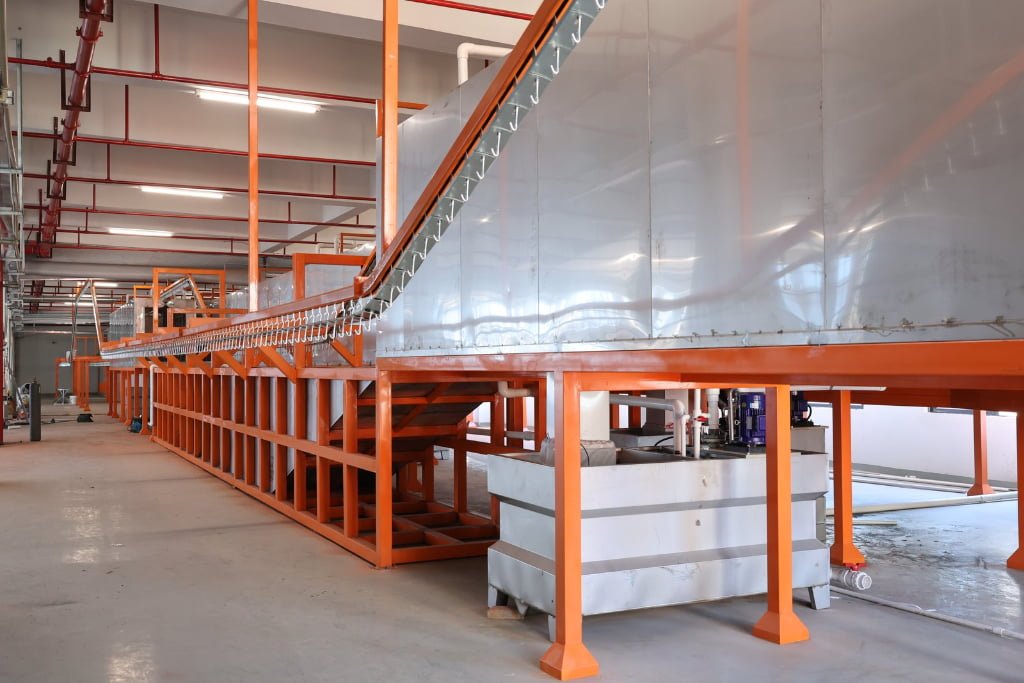
5 Advantages of Applying Powder Coating to Metal Furniture
When we talk about surface finishing for metal furniture, the conversation has fundamentally shifted over the past decade. What once meant choosing between limited options now centers on one dominant technology: electrostatic powder coating. This shift isn't accidental—it's driven by measurable results that matter to furniture manufacturers across every market segment, from budget-conscious producers to premium brands.
Static powder coating delivers five distinct advantages that directly impact your bottom line and product quality. These include superior surface uniformity and adhesion strength, exceptional durability against corrosion and wear, significant production efficiency gains, substantial cost savings through powder recovery and waste reduction, and full compliance with environmental regulations while maintaining worker safety standards. These benefits combine to make powder coating the preferred choice for metal furniture manufacturers targeting both domestic and export markets.
The question isn't really whether powder coating works for metal furniture anymore. The real question is whether your operation can afford to ignore it. Let me walk you through why.
Why Metal Furniture Manufacturers Are Switching to Powder Coating
For decades, metal furniture plants relied on liquid paint—oils, acrylics, and solvent-based systems. These methods worked, but they came with persistent challenges: uneven coverage, worker safety concerns, environmental compliance headaches, and volatile costs tied to material waste and energy consumption.
I've observed the shift accelerate dramatically over the past five to seven years, particularly with manufacturers serving premium markets or exporting to regions with strict environmental standards. The transition usually follows the same pattern: a plant faces either a quality complaint from a major customer, new local environmental regulations, or rising costs from labor-intensive manual spraying. They investigate powder coating, often by visiting a reference facility, and quickly realize they've been leaving money on the table.
What makes the shift particularly compelling for metal furniture is that the advantages aren't theoretical. They're operational. They're visible. They're measurable in both the product and the production line.
Superior Surface Quality and Durability
How Powder Coating Improves Adhesion and Corrosion Resistance
Let's start with what matters most to any furniture buyer: does the finish hold up?
Powder coating adheres to metal surfaces through a mechanism fundamentally different from liquid paint. The charged powder particles electrostatically bond to the grounded workpiece, creating what we call a "mechanical lock" during the spray phase. This is before any curing happens. Then, when the coated furniture enters the curing oven—typically at 170–200°C for most polyester or epoxy powders—the resin melts, flows, and undergoes cross-linking reactions that create a chemically fused layer with the substrate.
From our experience working with cabinet and furniture manufacturers, this dual-stage adhesion process produces a coating that's significantly more resistant to mechanical damage, UV exposure, and chemical attack compared to conventional liquid paint. We've seen furniture pieces that were powder-coated ten years ago still showing excellent adhesion when tested with cross-hatch or pull-off adhesion methods.
Here's what we care more about at the process level: pre-treatment quality directly determines long-term corrosion resistance. If the metal surface isn't properly degreased, phosphatized, and dried before powder application, the coating will eventually fail—not because the powder is poor, but because the foundation was weak. We always emphasize to our clients that the spray booth is only the middle third of the equation. The first third is pre-treatment; the last third is curing. Neglect either, and the powder coating becomes a liability, not an asset.
The corrosion resistance advantage becomes especially pronounced for outdoor furniture. A powder-coated metal chair with proper pre-treatment can withstand salt-spray testing (ASTM B117) for 1,000+ hours without red rust forming. That's the kind of durability specification that allows furniture makers to confidently guarantee products to end-users for 5–10 years without field failures.
Aesthetic Advantages: Gloss, Uniformity, and Color Consistency
Now let's talk about what the customer sees first: appearance.
Powder coating delivers surface uniformity that's simply unattainable with traditional spray painting. There are no drips, no sags, no runs. The electrostatic process distributes powder evenly across all surfaces—tops, sides, edges, recessed areas—in a single pass. During the melt-and-flow phase in the curing oven, the powder naturally self-levels, filling microscopic gaps and creating a smooth, consistent finish.
For indoor furniture targeting design-conscious buyers—think contemporary office seating, high-end residential pieces, or architectural installations—this aesthetic consistency is non-negotiable. A matte finish looks genuinely matte across the entire piece. A glossy finish delivers that premium sheen uniformly. There's no "spray pattern" visible, no areas where the operator's hand speed varied. It's architected uniformity.
| Finish Characteristic | Powder Coating | Liquid Paint |
|---|---|---|
| Surface uniformity | Excellent across all angles | Operator-dependent, variable |
| Color consistency | Batch-to-batch reliable | Risk of shade variation |
| Gloss appearance | Sharp, defined, consistent | Can appear dull or variable |
| Edge coverage | Even on sharp edges and recesses | Often thinner on edges |
| Orange peel risk (in proper curing) | Minimal (<5%) | Higher (10–20%) if airflow uncontrolled |
| Repair/touch-up blending | Noticeable (requires full re-spray) | Can blend if done carefully |
From our work with furniture clients, color consistency is particularly valuable when you're producing the same SKU for multiple customers or fulfilling repeat orders over months. Because powder is applied electrostatically and cured in a controlled oven, batch-to-batch color variation is minimal. That predictability allows designers to specify a finish with confidence and manufacturers to avoid costly re-work or customer complaints.
Cost Efficiency and Production Optimization
Powder Utilization Rate and Waste Reduction
Here's where the economics become impossible to ignore.
Traditional liquid paint typically results in 30–50% material waste during spraying. Overspray, runs, and drips mean you're paying for paint that never ends up on the furniture. Powder coating flips this equation. With a properly designed system including cyclone separation and secondary recovery cabinets, powder utilization rates reach 85–95%. That unused powder is collected by air currents, separated from the exhaust stream, and—here's the key—recycled back into the spray system.
Let's put numbers on this. If a medium-sized furniture plant sprays 500 units per day and uses 2 kg of powder per unit, that's 1,000 kg of powder daily. At a typical cost of $8–12 per kilogram for quality polyester powder, that's $8,000–12,000 per day in material. With liquid paint at 40% waste, you're throwing away $3,200–4,800 daily. With powder coating at 10% waste, you're throwing away $800–1,200 daily. That's a $2,400–3,600 per day savings in material cost alone, or roughly $600,000–900,000 annually for a single facility operating 250 days per year.
We've consistently advised our clients that powder recovery isn't a "nice to have"—it's the financial engine that justifies the equipment investment. The cyclone separator and secondary recovery cabinet aren't optional upgrades. They're core components that directly reduce your cost of goods sold.
Streamlined Line Integration and Throughput Balance
The second cost advantage comes from throughput efficiency and energy management.
When we design a powder coating line, we're not just bolting machines together. We're architecting a system where pre-treatment time, drying time, spray time, curing time, and cooling time all balance. The goal is to keep the line running continuously without bottlenecks.
Liquid paint systems typically require longer drying times (30–60 minutes in many cases) because solvents must evaporate before the paint hardens. Powder coating cures through heat and chemical cross-linking in 10–20 minutes at controlled temperature. This means faster cycle time, higher throughput for the same floor space, and lower energy cost per unit.
From a practical implementation standpoint, what we care more about is line configuration balance. If your pre-treatment takes 15 minutes but your spray booth can only accommodate pieces for 10 minutes due to space constraints, you've created congestion. The line will bottleneck, reducing effective capacity. We design around this by matching spray booth size, conveyor speed, and curing oven length to your target production rate. When this balancing is done correctly, a powder-coated line operating 24/7 can deliver 20–30% higher throughput per square meter than an equivalent liquid-paint setup.
For outdoor furniture or cabinet manufacturers where volume matters—especially those serving big-box retailers or export markets—this throughput advantage translates directly into whether you can meet demand without expanding your facility. It's a significant competitive advantage.
Environmental and Safety Benefits
Zero VOC Emissions and Reduced Air Pollution
This is the advantage that first catches regulatory attention, but it's also the one with the most concrete operational impact.
Powder coating produces zero VOC (volatile organic compound) emissions during application. There's no solvent vapors being released into the workshop or into the atmosphere. Liquid paint systems release significant VOCs—toluene, xylene, acetone—which create environmental compliance burdens, air quality issues, and worker health risks.
For furniture manufacturers in regulated markets (EU, North America, increasingly in Asia), powder coating shifts your compliance posture from "we need air scrubbers and monitoring" to "our process is inherently compliant." That's not just regulatory relief—it's operational simplicity. You're not managing scrubber maintenance, monitoring VOC levels, or defending against environmental audits on this front.
The air leaving a powder coating booth is also fundamentally cleaner. Modern secondary recovery cabinets filter dust to <0.5 microns, meaning exhaust air is often cleaner than ambient workshop air. Compare that to liquid paint, where overspray and aerosols require active scrubbing or disposal.
Dust Control and Waste Management Systems
The flip side of powder coating's efficiency is that it generates powder dust during spraying and recovery. This must be managed, but modern systems make it straightforward.
A well-designed booth includes:
- Primary collection via the spray booth's exhaust system and cyclone separator
- Secondary filtration through cartridge filters with automated pulse-cleaning
- Tertiary capture via outdoor exhaust filtration if required by local codes
- Waste consolidation into collection bins for recycling or disposal
The powder that collects is typically inert and non-hazardous. It can be recycled into the spray system (as mentioned earlier), sent to specialized powder recovery services, or disposed of as non-hazardous waste. Compare this to liquid paint sludge, which contains heavy metals, solvents, and chemical binders—disposal costs are significantly higher and more tightly regulated.
From our experience, the waste stream from powder coating is actually a revenue opportunity rather than a cost center. Recycled powder has market value. Some of our clients have recovered tens of thousands of dollars annually by selling reclaimed powder back to material suppliers.
![powder coating line in factory]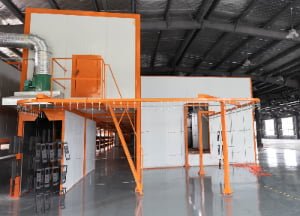
Performance for Outdoor and High-End Applications
Weather Resistance and Salt Spray Durability
For outdoor furniture, coating durability isn't abstract—it's the defining difference between a product that lasts a decade and one that deteriorates in 3 years.
Powder coatings, particularly polyester and polyester-polyol blends, provide exceptional UV and weathering resistance. They resist fading, chalking, and surface degradation far better than liquid paints. Modern outdoor furniture powders are formulated to maintain gloss and color retention for 7–10 years of outdoor exposure in temperate climates, even longer in arid regions.
The salt spray durability I mentioned earlier is critical for any furniture sold near coastal areas or in marine environments. Standard salt spray testing (ASTM B117) for 1,500+ hours without red rust is achievable with proper pre-treatment and quality powder. That translates to real-world rust-free performance in harsh environments.
We've consistently advised outdoor furniture clients that the powder grade matters as much as the coating process. A commodity powder won't deliver premium durability. You need formulations specifically engineered for outdoor use—typically polyester-based with UV stabilizers and corrosion inhibitors. These cost more upfront but deliver the durability that justifies a premium price point at retail.
Consistency Standards for Premium Market Entry
If you manufacture furniture for premium hospitality (upscale hotels, restaurants), high-end residential design, or architectural installations, coating consistency is a market entry requirement, not a nice-to-have.
These customers don't just want the furniture to work; they want every piece to look identical. They want the finish appearance to match the product's perceived quality. Powder coating delivers this consistency batch after batch, day after day. A designer can specify "matte black polyester powder" and receive identical results whether the order is produced in January or December, whether it's a 50-unit initial order or a 500-unit repeat order.
This reliability is why premium furniture makers globally have adopted powder coating as their standard. It signals manufacturing discipline and quality consistency to the end customer. The finish doesn't vary. The appearance is predictable. The durability is engineered and tested.
![metal furniture powder coating finish]
Critical Success Factors: Pre-treatment and System Design
The Role of Pre-treatment in Long-term Coating Performance
I want to emphasize something we've learned through thousands of hours on real production floors: pre-treatment quality directly determines powder attachment durability, and no amount of spray booth optimization can fix a weak foundation.
Metal furniture surfaces come into the shop contaminated with:
- Drawing oils and coolants from fabrication
- Fingerprints and salt from handling
- Oxide layers and corrosion from storage
- Dust and particulates from the environment
Before a single gram of powder can be applied, these contaminants must be removed. The pre-treatment process typically includes:
- Alkaline degreasing – removes oils and organic contamination
- Water rinsing – flushes away degreaser residue
- Acid pickling or mechanical abrasion – removes rust and oxide layers
- Surface conditioning – prepares metal for chemical film formation
- Phosphate or zirconium conversion coating – creates a crystalline layer that bonds powder and protects the base metal
- Pure water rinse – removes any residual chemicals
- Thermal drying – ensures the surface is completely moisture-free before spraying
Each step matters. We've seen manufacturing failures trace back to skipped rinses, inadequate drying, or conversion film layers that were too thin. The coating itself was perfect; the pre-treatment was the weak link.
For outdoor furniture or any application requiring salt spray durability, we always emphasize that the conversion film thickness is critical. A 500–800 mg/ft² phosphate film (or equivalent zirconium film) is the minimum. Less than this, and the coating will fail prematurely despite perfect powder application and curing.
Integrated Equipment Configuration vs. Single-Stage Solutions
Here's a practical decision point we've addressed hundreds of times: Should the furniture line include integrated pre-treatment, or can you outsource it?
The answer depends on your production volume and contamination control. If you're producing metal furniture pieces that will sit exposed between pre-treatment and spraying, you'll lose the benefit of clean metal. Oxidation begins immediately. Dust settles. Fingerprints appear. By the time the piece reaches the spray booth, you're starting with a compromised surface.
For serious manufacturers targeting durability-sensitive markets, we recommend integrated system design where pre-treatment and powder coating happen on the same line, ideally within hours of fabrication. This minimizes surface recontamination and maximizes adhesion.
That said, not every operation needs this level of integration. A shop producing low-volume custom pieces might use a job-shop pre-treatment service and then spray the next day. The key is understanding the trade-off: tighter integration costs more upfront but delivers more reliable, durable results.
![metal cabinet pre-treatment process]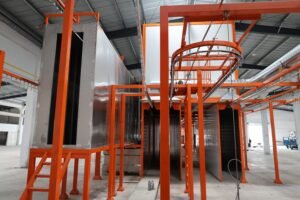
Making the Transition: What to Evaluate Before Upgrading
If you're currently using liquid paint and considering a shift to powder coating, here are the key evaluation criteria:
Production Volume
Powder coating lines have higher fixed costs (equipment, utilities, space) but lower variable costs per unit. They break even against liquid paint typically around 2,000–5,000 units monthly, depending on piece complexity and finish. Below that, the ROI math doesn't work. Above it, powder coating becomes economically compelling.
Product Specifications
What finish appearance do your customers expect? What durability standards must you meet? If you're selling budget outdoor furniture that needs to last 3 years, liquid paint might be adequate. If you're selling premium pieces or to regulated markets requiring durability certification, powder coating is necessary, not optional.
Available Space
Powder coating lines require dedicated booth space, exhaust infrastructure, and curing oven length. A typical line footprint is 20–40 meters long. If your facility can't accommodate this, outsourcing to a job-shop coater might be the better path.
Skilled Labor
Powder coating equipment requires more technical expertise than liquid paint spraying. Technicians need to understand electrostatics, oven calibration, powder chemistry, and process troubleshooting. Training programs exist, but plan 2–4 weeks for a skilled operator to reach full productivity.
Environmental Compliance
Check your local and national environmental regulations. If VOC emissions are regulated, regulated, powder coating eliminates that compliance burden. If hazardous waste disposal rules apply, powder coating's waste stream is less regulated. These regulatory tailwinds often justify the capital investment on their own.
Investment and Timeline
A mid-range powder coating line (pre-treatment, spray booth, cyclone recovery, curing oven, controls) costs $80,000–250,000 depending on automation level and production capacity. Typical ROI is 2–4 years based on material savings, throughput gains, and reduced rework. Budget 3–6 months from order to full production.
Risk Considerations
The biggest risks we see with transitions are underestimating learning curve time, misjudging pre-treatment importance, and oversizing or undersizing equipment for actual production demand. Start with conservative throughput projections and build headroom into your powder oven design. It's easier to run a slightly underutilized line than to discover you can't meet customer demand because your curing capacity is bottlenecked.
Conclusion: From Decision to Implementation
Powder coating isn't just an alternative to liquid paint for metal furniture—it's the emerging standard for manufacturers targeting durability, consistency, environmental compliance, and cost control. The five advantages we've outlined (superior surface quality, exceptional durability, production efficiency, waste reduction, and environmental compliance) combine to create a compelling economic and operational case.
The transition requires upfront capital investment and process discipline, particularly around pre-treatment and curing protocols. But manufacturers who make this move consistently report they can't imagine returning to liquid paint. The quality is better. The consistency is reliable. The costs are lower. The regulatory burden is lighter.
If your furniture business is currently competing on quality, if you're serving export markets with strict durability requirements, or if you're producing volume at scale, powder coating deserves serious consideration. Visit a reference manufacturer operating a similar product line. Spend time in the booth. Observe the pre-treatment sequence. See the cured finish. Talk to the operators. That real-world observation will answer more questions than any technical specification can.
We're here to help structure that evaluation. Whether you're producing metal cabinets, outdoor seating, architectural components, or custom pieces, we've worked through the transition with hundreds of furniture manufacturers. If you'd like to discuss your specific product requirements, production volume, and market targets, we're ready to help you design a powder coating solution that fits your operation.
Reach out to us at WhatsApp +8618064668879 or email ketumachinery@gmail.com to arrange a conversation about your coating needs.
 English
  German
  Vietnamese
  French