5 Tips When Sourcing a New Powder Coating Oven: A Complete Decision Guide for Manufacturers
Introduction: Why Getting the Right Oven Matters
Selecting the right powder coating oven is one of the most critical decisions in setting up or upgrading your coating production line. Unlike purchasing standard equipment, a curing oven directly impacts your final coating quality, production efficiency, and long-term operational costs. Whether you're expanding capacity or replacing aging equipment, understanding what to prioritize during sourcing can save you from costly mistakes and help you achieve stable, high-quality results across every batch.
From our experience at Ketu, we've worked with hundreds of manufacturers across cabinet production, outdoor furniture, and aluminum profile industries—and we've consistently observed that most purchasing challenges don't stem from equipment availability, but from customers not asking the right questions upfront. Many buyers focus primarily on price or headline specifications, only to discover months later that temperature uniformity is inconsistent, energy consumption is higher than promised, or the oven doesn't adapt well to their actual production rhythm.
Here are the five essential tips we recommend when sourcing a powder coating oven.
Tip 1: Verify Temperature Uniformity and Control Precision
Why Temperature Consistency Directly Impacts Coating Quality
Temperature is not just a number on a control panel display. What actually determines coating quality is whether every workpiece inside the oven reaches and maintains the target temperature consistently. Poor temperature uniformity causes visible defects: color variation between batches, uneven curing, surface gloss inconsistency, and reduced attachment strength.
We've seen projects where two identical parts sprayed with the same powder and fired in the same oven emerged with noticeably different appearances—simply because one area of the oven ran 10°C cooler than another. The cooler zone resulted in undercured coating; the hotter zone caused slight color shift. Both issues directly reduce your product quality and customer satisfaction.
What Temperature Mapping and Control Specs to Ask Suppliers For
When evaluating an oven, insist on the following specifications:
Temperature Distribution Data: Request a temperature mapping report showing measured temperatures at multiple points—center, edges, top, and bottom of the chamber. Ideally, the temperature difference should not exceed ±5°C across the entire curing space. Reputable manufacturers should provide this data proactively; if they can't or won't, consider that a red flag.
Control System Accuracy: The oven's PLC-based temperature controller should maintain your set temperature within ±2-3°C over extended production runs. Ask about the sensor placement (are there multiple thermocouples or just one?), the response time, and the overshoot behavior during startup.
Heating Element Distribution: Verify that heating elements are well-distributed throughout the chamber—not concentrated in one area. Ask how the oven achieves uniform heat circulation (hot air recirculation fans, internal baffles, etc.).
Over-Temperature Protection: The oven should include automatic safety shutoff if temperature exceeds a safe threshold, protecting both your parts and the equipment.
From our work in cabinet, furniture, and aluminum profile applications, we've learned that temperature consistency is non-negotiable. Cabinet manufacturers, in particular, are extremely sensitive to color matching across production batches. When we specify an oven's thermal profile, we conduct thermal mapping during commissioning to confirm that what the supplier promised matches what actually happens on your factory floor.
Tip 2: Choose Between Electric and Gas Heating Based on Your Production Scale
Electric Heating: Best for Smaller to Mid-Size Operations
Electric heating systems use immersion or cartridge heaters to warm air or direct heating surfaces. They are ideal for operations with daily throughput under 100–200 pieces (depending on part size and cycle time).
Advantages:
- Easier to install and maintain
- Precise temperature control via PLC
- No combustion equipment or fuel lines needed
- Smaller physical footprint
- Faster startup and safer operation
- Suitable for facilities with limited infrastructure
Disadvantages:
- Higher per-unit energy cost at large volumes
- Slower temperature ramp-up compared to gas
- May require facility electrical upgrades (higher amp service)
Cost Profile: Lower upfront equipment cost, but higher operational electricity bills over 3–5 years.
Gas Heating: Best for High-Volume Continuous Production
Gas heating (natural gas or propane) uses a burner to heat air, which then circulates through the oven chamber. This method is standard for high-throughput operations producing 500+ pieces daily.
Advantages:
- Much faster heat-up time (often 30–40% quicker than electric)
- Lower per-unit energy cost at large volumes
- Better suited to continuous or semi-continuous conveyor lines
- Higher overall thermal capacity
Disadvantages:
- Requires gas supply infrastructure and safety approvals
- More complex burner and combustion system maintenance
- Regulatory compliance and periodic inspections
- Higher upfront equipment and installation cost
- Requires trained operators
Cost Profile: Higher initial investment, but significantly lower per-piece operating cost at scale.
How to Calculate the Break-Even Point for Your Scenario
Here's a practical method we use when advising clients:
- Determine your daily production volume (pieces/day)
- Estimate energy consumption for each option:
- Electric: typically 40–80 kW depending on oven size and setpoint
- Gas: typically 200,000–400,000 BTU/hour depending on size
- Calculate daily energy cost:
- Electric: kW × hours of operation × local $/kWh
- Gas: BTU/hour × hours of operation ÷ 100,000 × local $/therm
- Annual operating cost = daily cost × 250 working days
- Compare 5-year total cost of ownership: (Equipment cost + installation) + (5 × annual operating cost)
In our experience with cabinet and aluminum profile manufacturers, the break-even point typically occurs around 150–200 pieces per day. Below that, electric is cheaper; above that, gas usually wins—but local energy rates matter significantly. We've advised Turkish and Indian customers where gas rates are substantially cheaper, making gas the clear choice even at moderate volumes.
Tip 3: Match Oven Size to Workpiece Dimensions and Production Capacity
Critical Measurements to Confirm Before Ordering
An oversized oven wastes energy and floor space; an undersized oven creates production bottlenecks and forces you to replan workflows. This mismatch is surprisingly common and often discovered only after delivery.
Key dimensions to verify:
| Parameter | What to Measure | Why It Matters |
|---|---|---|
| Internal chamber length (L) | Maximum workpiece length + 150–300 mm clearance | Ensures parts fit and air can circulate around ends |
| Internal chamber width (W) | Widest workpiece + 200–400 mm | Allows proper spacing and heat distribution |
| Internal chamber height (H) | Tallest workpiece + 150–250 mm | Prevents parts from touching heating elements or baffles |
| Conveyor speed (m/min) | Typical line speed | Oven residence time = chamber length ÷ line speed must = required curing time |
| Load density (kg/m²) | Weight of parts per linear meter on conveyor | Heavy loads need slower speeds or larger ovens; light loads waste capacity |
| Electrical/Gas supply | Available amperage or BTU flow at your facility | Prevents undersized utilities that throttle oven performance |
How to Avoid Costly Mismatches Between Oven Specs and Actual Production Needs
Common scenario: A customer specifies an oven 5 meters long based on their maximum part length, but then runs a conveyor at 2 m/min, resulting in only 2.5 minutes of curing time—too short for most powder formulations. The oven then operates inefficiently, requiring higher temperatures to compensate, wasting energy.
Our approach: We calculate the required residence time (how long a part must spend inside the oven). For typical epoxy or polyester powders, this is usually 8–15 minutes depending on thickness and chemistry. We then work backward: residence time × line speed = minimum oven length. We also account for startup buffer and process margin—we don't size ovens to the minimum; we add 15–20% extra length for flexibility.
For cabinet manufacturers, we often see parts that are 1.5–2 meters long but vary in cross-section and weight. We design the oven to handle the longest piece comfortably and then run different part types at adjusted speeds. For aluminum profile customers in India and similar markets, we pay special attention to conveyor load capacity—high-density aluminum can exceed a poorly-specified system's throughput, creating a hidden bottleneck.
Before ordering, ask the supplier: "If I run parts at [your expected speed], will my actual curing time be [your required time]?" Get this in writing. If the supplier hedges or says "it depends on the powder," that's a warning sign.
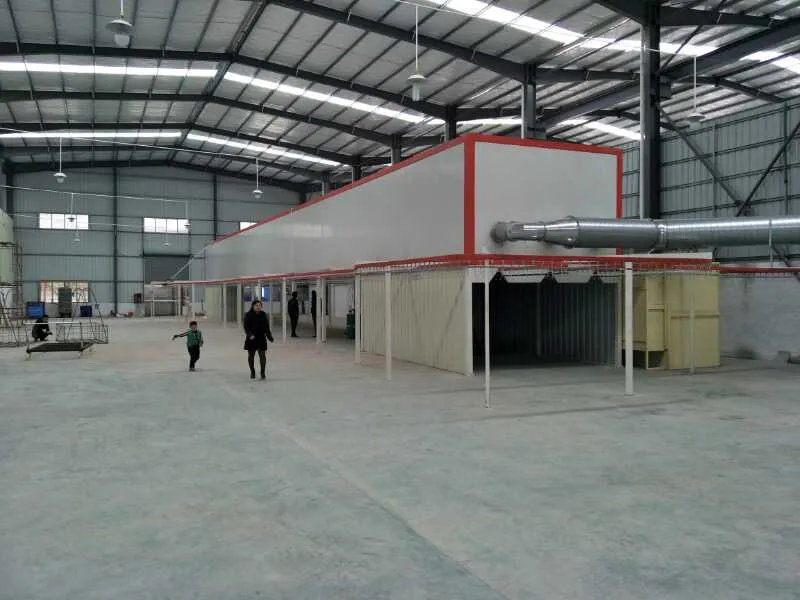
Tip 4: Evaluate Supplier Credibility, Quality Standards, and After-Sales Support
Essential Credentials and Certifications to Verify
Before committing to an oven supplier, verify these credentials:
- ISO 9001 (Quality Management): Shows systematic quality processes
- ISO 14001 (Environmental Management): Relevant if emissions control matters to you
- CE Marking (European Conformity): Mandatory for EU markets; indicates compliance with EU machinery and safety directives
- UL or equivalent certification (North America): Verifies electrical safety
- Industry-specific standards: For powder coating equipment, look for compliance with standards like GB 15607 (China), NFPA 654 (dust hazard assessment), or equivalent in your country
- Factory audit credentials: Ask if they've passed third-party factory audits (TÜV, SGS, etc.)
These certifications don't guarantee perfect equipment, but their absence is often a red flag—especially if the supplier is vague about quality processes.
How to Assess Supplier Reliability Through Case References and Site Visits
Ask for references in your industry segment:
- How many cabinet manufacturers have they supplied in the past 3 years?
- Which furniture or aluminum profile producers are running their ovens?
- Can they provide contact information for 2–3 reference customers?
Do a reference check: Call or visit a reference site if possible. Ask them:
- How long has the oven been in operation?
- Has it performed as specified?
- Any major repairs or downtime in the first year?
- How responsive was the supplier to problems?
- Would they buy from this supplier again?
If possible, visit the supplier's factory: See their production capabilities firsthand:
- Is the workshop clean and organized? (Suggests attention to detail)
- Do they have sample lines or demo units running? (Allows you to observe actual thermal behavior)
- How do they test ovens before shipment?
- What's their average lead time?
From our experience at Ketu, we've learned that customers who invest time in a factory visit or thorough reference check rarely regret their choice—and often catch red flags that wouldn't show up in a catalog or quote. For overseas suppliers, this is especially important. A Turkish furniture company considering a Chinese oven manufacturer, or an Indian aluminum profile maker evaluating a European supplier, should plan site visits before signing contracts.
What to Prioritize in Warranty, Spare Parts Availability, and Technical Support
Warranty terms:
- Typical warranty is 12–18 months from shipment or commissioning (confirm which).
- Does it cover only defects, or also wear items like heating elements?
- What's the warranty claim process? (Some suppliers require on-site inspection; others are more flexible.)
Spare parts:
- Ask for a list of common wear items: heating elements, thermocouples, blower motor seals, door gaskets, etc.
- Are these stocked locally, or must you order from abroad?
- What's the typical lead time?
- Are prices reasonable, or are they inflated? (Some suppliers use spare parts as a revenue stream—avoid these if possible.)
Technical support:
- Does the supplier provide phone/email support, or only on-site visits?
- For overseas customers, what's the on-site support model? (Do they send engineers, or do they expect you to troubleshoot remotely?)
- Do they offer training for your operators and maintenance team?
- Is technical documentation available in your language?
In our cabinet and furniture projects, we've found that local technical support is worth paying extra for. A problem in a production oven can cost thousands per hour in downtime. If your supplier is a 10-hour flight away, that matters.
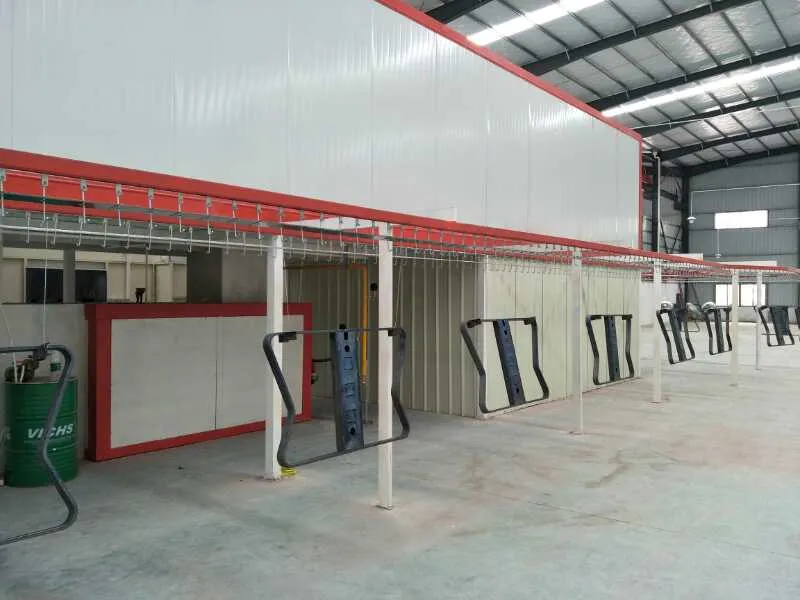
Tip 5: Calculate Total Cost of Ownership, Not Just Equipment Price
Hidden Costs Most Buyers Overlook
When comparing oven quotes, many procurement managers focus narrowly on the purchase price. This is a mistake. Here are the costs that typically surprise buyers:
Energy consumption:
An electric oven running 16 hours/day at 60 kW costs ~$70,000–$100,000 annually in electricity (assuming $0.12/kWh). A gas oven might cost $40,000–$60,000 in gas annually. These compound significantly over 5–10 years.
Installation and commissioning:
- Foundation work (concrete pad, leveling, utilities)
- Electrical or gas line upgrades
- Conveyor integration and alignment
- Thermal mapping and calibration
- Operator training
Budget $10,000–$50,000 depending on site conditions and complexity.
Maintenance and wear items:
- Heating elements: $2,000–$10,000 per replacement
- Thermocouples: $500–$2,000 per set
- Blower motor: $3,000–$8,000
- Door seals and gaskets: $1,000–$3,000
Budget $5,000–$15,000 annually for preventive maintenance.
Configuration and customization:
If your powder formula requires non-standard temperature profiles, the supplier may need to reprogram the controller or adjust airflow. This isn't always free.
Space and infrastructure:
A large oven occupies floor space and requires adequate electrical service, compressed air (for controls), and ventilation ducting. If your facility doesn't have these, costs escalate quickly.
Long-Term ROI: How to Compare Options Using Realistic Operational Scenarios
Here's a practical comparison framework:
| Cost Category | Electric Oven (50 kW) | Gas Oven (300k BTU/hr) |
|---|---|---|
| Equipment cost | $80,000 | $120,000 |
| Installation/commissioning | $15,000 | $25,000 |
| Annual energy cost (250 days/year, 16 hrs/day) | $96,000 | $48,000 |
| Annual maintenance | $8,000 | $10,000 |
| 5-year total cost | $575,000 | $515,000 |
| Cost per piece (assuming 200 pcs/day) | $23/piece | $20.60/piece |
In this scenario, despite higher upfront cost, the gas oven's lower operating cost delivers better ROI over 5 years—but the margin is thin. If electricity is cheap in your region, the calculation flips. If you run only 100 pieces/day, the electric oven wins.
Our advice:
- Build a spreadsheet with your actual expected volume, energy rates, and maintenance assumptions
- Run 5-year and 10-year scenarios
- Include a "stress test": what if volume drops 20%? Does the ROI still work?
- Don't optimize for lowest price; optimize for lowest cost per piece over equipment life
We've worked with aluminum profile manufacturers in India who initially wanted the cheapest oven, but once we showed them the 5-year total cost including energy, they chose a mid-range gas option that saved $300,000+ over the equipment's lifetime.
Common Sourcing Mistakes to Avoid
Based on hundreds of projects, here are the pitfalls we see most often:
1. Buying based on price alone
The cheapest oven often becomes the most expensive over time. Prioritize total cost of ownership and long-term reliability.
2. Underestimating space and utility requirements
Don't assume the floor space and electrical service you have now will suffice. Get detailed site requirements from the supplier and have your facility manager review them.
3. Ignoring temperature uniformity testing
Request temperature mapping data before ordering, not after delivery. If a supplier resists, walk away.
4. Not confirming curing time calculations
Verify that the supplier's oven length and your conveyor speed actually deliver the residence time your powder needs. Don't assume "8 meters is long enough"—do the math.
5. Overlooking spare parts and support
Buying from a supplier with no local presence or spare parts inventory is a trap. Equipment failures will cost you dearly.
6. Choosing the wrong heating method for your volume
Run the numbers before deciding on electric vs. gas. Both can be right for the right application, but choosing poorly costs tens of thousands annually.
7. Not involving your maintenance team in the selection
Your maintenance staff will operate and troubleshoot the oven. Get their input on control panel design, accessibility, and support responsiveness.
Getting Started: Your Oven Sourcing Checklist
Use this checklist to stay organized and ensure you don't miss critical steps:
Phase 1: Requirements Definition
- [ ] Document exact workpiece dimensions (L × W × H) and weight
- [ ] Calculate required curing time based on powder formula
- [ ] Define daily/annual production volume
- [ ] List required temperature range and uniformity tolerance
- [ ] Confirm available electrical or gas capacity at your facility
- [ ] Identify space constraints and floor layout
Phase 2: Supplier Evaluation
- [ ] Request RFQ from 3+ qualified suppliers
- [ ] Verify certifications (ISO 9001, CE, UL, etc.)
- [ ] Request thermal mapping data or temperature distribution specs
- [ ] Ask for references and contact 2–3 customers
- [ ] Inquire about warranty, spare parts, and technical support
- [ ] Calculate 5-year total cost of ownership for each option
Phase 3: Site Visit and Commissioning Plan
- [ ] Schedule factory visit if possible; observe demo units
- [ ] Confirm exact oven interior dimensions and residence time calculations
- [ ] Review installation requirements (electrical, gas, foundation, utilities)
- [ ] Confirm training and commissioning timeline
- [ ] Clarify warranty claim process and spare parts ordering
Phase 4: Purchase and Implementation
- [ ] Finalize contract with clear specs, delivery date, and payment terms
- [ ] Prepare facility (electrical/gas upgrades, floor prep, utilities)
- [ ] Plan operator and maintenance training
- [ ] Schedule commissioning and thermal mapping
- [ ] Establish ongoing maintenance schedule
Conclusion
Selecting a powder coating oven is a significant investment—often $100,000 to $300,000+ in equipment, installation, and commissioning. Getting it right delivers years of stable, high-quality coating results and optimized production efficiency. Getting it wrong costs money every single day through energy waste, quality issues, or downtime.
The five tips in this guide—verifying temperature uniformity, matching heating method to volume, sizing correctly, assessing supplier reliability, and calculating true cost of ownership—form a practical framework for making a confident decision. Combined with a thorough site visit, reference checks, and a detailed cost-benefit analysis, these steps significantly reduce the risk of regret.
From our experience at Ketu working with cabinet, furniture, and aluminum profile manufacturers across multiple countries, the customers who invest time upfront in careful sourcing consistently report higher satisfaction and lower long-term costs than those who rush the decision.
If you're currently evaluating oven suppliers or would like to discuss your specific requirements—workpiece type, production volume, energy priorities, or site constraints—we'd be happy to share insights from similar projects. Contact us via WhatsApp at +8618064668879 or email ketumachinery@gmail.com to discuss your application and explore how an optimized powder coating line can improve your manufacturing performance.
Your coating quality and operational costs depend on getting this decision right. Take the time to source thoughtfully.
 English
  German
  Vietnamese
  French