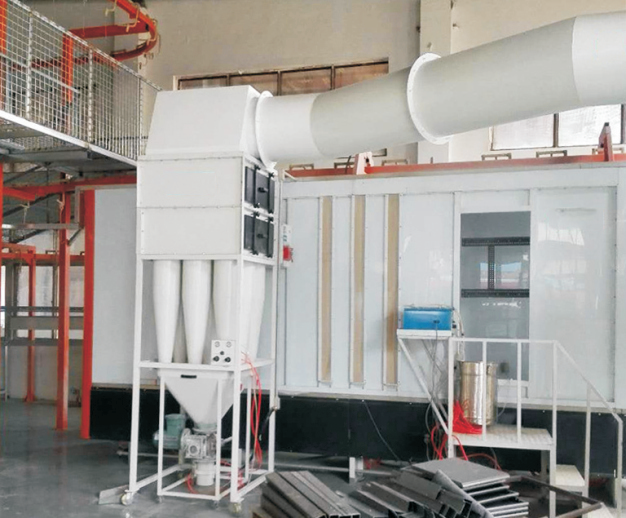
Powder Coating Oven: How It Works – Complete Guide to Curing Process
You've just finished spraying powder onto a metal workpiece. The powder looks perfect on the surface, but nothing has actually bonded yet. Without the next critical step—curing in a powder coating oven—that beautiful coating will simply fall off when touched. The oven is where the real transformation happens: where loose powder particles transform into a hard, durable, protective layer.
A powder coating oven cures applied powder through controlled heating that melts the powder particles, allows them to flow into a uniform film, and triggers chemical cross-linking to form a hard, durable coating. The oven maintains precise temperature and duration to ensure the powder fully reacts and adheres to the workpiece surface, typically operating between 175–232°C (350–450°F) depending on the specific coating formulation. The challenge isn't just getting hot enough—it's maintaining uniform temperature distribution throughout the oven chamber, ensuring every workpiece reaches the correct internal temperature, and managing the heating duration so the coating cures completely without degradation.
Most factories underestimate how critical oven performance is to their final product quality. We've seen countless cases where excellent pre-treatment and perfect spray application were undermined by temperature instability, poor heat circulation, or undersized oven capacity. Understanding how your powder coating oven works isn't just technical knowledge—it's the key to preventing costly rework and achieving consistent quality.
What Is a Powder Coating Oven and Why It Matters
A powder coating oven is an industrial heating chamber specifically designed to cure thermosetting powder coatings. Unlike a conventional oven, a powder coating oven must accomplish a very specific sequence: first, it raises the workpiece temperature high enough to melt the powder particles; then it holds that temperature long enough for the resin and hardener in the powder to undergo a cross-linking chemical reaction; finally, it must allow the coated workpiece to exit and cool without defects.
The stakes are high because the oven determines the final coating's hardness, adhesion, chemical resistance, and durability. An under-cured coating may look good initially but will fail under mechanical stress, chemical exposure, or UV weathering. An over-cured coating becomes brittle and can yellow or lose gloss, especially with certain polyester and epoxy formulations. This narrow window of correct curing is why oven control is non-negotiable.
From our experience working with cabinet manufacturers, furniture producers, and aluminum profile companies, the powder oven is often the bottleneck that decides whether your production line can meet quality targets or not. Cabinet customers especially demand 100% consistent cure because their products go into demanding environments where coating failure means product returns and warranty claims. Furniture makers care about gloss uniformity and color consistency—both directly tied to oven temperature stability. Aluminum profile operations need fast, efficient curing to maintain high throughput without sacrificing surface quality.
Types of Powder Coating Ovens: Key Differences
Not all powder ovens are created equal. The choice between different oven types has enormous impact on your production speed, product quality, energy efficiency, and long-term operating cost.
Heat Source Options (Electric, Gas, Oil)
Electric heating uses resistance heating elements (typically nichrome wire coils or ceramic heaters) to generate heat directly. Electric ovens are ideal for small to medium production volumes, complex-shaped workpieces that need lower temperature profiles, and facilities where natural gas isn't available. The advantage is precise temperature control and zero combustion byproducts inside the oven chamber. The downside is higher operating cost per unit of heat, longer warm-up time, and higher electricity demand (which requires robust facility infrastructure).
Gas heating burns natural gas or LPG to generate hot air through a combustion chamber and heat exchanger. Gas-fired ovens are the industrial standard for high-volume powder coating because they deliver heat more efficiently and cost less to operate per degree of temperature. They reach target temperatures faster (typically 30–40 minutes to reach 200°C in an empty oven versus 45–60 minutes for electric). Gas ovens are best suited for stable, continuous production runs. The trade-off is that you need reliable gas supply infrastructure, more complex burner maintenance, and slightly higher capital cost.
Oil heating is less common in modern powder coating but still used in some regions where gas infrastructure is unavailable or unreliable. Oil systems have similar efficiency to gas but require fuel storage, regular tank maintenance, and carry higher environmental risk.
From a practical standpoint, if your facility has natural gas access and you're running production volumes exceeding 20–30 parts per hour, gas heating makes economic sense. For smaller operations, batch processing, or facilities with restricted energy infrastructure (like some overseas locations), electric heating is often the better fit despite higher per-unit operating costs.
Oven Structure and Production Scale (Box, Tunnel, Bridge)
Box ovens (also called chamber ovens or batch ovens) are enclosed rectangular chambers where workpieces sit or hang stationary during the entire cure cycle. You load the oven, close the door, run a timed cycle (typically 10–30 minutes), then unload. Box ovens are ideal for small batches, one-off jobs, or workpieces requiring different cure profiles. They're simple to operate, require minimal floor space, and have lower capital cost. The drawback is they're fundamentally slow because the oven must heat up, cure, and cool down between batches. They don't work well for high-volume continuous production.
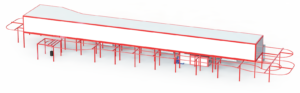
Tunnel ovens consist of a long, insulated chamber with a motorized conveyor running through it. Workpieces enter at one end and exit at the other on a continuous, steady pace. The oven zone nearest the entrance is typically cooler (pre-heat zone), the middle is hottest (cure zone), and the exit may include air cooling. Tunnel ovens are the workhorse of industrial powder coating because they enable continuous, high-volume production (100–500+ parts per hour depending on line speed and part size). They maintain consistent output and excellent temperature uniformity because the conveyor speed is constant. The downside is higher capital cost, larger footprint, and inflexibility if your product mix varies significantly or you need to change cure times frequently.
Bridge ovens (or walking-beam ovens) use a reciprocating or indexing mechanism instead of a continuous conveyor. Parts move through the oven in discrete steps, pausing at each zone for a set time before advancing. Bridge ovens offer a good middle ground: they can handle varied part sizes and shapes better than tunnel ovens, they're faster than batch ovens, and they use less floor space than continuous tunnels. They're popular in job shops and for medium-volume production runs of different products.
In our experience working with cabinet and sheet-metal clients, tunnel ovens are the standard choice for dedicated, high-volume product lines (like large cabinet manufacturers doing 50+ units daily). Bridge or box ovens are more common for shops that spray multiple product types or smaller batch runs.
How Powder Coating Ovens Work: The Complete Process
The Curing Stages: From Powder to Finished Coating
The powder curing process isn't instantaneous. It progresses through distinct physical and chemical stages, each critical to the final outcome.
Stage 1: Ambient to Melt Temperature (0–3 minutes)
When the workpiece first enters the hot oven, the spray-applied powder particles are still dry and separate from each other. The oven's hot air rapidly transfers heat to the metal substrate and the powder layer. As surface temperature rises, the powder particles begin to soften and fuse together. This stage is called the "melt phase." The powder melts into a liquid film covering the metal surface. This is a physical change—the powder hasn't yet undergone chemical reaction; it's simply changed from a solid to a liquid state.
Stage 2: Flow and Coalescence (3–8 minutes)
Once melted, the powder coating becomes a viscous liquid. Gravity and surface tension pull the melted coating into a smooth, uniform film. Any spray pattern imperfections, minor thickness variations, or orange-peel texture tends to flow out during this stage. This is why proper powder selection, particle size distribution, and spray parameters matter—they influence how well the powder flows during this window. If the powder is the wrong formulation (too stiff or too fluid), or if you've applied it too thick or too thin, the flow-out phase can't fully correct it.
Stage 3: Chemical Cross-linking Reaction (8–20 minutes, depending on formulation)
This is where the actual curing happens at the molecular level. Thermosetting powder coatings contain two main components: resin and hardener (or curing agent). At room temperature, these remain inert. But once the powder is heated above a certain threshold (typically 150–180°C for most polyester and epoxy systems), the resin and hardener molecules begin a chemical reaction called cross-linking. Long-chain polymer molecules bond together, forming a tight three-dimensional network. This is why temperature and time are so critical—too little heat or too short a time, and cross-linking is incomplete, leaving the coating soft and weak. Too much heat or too long a time can over-cure the coating, causing brittleness and color shift.
Stage 4: Cooling and Hardening (20+ minutes)
As the cured workpiece exits the oven and cools, the coating gradually hardens and sets into its final state. The cooling rate affects the final appearance and properties. Too-rapid cooling can cause thermal stress and micro-cracking. Too-slow cooling wastes production time. This is why many modern production lines include a cooling zone at the oven exit—either passive air cooling or assisted cooling with ambient air circulation—to manage the cooling rate.
Temperature Control and Heat Distribution
The single most important factor in powder oven performance is temperature uniformity. In our work with production lines, temperature inconsistency is the #1 cause of:
- Color variation between batches
- Inconsistent gloss (some parts shiny, some dull)
- Variable hardness
- Adhesion failures in low-temperature zones
- Over-cure defects in high-temperature zones
Temperature sensing starts with placement of temperature sensors at critical points inside the oven chamber. Most modern ovens use thermocouples or RTD (resistance temperature detector) probes positioned at:
- The center of the chamber
- Near the entrance
- Near the exit
- Inside the oven at workpiece height (not just air temperature)
This is critical: the air temperature shown on your oven display may differ 5–10°C from the actual surface temperature of your workpiece, especially with thick metal parts. A thin sheet metal cabinet might reach target temperature in 5 minutes, but a solid aluminum extrusion might need 10–15 minutes to heat through. Smart powder curing accounts for part mass and material thermal conductivity, not just oven air temperature.
Heat distribution relies on hot air circulation fans (also called recirculation fans). These powerful fans continuously pull hot air from above the heating elements and push it across the oven chamber at high velocity. Good circulation ensures that hot spots and cold spots average out. Poor circulation (blocked vents, failing fan, wrong duct design) creates dead zones where the coating may not cure fully.
From a factory perspective, we've seen a pattern: facilities that invest in regular oven maintenance (cleaning ducts, checking fan bearings, inspecting door seals) have 20–30% fewer coating defects related to cure inconsistency. Facilities that ignore maintenance suffer gradual performance degradation—they notice thinner gloss, inconsistent hardness, and eventual adhesion failures before they realize the oven is the culprit.
The Role of Airflow and Circulation Systems
The hot air circulation system is the oven's "heart." Without proper airflow, you can't achieve uniform heating, and without uniform heating, you can't achieve consistent cure.
How the circulation loop works:
- Heating elements (electric resistors or gas burner) generate heat
- Recirculation fan draws hot air from the heating zone
- Air is forced through distribution ducts and enters the oven chamber through carefully positioned vents or slots
- Hot air contacts the workpiece and coating, transferring heat
- Used air is either exhausted (to comply with environmental regulations) or partially recirculated to save energy
- The cycle repeats continuously
Critical design factors:
- Duct velocity: Air must move fast enough (typically 2–4 m/s) to ensure good heat transfer and uniform distribution, but not so fast (>5 m/s) that it causes turbulence or noise
- Vent spacing: Vents must be distributed evenly so that all areas of the oven chamber receive adequate airflow
- Return air path: Proper design of the return air path prevents stagnant zones where coating may under-cure
- Insulation: Without adequate insulation, heat loss through the oven walls increases operating cost and makes temperature control inconsistent
- Air leakage: Even small gaps around doors or seams allow hot air to escape, requiring the heating system to work harder
We typically recommend that powder coating lines include motorized dampers or variable-frequency drive (VFD) fans so you can adjust airflow based on production needs. A small load of thin parts needs less airflow than a heavy load of thick parts. Being able to modulate airflow saves energy and improves temperature stability.
Critical Factors Affecting Curing Results
Temperature and Time Parameters
Every powder coating formulation has an MFT (Minimum Film Forming Temperature) and a recommended cure schedule. The cure schedule typically specifies:
- Target temperature (e.g., 200°C)
- Time at temperature (e.g., 10 minutes)
- Allowable tolerance (e.g., ±5°C)
Why both matter:
- Temperature determines reaction rate. A 10°C increase roughly doubles the reaction speed. This is why 190°C vs. 200°C makes a huge difference in cure completeness.
- Time determines extent of cross-linking. Even at the correct temperature, insufficient time leaves the coating under-cured. Excessive time can over-cure it.
The combination of temperature and time is what determines the degree of cure. A conservative approach—high temperature for shorter time—can produce equivalent results to lower temperature for longer time, but with different cost and coating properties trade-offs.
From a production standpoint:
- If you're processing heavy, slow-heating parts (solid aluminum extrusions, thick steel cabinets), you may need extended time or higher temperature to ensure the interior of the part reaches the necessary temperature for cure
- If you're processing thin, quick-heating parts (sheet metal, thin aluminum), you can reduce time or temperature slightly, but be cautious of under-cure
- Different powder formulations (epoxy vs. polyester vs. polyurethane) have different cure windows; always follow the powder supplier's technical datasheet
We've seen clients reduce energy cost by 15–20% by carefully optimizing cure schedules for their specific parts, rather than using blanket "safe" settings.
Part Size, Material, and Powder Type Considerations
Part mass and material thermal properties dramatically affect how long it takes for the workpiece to reach cure temperature.
- Thin sheet metal (< 1 mm): Heats rapidly, reaches target temperature in 3–5 minutes, risks over-cure if oven residence time is too long
- Medium aluminum extrusions (5–10 mm): Takes 8–12 minutes to heat through; requires longer oven residence time
- Solid steel parts or thick-walled components (> 15 mm): May take 15–20 minutes or more; needs extended oven length or higher temperature to avoid under-cure at the core
Powder type affects cure behavior:
- Epoxy powders are fast-curing, typically fully cured at 200°C / 10 minutes; they can under-cure easily if conditions are slightly off
- Polyester powders are slower-curing, typically requiring 200–220°C / 15–20 minutes; they tolerate minor temperature fluctuations better
- Polyurethane and hybrid powders have intermediate cure speeds and often require tighter temperature control
The powder supplier's technical datasheet is your specification document. It includes:
- Recommended cure temperature
- Cure time range
- Minimum and maximum allowable temperatures
- Alternative cure schedules (e.g., "180°C / 20 min or 200°C / 10 min")
- Expected properties (hardness, gloss, adhesion) at correct cure
- Storage and handling requirements
Common Issues and How to Avoid Them
Issue: Dull or inconsistent gloss
- Root cause: Usually under-cure due to insufficient temperature or time, or uneven heating
- Fix: Verify oven air temperature is correct (use an external thermometer probe, not just the display), confirm the workpiece is actually reaching target temperature (use thermal tape or IR gun), increase residence time slightly, check that recirculation fan is running and ducts aren't blocked
Issue: Soft coating / poor hardness
- Root cause: Under-cure (inadequate temperature or time) or oven malfunction
- Fix: Same as above; also verify that the powder wasn't exposed to moisture before spraying (moisture can interfere with cure)
Issue: Color shift / yellowing
- Root cause: Over-cure (temperature too high or time too long), or oven temperature cycling
- Fix: Lower oven temperature by 5–10°C, reduce residence time, check if heating elements are cycling on/off excessively (indicates poor temperature control)
Issue: Adhesion failure / coating peeling
- Root cause: Usually under-cure combined with poor pre-treatment, or insufficient time at temperature
- Fix: Verify pre-treatment quality (make sure substrate is truly clean and dry), increase oven residence time, check that oven is reaching and maintaining target temperature
Issue: Orange peel or rough surface texture
- Root cause: Powder didn't flow out properly—usually due to under-cure, wrong spray technique, or incompatible powder
- Fix: Increase oven temperature by 5–10°C to improve flow, check that spray pattern is even, verify powder viscosity is correct
Choosing the Right Powder Coating Oven for Your Operation
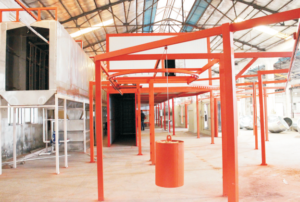
The oven you choose should match your production volume, workpiece size and material, space constraints, and quality requirements.
Key questions to answer first:
-
What is your target production volume? (parts per hour)
- < 10 parts/hour: Box or small bridge oven
- 10–50 parts/hour: Bridge or small tunnel oven
- 50–200+ parts/hour: Full-size tunnel oven
-
What are your workpiece dimensions and weight?
- Largest part length, width, height (oven chamber must accommodate this)
- Heaviest part (affects conveyor load rating)
- Thermal mass (heavy parts need longer heating time)
-
What space do you have?
- Tunnel ovens require long, straight runs (minimum 5–8 meters typically)
- Bridge ovens are more compact but more complex mechanically
- Box ovens are smallest but slowest
-
What material composition?
- Aluminum heats quickly; steel heats slower
- Stainless steel has poor thermal conductivity; needs longer cure time
- Composite substrates may have temperature limits (can't exceed certain temperatures or substrate will degrade)
-
What are your coating specifications?
- Which powder formulations? (Get datasheet for cure parameters)
- What hardness and adhesion targets?
- What gloss level?
From our experience with cabinet, furniture, and aluminum customers:
- Cabinet manufacturers typically choose tunnel ovens (continuous output, consistent quality) or bridge ovens (flexibility for different cabinet types)
- Furniture makers often use tunnel ovens for high-volume standard products, box ovens for custom batches
- Aluminum profile extrusion lines require tunnel ovens with precise temperature control and extended length to accommodate the slow heating of large profiles
- Job shops and prototype facilities benefit from box ovens because they can adjust cure cycles per job without line redesign
Energy and cost consideration:
Gas-fired tunnel ovens have the lowest operating cost per part for high-volume production. Electric ovens are more efficient for low-volume or variable production. Bridge ovens offer a cost-effective middle ground for medium-volume mixed production.
Red flags when evaluating a used or refurbished oven:
- Door seals that are cracked or missing
- Visible rust or corrosion on internal surfaces (indicates previous overheating or moisture damage)
- Recirculation fan that's noisy or doesn't spin freely
- Heating elements that are visibly damaged or coated with buildup
- Temperature controller that doesn't hold set temperature (drifts by > ±5°C)
More Related Questions
How often should I maintain my powder coating oven?
We recommend monthly inspection of fans and ducts, quarterly cleaning of oven internals, and annual professional service including calibration of temperature sensors and inspection of seals and insulation.
Can I use the same oven for different powder types?
Yes, but you need to adjust temperature and time parameters for each powder's cure schedule. Keep a logbook of settings for each powder type to ensure consistency.
How long does a powder oven typically last?
With proper maintenance, 15–25 years. The most common failure points are recirculation fans (typically 10–15 years), heating elements (10–20 years depending on type), and door seals (5–10 years).
What's the difference between oven temperature and actual part surface temperature?
They often differ by 5–15°C. Use thermal imaging or surface temperature probes to verify that your actual workpieces are reaching the target temperature, especially for the first time you run a new part geometry.
Conclusion
The powder coating oven is where spray quality becomes coating durability. Without proper oven design, maintenance, and parameter control, even perfect pre-treatment and flawless spray application can fail. The most successful powder coating operations treat the oven as a precision instrument, not a commodity box. They invest in temperature monitoring, regular maintenance, and disciplined cure schedule documentation. If your line is experiencing inconsistent gloss, color variation, or adhesion issues, the oven is often the first place to investigate. Understanding how your oven works—and what each component contributes to the final result—is essential to achieving the stable, high-quality coating your customers expect.
If you're evaluating your current powder coating setup or planning a new line, we're here to help assess whether your oven is properly sized, configured, and maintained for your application. Contact us to discuss your specific production requirements and how we can optimize your entire coating system—not just the oven, but the pre-treatment, spray booth, and material handling that all work together.
 English
  German
  Vietnamese
  French