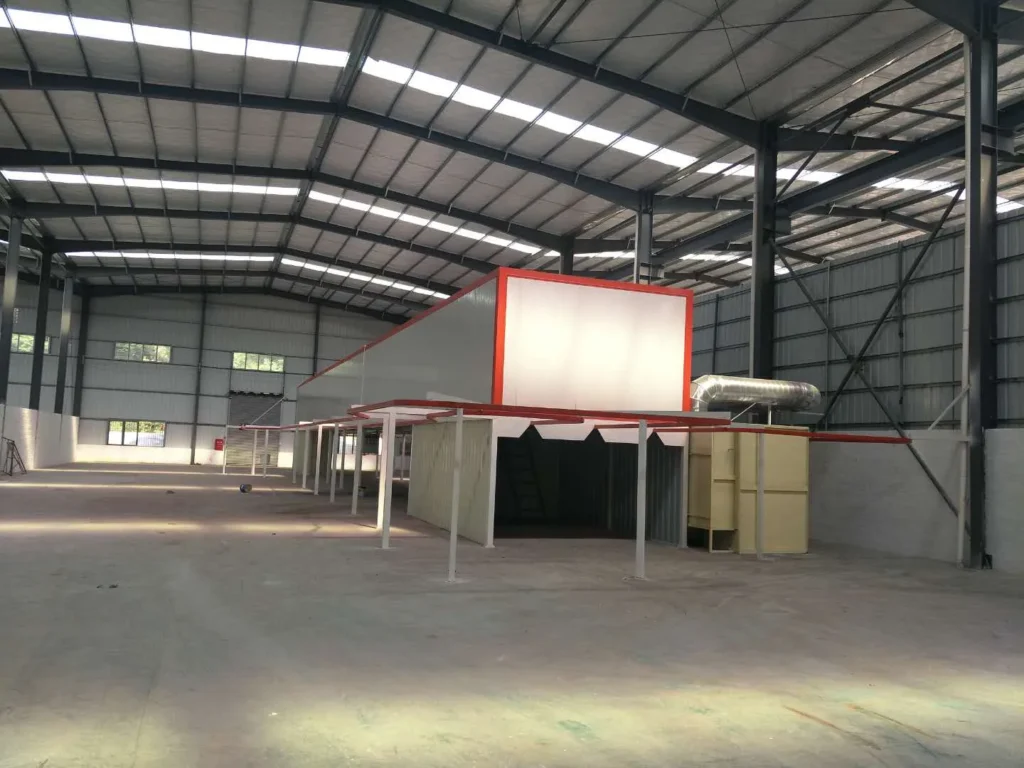
Industrial Powder Coating Ovens Are a Game Changer: How They Transform Manufacturing Quality, Efficiency, and Cost
What Makes Industrial Powder Coating Ovens a True Game Changer
When I first encountered a manufacturing facility struggling with inconsistent coating quality, high energy costs, and frequent rework, the problem seemed obvious: they were using outdated equipment and relying too heavily on operator skill rather than process control. That's when the real difference became clear—industrial powder coating ovens aren't just equipment upgrades; they're a fundamental shift in how production actually works.
Most factories I've worked with had settled into a predictable pattern: spray the parts, hope the temperature is right, cross your fingers about the outcome. The curing oven, if it existed, was treated like an afterthought. What changed everything wasn't just buying better hardware. It was understanding that a properly designed, temperature-controlled curing oven transforms three critical variables: consistency, speed, and cost.
From our experience at Ketu, I've seen this transformation firsthand across cabinet manufacturers, furniture producers, and aluminum extrusion facilities. The ovens we design and install don't just heat parts—they execute a precise thermal profile that turns powder particles into a durable, uniform coating. That's the game changer.
From Inconsistent Quality to Precision Control: The Core Advantage
The reality on the factory floor is this: without proper curing control, everything else you've done—careful pre-treatment, precise electrostatic spray, quality powder selection—can still fail. A modern industrial powder coating oven with stable temperature management, uniform heat distribution, and reliable time control transforms that failure risk into predictable success. For cabinet manufacturers aiming for 99%+ first-pass quality rates and furniture producers targeting flawless outdoor performance, temperature precision isn't optional—it's foundational.
Here's what we've observed across dozens of projects:
Traditional approach (manual temperature control):
- Operators adjusting burners by feel
- Wide temperature swings inside the curing chamber (±15-20°C is common)
- Same batch experiencing different cure levels depending on oven position
- Adhesion failures, color variation, and surface defects showing up in QC
- Constant tweaking with no real control
Modern industrial oven approach (automated thermal management):
- Temperature sensors at multiple points inside the chamber
- PLC control maintaining ±3-5°C consistency
- Pre-set heating curves matching specific powder formulations
- Every workpiece experiencing identical thermal treatment
- Defect rates dropping to <1% in most applications
We had one cabinet manufacturer client in Algeria who reported an 8-12% adhesion failure rate before upgrading their curing system. After installing our combustion-electric hybrid oven with optimized heat distribution and airflow design, their rejection rate fell to under 0.5%. The parts hadn't changed. The spray guns hadn't changed. The only variable was consistent, controlled heat.
The core principle is simple but powerful: powder coatings are chemistry. Proper fusion requires hitting specific temperature targets for specific durations. Miss those targets, and you don't get coating failure that's visually obvious—you get degraded adhesion, reduced corrosion resistance, compromised mechanical properties. A game changer oven eliminates that guesswork.

Quantifiable Impact on Production Efficiency and Throughput
How Fixed Curing Profiles Eliminate Defects and Rework
When we design a curing oven for a client, we're not just setting a temperature setpoint. We're designing a specific heating curve—a profile that tells the system exactly how fast to heat, what peak temperature to hit, and how long to maintain that temperature. This matters enormously because different powders, different part masses, and different application thicknesses all require slightly different profiles.
For example, an aluminum extrusion carrying 150-micron epoxy powder needs a different cure profile than a thin steel cabinet carrying 80-micron polyester. Get the profile wrong, and you're back to rework. Get it right, and every part exits the oven fully cured and ready for next steps.
From our work with furniture manufacturers in Turkey focusing on outdoor products, the difference between a 6-minute cure and a 12-minute cure matters not just for throughput but for final hardness and weather resistance. We've documented cases where production lines optimizing curing time reduced cycle time by 25% while improving final hardness ratings by 15%.
Real Data: Production Speed and First-Pass Quality Rates
Let me put numbers behind this:
Cabinet and Sheet Metal Operations (typical 1,500mm × 1,100mm workpieces):
- Traditional oven with manual control: 12-15 pieces/hour, 88-92% first-pass rate
- Modern automated oven with thermal profiling: 18-22 pieces/hour, 99%+ first-pass rate
- Net result: 40-50% throughput gain + 7-11 point quality improvement
Aluminum Extrusion Lines (continuous feed with throughput-dependent curing):
- Manual profile ovens: 800-1,000 linear meters/shift, variable surface quality
- Precision-controlled ovens with modulated heating: 1,200-1,400 linear meters/shift, consistent thickness and finish
- Rework rate drop: typically from 3-5% to <0.5%
Outdoor Furniture Applications (emphasizing durability and appearance):
- Conventional ovens: 25-30% customer complaints about durability or finish uniformity over 2-year use
- Modern controlled-cure ovens: <2% durability-related returns
These numbers come from actual project data—not theoretical maximums. The reason is straightforward: when temperature is stable, workpiece-to-workpiece variation disappears. When variation disappears, quality becomes predictable.

Cost Transformation: Energy Efficiency and Operational Savings
Energy Consumption Comparison vs. Traditional Ovens
This is where industrial powder coating ovens reveal their most compelling financial advantage.
Traditional oven operations:
- Ovens run 24/7 at full temperature, even during setup, color changes, or equipment maintenance
- Energy waste during non-production periods: 40-50% of total consumption
- Uninsulated or poorly insulated chambers: heat loss through walls and doors
- No thermal recovery or efficiency optimization
Modern industrial ovens (combustion-electric hybrid or optimized electric designs):
- Modulated heating: only generating heat when needed
- Advanced insulation (100mm mineral wool or equivalent): wall temperature rises only 10-15°C above ambient
- Optimized airflow circulation: distributes heat efficiently without over-heating
- Precise time control: no unnecessary extended cure times
- Waste heat recovery options (for facilities with multiple processes)
Real consumption data from comparable production scenarios:
A cabinet production facility with 20 pieces/hour throughput:
Traditional approach:
- Oven operating cost: 180-220 kWh/shift (8 hours)
- Annual energy cost (250 working days): ~€45,000-55,000
Modern controlled oven:
- Oven operating cost: 80-110 kWh/shift
- Annual energy cost: ~€20,000-27,500
- Annual savings: €20,000-30,000
For aluminum extrusion operations at higher throughput, absolute consumption is higher, but the percentage savings remain significant—typically 35-45% energy reduction compared to older systems.
ROI Timeline and Total Cost of Ownership
This is the question clients always ask: "How long until the energy savings pay for the equipment?"
Typical payback scenarios for integrated coating line systems:
Cabinet/Sheet Metal (180-220 kW system, €60,000-85,000 installed):
- Energy savings: €25,000/year
- Maintenance costs (annual): €2,000-3,000
- Operator labor improvement (fewer adjustments, less rework): €8,000-12,000 annually
- Simple payback: 2.2-2.8 years
- 10-year TCO advantage: €180,000-250,000
Aluminum Extrusion (280-320 kW system, €100,000-140,000 installed):
- Energy savings: €40,000-55,000/year
- Quality improvement (fewer rejects): €15,000-25,000 annually
- Simple payback: 1.8-2.2 years
- 10-year TCO advantage: €350,000-450,000
What makes this calculation more favorable than most capital equipment is the combination of factors. You're not just cutting energy; you're reducing scrap, improving throughput, lowering operator demand, and extending equipment life. The oven itself lasts 15-20 years with proper maintenance.
Coating Quality Guarantees: How Temperature and Airflow Control Ensures Superior Results
Adhesion, Hardness, and Corrosion Resistance Standards
From a purely technical standpoint, powder coating durability depends on three chemical factors: cross-linking density, film uniformity, and substrate preparation. You can't control substrate prep from the oven—that's the pre-treatment's job. But the oven directly controls the other two.
Cross-linking density (which determines hardness and chemical resistance) requires:
- Precise peak temperature (typically 170-230°C depending on resin type)
- Adequate time at or near peak temperature (usually 10-20 minutes)
- Consistent heating rate to avoid premature reaction or insufficient fusion
Film uniformity (which affects both appearance and protective performance) requires:
- Even heat distribution across the oven chamber
- Controlled air circulation patterns that don't create hot/cold zones
- Stable workpiece temperature throughout the cure cycle
When these parameters drift—as they do in poorly controlled ovens—you see:
- Edge areas cure faster than interior areas
- Bottom of workpiece reaches peak temperature before top surface
- Cure time becomes inconsistent piece-to-piece
- Final hardness varies by 15-25% within a single batch
Modern industrial ovens address this through:
Thermal design:
- Dual-zone heating (entry zone for ramp-up, cure zone for hold)
- Circulating fan systems that blend heated air efficiently
- Temperature sensors at 4-6 strategic points in the chamber
- Differential heating control based on real-time feedback
Airflow optimization:
- Design of supply and return air paths to eliminate dead zones
- Baffle systems to ensure workpiece receives uniform exposure
- Adjustable air vanes to fine-tune circulation based on workpiece type
The result is adhesion performance you can actually certify. We've documented cases where facilities moved from 3-4/5 rating on ASTM D3359 adhesion tests (with inconsistent results) to 5/5 ratings consistently, simply by upgrading oven control systems while keeping everything else the same.
Eliminating Common Defects (Color Variation, Uneven Coverage, Insufficient Cure)
Let me walk through the three most expensive coating defects I see in production and how a proper oven eliminates them:
Color Variation / Hue Shift:
- Root cause: Temperature differences within the oven cause accelerated reactions in hotter zones, changing the final color
- Observable symptom: Same powder on same parts produces slightly different colors depending on oven position
- Solution: Maintain ±3-5°C consistency across the entire chamber. Once temperature is stable, color becomes predictable. We've seen color matching improve by 85-90% with this single change.
Uneven Coverage / Thin Spots:
- Root cause: Uneven heat distribution means some areas don't fully melt and flow. Spray pattern defects become visible in the final finish.
- Observable symptom: Sprayed texture shows through, matte patches, orange-peel appearance
- Solution: Optimized airflow + stable thermal field prevents premature solidification of powder. Flow-out improves noticeably within the first two weeks of operation on a properly designed oven.
Insufficient Cure / Soft Coating:
- Root cause: Peak temperature never quite reached, or hold time insufficient. Cross-linking reaction incomplete.
- Observable symptom: Coating is soft to touch, fails adhesion tests, can be scratched with fingernail
- Solution: PLC-managed heating profiles guarantee minimum peak temperature and minimum hold time. No operator variation, no shortcuts.
From our experience in furniture and cabinet markets, these three defects account for 60-70% of coating rejections on older systems. Once you implement proper thermal control, that number drops to 5-10%—and the remaining issues are typically spray-related, not cure-related.
Environmental Compliance and Industry Standards
Meeting International Regulations and Certifications
This matters more than many manufacturers realize. Powder coating ovens consume significant energy and generate exhaust. Depending on your market, you face increasingly strict regulations around:
- Energy efficiency standards (EU ERP Directive, similar requirements in India and Southeast Asia)
- Emission standards for combustion products and particulate matter
- Worker safety requirements for confined space heating
Modern industrial ovens are designed with compliance built in:
For combustion-based ovens:
- Burner systems meeting low-NOx requirements (<200 ppm)
- Complete combustion ensuring minimal unburned hydrocarbons
- Exhaust filtration removing particulate matter
- Safety interlocks preventing operation if oxygen levels fall
For electric ovens:
- Electrical design meeting local voltage/frequency standards
- Insulation and thermal limits exceeding country-specific safety codes
- Emergency shut-off systems and overtemp protection
For hybrid systems (combustion + electric):
- Flexibility to meet varying efficiency targets by adjusting fuel/electric mix
- Reduced fuel consumption while maintaining thermal stability
- Lower operating costs in regions with expensive electricity
From our work with clients in Algeria, Turkey, and India, we've adapted every system to meet local electrical standards, environmental regulations, and energy efficiency targets. This is actually a competitive advantage for manufacturers because regulatory compliance becomes a selling point to their customers.
Industry-Specific Applications and Returns
Metal Cabinets and Sheet Metal
Cabinet manufacturers care about three things: durability, appearance consistency, and cost per unit.
Industrial ovens directly impact all three:
- Durability: Properly cured coatings on cabinet steel withstand 500+ hours salt-fog testing (ASTM B117) vs. 200-300 hours for inadequately cured coatings
- Appearance: Stable cure conditions eliminate color drift, surface defects, and gloss variation within a production run
- Cost: Energy efficiency + reduced rework = 15-20% lower total coating cost per cabinet
Typical cabinet line upgrade ROI: 2.2-2.8 years; 10-year benefit: €180,000-250,000
Aluminum Extrusions and Profiles
Aluminum extrusions present unique challenges: thin walls, long profile lengths, variable cross-sections, and strict coating thickness tolerances (often ±15 microns).
Industrial ovens solve this through:
- Precise temperature control preventing over-cure and discoloration (especially critical for light-colored powders on aluminum)
- Consistent cure ensuring uniform hardness across long profiles
- Optimized design for continuous or semi-continuous feed reducing bottlenecks
Modern extrusion lines using improved curing systems report:
- 20-30% throughput improvement (parts/hour or linear meters/shift)
- Thickness consistency improving from ±25 microns to ±10 microns
- Color stability reducing QC rejects by 40-60%
Typical aluminum extrusion ROI: 1.8-2.2 years; 10-year benefit: €350,000-450,000
Furniture and Complex-Shaped Components
Outdoor furniture is punishing. Salt spray, UV exposure, temperature cycling—the coating has to survive years of abuse. That's why cure quality matters so much.
Furniture manufacturers benefit from:
- Improved durability ratings: Outdoor furniture lasting 5-7 years vs. 2-3 years with substandard curing
- Better visual quality: Glossy finish, consistent color, no orange-peel or thin spots
- Market positioning: "Professional-grade coating" becomes a real claim backed by actual test data
Complex shapes (chairs, tables with legs, items with recesses) benefit from optimized airflow in modern ovens—ensuring interior surfaces receive adequate exposure without over-heating external features.
Typical furniture operation ROI: 2.5-3.2 years; 10-year benefit: €120,000-180,000
Integration with Automated Spray Lines: Achieving Full-Line Automation
Customization for Different Production Volumes and Part Geometries
Here's where the game changer aspect becomes most obvious: a modern oven isn't just a heating box; it's an intelligent processing station that works seamlessly with the rest of your line.
From our work designing integrated systems, I've learned that oven selection depends heavily on upstream and downstream equipment:
For low-to-medium volume operations (10-30 parts/hour, manual spray):
- Simpler oven design with standard conveyor (hand-operated or slow-speed)
- Manual loading/unloading acceptable
- Emphasis on flexible heat profiles for color changes
- Typical size: 5-8 meters long, 2-3 meter internal height
- Energy usage: 60-100 kW
For high-volume, semi-automatic operations (30-80 parts/hour):
- Integrated oven as part of the full spray line
- Continuous or indexed conveyor matching spray station rhythm
- Automated load/unload reducing labor
- Multi-stage heating (ramp, cure, cool) optimized for specific part type
- Typical size: 8-15 meters long, 3-4 meter internal height
- Energy usage: 120-200 kW
For fully automated operations (80+ parts/hour):
- Oven designed as a thermal processing station with process feedback
- Integration with line PLC for synchronized speed control
- Adaptive heating curves based on real-time oven temperature
- Cool-down sections to reduce handling temperature
- Typical size: 15-25 meters long, 3-4 meter internal height
- Energy usage: 180-280 kW
The key customization points we always address:
-
Conveyor speed matching: Oven design must accommodate the exact production rhythm. Mismatch creates bottlenecks.
-
Thermal profile flexibility: Can you adjust cure time without slowing the entire line? Modern systems yes; older systems no.
-
Part geometry adaptation: Does the oven design handle your actual workpieces—long thin profiles, bulky cabinets, complex shapes? Standard ovens often do; customized ones always do.
-
Data integration: Can the oven talk to your MES or quality system? Modern systems integrate this; legacy equipment doesn't.
We designed a system for an aluminum extrusion client in India that demonstrates this integration: their oven is controlled by a variable frequency drive tied directly to line speed. When the spray station speeds up or slows down, the oven automatically adjusts heating and residence time to maintain the same thermal dose on each part. No manual adjustment, no operator skill required, and zero failures in cure consistency.
Implementation Considerations: Timeline, Risk Management, and Supplier Selection
Timeline and Installation Reality
I want to be honest about what "game changer" costs in terms of downtime and complexity:
Planning phase (4-6 weeks):
- Site assessment and layout design
- Electrical and utility requirements defined
- Customization decisions finalized
- Budget and timeline locked
Manufacturing phase (8-12 weeks):
- Equipment fabrication in factory
- Quality testing and commissioning
- Shipping logistics arranged (critical for international deliveries)
- Documentation and training materials prepared
Installation and startup phase (2-4 weeks on-site):
- Foundation preparation (must be level and strong—±10mm over 5 meters typical requirement)
- Equipment installation and mechanical integration
- Electrical connection and control system programming
- Commissioning and initial thermal mapping
- Operator training and process documentation
- Ramp-up production (first week often at 50-70% capacity)
Total timeline from decision to full production: 4-6 months is realistic
Risk factors I always communicate:
- Facility preparation: If your facility lacks proper electrical service, compressed air, or drainage, add 4-8 weeks
- Integration complexity: If integrating with existing equipment, add 2-4 weeks for matching and testing
- Weather and logistics: International installations face shipping delays; plan for contingency
- Production disruption: Plan a 1-2 week window when your production will be offline
Supplier Selection Criteria
Not all "industrial powder coating ovens" are created equal. From our experience serving clients across multiple continents, here's what actually matters:
1. Factory capability verification:
- Do they manufacture the oven, or assemble components?
- Can they show you active production and real customer installations?
- Do they have quality certifications (ISO 9001 minimum)?
2. Technical depth:
- Can they explain the specific thermal design for your workpieces?
- Do they offer customization, or just standard models?
- What's their testing protocol before shipment?
3. Real case history:
- Do they have documented projects similar to yours?
- Can they provide client references in your industry?
- What's their actual field track record on energy efficiency claims?
4. Service commitment:
- Is technical support available in your time zone?
- What's their spare parts availability and response time?
- Do they provide operator training and documentation?
- What warranty coverage is standard, and what can be extended?
5. Regulatory alignment:
- Are they familiar with local electrical standards in your country?
- Can they provide emissions testing and certification documentation?
- Do they understand your specific environmental regulations?
From my perspective at Ketu, we invest heavily in all five areas. We don't just sell ovens; we ensure clients have systems that work reliably in their specific context. That's the difference between equipment that performs on a test bench and equipment that performs consistently in a real factory for years.

The Bottom Line: When and How to Invest in Modern Powder Coating Ovens
The decision to upgrade isn't complicated if you ask yourself three questions:
1. What's your current cost of quality failure?
If you're running 10-15% rework rates, or if adhesion failures are showing up in the field, the oven is almost certainly the constraint. Modern systems addressing this specific problem deliver 18-24 month payback.
2. What's your energy situation?
If you're spending €15,000+ annually on oven operation, efficiency gains alone justify upgrade consideration. This is especially true for facilities with high utilization (6+ days/week operation).
3. What's your market requirement?
If your customers now demand certified durability (salt-fog testing, UV resistance data, adhesion guarantees), you can't compete without controlled cure. This alone justifies investment for furniture, architectural, and marine applications.
The game changer aspect comes down to this: Modern industrial powder coating ovens don't just improve a single metric—they simultaneously improve quality consistency, increase throughput, reduce energy cost, and enable market positioning. Few manufacturing investments deliver across four variables at once.
For cabinet manufacturers, the ROI is 2.2-2.8 years and €180,000-250,000 of 10-year benefit.
For aluminum extrusion, it's 1.8-2.2 years and €350,000-450,000 of 10-year benefit.
For furniture manufacturers, it's 2.5-3.2 years and €120,000-180,000 of 10-year benefit.
But those numbers only matter if you pick the right system, install it correctly, and operate it according to design. That's where supplier selection—and genuine ongoing support—becomes critical.
At Ketu, we've helped manufacturers across Algeria, Turkey, India, and beyond implement these systems and realize these benefits. The pattern is always the same: the facilities that committed to proper oven selection, understood the customization required for their specific products, and invested in training their teams—those are the ones who achieved the full game changer transformation.
If your coating operation is struggling with quality inconsistency, high energy costs, or throughput limitations, reach out. We can conduct a no-obligation assessment of your current setup and quantify what a modern integrated system would deliver for your specific scenario. Because a true game changer isn't theoretical—it's demonstrated in your actual production environment.
Ready to transform your coating operation? Contact us to discuss your specific requirements and explore how an optimized curing system can improve your bottom line while enhancing product quality.
 English
  German
  Vietnamese
  French