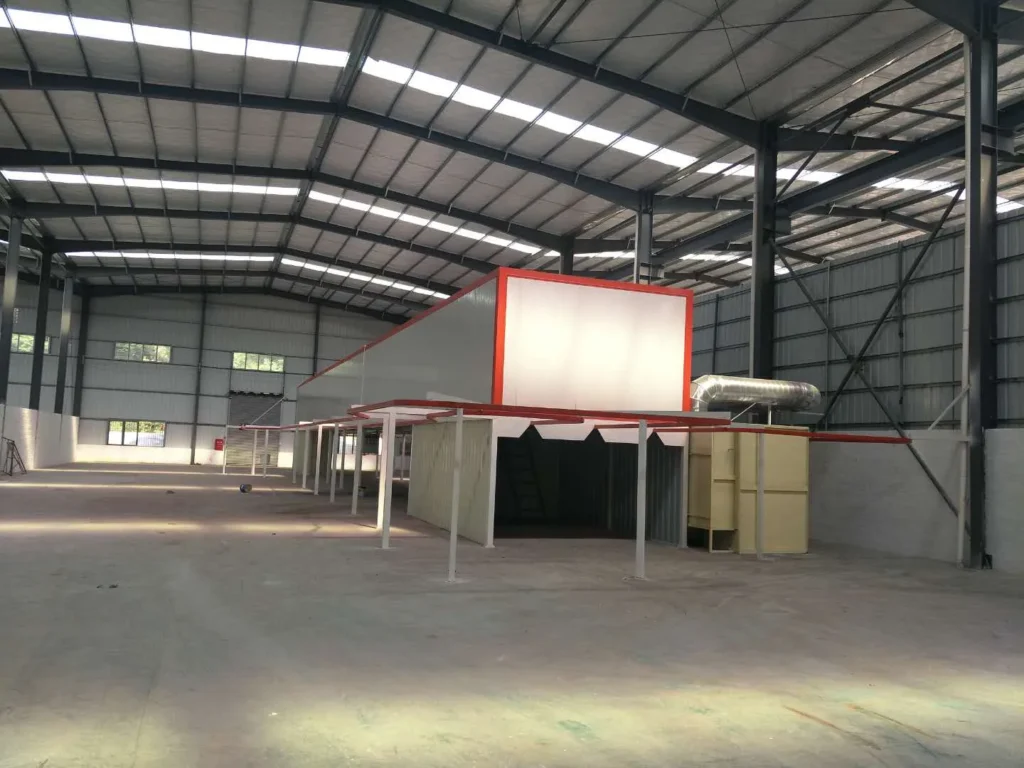
How Many Equipment Are Involved in a Powder Coating Line? A Complete System Guide
When we're asked to design a powder coating production line, one of the first questions clients ask is: "How many pieces of equipment will I actually need?" It's a fair question, but the answer is more nuanced than a simple number. Based on our years of experience building and installing electrostatic powder coating lines for manufacturers in cabinet making, outdoor furniture, and aluminum profile processing, I can tell you this: a functional line isn't just a collection of standalone machines—it's an integrated system where every component must work in precise coordination.
Let me break down what a realistic, production-ready powder coating line actually consists of, and more importantly, why understanding this matters for your purchasing decision and long-term operational success.
What Is a Powder Coating Production Line and Why Does Equipment Count Matter?
A powder coating line isn't something you can just assemble from random components. Every stage—from the moment a workpiece enters until it leaves as a finished product—depends on the equipment before it and affects the equipment after it.
Here's what I've learned from our projects: counting equipment by individual machines misses the point entirely. What really matters is whether your line is configured to handle your specific products, volumes, and quality standards. I've seen factories invest in expensive equipment only to discover their layout creates bottlenecks, or their pre-treatment system wasn't calibrated for their material type.
The real question isn't "how many machines?" but rather "which subsystems do I need, and how should they be sized and sequenced for my operation?"
This is why we always start with your product specifications, not with a standard template.
The 6-8 Major Equipment Subsystems in a Complete Powder Coating Line
A typical electrostatic powder coating production line integrates between 6 and 8 major equipment subsystems. The exact number depends on your automation level, production volume, and quality requirements. Let me walk through each one:
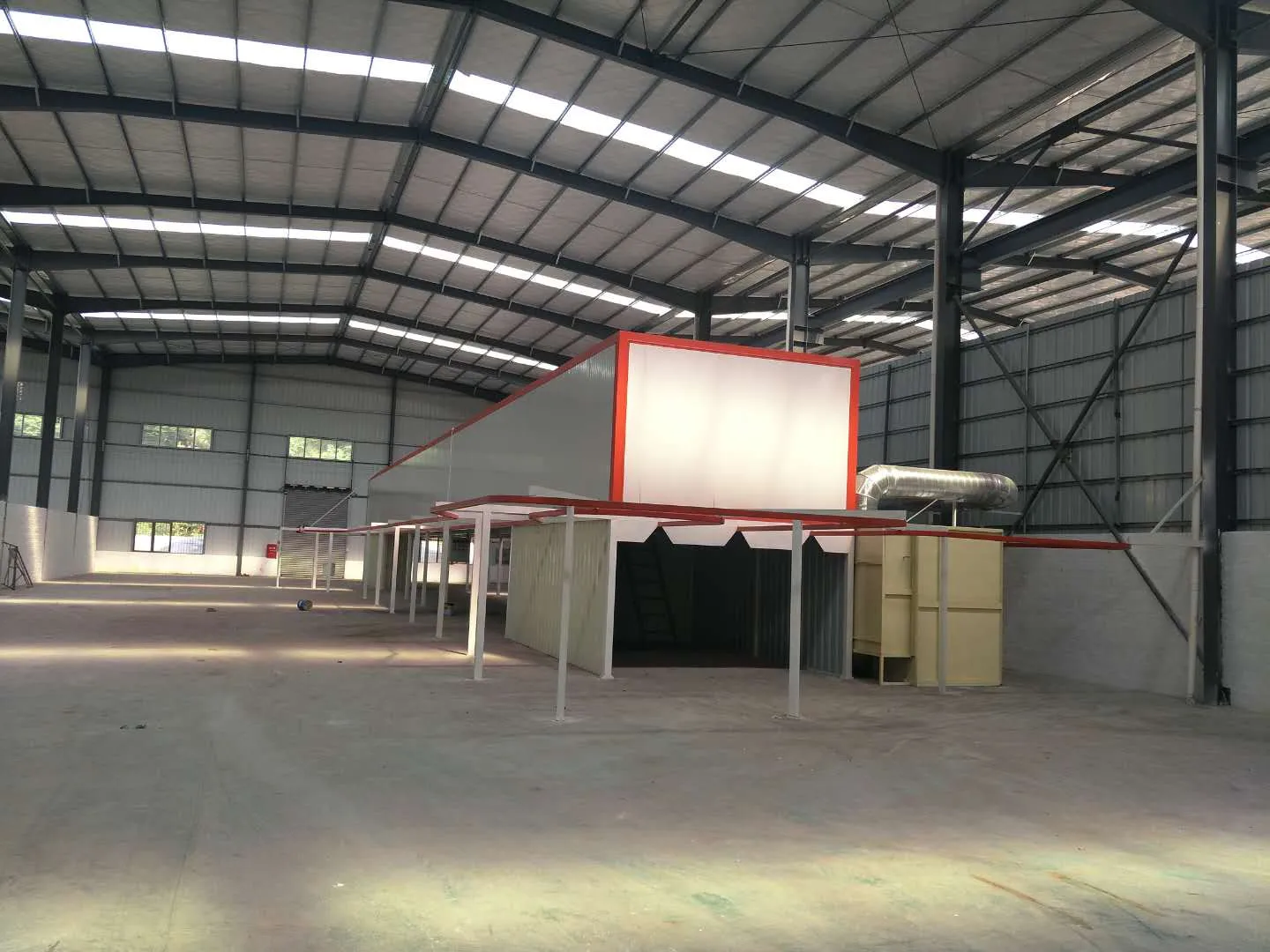
| Equipment Subsystem | Primary Function | Typical Status | Notes |
|---|---|---|---|
| Pre-treatment System | Surface cleaning, oil removal, rust removal, conversion coating | Essential | Non-negotiable; determines coating durability |
| Drying Chamber | Moisture removal before spray | Essential | Critical for adhesion quality |
| Electrostatic Spray Booth | Powder application via static charge | Essential | Core process; system quality directly affects finish |
| Powder Recovery System | Cyclone separation + secondary recovery | Essential | 90%+ powder recovery saves costs significantly |
| Curing Oven | Heat-based coating polymerization | Essential | Determines final mechanical properties |
| Conveyor System | Workpiece transport through all stages | Essential | Speed synchronization critical to quality |
| Electrical Control System | Temperature, speed, spray parameters | Essential | Consistency depends on control precision |
| Powder Supply Center | Metering, distribution, color change | Optional but recommended | Essential for efficiency if handling multiple colors |
Pre-Treatment System: Preparing Workpieces for Coating
What equipment does pre-treatment include?
Pre-treatment is where coating quality actually begins, though many buyers underestimate its importance. A typical pre-treatment system includes:
- Degreasing tanks (chemical or alkaline treatment to remove oils and cutting fluids)
- Rinsing stages (removing all chemical residues)
- Surface treatment (phosphating for steel, chromium-free conversion for aluminum)
- Final rinsing and drying (ensuring no chemical or salt deposits remain)
The complexity depends on your material and contamination level. For steel cabinets and metal furniture, we typically recommend a 5-7 stage process: degrease → rinse → etch (if needed) → phosphate → rinse → pure water rinse → air dry.
For aluminum profiles, you might use a gentler 4-5 stage approach with conversion coating instead of phosphating, to avoid surface damage.
Why pre-treatment quality directly impacts final coating performance
I need to be direct here: approximately 40% of the coating failures we see in the field trace back to inadequate pre-treatment. Clients sometimes think they can skip a stage or use cheaper chemistry to save costs upfront. What actually happens is higher rework rates, customer complaints about adhesion, and corrosion creeping under the coating within months.
When a workpiece still has oil, rust, or mineral deposits when it reaches the spray booth:
- Powder won't adhere uniformly (it literally repels from contaminated areas)
- You get adhesion failures and peeling
- Corrosion protection is compromised because the coating isn't continuous
- Your coating looks acceptable initially but fails in field testing
The long-term cost of poor pre-treatment—in rework, customer returns, and reputation damage—always exceeds the small savings from cutting corners here.
Drying and Powder Spray Application: From Surface Prep to Electrostatic Coating
Drying chamber: Why separate drying is essential
After pre-treatment, moisture on the workpiece surface is your enemy. Even small amounts of water will create defects during spray and curing.
A dedicated drying chamber (typically heated to 60–80°C with controlled air circulation) serves critical purposes:
- Evaporates residual water from the pre-treatment process
- Ensures uniform surface temperature so powder adheres consistently
- Prevents "fish-eye" defects (water creates small crater-like spots in the powder)
- Improves powder transfer efficiency (dry surfaces accept powder more readily)
Trying to skip the drying stage to speed up production typically backfires. Yes, you move faster, but defect rates spike—pinholes, cratering, poor adhesion—and you end up spending more time on rework.
Electrostatic spray booth: Components and design considerations
The spray booth is where the actual powder application happens. Here's what's actually inside:
- Booth enclosure (rock wool-insulated walls, typically 50mm thickness, designed to contain powder and manage airflow)
- Electrostatic spray guns (2–6 guns depending on workpiece size; we typically recommend one gun per 1–1.5 meters of workpiece length)
- High-voltage power supply (60–90 kV charging voltage; too high causes back-ionization, too low means poor transfer)
- Powder supply system (hopper, pump, distribution manifold, feed lines)
- Ventilation and extraction (removing excess powder and maintaining negative pressure)
- Lighting and operator workspace (safe, visible work environment)
From our factory experience, I can tell you the spray booth design requires balancing three competing demands:
1) Spray Efficiency — You want powder landing on the workpiece, not wasted in the air.
2) Powder Recovery — Unspent powder should be captured and reusable (90%+ recovery is standard; anything below 85% indicates design problems).
3) Color Change Speed — If you're switching colors, you need to purge the old powder quickly without excessive downtime.
Most clients only think about #1. But in real production, #2 and #3 affect your profitability as much as spray quality does.
Powder Recovery and Environmental Control: Reducing Waste and Compliance
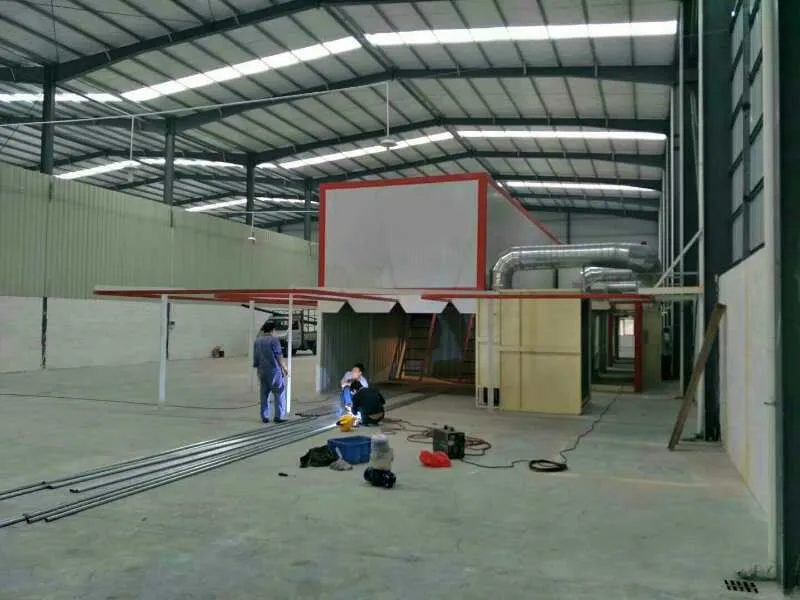
How cyclone separators and secondary recovery cabinets work
Not all powder you spray lands on the workpiece. Depending on your spray parameters, transfer efficiency is typically 70–85%. The remaining powder becomes waste—or opportunity, if you have a recovery system.
A cyclone separator works by centrifugal force: air containing powder enters tangentially, creates a spiral motion, and heavier powder particles are thrown outward by inertia, falling to a collection bin. Clean air exits the top. Simple physics, but effective.
A secondary recovery cabinet (with filter cartridges and pulse-jet backflushing) captures even finer powder particles that the cyclone missed. Together, these two stages can recover 90%+ of your overspray.
Why this matters operationally:
- Cost savings: Recovered powder can be reused (ideally with <5% contamination). If you're spraying 500 kg of powder daily at $8/kg, poor recovery costs you $1,600/day in waste.
- Environmental compliance: Most jurisdictions now limit powder discharge to air. Without recovery, you're either buying expensive air filtration or facing regulatory fines.
- Color change efficiency: A secondary cabinet with good filtration lets you change colors faster with less contamination between batches.
Cost savings and sustainability benefits of recovery systems
We had a client in India processing aluminum profiles—high volume, tight tolerances. Their old setup had no secondary recovery. We added a cartridge filter system. Within three months, they'd reduced powder consumption by 18% and cut their color-change downtime from 45 minutes to 15 minutes.
The payback on a good recovery system is typically 6–12 months, after which it's pure savings.
Curing System: Heat Sources and Temperature Management
Convection ovens vs. infrared systems
After powder is applied, it must be heated to melt, flow, and cure. This is where chemistry happens—the resin and hardener cross-link, forming the durable coating.
Convection Ovens (hot air circulation):
- Heat the entire workpiece uniformly via circulating heated air
- Typical temperature: 170–220°C for 10–20 minutes (varies by powder chemistry)
- Cost-effective for most applications
- Require good insulation and thermal uniformity
Infrared Systems (radiant heat):
- Direct radiant energy, faster initial heating
- Better for temperature-sensitive materials or thick workpieces
- Higher energy cost but faster throughput
- Risk of uneven curing if design is poor
For most clients—cabinets, furniture frames, structural parts—convection ovens are the right choice. Infrared makes sense if you're handling very thick sections or high throughput where every second counts.
Selecting the right curing temperature and residence time
Here's something crucial: the critical temperature isn't the oven air temperature; it's the workpiece surface temperature.
If your oven is set to 200°C but your steel workpiece only reaches 180°C during its transit, the powder won't fully cure. You'll get poor hardness, chemical resistance fails, and adhesion suffers.
This is why we always recommend:
- Validate with thermocouples: Measure actual workpiece temperature during production, not just oven setpoint.
- Account for workpiece mass: Heavier parts need longer dwell time.
- Test your powder: Each powder chemistry has a specific cure schedule. Follow the supplier's data sheet exactly.
- Build in safety margin: If the spec says 15 minutes at 200°C, run 16–17 minutes. Under-curing is worse than over-curing.
Material Handling and Automation: Conveyors and Process Control
Types of conveyor systems (chain, roller, monorail)
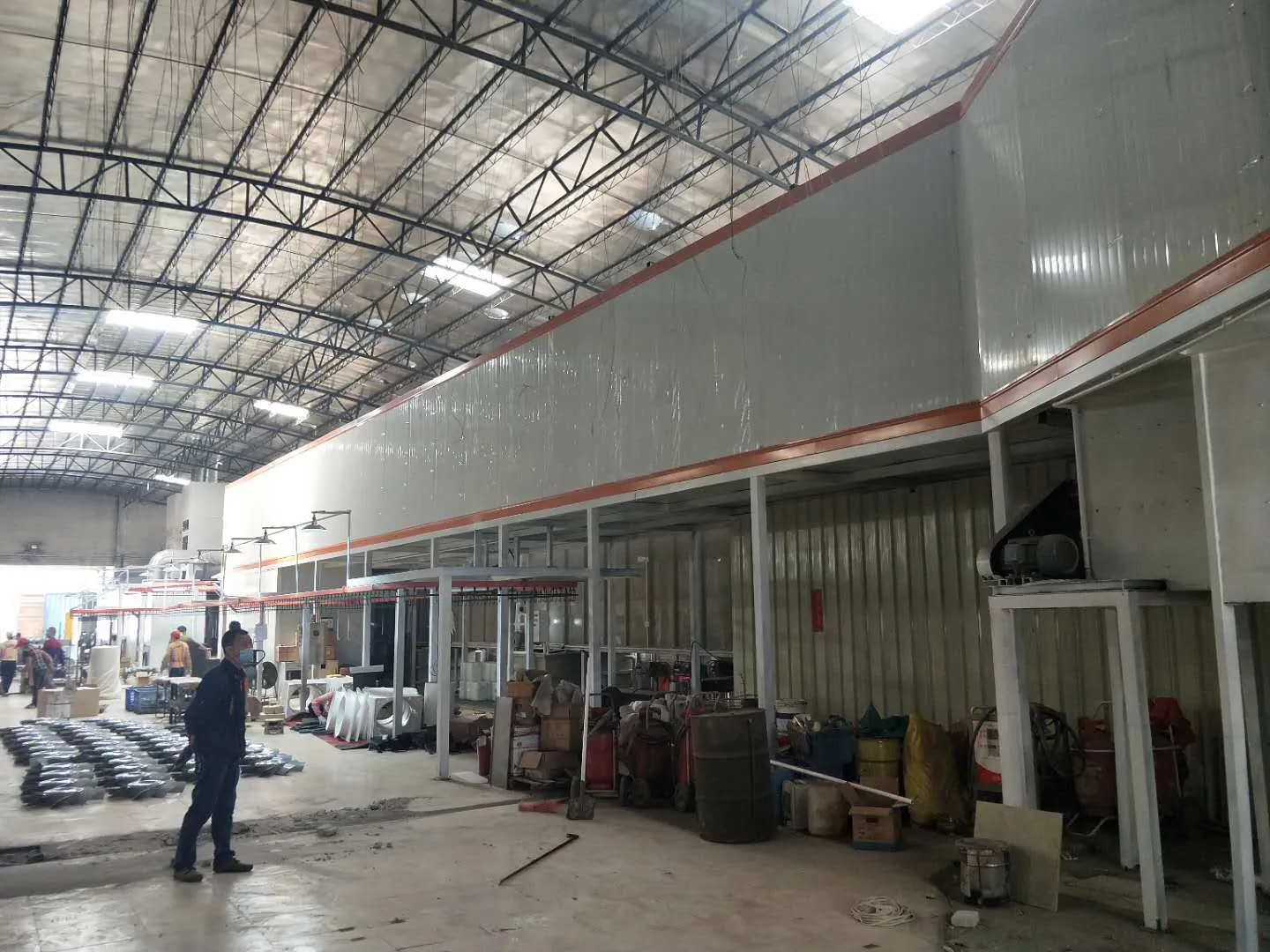
The conveyor is your line's "skeleton." It has to move workpieces at a consistent speed through every stage while maintaining proper spacing and orientation.
Chain Conveyors (most common for powder coating):
- Suspended chain with workpiece hangers
- Flexible for varying workpiece shapes
- Can carry heavy loads
- Requires regular lubrication and maintenance
Roller Conveyors (horizontal surfaces):
- Used for lighter, smaller parts
- Lower maintenance than chain
- Less flexible for complex shapes
Monorail Systems (overhead point-to-point):
- High space efficiency
- Good for automated lines
- Higher capital cost
The choice depends on your workpiece weight, size variation, and space constraints. For cabinet bodies and furniture frames (our typical clients), suspended chain conveyors are standard.
Critical detail: Your line speed must be synchronized across all stages. If the spray booth is running at 5 meters/minute but your oven can only handle 4 m/min, you create bottlenecks. Parts crowd the oven entrance, incomplete curing, quality issues.
How automation level affects production speed and labor costs
Manual operation (operator sprays by hand):
- Lower equipment cost
- Flexible for one-off jobs
- Limited speed, typically 8–15 parts/hour
- Labor-intensive, quality inconsistent
Semi-automatic (fixed spray stations, operator manually positions workpiece):
- Better consistency than manual
- 15–30 parts/hour typical
- Still labor-dependent
Fully automatic (automated spray guns, coordinated motion):
- 30–60+ parts/hour (depends on part complexity)
- Highly consistent quality
- Much higher capital investment
- Lower labor per part
For most clients starting their first powder coating line, we recommend semi-automatic with high-quality manual spray stations. The cost-to-value ratio is best there. Full automation makes sense when volume exceeds 50 parts/hour and part design is stable.
How These Equipment Subsystems Work Together: The Complete Process Flow
Equipment sequence in a standard coating line
Here's how a typical workpiece travels through a complete line:
| Stage | Equipment | Time | Purpose |
|---|---|---|---|
| 1 | Loading station | 2 min | Operator hangs part on conveyor |
| 2 | Pre-treatment tanks | 8–12 min | Chemical cleaning and conversion |
| 3 | Rinse stages | 4–6 min | Remove chemical residue |
| 4 | Air dry/blow-off | 2–3 min | Remove surface water |
| 5 | Drying oven | 5–8 min | Final moisture removal, temperature stabilization |
| 6 | Spray booth | 3–5 min | Powder application (hand or automated) |
| 7 | Curing oven | 15–20 min | Heat, melt, cure powder |
| 8 | Cool-down | 5–10 min | Cool to safe handling temperature |
| 9 | Unload/inspect | 3–5 min | Remove, inspect, pack |
Total cycle time: Approximately 50–75 minutes from start to finish, depending on part size and your settings.
If you're spraying cabinets at a spacing of 4 meters apart on your conveyor, and your line speed is 3 m/min, you produce one finished cabinet every 1.3 minutes, or roughly 45 per hour at full capacity.
Critical handoff points between subsystems
Pay attention to these transitions—this is where most problems occur:
Pre-treatment → Drying:
If workpieces leave pre-treatment and sit before entering the drying oven, residual moisture will cool and settle. They need to move within 1–2 minutes.
Drying → Spray Booth:
Workpieces should enter the spray booth while still warm (to help powder flow). If they cool completely before spraying, adhesion quality drops.
Spray → Curing:
Once sprayed, parts shouldn't sit in room air longer than 10–15 minutes. Powder can settle unevenly and attract dust. Immediate entry to the oven is ideal.
Curing → Cooling:
Don't remove hot parts from the oven and immediately expose them to shop air—thermal shock can cause micro-cracking. Transition through a cooling zone if possible.
Equipment Configuration Flexibility: Can You Simplify or Customize Your Line?
Which equipment is non-negotiable
If you're going to do powder coating, you cannot skip:
- Pre-treatment — Skip this, your coating fails. No exceptions.
- Drying — Even 1–2 minutes of controlled drying prevents defects.
- Spray booth — You need controlled powder application.
- Curing oven — Without proper heat, the powder doesn't polymerize.
- Conveyor — You need to move parts between stages.
Everything else can be simplified or optimized depending on your situation.
Optional equipment based on production volume and coating requirements
Consider adding if your volume justifies it:
- Secondary powder recovery cabinet — If you're over 30 parts/hour or doing frequent color changes
- Powder supply center — If handling 3+ colors regularly
- Automated spray guns — If pursuing consistency or volume above 40 parts/hour
- Infrared pre-heating — For very thick or highly conductive materials
Can be minimal or eliminated:
- Automated workpiece positioning — Manual positioning works fine for low volume
- Advanced filtration beyond cyclone — Only if environmental regulations demand it
The key is matching your configuration to your actual production needs, not over-building for theoretical future capacity.
Cost Breakdown: What Do Different Equipment Subsystems Cost?
Typical budget allocation across subsystems
For a small-to-medium powder coating line handling cabinets or aluminum profiles (roughly 20–40 parts/hour):
| Subsystem | Typical Cost Range | % of Total |
|---|---|---|
| Pre-treatment system | $25,000–$50,000 | 15–20% |
| Drying oven | $8,000–$15,000 | 5–8% |
| Spray booth + guns + controls | $30,000–$60,000 | 20–30% |
| Powder recovery system | $15,000–$30,000 | 10–15% |
| Curing oven | $20,000–$40,000 | 15–20% |
| Conveyor system | $15,000–$30,000 | 10–15% |
| Electrical/control system | $10,000–$20,000 | 8–12% |
| Installation, commissioning, training | $20,000–$40,000 | 12–20% |
Total: $140,000–$280,000 USD (depending on automation level and specifics)
How to prioritize investments based on your production goals
If your priority is consistency and quality:
- Invest more in pre-treatment (better chemistry, more stages)
- Choose a good curing oven with precise temperature control
- Don't skimp on powder recovery (consistency requires good powder quality)
If your priority is throughput:
- Invest in conveyor speed and synchronized timing
- Consider automated spray guns
- Ensure your oven can handle the volume without creating bottlenecks
If your priority is cost control:
- Use a simple, proven pre-treatment system (don't over-engineer)
- Focus on powder recovery (this pays back quickly)
- Choose standard, reliable components (avoid experimental features)
From our experience with clients like those in India processing aluminum profiles and Egyptian cabinet makers, the sweet spot is usually: solid pre-treatment + good oven + reliable recovery + standard conveyors. These investments give you quality and durability without excessive complexity.
Common Questions About Powder Coating Line Equipment
What equipment is absolutely required?
Pre-treatment, drying, spray booth, curing oven, and conveyor. Everything else optimizes around these five.
Can I start with a smaller line and expand later?
Yes, but plan for it. Design your layout so a secondary recovery cabinet, powder center, or second spray station can be added without major reconstruction.
How much does downtime for maintenance typically cost?
If you're running at 40 parts/hour with good margins, each hour of downtime costs roughly $500–$1,000 in lost production. Invest in reliable equipment and preventive maintenance.
What's the learning curve for operators?
With proper training, 2–4 weeks for competency, 3–6 months for mastery. The difference between an average operator and a skilled one is 10–20% better efficiency and half the defect rate.
Conclusion: Think in Subsystems, Not Individual Machines
When you're evaluating a powder coating line, don't count equipment by individual pieces. Instead, ask yourself:
- Do all my stages have adequate capacity? (A fast spray booth paired with a slow oven creates problems.)
- Are my handoff points optimized? (Timing between stages matters more than individual equipment specs.)
- Does this system match my actual production profile? (Overbuilding wastes money; underbuilding creates bottlenecks.)
- Can this system adapt as my needs change? (Growth happens; design for flexibility.)
A well-configured powder coating line with 6–8 integrated subsystems, properly sized and coordinated, will outperform a collection of expensive but mismatched machines every time.
If you're planning a line, I'd recommend starting with a detailed audit of your workpieces, production volume, and quality standards. From there, we can determine exactly which equipment you need and in what configuration. We've done this for cabinet makers in Algeria, furniture manufacturers in Turkey, and aluminum processors in India—each one completely different, each one optimized for their actual business.
If you're ready to explore the right configuration for your operation, let's talk. Contact us with your product specifications and production goals, and we'll design a system that works for your factory, not just on paper.
 English
  German
  Vietnamese
  French