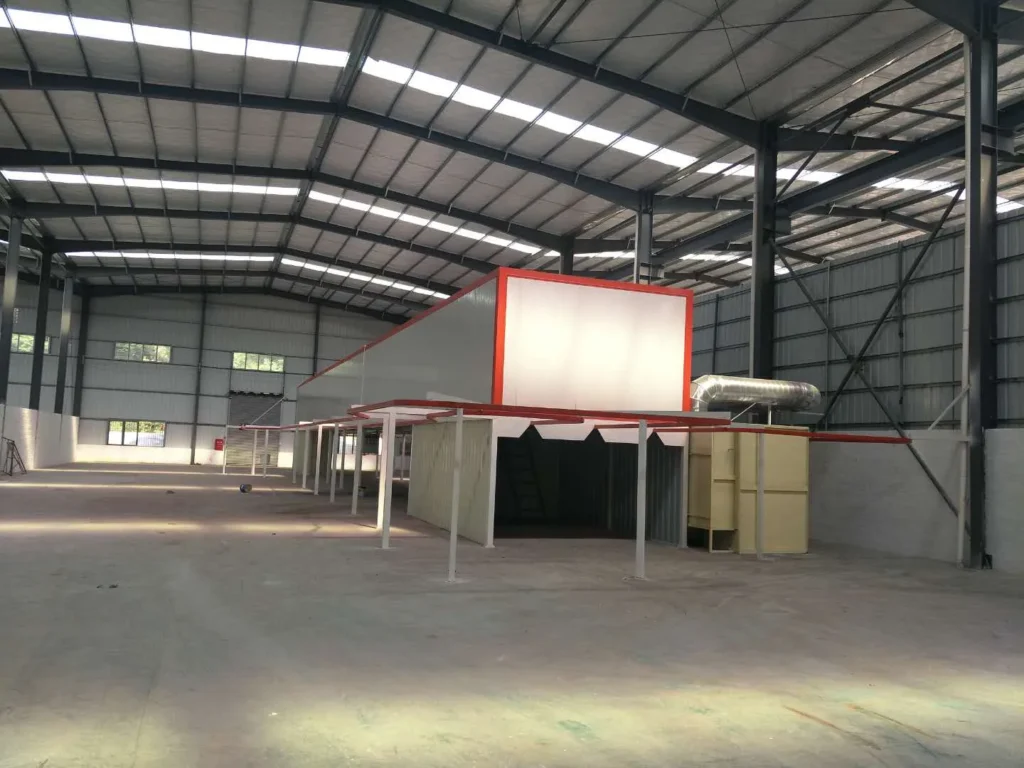
10 Tips On Choosing The Powder Coating Equipment Company?
Why Choosing the Right Powder Coating Equipment Supplier Matters
Selecting a powder coating equipment manufacturer is one of the most important decisions you'll make as a manufacturing leader. From our experience working with cabinet makers, furniture producers, and aluminum extrusion companies across North Africa, the Middle East, and South Asia, we've learned that choosing the wrong supplier can cost you far more than you save on initial pricing.
The stakes are real. A poorly designed electrostatic powder coating line can trap you in years of mediocre surface quality, inconsistent output, excessive energy consumption, and costly downtime. Conversely, a well-matched system from a manufacturer who truly understands your production needs becomes a competitive advantage—delivering superior coating uniformity, reliable throughput, and stable operating costs.
The fundamental problem is this: most equipment decisions are made based on incomplete information. Buyers get attractive brochures, hear impressive claims, see basic specifications, but never actually verify whether the supplier can deliver in their specific application. That's where this guide comes in. We're sharing the 10 evaluation criteria we use internally when assessing powder coating equipment manufacturers, distilled from years of factory partnerships and cross-border project delivery.
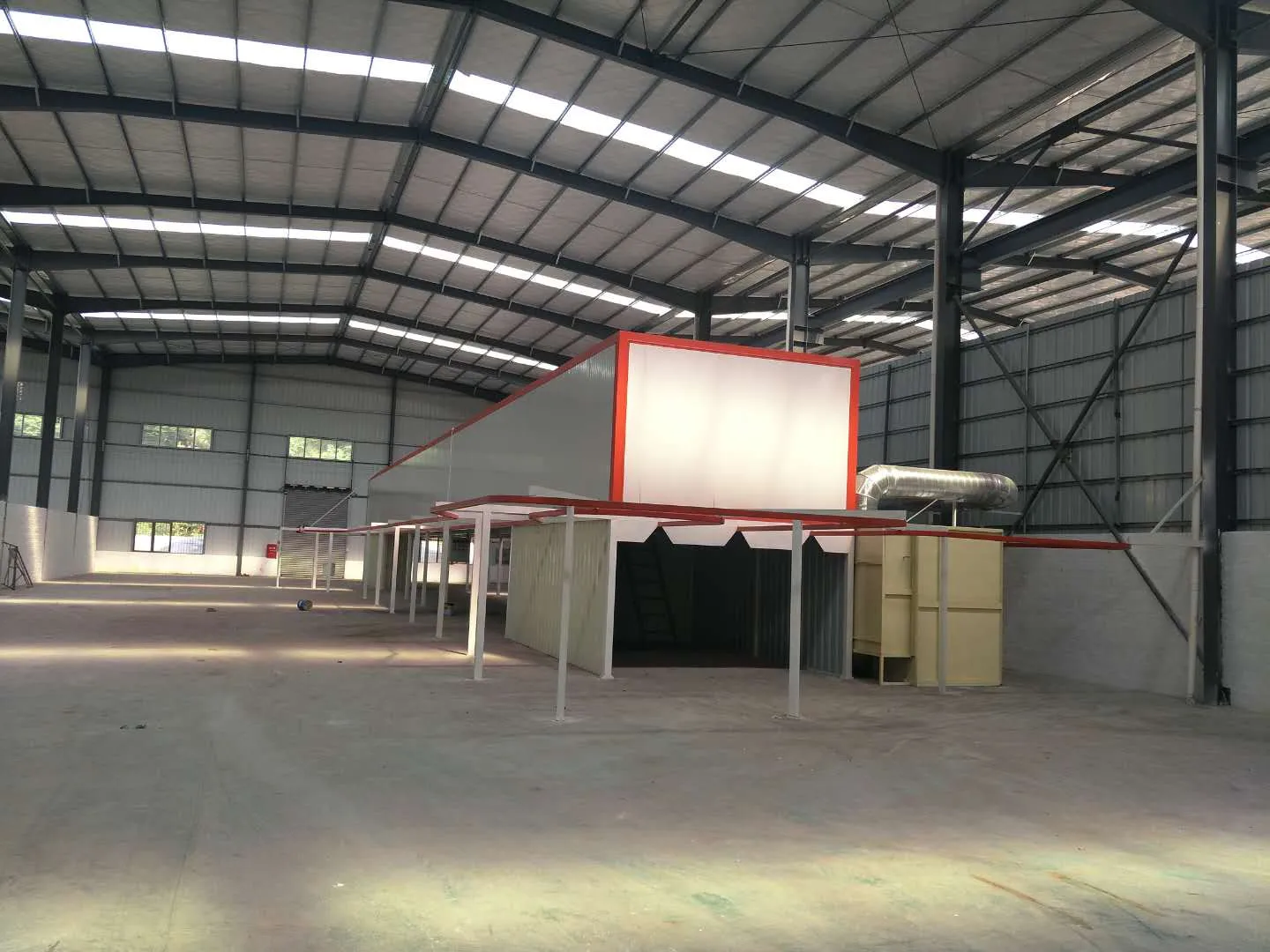
Tip 1: Verify Direct Manufacturing vs. Trade Intermediaries
Before you evaluate anything else, confirm whether you're talking to an actual manufacturer or a reseller masquerading as one. This distinction determines your entire relationship—and your long-term risk.
How to Confirm Factory Ownership and Production Capability
A true manufacturer owns production capacity. They have:
Physical manufacturing infrastructure. This means sheet metal equipment, welding stations, assembly lines, and testing capability. Ask the supplier directly: "Can you show us your manufacturing floor?" A real factory will have photos, production records, and scheduling flexibility to accommodate customer visits.
Engineering and design teams in-house. Verify that they employ mechanical engineers, electrical engineers, and control system specialists who can customize solutions. Don't accept "we work with partners"—that's code for system integration, which may be appropriate, but it's not the same as full design responsibility.
Quality control documentation. Manufacturers maintain material certifications, welding records, and functional testing logs. Request samples of their quality documentation for recent projects. Resellers typically cannot produce these.
Transparent supply chain. A manufacturer can tell you where major components come from and why. They'll discuss their material sourcing, subcontractor relationships, and quality criteria for suppliers. If they're vague, they're likely buying finished subsystems and bolting them together.
Red Flags That Indicate a Reseller Rather Than Manufacturer
"We can get you a quote in 24 hours with no specifications." Genuine design takes time. If someone quotes an entire system before understanding your workpiece size, production volume, or space constraints, they're pulling a standard configuration off a shelf.
Inability to modify specifications without a long lead time or significant upcharge. True manufacturers can typically adjust dimensions, material gauges, component quality, and system configuration within normal lead time. Resellers are locked into whatever they've already purchased.
No factory location or vague about where "their" equipment is built. Legitimate manufacturers have a known address, tax records in their home country, and verifiable production history. If you cannot find them on official business registries or their factory address keeps changing, that's a warning.
They refuse or heavily restrict factory visits. This is the biggest red flag. Resellers and low-cost integrators often operate from small warehouses or shared facilities. A genuine manufacturer will eagerly show you their operation—because it's a major selling point.
All their customer references are recent or clustered in a few regions. Established manufacturers have diverse, geographically spread customer bases with projects spanning years. Recent-only references suggest either the company is brand new or previous customers had issues they're reluctant to discuss.
Tip 2: Assess Manufacturing Capability Through Factory Visits and Demonstrations
You cannot evaluate a powder coating equipment manufacturer without seeing their actual production environment. Specifications on paper mean nothing compared to what you observe in person.
What to Inspect During Factory Tours
Equipment age and maintenance condition. Walk the shop floor. Are the machines well-maintained? Are there safety protocols visibly in place? Equipment doesn't have to be brand new, but it should be functional and clean. Worn, neglected production machinery suggests internal processes are also neglected.
Sample production lines in operation. The best manufacturers maintain 1-2 demonstration systems running in-house. You should see a working electrostatic powder spray booth, a curing oven, a recycle system, and a transport system. Watch these systems operate under load. Listen for unusual noise. Check for efficiency and cleanliness of operation.
Material and component quality. Examine the materials used in their systems:
- Are welds clean and consistent?
- Is the insulation material high-grade (mineral fiber, not cheap foam)?
- Are electrical connections properly labeled and documented?
- Are fasteners stainless steel or plated, not raw steel?
Attention to detail in assembly. Look at how cables are routed, how panels align, how drainage and airflow paths are designed. Poor attention to detail in a sample system predicts poor execution in your system.
Documentation and traceability. Ask to see documentation from a recent customer system: technical drawings, bill of materials, quality inspection records, final test results. Can they pull this information immediately? If documentation is scattered or incomplete, that's how your project will be managed too.
Evaluating Sample Lines and Real-World Customer Installations
Sample line spraying demonstrations. Request that they spray actual test parts during your visit, not just show you pre-sprayed samples. Watch the powder coverage, flow of material, and coating consistency. Ask them to spray a geometrically complex part (with holes, internal surfaces, etc.) if that mirrors your production needs.
On-site customer visits. This is your most valuable data point. Ask the manufacturer to arrange a visit to 1-2 active customer installations running similar work. When you visit:
- Observe the system running at customer's normal production speed
- Ask the customer direct questions without the equipment supplier present if possible
- Look at coated parts coming off the line—are they meeting quality standards?
- Ask about reliability, downtime frequency, ease of maintenance
- Ask about the manufacturer's responsiveness to issues
- Check if color change procedures are as simple as described
Historical performance data. For mature installations (3+ years old), ask the customer about powder recovery rates, energy consumption, coating defect rates, and required maintenance. This beats theoretical performance claims.
Tip 3: Evaluate Technical Expertise and Industry Credentials
Equipment is only as good as the knowledge behind it. You need a supplier who deeply understands powder coating science, electrostatic principles, thermal processing, and your specific industry's requirements.
Industry Associations, Certifications, and Thought Leadership
Membership in professional organizations. Look for involvement in powder coating associations, adhesives and coatings societies, or manufacturing technology groups. This indicates ongoing engagement with industry best practices and networking.
Published technical content. A manufacturer with genuine expertise publishes. This might include:
- Technical papers on spray gun design, electrostatic optimization, or curing efficiency
- Webinars or training materials on troubleshooting common coating defects
- Case studies on industry-specific applications (cabinet coating, aluminum extrusion coating, furniture finishing, etc.)
Certifications and standards compliance. Verify compliance with:
- ISO 9001 (quality management)
- Relevant electrical safety standards (IEC, UL, or equivalent for your region)
- Explosion-proof equipment standards if powder coating is involved (ATEX, NEC, etc.)
- Environmental regulations (dust collection, VOC handling)
Training and customer education programs. Companies that invest in teaching customers how to optimize their systems demonstrate confidence in their design. Ask if they offer operator training, troubleshooting workshops, or technical support for parameter optimization.
Core Team Qualifications and Project Experience
Who is actually designing your system? Ask to meet the primary engineer(s) who will design your line. Review their background:
- How many years in powder coating or surface finishing?
- What types of products have they designed systems for?
- Can they explain design trade-offs and why they're recommending specific component choices?
Project management capability. Find out who manages day-to-day execution. Do they have a dedicated project manager assigned to your job, or is this squeezed between other responsibilities? What's their track record on on-time delivery and budget adherence?
Aftermarket support depth. Ask about technical support availability:
- Do they have field service technicians who can travel to your location?
- What's their response time for technical issues?
- Do they maintain spare parts inventory, or is everything made-to-order?
- Is technical support included in the warranty, or charged separately?
Tip 4: Verify Technical Parameters and System Design Approach
This is where theory meets practice. You need to verify that the supplier hasn't just configured standard components, but has actually optimized the system for your application.
Testing Equipment and Performance Validation Methods
Do they test before shipping? A credible manufacturer doesn't build your system and immediately ship it. They test it. Ask:
- What test conditions do they run before delivery?
- What parameters do they measure? (spray coverage, coating uniformity, temperature stability, air velocity, recovery efficiency, etc.)
- Can they provide test reports from your specific system?
Testing infrastructure they own. Legitimate manufacturers maintain in-house test equipment:
- Sample spray booths with adjustable parameters
- Curing ovens with temperature mapping capability
- Thickness gauges and adhesion test kits to validate coating quality
- Air velocity and particle count instruments for booth performance
- Data logging systems that prove their claims
Performance guarantees and validation. Do they guarantee specific performance metrics, such as:
- Powder transfer efficiency (% of powder that sticks vs. waste)?
- Coating uniformity (thickness tolerance across parts)?
- Curing time and temperature stability?
If they can't quantify expected performance or back it with data, they haven't really optimized the system.
Full In-House Design vs. System Integration Approach
Full in-house design means the manufacturer:
- Designs the spray booth layout, volume, and airflow path
- Specifies and possibly manufactures the curing oven and heating system
- Designs the transport system to match your cycle time
- Integrates controls and automation
- Takes responsibility for the entire system's performance
System integration means the manufacturer:
- Sources major subsystems (spray booth, oven, transport) from component suppliers
- Adds their own controls and integration
- Assembles and tests the complete package
Neither approach is inherently wrong, but you need to understand which one you're getting and what it means for your support:
- Full design: Higher customization potential, more control over component quality, single point of responsibility, but potentially longer delivery and higher cost
- System integration: Faster delivery, lower cost, but less customization and distributed responsibility if problems arise
Our view from field experience: The best manufacturers do selective integration—they own the most critical, application-specific parts (booth design, oven control strategy, transport timing) and partner with proven suppliers for commoditized components (motors, actuators, standard pumps). This balances customization, cost, and accountability.
Ask them explicitly: "Which components do you design and manufacture in-house, and which do you source?" Then ask about the integration: "How do you test that all these components work together under your customer's specific conditions?"
Tip 5: Assess Customization Capability and Solution Design
One of the costliest mistakes is buying a standardized system when you actually need a customized one. Or worse—buying a "customizable" system that's really just a standard design with a few tweaks.
Understanding Your Product Requirements
A good manufacturer will invest time in understanding your actual needs before proposing a design. They should ask detailed questions about:
Workpiece characteristics:
- Exact dimensions (length, width, height)
- Material (aluminum, steel, composite, etc.)
- Weight per piece
- Geometry complexity (flat panels, deep cavities, internal surfaces, etc.)
- How will parts be suspended or transported through the line?
Production parameters:
- Target daily or hourly volume
- How many different part types run on this line?
- What's the target cycle time per part?
- Do you need flexibility for different sizes/types, or is this dedicated to one product?
Quality requirements:
- Target coating thickness and tolerance
- Acceptable surface defect rate
- Required adhesion strength
- Color consistency requirements
- Any specific industry standards (automotive, aerospace, food-contact, etc.)?
Environmental and regulatory context:
- What's your facility's electrical service (voltage, phase, capacity)?
- Natural gas available? What's the pressure/flow?
- Compressed air capacity and quality?
- Local environmental regulations on powder dust, discharge, noise?
- Any specific certifications required (ATEX, UL, local compliance)?
Whether Supplier Offers Flexible vs. Standardized Configurations
Red flags for overly standardized systems:
- Supplier provides the same basic design to every customer regardless of product differences
- "We have three standard sizes; pick one" approach
- Cannot explain why specific component choices are appropriate for your workpiece
- Quotes without conducting detailed needs analysis
Signs of genuine customization capability:
- They ask numerous clarifying questions before proposing anything
- They sketch or show you design alternatives and explain trade-offs
- They can adjust transport speed, spray gun positioning, oven residence time, recovery system configuration based on your specific parts
- They provide 2-3 design options with different cost/performance/timeline implications
- They're willing to modify standard components (booth height, oven length, transport speed) to match your cycle requirements
Our approach: We never present a single "recommended" design. We provide three options:
- Optimized for cost – standard configurations, 8-10 week lead time
- Optimized for your application – customized to your parts and process, 12-14 week lead time
- Premium/fully automated – maximum customization, fastest cycle time, 16+ week lead time
This approach forces transparency about what you're trading off. Many customers realize the "cost" option won't actually work for them once they see the limitations.
Tip 6: Review Complete Service Capability and Support System
Equipment doesn't become valuable the moment it arrives at your facility. It becomes valuable the moment it's running reliably and producing quality parts. That transition—from equipment to operational system—is where many suppliers disappear.
Full Lifecycle Services: Design, Manufacturing, Installation, Commissioning, Training, Aftermarket Support
Design phase support: Does the supplier provide:
- Site assessment visits to understand your facility layout, utilities, and constraints?
- 3D modeling or technical drawings for your review and approval?
- Design reviews where you can see and critique proposals?
- Optimization for your specific facility (electrical loads, compressed air requirements, ventilation strategy)?
Manufacturing phase transparency: Can you:
- Track production progress?
- Approve quality milestones before they proceed to the next stage?
- Request inspections at critical points (welds, electrical connections, assembly completeness)?
- Receive factory acceptance test (FAT) documentation before shipment?
Installation and commissioning: This is where problems become visible. Does the supplier provide:
- On-site installation by trained technicians?
- Connections to your utilities (electrical, air, water, gas) with proper certification?
- System startup and initial parameter tuning?
- Performance validation (spray pattern testing, oven temperature mapping, cycle time verification)?
- Troubleshooting of any issues discovered during commissioning?
Operator training: Do they provide:
- Classroom or hands-on training for your operators?
- Documentation in your language (not just English/Chinese)?
- Training on normal operation, maintenance schedules, and basic troubleshooting?
- Video tutorials for reference after they leave?
Ongoing aftermarket support: This is where supplier choice matters years after purchase. Ask about:
- Technical support hotline or email contact
- Response time SLA for different issue severity levels
- Field service availability (can they send technicians for complex problems?)
- Spare parts availability and pricing
- Preventive maintenance programs
Warranty, Spare Parts Availability, and Technical Support Responsiveness
Warranty structure: Get specifics:
- How long is the warranty? (Standard is 12-24 months from delivery or first operation)
- What does it cover? (Manufacturing defects only, or also design/performance issues?)
- Are parts covered? Workmanship? Electrical systems separately from mechanical?
- What's excluded? (Wear items like seals, brushes, filter elements?)
Spare parts strategy:
- Does the supplier maintain inventory of common wear items (filters, seals, spray gun nozzles)?
- Can they provide parts within days, or weeks?
- What's their parts pricing relative to OEM alternatives?
- Do they provide documentation so you can source emergency replacements from other vendors if needed?
Technical support responsiveness:
- How do you contact them? Email, phone, online ticketing?
- What's their guaranteed response time for different issue levels?
- Critical (system down): 4-8 hours?
- Significant (quality issue): 24 hours?
- Non-urgent: 48-72 hours?
- What time zones/languages do they support?
- Do they offer remote diagnostics (connected monitoring that alerts them to problems proactively)?
Tip 7: Request Long-Term Customer References and Independent Feedback
References matter, but not the way most buyers approach them. The typical approach—calling the three customers the supplier recommends and hearing predictable praise—is nearly useless.
Why Long-Running Installations Matter More Than New Systems
New systems are honeymoons. A brand-new installation looks great, runs smoothly, and the customer is motivated to speak positively because they're justifying their purchase decision. Real performance emerges after 12+ months:
- Do seals wear as expected, or faster?
- Does the control system hold calibration over time?
- Have design flaws or maintenance headaches emerged?
- Is the supplier responsive when issues occur outside warranty?
Long-running systems show true cost of ownership.
- What's the actual failure rate and mean time between failures (MTBF)?
- How much downtime has the customer experienced, and what caused it?
- What have been the actual maintenance costs (labor and parts)?
- Has powder recovery remained stable, or has efficiency degraded?
- Have energy consumption levels matched promises?
5-10 year customer relationships reveal supplier commitment.
If a supplier has customers they've worked with for years, that supplier has invested in making those relationships work. They've solved problems, provided support, and maintained parts availability.
How to Verify Unbiased Customer Experiences
Request customer references with specific criteria:
- "Please provide references from customers running systems for 3+ years"
- "Include customers in [your region], not just one geographic cluster"
- "Include customers with products similar to ours"
- "Provide at least 3-5 references, not just 1-2"
Contact customers directly, away from the supplier:
- Ask the supplier for customer contact information, then reach out independently (not through the supplier)
- If the supplier is reluctant to provide direct contacts, that's a warning sign
- Speak with operators and maintenance staff, not just management
Ask specific, technical questions:
Instead of "Are you happy with the system?" ask:
- "What's your actual powder recovery rate compared to what was promised?"
- "How many hours per month does the system require maintenance?"
- "What's been your biggest operational challenge with this equipment?"
- "How responsive has the manufacturer been to requests for support?"
- "If you were buying again today, would you choose the same manufacturer?"
- "What would you tell a potential buyer about this supplier's weaknesses?"
Check for recurring complaints:
If multiple references mention the same issue (poor after-sales support, certain component failure, etc.), that's a pattern, not an anomaly.
Tip 8: Assess Delivery, Installation, and Implementation Risks
On-time delivery and smooth installation are where many equipment purchases go wrong. A perfect design means nothing if the system arrives late or takes months to get running.
Timeline Reliability and Project Management Capability
Get realistic lead time expectations:
- What's the baseline lead time for your specific system?
- What factors can extend it? (Complex customization, supply chain delays, high order volume?)
- If they promise 10 weeks, what's the probability they hit it? Ask for their on-time delivery percentage from the past 12 months
Understand what "delivery" means:
- Does the lead time include shipping time, or just manufacturing time?
- Where will the system be tested before it ships?
- Who arranges shipping, and what's included in that cost?
- Will they provide tracking and regular status updates?
Get a detailed project schedule:
- Design phase: start date, design review date, approval date, design freeze date
- Manufacturing phase: milestone dates for key components
- Testing: FAT date, when you'll receive test reports
- Shipping: exact delivery date, with contingency plan if delays occur
- Installation: estimated duration on-site
Define consequences for delays:
- What happens if the manufacturer misses their delivery commitment?
- Are there penalties (cost reduction, extended warranty)?
- What if delays are due to customer requests (changes)?
Installation Complexity and On-Site Support Capacity
Understand what's required on-site:
- How much structural preparation is needed (floors, walls, utility extensions)?
- Is professional installation required, or can it be done in-house?
- How long will installation take? (Typically 2-4 weeks depending on line complexity)
- How many technicians will they send, and for how long?
Verify their installation capacity:
- Do they have enough technicians available in your region/season?
- Have they installed similar systems in your geographic area before?
- Can they provide references from recent installations they've done?
- What's their contingency if their primary technician becomes unavailable?
Get clarity on what they do vs. what you do:
Clear documentation should specify:
- Manufacturer's responsibility: Equipment manufacturing, FAT testing, shipping, on-site installation, utility connections (electrical, air, water, gas), system commissioning, FAT on-site, operator training
- Customer's responsibility: Site preparation (floor, walls, ventilation ducting), structural modifications, electrical service extension, compressed air system, water supply, gas supply, removal of old equipment, environmental permits
Vague boundaries lead to cost overruns and blame-shifting.
Estimate total implementation timeline:
- Site prep: 2-4 weeks
- Manufacturing: 10-16 weeks (depending on customization)
- Shipping: 1-4 weeks (depending on distance)
- Installation and commissioning: 2-6 weeks
- Operator training and ramp-up: 2-4 weeks
- Total: 5-8 months is typical for a custom line
If a supplier promises much faster, you're either getting a standard system (less ideal) or their estimate is unrealistic.
Tip 9: Understand Pricing Transparency and Total Cost of Ownership
Price is rarely the right decision criterion for industrial equipment, yet it's how many purchasing managers operate. Shift your thinking from "purchase price" to "total cost of ownership."
Detailed Specifications vs. Vague Quotes
Red flag: One-page quote with no specifications
If you receive a quote like:
"Electrostatic powder coating line for cabinet finishing: $185,000"
...that's not a quote. That's a guess. It tells you nothing about what you're actually getting. A vague quote allows the supplier to deliver a minimum-spec system and claim they've met the contract.
Professional quote includes:
- Detailed system description: booth size, oven dimensions, transport type, control system features
- Bill of materials: major components specified by brand and model
- Performance guarantees: expected powder recovery rate, curing time, cycle time, coating thickness tolerance
- Inclusions vs. exclusions: what's covered in the price vs. what's additional cost
- Timeline: specific delivery and installation dates
- Payment terms: typical is 50% deposit, 50% on delivery
- Warranty: length, coverage details, exclusions
- Service provisions: what training, support, and commissioning are included
If the supplier can't provide detailed specifications, it means:
- They haven't done detailed design yet (proceed cautiously—they may discover mid-project that your needs require a bigger system)
- They're planning to cut corners and hide them in vague language
- They're not serious about the project
Request multiple quote scenarios:
Ask for 3 versions:
- Standard: Good quality, 12-14 week lead time, standard components
- Enhanced: Better performance guarantees, upgraded components, 16+ week lead time
- Premium: Full customization, fastest cycle time, premium materials, 18+ week lead time
This allows you to see how specifications and features correlate with price.
Hidden Costs and Long-Term Maintenance Expenses
Costs typically hidden in quotes:
- Site preparation: If your facility needs electrical upgrade, compressed air system improvement, or structural reinforcement, this can be $10,000-50,000+
- Utility connections: Bringing gas, 480V power, or compressed air to the line location
- Ventilation: Sizing and installing the exhaust system and environmental controls
- Operator training: Multiple sessions for different shifts
- **
 English
  German
  Vietnamese
  French