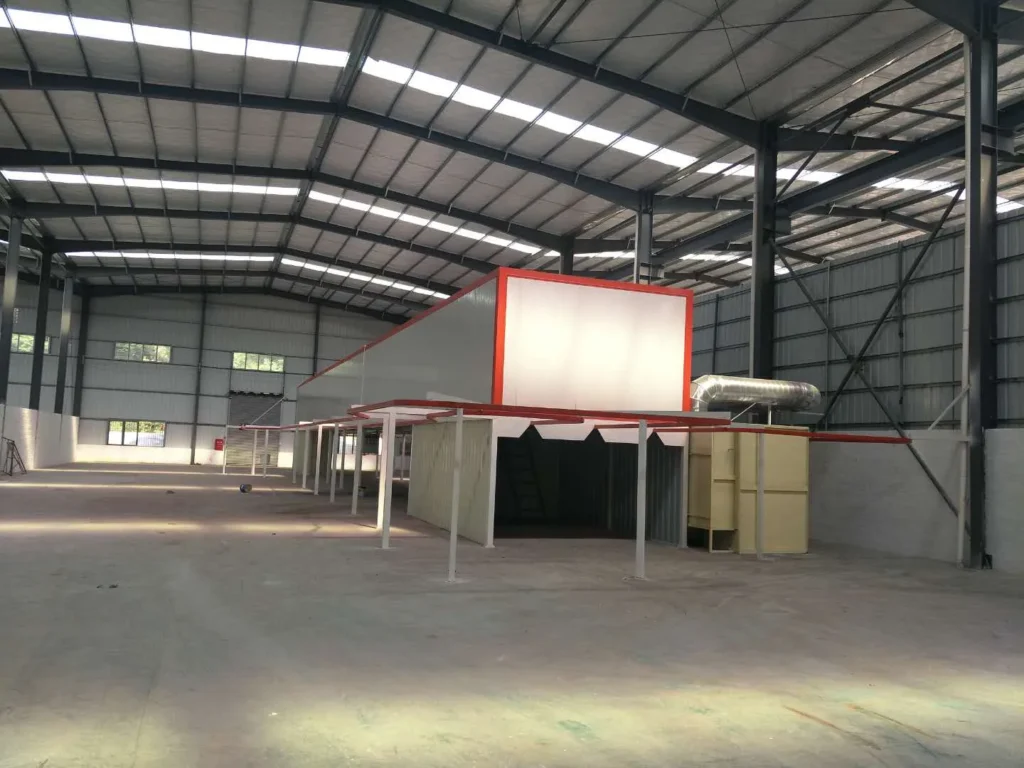
Analysis of Environmental Protection Status of Spraying Equipment: Current Standards, Challenges, and Solutions
Overview of Environmental Protection in the Spraying Equipment Industry
When we talk about surface coating in modern manufacturing, the conversation has fundamentally shifted. Environmental protection is no longer optional—it's becoming a defining factor in how factories operate, how equipment is selected, and how entire supply chains are evaluated.
Over the past 15 years, I've watched this transition firsthand. When we started building electrostatic powder coating lines, the industry's focus was primarily on efficiency and cost. Today, manufacturing enterprises—whether they're in metal fabrication, cabinet production, furniture manufacturing, or aluminum extrusion—are asking different questions before they commit to new equipment. They want to know: How much waste will this system generate? What's the VOC impact? Can I recover and reuse powder? What does local compliance actually look like in my facility?
The environmental protection landscape of spraying equipment has matured considerably. What we're seeing now is not a binary choice between "environment-friendly" and "traditional," but rather a spectrum of solutions with varying degrees of sophistication and real-world effectiveness. The reality on factory floors tells us something important: environmental performance depends far less on marketing claims and far more on how the entire system is configured, operated, and maintained.
From our perspective as a manufacturer who's deployed spraying lines across multiple countries and industries, we've learned that environmental excellence isn't about buying the "greenest" equipment in isolation. It's about understanding how each component of your line—pretreatment, spray booth design, recovery systems, filtration, curing—either contributes to or undermines your environmental goals. A perfectly designed powder recovery system won't help if your pretreatment generates liquid waste that nobody's managing. An efficient curing oven becomes less impressive if your facility's compressed air system is leaking water and oil into your powder stream.
This article reflects what we've actually seen work—and not work—across real manufacturing environments.
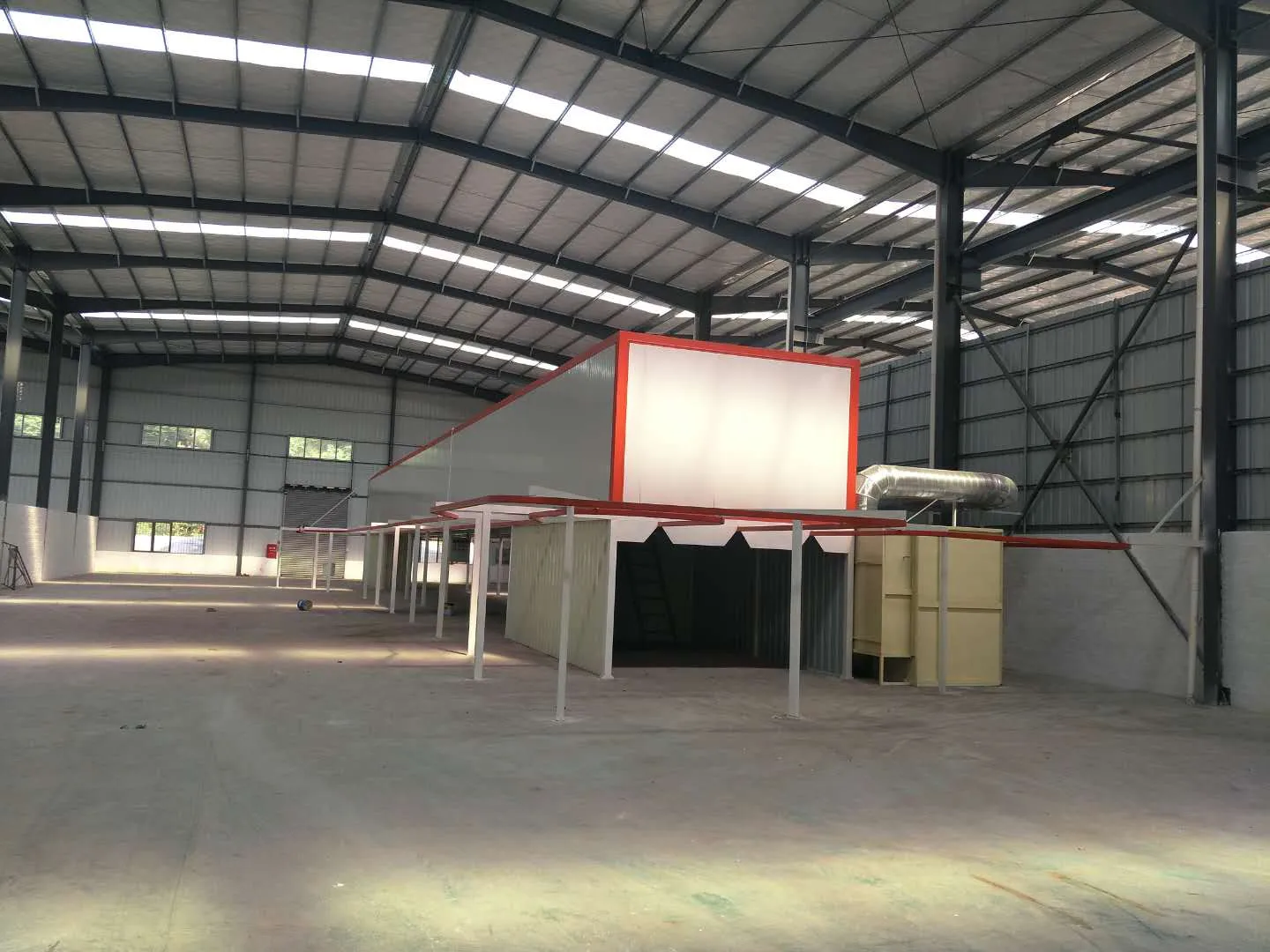
Environmental Challenges and Problems in Current Spraying Systems
Waste Gas and VOC Emissions
The conversation about vapor emissions in coating operations often oversimplifies the problem. When we're dealing with liquid spray painting, VOC (volatile organic compound) release is continuous and substantial—solvents evaporate from the paint, the spray gun overspray, the wet coating, and every surface the applicator touches. The numbers are honestly significant: a typical liquid spray booth might generate 50-80 grams of VOC per workpiece, depending on coating thickness and material efficiency.
Powder coating, by contrast, generates almost negligible VOC because there are no solvents in the formulation. This is perhaps the single most quantifiable environmental advantage of powder technology. However—and this is critical—powder systems do produce dust and particulate emissions that must be managed separately. This dust isn't toxic in the way solvents are, but uncontrolled particulate release violates most modern air quality standards and can accumulate in the workshop environment, creating safety and compliance issues.
What we've observed in factories that struggle with air quality is this: they focus on capturing gross powder loss (the obvious stuff that doesn't land on the workpiece) but neglect the finer points. Dust from incomplete filtration, micro-particulates that escape during color changes, air leakage from poorly sealed spray booths, and carryover from inadequate pretreatment drying all contribute to ambient air contamination that far exceeds what the designers intended.
The reality is that a powder coating system producing near-zero VOC can still fail environmental inspections if the dust collection and filtration aren't right. We've seen clients in Southeast Asia and North Africa discover this after installation when local environmental auditors flagged particulate emissions they weren't capturing with their existing exhaust design.
Powder and Dust Control
This is where I need to be direct about what we actually see versus what datasheets promise.
Most spray booths are designed with a single-stage powder recovery system—typically a cyclone separator that's supposed to catch 90-95% of overspray powder. In theory, this works. In practice, several factors degrade performance:
First, booth design quality varies enormously. A properly designed spray booth creates negative pressure that draws air uniformly through the spraying zone and evacuates it before powder can accumulate. Poorly designed booths have dead zones where powder settles, creating both a safety hazard (powder concentration) and a performance problem (re-entrainment of settled powder when new air flows through).
Second, the cyclone separator is only as good as the incoming air stream. If your spray booth isn't creating clean, uniform airflow, if your pretreatment process is introducing moisture that makes powder clump, if your compressed air system is contaminated with water or oil, the cyclone will not perform at rated efficiency. We've tested this extensively in our own facilities: a contaminated compressed air supply can reduce cyclone separation efficiency by 15-20%, meaning significantly more powder ends up in secondary recovery or escapes to the environment.
Third, powder characteristics matter. Newer, ultra-fine powder formulations have smaller particle sizes, which means they're harder to separate from air streams. They migrate further, penetrate filters more aggressively, and require more aggressive backflushing during filter cleaning. Many facilities use older equipment designed for larger-particle powder and don't realize their separation efficiency has degraded as formulations evolved.
What we've actually achieved with properly configured systems: On lines we've built with attention to booth design, air handling, equipment maintenance, and appropriate filter selection, we consistently see powder recovery rates of 90-95% under normal operating conditions. But "normal operating conditions" is the qualifier. Peak efficiency happens only when:
- Spray booth air velocity is correct (typically 0.5-1.2 m/s at the gun face)
- Pretreatment output is completely dry
- Compressed air is filtered to below 1 micron and dried to -40°C dew point
- Cyclone and filter systems are cleaned on schedule
- No color changes introduce transition waste without proper purging
Wastewater Management and Processing
This is the environmental challenge that most manufacturers underestimate because it's not immediately visible.
Wastewater in a coating facility comes from several sources. The most obvious is pretreatment—especially if you're using traditional chemical conversion processes (phosphating, degreasing, rust removal). A typical pretreatment line generating wastewater at 50-100 liters per hour will accumulate metal hydroxides, oils, and chemical residues that require treatment before discharge.
What we observe is that many facilities treat this as a separate problem from the spray system itself, which leads to incomplete planning. When you're designing an integrated electrostatic powder coating line, pretreatment wastewater management should be part of the specification from the beginning. If it's not, you end up bolting on treatment solutions later at higher cost and lower efficiency.
The actual environmental impact depends on local regulations. In some regions, metal hydroxide content limits are strict; in others, they're more permissive. Wastewater pH, suspended solids, and specific metal content (zinc, iron, chromium) all matter. We've seen clients in India and the Middle East discover, six months after installation, that their wastewater discharge was non-compliant with newly enforced local standards, requiring retrofitted treatment systems.
Powder coating itself doesn't generate wastewater—that's another advantage over liquid spraying, which requires wash water for guns and spray booths. But if you're building an integrated line, you need to account for pretreatment wastewater, and you need to understand your local discharge standards before you start operations.
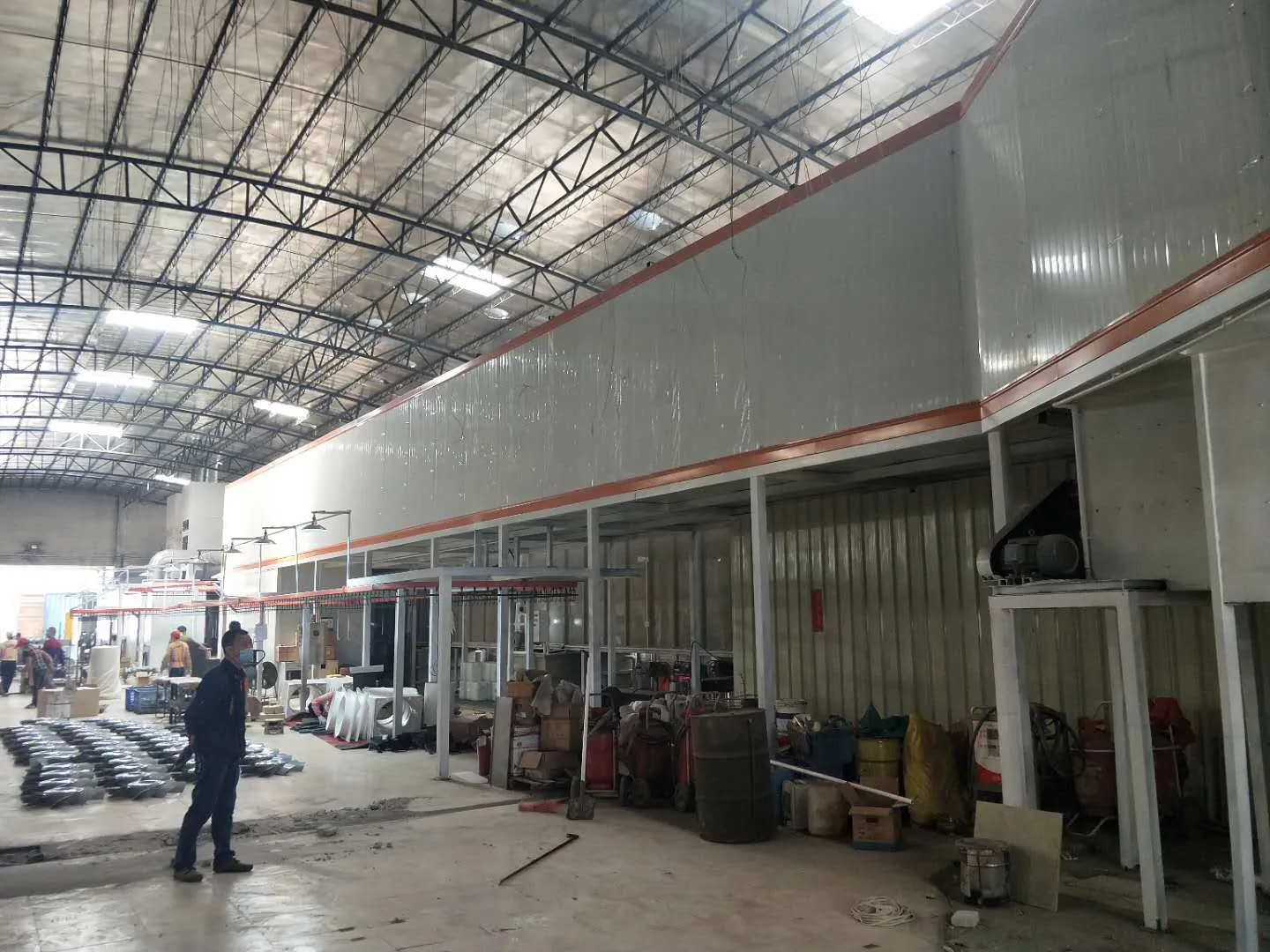
Comparative Environmental Performance: Powder Coating vs. Liquid Painting
Let me lay out the direct comparison, because this is foundational to understanding where powder technology actually wins:
| Factor | Powder Coating | Liquid Spray Painting |
|---|---|---|
| VOC Emissions | ~0-2 g/workpiece | 50-80 g/workpiece |
| Powder/Paint Waste Rate | 5-10% overspray (recoverable) | 20-40% overspray (cannot be recovered) |
| Air Quality Impact | Dust/particulates (manageable with filtration) | Solvent vapor (harder to capture, diffuses rapidly) |
| Wastewater Generation | None from spray process | Significant from booth washing, gun cleaning |
| Pretreatment Options | Water-based, less aggressive chemicals possible | Same requirements as powder |
| Coating Cure Energy | 170-200°C, 10-20 minutes (electric or gas) | 60-80°C typical, longer cure times |
| Worker Exposure Hazards | Dust inhalation, electrical safety | Solvent vapor, dermatitis, respiratory issues |
What this tells us: Powder coating has a fundamentally lower environmental burden per workpiece produced. A powder line processing 20 cabinets per day generates a fraction of the VOC emissions of a liquid spray line processing the same volume. This isn't marketing—it's basic chemistry.
However—and this is what I need to emphasize because I've seen clients make poor decisions based on incomplete thinking—the comparison only holds if both systems are properly managed.
A poorly maintained powder line with inadequate dust filtration and water-contaminated compressed air can create worse working conditions than a well-maintained liquid spray booth. Conversely, a high-efficiency powder line running on clean air with good dust collection beats liquid spray systems on almost every environmental metric.
The environmental advantage of powder is real, but it's not automatic. It requires:
- Proper system design (not undersized dust collection)
- Regular maintenance (filter cleaning, air dryer maintenance)
- Operational discipline (color change procedures, dust control during maintenance)
- Monitoring (pressure drop across filters, ambient air quality checks)
Key Environmental Standards and Compliance Requirements
The regulatory framework around spraying equipment varies significantly by region, which is one reason we insist on understanding your location during the design phase.
Major global standards and regulations:
In the European Union, the primary driver is the Industrial Emissions Directive (IED), which sets limits on total suspended particulates, VOC emissions, and dust deposition. The Paint and Varnish Directive (2004/42/EC) specifically limits VOC content in liquid coatings. For powder coating specifically, there's less direct regulation, but emissions limits apply to the air discharge and any vapor from the curing process.
In North America (US/Canada), the Clean Air Act and various state/provincial regulations set VOC limits and require pollution control equipment. Powder coating facilities are generally subject to less stringent requirements than liquid spray because VOC generation is minimal, but dust limits still apply.
In Asia, standards are increasingly tightening. China's Industrial Coatings VOC Standards (GB 24409) and similar regulations in India, Indonesia, and Vietnam now require documented emissions controls. What we've seen is that clients in these regions often discover—after commissioning—that their dust collection design needs upgrade to meet local enforcement.
What these standards mean practically:
For powder coating specifically:
- Dust emission to atmosphere: typically limited to 5-10 mg/m³ (varies by location)
- Pressure drop across spray booth: must be maintained within design parameters
- Filter change intervals: must be documented
- Secondary waste powder disposal: must be properly classified and managed (it's not always inert)
For integrated lines with pretreatment:
- Wastewater discharge limits on metals, pH, suspended solids
- Spent pretreatment chemicals: require proper hazardous waste handling
- Energy consumption: increasingly subject to carbon reporting requirements
The compliance gap I see most often: Manufacturers buy equipment that meets the equipment standard (e.g., the spray booth is built to ISO 4215 standards for velocity and filtration) but fail to validate that the entire integrated line meets their local environmental discharge standards. The spray booth might be perfect, but if your pretreatment wastewater isn't being treated, or if your dust collection isn't sized for your actual production rate, or if your curing oven is venting unfiltered, you'll discover non-compliance quickly.
Advanced Environmental Technologies and System Design Optimization
Powder Recovery Systems and Efficiency Improvement
Let me walk you through what actually moves the needle on powder recovery because this is where theory and practice diverge most sharply.
A cyclone separator—still the most common recovery technology—works on centrifugal force. Air carrying powder enters tangentially, spirals around the chamber, and centrifugal force pushes particles toward the wall. Particles slide down into a collection hopper; clean air exits from the top. The simplicity is its strength, but efficiency depends heavily on:
1. Particle size distribution. Larger particles (>50 microns) separate reliably. Smaller particles (<10 microns) are much harder to remove. Modern powder formulations trend toward finer particles for better surface finish, which means cyclone efficiency is declining relative to older powder types. A cyclone that recovered 95% of 50-micron powder might only recover 80% of 10-micron powder.
2. Air velocity through the cyclone. Too slow, and separation is incomplete. Too fast, and particles get re-entrained in the exit air. Design velocity is typically 3.5-5.5 m/s. If your supply airflow is higher than designed (common when ductwork is undersized), you're losing efficiency.
3. Powder contamination in the recovered material. Not all powder that reaches the hopper is pure. Moisture absorption, color mixing from incomplete purging during color changes, dust from pretreatment carryover—all degrade recovered powder quality. Some operations can recycle recovered powder at 100% rates; others can only use 50% recovered powder and have to discard the rest.
What we've found improves recovery most effectively:
Multi-stage recovery. Cyclone as primary recovery (catches 90% of particles), then secondary cartridge filter recovery (catches 80-90% of what the cyclone missed), then optional tertiary recovery for ultra-fine dust. This complexity adds cost and space but improves recovery to 95%+ and captures finer particles.
Electrostatic pre-separation. Before powder enters the cyclone, pass it through an electrostatic field that removes finer particles. This reduces load on the cyclone, improves its efficiency on remaining particles, and captures ultra-fines. Expensive, but justifiable if powder costs are high or environmental limits are strict.
Automated backflush for filter cleaning. Manual filter cleaning is inconsistent. Automated systems (pulse-type or rotary-wing) clean filters at programmed intervals, maintaining consistent pressure drop and preventing the collapse of efficiency over a shift.
Real recovery rate expectations: Assuming proper system design and maintenance—a two-stage recovery system (cyclone + filter) typically achieves 92-95% recovery of powder under standard operating conditions. Multi-stage systems can reach 96-98%. The remaining 2-8% is either entrained in exit air or represents powder that's contaminated and unusable.
Waste Gas Treatment Solutions
Beyond dust recovery, waste gas from a powder coating line requires treatment if you're discharging to atmosphere.
For powder systems, the primary concern is remaining suspended particulates. Even with excellent cyclone and filter recovery, some fine dust remains in the exit air. Treatment options:
1. Cartridge filters with enhanced media. Standard polyester filters work adequately, but electrostatically charged media or PTFE-coated filters improve fine particle capture. Pressure drop is higher (meaning more energy to pull air through), but capture efficiency improves to 99%+.
2. Electrostatic precipitators (ESPs). These remove particles using electric field without physical filters. They're energy-efficient once running, but can generate ozone and require regular electrode cleaning. Less common in powder coating than in other industries but increasingly used for ultra-fine dust control.
3. Activated carbon or chemical filters. If your curing oven is generating vapor (from powder additives or in high-temperature conditions), activated carbon downstream of the particulate filter captures volatile organic compounds that would otherwise exit to atmosphere.
What we typically specify: A two-stage approach—mechanical cartridge filter (removes 98%+ of suspended solids) followed by activated carbon stage (removes residual organics). This combination meets most regional air discharge standards and is maintenance-feasible for manufacturing facilities.
The efficiency ceiling: Even with perfect gas treatment equipment, you need adequate air handling. If your spray booth exhaust ductwork isn't sized correctly, air velocity becomes too high, and particles don't have time to settle or be captured efficiently. This is a common design error—the booth is right, the filters are right, but the exhaust ducting is undersized or poorly configured, and efficiency drops accordingly.
Energy Efficiency Optimization in Spraying Lines
Energy consumption in a powder coating line comes from three main sources: air movement (spray booth exhaust fan, compressed air), heating (curing oven), and equipment operation (spray guns, conveyors, controls).
Spray booth air handling typically consumes 20-30% of total line energy. The exhaust fan runs continuously; even with variable frequency drives (VFDs) that modulate speed based on demand, it's a major energy load.
Optimization approaches:
- Ensure booth is not over-sized (smaller booths need smaller fans)
- Optimize air velocity to minimum effective level (typically 0.7-0.9 m/s instead of 1.2+ m/s)
- Use VFDs that reduce fan speed during low-production periods
- Ensure ductwork is clean and unobstructed (pressure drop in dirty ducts forces fans to work harder)
Curing oven typically consumes 40-60% of total line energy. Optimization approaches:
- Insulation quality matters: 100mm of high-quality rockwool vs. 50mm saves substantial energy
- Air circulation design: efficient circulation reduces dead zones and allows lower overall temperature
- Load consistency: batch heating (all workpieces at once) is more efficient than continuous loading
- Oven temperature setpoint: reducing from 200°C to 190°C saves ~10% heating energy if your powder allows it
- Oven turnover speed: matching oven length, width, and throughput to your production ensures you're not running excess capacity
From our experience: A well-optimized curing oven running at proper parameters can reduce energy consumption 15-20% compared to a standard design without sacrificing coating quality. This translates to real cost savings—a 100-piece-per-day line operating 250 days annually saves 4,000-5,000 kWh per year, worth $400-600 depending on electricity rates.
Compressed air system optimization is often overlooked but significant:
- Air dryer maintenance: a failed dryer allows moisture into powder, degrading quality and increasing waste
- Filter condition: clogged filters force compressor to work harder
- Leak detection: even small leaks accumulate; systematic leak testing (ultrasonic detection) identifies and repairs them
- Pressure optimization: reducing system pressure by 0.5 bar (from 7 to 6.5 bar) reduces compressor energy by ~8%
Overall line energy profile: A properly designed and maintained 20-meter-long electrostatic powder coating line with pretreatment, spray booth, and curing oven typically consumes 80-120 kW, depending on production rate and oven type. A poorly maintained line with oversized components and inefficient operation might consume 150+ kW for the same production, a 50-80% energy penalty.
powder coating oven efficiency" />
Critical Factors for Selecting Environmental-Friendly Spraying Equipment
Essential Environmental Indicators and Metrics
When you're evaluating equipment for environmental performance, there are specific metrics that actually matter versus metrics that are marketing language.
Powder recovery rate is the most critical. Ask the supplier: "What is your measured recovery rate on this system at 100% production load?" Not theoretical, not promised—actual measured data. Push for them to show you data from installations similar to yours. When we specify systems, we commit to 90%+ recovery, but that's conditional on proper installation, maintenance, and operating procedures.
VOC emissions from the spray process itself should be near-zero for powder systems (this is the technology advantage), but ask about emissions from the curing oven. If the oven is venting unfiltered, there may be vapor emissions from powder additives at elevated temperature.
Energy consumption per workpiece is the metric that actually affects your operational cost and environmental footprint. Ask suppliers: "What's the kWh per piece for a 20-meter line processing [your product type] at [your production rate]?" Compare lines on this basis. A 50-piece/day line shouldn't consume the same total energy as a 200-piece/day line, but energy-per-piece should be similar if designs are efficient.
Dust emission to atmosphere (air discharge quality) should be measured and certified. Typical limits are 5-20 mg/m³; ask suppliers what their design guarantees and what independent testing shows. Some suppliers will claim "less than 10 mg/m³" but won't provide actual test data.
Wastewater treatment requirements should be clearly specified if your line includes pretreatment. What's the daily wastewater volume? What are the metal content levels? Does the equipment come with treatment options, or are you responsible for external treatment?
Filter change intervals and replacement costs matter more than you might think. A system that requires filter replacement every 1,000 operating hours is more cost-intensive than one requiring replacement every 2,000 hours—and it's also generating more waste. Ask specifically about filter maintenance intervals under your expected operating conditions.
Compliance documentation. Ask the supplier: "What environmental standards does this system meet?" Push for specific references (ISO standards, local regulations) and supporting test reports. A common mistake is asking this question and accepting vague answers like "meets international standards." You need specifics—which standards, which test lab, what conditions.
System Configuration and Local Compliance Alignment
This is where theory meets reality on the factory floor.
The environmental performance of any coating line depends on how all the components work together. A perfectly specified spray booth becomes less effective if your pretreatment isn't generating dry workpieces. A high-recovery powder system becomes less effective if your compressed air supply is contaminated with moisture. These integration points determine actual environmental performance.
Pretreatment design needs to align with your powder coating objectives. If you're trying to minimize wastewater, specify water-efficient pretreatment (e.g., shorter rinse cycles, efficient rinse water reuse). If you're trying to minimize powder usage, specify pretreatment that produces very clean, completely dry workpieces (reduces powder adhesion issues that cause waste).
Booth design should be sized to your actual production, not oversized. An oversized booth uses excess air and energy for no performance benefit. We specify booth dimensions based on workpiece size, spray distance, and production rate—typically 20-30% larger than the actual workpiece to allow working room, not 50-100% larger.
Air handling and ductwork must be designed as an integrated system. The exhaust fan, ducting, filters, and spray booth form a system; sizing one component independently of the others leads to inefficiency and performance degradation.
Local compliance specificity: Before specifying equipment, obtain a clear written list of environmental requirements for your location:
- Air discharge limits (dust, particulates, VOCs)
- Wastewater discharge limits (pH, metals, suspended solids)
- Noise limits (many booths need silencers in residential areas)
- Energy efficiency requirements (increasingly common in EU, parts of Asia)
- Hazardous waste disposal protocols (for used filters, spent pretreatment chemicals)
Once you have these requirements, share them with the equipment supplier. Ask them specifically: "How does this design ensure compliance with [specific requirement]?" If they give vague answers, find another supplier. We've learned this the hard way—a client in India bought equipment without understanding local wastewater standards, then discovered after installation that compliance required a $50,000 treatment system retrofit.
Real-World Applications and Cost-Benefit Analysis of Environmental Upgrades
Let me ground this in actual cases we've seen, because environmental equipment decisions are ultimately economic decisions, not just environmental ones.
Case 1: Cabinet manufacturer in North Africa (Aluminum-framed electrical enclosures)
Initial situation: The facility had a liquid spray operation with high solvent costs and environmental issues. Emissions were non-compliant with newly enforced local standards. They needed to upgrade.
Our proposal: Move to electrostatic powder coating with a two-stage recovery system.
Environmental gains:
- VOC emissions dropped from ~60 g/unit to <1 g/unit (99% reduction)
- Air discharge improved to 8 mg/m³ particulates (within local limits)
- Waste generation: liquid spray produced 30% overspray waste; powder system achieves 8% unrecoverable loss
- Powder utilization improved from ~70% to 92%
Cost analysis:
- Equipment investment: $280,000
- Installation and pretreatment system: $45,000
- Monthly operating cost (power, powder, labor): $6,500
- Powder cost per unit: dropped from $8/piece (paint) to $3.20/piece (powder with 92% recovery)
- Annual savings in material costs: ~$96,000
- Environmental compliance cost avoided: at least $50,000 (fines and retrofits for non-compliant system)
- Payback period: approximately 18-20 months on equipment alone, much shorter when accounting for avoided penalties
Case 2: Aluminum extrusion finishing facility in Southeast Asia (Curtain wall profiles, ~150 meters processed daily)
Initial situation: High-precision requirements for coating uniformity; existing powder system had undersized dust recovery, poor air handling, and high energy consumption.
Our upgrade proposal: Replace cyclone with multi-stage recovery (cyclone + cartridge filter + electrostatic pre-separator), optimize ductwork, add VFD to exhaust fan, improve booth air velocity distribution.
Environmental gains:
- Powder recovery improved from 88% to 95% (total waste reduction of 7 percentage points)
- Energy consumption: reduced from 95 kW average to 75 kW average (21% reduction)
- Dust emissions to atmosphere: reduced from 12 mg/m³ to 6 mg/m³
- Filter change interval extended from 800 hours to 1,400 hours (33% fewer filters, less waste)
Cost analysis:
- Equipment upgrade cost: $62,000
- Installation: $8,000
- Payback from energy savings alone: ~3.5 years (electricity rate $0.11/kWh)
- Additional payback from material waste reduction (7% less powder): ~18-24 months
- Combined payback: approximately 2 years
- Compliance improvement: facility now meets tightening local environmental standards, avoiding future retrofit costs
Case 3: Furniture manufacturer in India (Outdoor metal furniture frames)
Initial situation: Client was using a backpack-style powder room (single filter cartridge) on a semi-automated line. Dust control was problematic; filter changes every 5-6 days were disrupting production; powder cost was higher than expected due to low recovery rates.
Our recommendation: Upgrade to a cyclone + cartridge filter two-stage system with automated backflush.
Environmental gains:
- Powder recovery improved from 82% to 92%
- Production disruption from filter changes: reduced from every 5-6 days to every 14-18 days
- Dust levels in spray booth: visibly reduced
- Powder waste: dropped 10 percentage points annually
Cost analysis:
- Equipment upgrade: $28,000
- Payback from reduced filter changes (labor and material): ~14 months
- Payback from recovered powder (10% waste reduction): ~22 months
- Total payback: approximately 10-12 months
What these cases show:
Environmental upgrades to spraying equipment aren't altruistic investments—they typically pay for themselves within 1-3 years through reduced material waste, lower energy consumption, and reduced compliance risks. The uncertainty isn't whether upgrades are cost-effective; it's understanding what specific improvements matter for your situation.
The highest-ROI upgrades tend to be:
- Powder recovery system improvements (if your current recovery is below 90%)
- Compressed air quality (dryer upgrade, better filtration)
- Ductwork optimization (ensuring air velocity is correct, not excessive)
- Filter upgrade (to longer-lasting, more efficient cartridges)
- Energy management (VFD on exhaust fan, oven insulation)
Lowest-ROI upgrades (though sometimes necessary for compliance) tend to be:
- Tertiary dust control systems (beyond what regulations require)
- Over-specification of equipment capacity
- Environmental monitoring equipment that doesn't drive operational changes
How to Choose the Right Environmental Configuration for Your Operation
The core decision framework is this:
Start with compliance requirements. What are your actual environmental limits—air discharge, wastewater, noise, energy? Get these in writing from your local environmental authority or regulator. This is your baseline.
Specify equipment to meet these limits with margin. Most facilities should aim for 20-30% better performance than the regulatory minimum. Regulations tighten over time; overshooting the minimum by a small margin future-proofs your investment.
Understand the integration points. Don't spec a spray booth separately from ductwork, filters, and recovery systems. Request an integrated design that accounts for how each component affects the others.
Validate with actual case data. Ask the supplier: "Show me data from three installations similar to mine (same product type, similar production rate) and what their actual environmental performance has been." Case data is far more reliable than theoretical specifications.
Plan for maintenance. Environmental performance degrades if you don't maintain the system. Before you buy, confirm you can commit to the maintenance schedule the equipment requires.
Consider your labor and technical capability. Some environmental upgrades require more sophisticated operation and maintenance (e.g., multi-stage recovery systems, automated backflush). Make sure your facility has the technical team to manage them. A high-tech system in the hands of staff without maintenance training will underperform.
Conclusion: Environmental Protection as Operational Reality
The environmental status of modern spraying equipment has evolved significantly. Electrostatic powder coating, properly designed and maintained, delivers measurable environmental advantages—lower VOC emissions, reduced powder waste, smaller wastewater generation, and lower long-term energy consumption compared to liquid spray alternatives.
However, these advantages aren't automatic. They depend on understanding your specific situation, making informed equipment choices based on actual case data rather than marketing claims, and committing to proper maintenance and operation.
What we've learned from deploying lines across multiple continents and industries is that environmental performance ultimately reflects engineering discipline. A system that's designed right, installed carefully, and maintained consistently will deliver on its environmental promise. A system that cuts corners on design, installation, or maintenance will disappoint—in both environmental and economic terms.
If you're evaluating equipment for environmental performance, ask the hard questions: What are your actual recovery rates? How do you ensure compliance with our specific local standards? What does your maintenance schedule look like, and how much technical capability does our team need? Show us data from three similar installations and their real-world performance.
We're here to help you navigate these questions. Whether you're upgrading an existing line or building new capacity, we've worked through these environmental considerations across different industries, countries, and regulatory frameworks. If you'd like to discuss how to optimize your coating system for environmental performance while maintaining economic viability, we're ready to help.
Contact us:
- WhatsApp: +8618064668879
- Email: ketumachinery@gmail.com
Let's talk about what environmental performance actually looks like for your specific operation.
 English
  German
  Vietnamese
  French