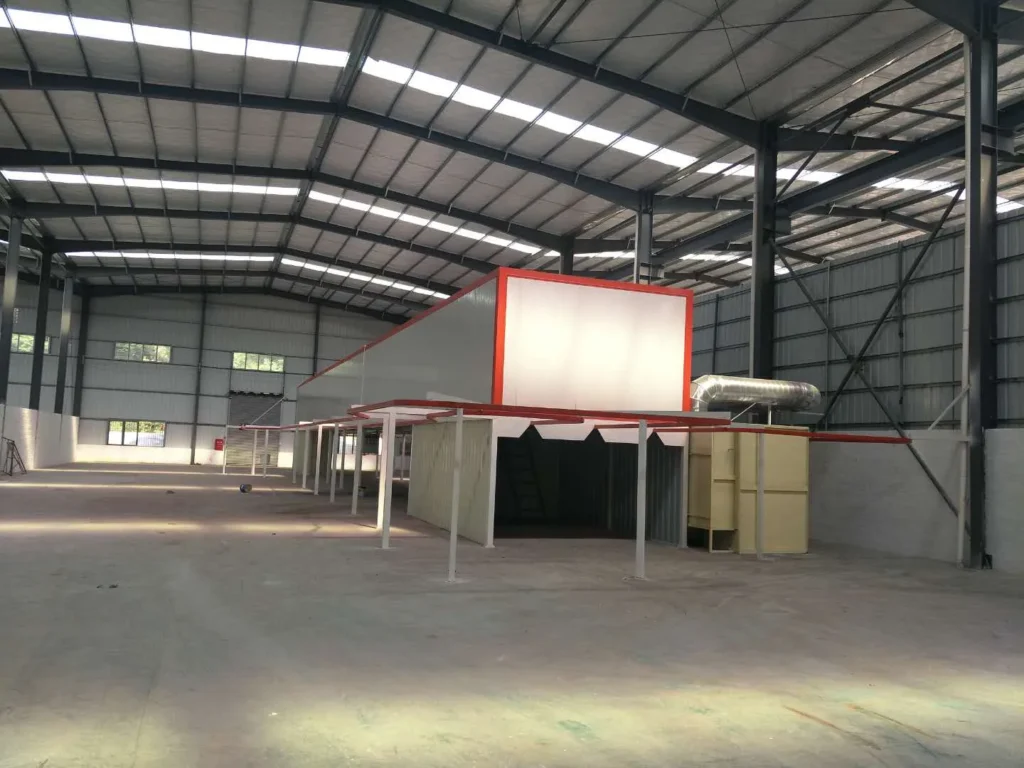
Powder Coating Line Cost Reduction: Achieve 20-35% Savings Through Spray Gun Optimization and Recycling Systems
Your powder coating line is bleeding money. Every day, wasted powder hits the floor instead of your products. Energy costs spiral. Labor stays high even as automation promises savings. And the promise you hear everywhere—"reduce costs by 50%"—keeps ringing hollow.
I understand the frustration. Over years of working with manufacturers across cabinet production, outdoor furniture, and aluminum profiles, I've seen clients obsess over that 50% target. They chase it. They restructure their lines around it. And then reality sets in: the actual cost reduction lands at 20-30% instead.
Here's what I've learned: 50% is rarely achievable. But 20-35% is realistic, measurable, and often achievable faster than you think.
The gap between fantasy and reality comes down to one thing: most operations don't understand where their actual costs are bleeding.
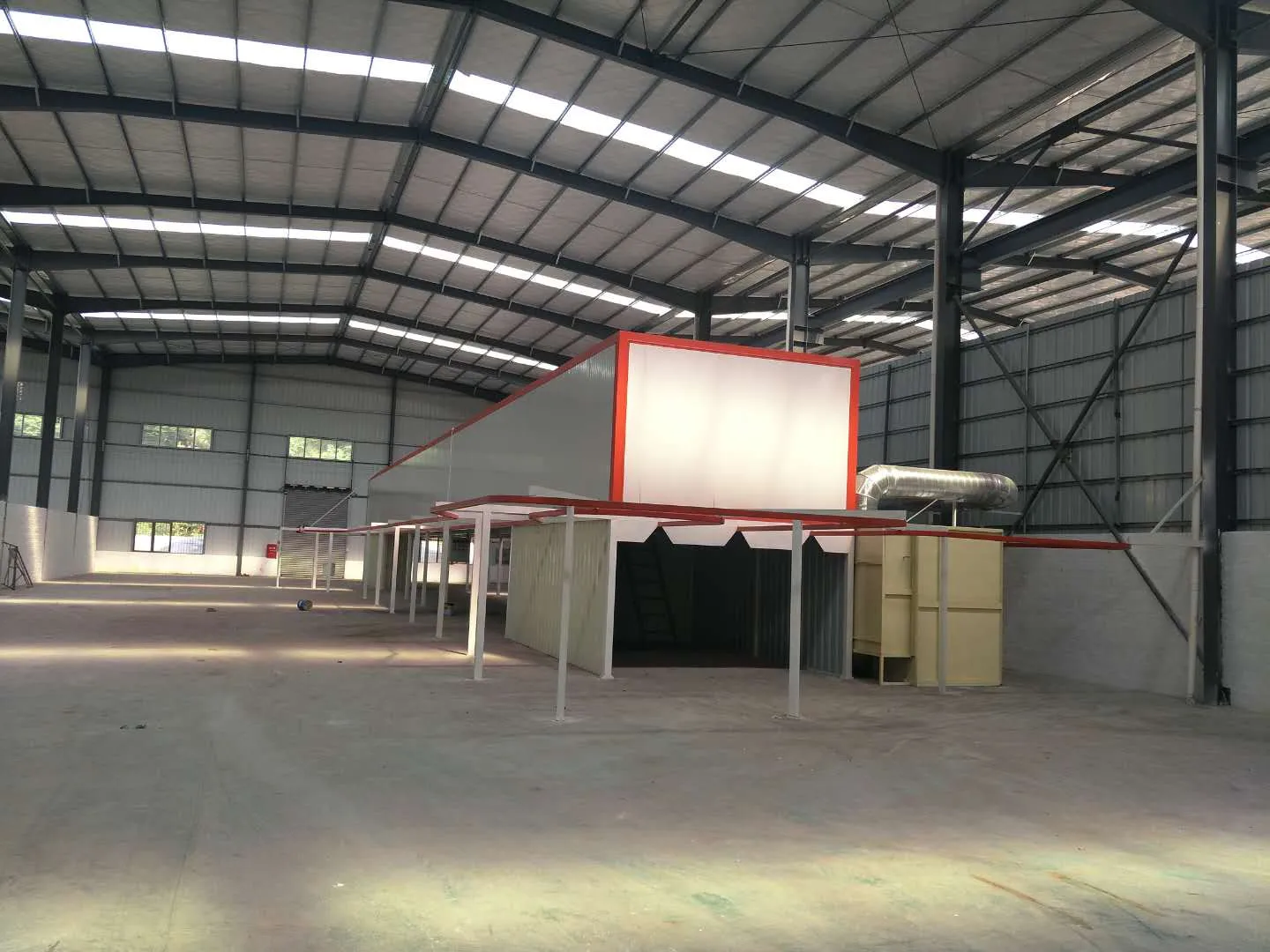
Where Powder Coating Costs Actually Live
Before you can reduce costs, you need to see them clearly.
A typical powder coating operation's cost structure looks something like this:
Energy consumption (30-40% of operating costs): The curing furnace runs hot, all day. Inadequate insulation means the furnace works harder than it needs to. Poor temperature control wastes heat. Supply fans running at full speed constantly—that's money leaving your facility as hot air.
Powder waste (20-30%): This is the invisible cost. Powder that doesn't make it onto the workpiece gets sucked into your recovery system. If you're not capturing and reusing it efficiently, you're buying fresh powder constantly. Low recovery rates (below 80%) mean you're discarding material that costs money.
Labor (15-20%): Manual spray operations require skilled operators. Complex part geometries, frequent color changes, and inconsistent processes all drive labor time up. Automation can help, but only if configured correctly.
Equipment maintenance (10-15%): Spray guns accumulate powder. Filters clog. Supply lines get blocked. Thermal control systems drift. Each failure means downtime, reduced output, and emergency parts orders.
Material handling and setup (5-10%): Time between batches, fixture cleaning, color change procedures—this all adds up silently.
The critical insight: not all of these costs respond equally to spray gun optimization or recycling systems alone.
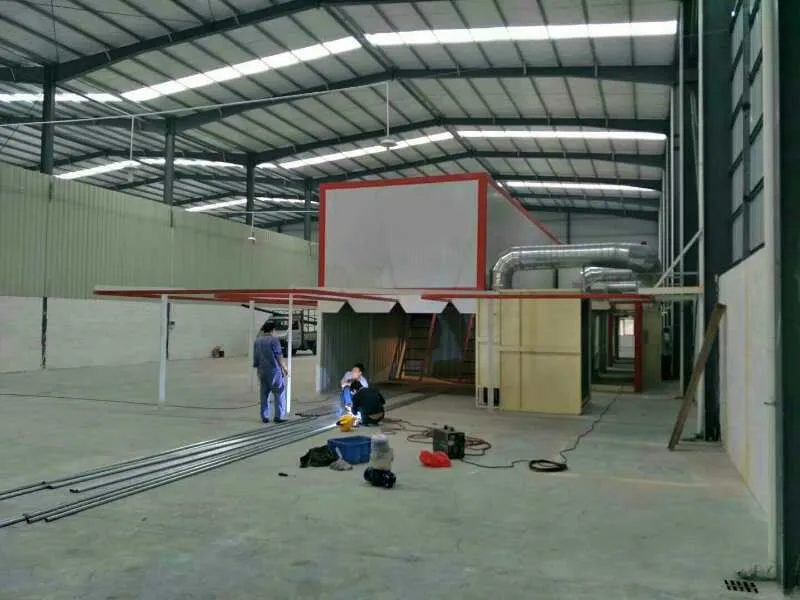
Why 50% Cost Reduction Is Almost Never Real
Let me be direct: anyone promising 50% cost savings is either selling something they haven't implemented, or they're looking at a situation where your current system is catastrophically broken.
From our experience, here's what 50% would actually require:
- Powder recovery improvement from 70% to 95%+ (saves ~15% on powder costs)
- Energy reduction of 40% (saves ~12-15% overall)
- Labor reduction of 60% (saves ~10% overall)
- Maintenance cost elimination of 70% (saves ~7% overall)
Even stacking all of these optimistically, you're looking at maybe 40-44% if everything aligns perfectly. And that's assuming your pre-treatment is already solid, your equipment is modern enough to optimize, and your production volume is high enough that the ROI math works.
The reality we see in the field:
Most clients' actual achievable range is 20-30% cost reduction through spray gun optimization plus recycling systems. The top-performing operations hit 30-35%, but they usually had pre-optimization issues to fix first.
The clients we see achieve nothing close to 50%? They had one of these problems:
-
Their front-end processing was broken. No amount of spray gun tweaking fixes a workpiece that's covered in oil or moisture. If pre-treatment is inconsistent, you can't fix it downstream.
-
Their production volume is too low. A powder recycling system costs money. If you're only spraying 500 pieces a month, the ROI takes 4-5 years. For 5,000 pieces a month, it's 18-24 months. At 10,000+, it's 12-18 months.
-
Their equipment is already optimized. If your furnace is already insulated well, your spray guns are already tuned, and your recovery is already at 85%+, then "optimization" doesn't mean much. You're managing incremental gains at that point.
-
They're confusing capital improvements with operational savings. Replacing old equipment with new equipment can look like 50% savings on a spreadsheet. But that's not optimization—that's asset replacement. And it costs hundreds of thousands of dollars upfront.
What Spray Gun Optimization Actually Delivers
Let's talk specifics. When we work with existing spray systems, here's what "optimization" actually means.
Parameter adjustment involves four main levers:
Electrostatic voltage and current tuning (5-8% powder cost reduction). Most operations run guns at default settings because "that's how it came configured." In reality, your specific geometry, your powder formula, and your production pattern might benefit from slightly different voltage or current settings. Lower voltage can reduce powder rebound on complex parts. Adjusted current can improve transfer efficiency by 3-5%. This costs nothing except technician time.
Spray distance and angle recalibration (3-5% improvement). Guns set too close overspray on edges. Guns set too far miss internal geometry. Adjusting position or angle can reduce wasted powder, improve coverage uniformity, and reduce defect rates (which means less rework).
Supply flow optimization (4-7% improvement). Powder supply systems often run at maximum air pressure out of habit. Reducing air pressure where possible means lower powder velocity, better deposition, less rebound, and less compressed air consumption (which actually saves energy).
Spray pattern programming (for automated lines). If you have a reciprocating arm or gantry, the spray path might be inefficient. Reprogramming the motion profile to match workpiece geometry can reduce total spray time by 10-15% without sacrificing coverage.
Net improvement from parameter adjustment alone: 12-20% powder cost reduction, plus 5-10% energy savings. No capital expenditure required. Payback: 2-4 weeks.
Equipment upgrade is different. Replacing worn or outdated spray guns with current-generation equipment can add another 5-10% efficiency gain:
- Modern electrostatic caps maintain charge consistency better than older designs
- Current gun models have better atomization, reducing powder waste by 2-4%
- Newer guns have less maintenance downtime (maybe 15% longer intervals between cleanings)
But here's the catch: A spray gun upgrade costs $2,000-$5,000 per gun. If you have 10 guns, that's $20,000-$50,000. At 8-10% powder cost savings, your payback is 2-3 years. That's fine, but it's not fast.
Our honest assessment: Spray gun optimization—whether parameter adjustment or equipment upgrade—will save you 15-25% on powder costs if your current system has visible waste. If your system is already running well, expect 5-10%.
Powder Recycling Systems: Where the Real Numbers Are
This is where most clients see their biggest cost reduction.
A typical powder recycling system sits between your spray booth and the atmosphere. It captures powder that didn't land on the workpiece, separates it from air using cyclone or filter technology, and returns usable powder to your supply system.
The math on powder recovery:
Standard operations run 70-80% transfer efficiency. That means 20-30% of the powder you spray doesn't stick.
A well-configured cyclone recovery system can capture 85-95% of that airborne powder. Of the captured powder, 80-90% can be reused immediately. The remainder gets contaminated or degrades and goes to waste disposal.
So if you're spraying 100 pounds of powder per day:
- Without recycling: 20-30 pounds waste per day
- With recycling (90% capture, 85% reuse): 3-4 pounds waste per day
Cost impact: At $3-5 per pound of powder, that's $50-130 saved per day. Over 250 working days, that's $12,500-$32,500 annually in powder savings.
But recycling systems have costs:
- Equipment: $15,000-$40,000 for a medium-scale system (depending on booth size and configuration)
- Installation: $3,000-$8,000
- Energy (fan operation): $2,000-$5,000 annually
- Maintenance (filter replacements): $1,500-$3,000 annually
ROI analysis for a typical operation (monthly production: 3,000 painted parts):
Annual powder savings: $18,000-$24,000
Annual operating costs: $3,500-$8,000
Net annual benefit: $10,000-$20,500
Equipment investment: $18,000-$48,000
Simple payback: 18-36 months
For higher-volume operations (10,000+ parts monthly):
Payback compresses to 12-18 months because powder savings scale linearly but equipment cost stays fixed.
For lower-volume operations (500-1,000 parts monthly):
Payback extends beyond 48 months, making the investment harder to justify purely on savings.
| Metric | Low-Volume (1K/mo) | Mid-Volume (3K/mo) | High-Volume (10K/mo) |
|---|---|---|---|
| Annual Powder Saved | $6,000–$9,000 | $18,000–$24,000 | $50,000–$70,000 |
| System Cost | $20,000–$40,000 | $25,000–$45,000 | $35,000–$60,000 |
| Annual Operating Cost | $3,500–$5,000 | $4,000–$6,000 | $6,000–$8,000 |
| Payback Period | 36–60 months | 18–30 months | 10–15 months |
The reality: Recycling systems are most cost-effective for operations doing 3,000+ parts monthly. Below that, the ROI math gets uncomfortable.
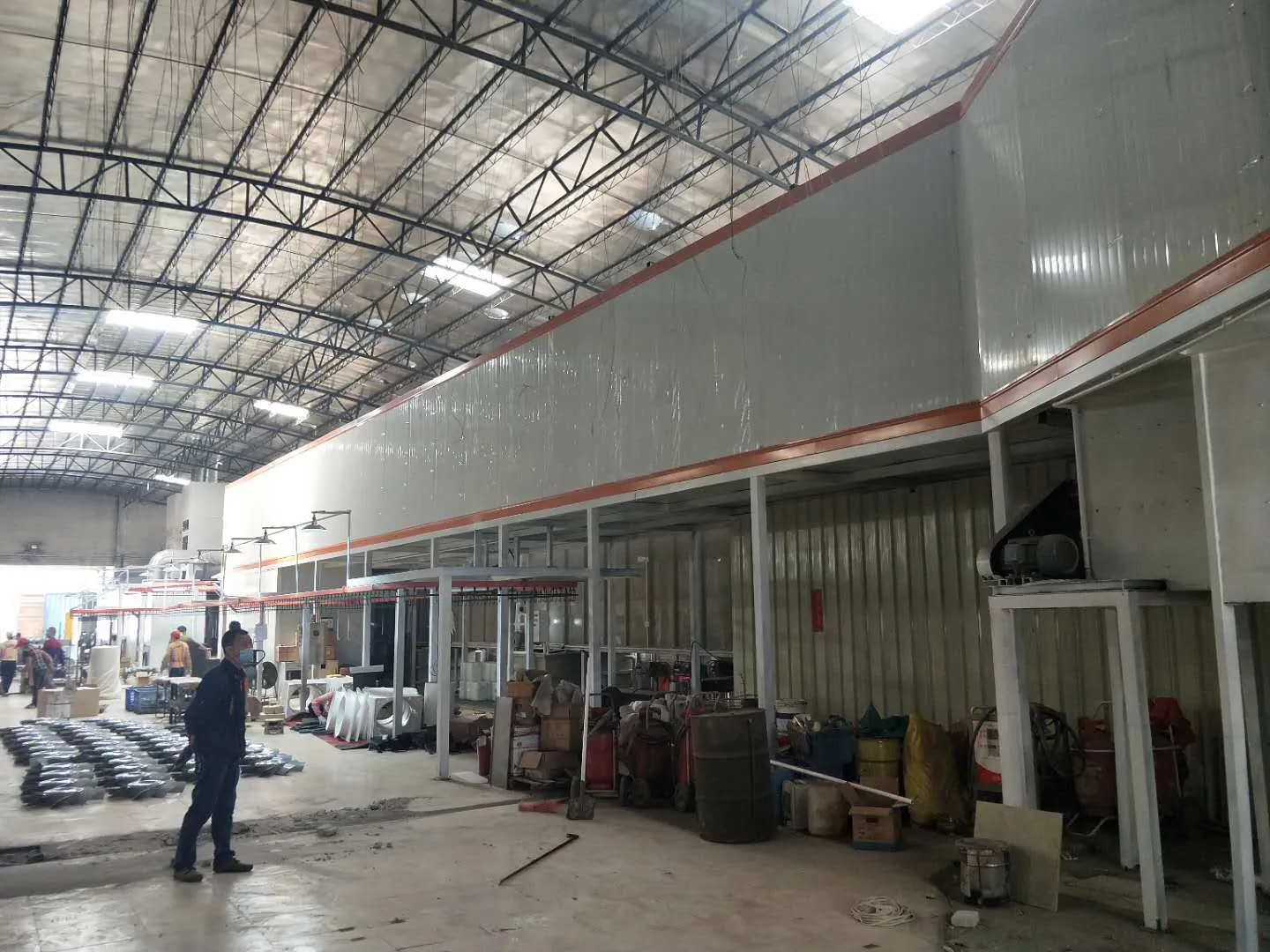
Energy Optimization: The Third Pillar
Most companies focus only on powder costs and labor. They miss the energy piece, which is 30-40% of your total operating costs.
Furnace optimization typically returns 15-25% energy savings:
Insulation upgrades: Many older furnaces have worn or inadequate thermal insulation. Upgrading from 50mm to 100mm rock wool can reduce heat loss by 20-30%. Cost: $5,000-$15,000. Annual energy savings at 96 kW furnace: $3,000-$5,000. Payback: 2-4 years.
Temperature control systems: Modern furnaces include PLC-based temperature profiling. Instead of running the furnace at full heat all day, it can modulate temperature based on workpiece flow. If you have gaps between batches or run at part capacity regularly, this saves 10-15% energy. Cost: $3,000-$8,000. Payback: 1-2 years.
Burner efficiency: For gas-fired furnaces, upgrading the combustion system to staged or modulating burners can improve efficiency by 5-10%. This is a $4,000-$10,000 retrofit that pays back in 2-3 years for high-volume operations.
Compressed air optimization: Your spray system probably wastes compressed air. Leaking lines, oversized supply, inefficient regulators—these are common and largely invisible. Auditing and fixing the compressed air system can save 10-20% of compressed air energy. Cost: $500-$2,000. Payback: immediate to 3 months.
Variable frequency drives (VFDs): Powder booth exhaust fans often run at full speed regardless of demand. Installing a VFD lets the fan speed adjust based on air quality monitoring. Energy savings: 20-30% for booth fans. Cost: $2,000-$5,000 per fan. Payback: 6-12 months.
Realistic energy cost reduction from furnace + booth optimization: 15-25% of total energy spend. At $10,000-$15,000 annual energy costs for a typical line, that's $1,500-$3,750 saved. Payback on typical projects: 18-36 months.
Existing Line Modification vs. Complete Reconfiguration: The Strategic Choice
Now here's where many operations go wrong: they treat optimization as a single-decision point. Either upgrade everything or do nothing.
In reality, you have two distinct paths, and the right choice depends on your current situation.
Path 1: Targeted Component Upgrades (Low Risk, Fast Implementation)
This means keeping your existing line's core structure and replacing or optimizing specific components.
What gets upgraded:
- Spray guns (parameter adjustment first, equipment swap if needed)
- Recovery system (add or improve existing one)
- Furnace controls (add PLC and VFD)
- Compressed air system (leak repair, regulator upgrade)
Timeline: 2-6 weeks of implementation, often without stopping production. You can phase upgrades across multiple production shifts.
Cost: $20,000-$60,000 depending on what's included
Risk: Low. Existing equipment remains in place. If new components underperform, you haven't committed to a full reconfiguration.
Achievable savings: 15-25% total cost reduction
Best for: Operations with fundamentally sound equipment that's running but not optimally. Equipment age: 5-15 years old. Production runs smoothly but costs are creeping up.
Path 2: Complete Line Reconfiguration (Higher Investment, Better Long-Term Performance)
This means redesigning the entire line to optimize from pre-treatment through curing.
What changes:
- Pre-treatment system redesign (faster cycles, better chemistry management)
- Spray booth layout (optimize gun positions, improve air flow)
- New spray equipment (current-generation guns, improved controls)
- Integrated powder recovery (second-stage filters if not present)
- Furnace replacement or comprehensive retrofit
- Conveyor speed optimization (match all stages to each other)
- Full electrical and control system modernization
Timeline: 8-16 weeks. Typically requires 2-4 weeks of production shutdown for installation and commissioning.
Cost: $80,000-$200,000+ depending on line complexity and automation level
Risk: Higher during transition. Requires external expertise. Production stops during implementation. Learning curve for operators on new systems.
Achievable savings: 25-40% total cost reduction (includes operational improvements you can't achieve through partial upgrades alone)
Best for: Operations where multiple systems are aging simultaneously. Equipment age: 15+ years. Frequent problems or inefficiencies across different line stages. Plans for increased volume (10%+) in next 2-3 years.
From our experience, complete reconfiguration makes sense when you're already facing:
- Recurring maintenance on furnace or spray equipment
- Frequent product quality issues despite parameter adjustments
- Unable to achieve target production speeds or volume
- Struggling to meet color or coverage consistency standards
If you're hitting these problems, partial upgrades are band-aids. You'll spend money, get temporary relief, then face the same problems again in 12-18 months.
Diagnostic: Where Is Your Cost Leaking?
Before you decide what to do, you need to understand what's actually broken.
Check your pre-treatment system first. This is the foundation. If workpieces are arriving at the spray booth with:
- Visible moisture on the surface
- Residual oil or film
- Inconsistent cleanliness between batches
Then your spray gun optimization will underperform. You're trying to spray onto contaminated surfaces, which means poor adhesion, rework, and frustration. Fix pre-treatment first. It's usually cheaper and faster than spray system work.
Audit your powder consumption next. Track how much powder you're buying per month and divide by the number of parts produced. If your per-unit powder cost is trending up, you have a waste problem—either worn spray equipment or inadequate recovery. Start with spray gun inspection and parameter review before investing in new recovery systems.
Measure your energy consumption. Get meter readings on your furnace over a week. Compare against baseline data or industry standards for your line size. If energy per part is 20%+ above what you'd expect, you have an efficiency problem. Insulation, controls, or burner issues are likely culprits.
Document your downtime. Track unplanned production stops over 4 weeks. Categorize by cause: spray equipment failures, furnace issues, control system problems, compressed air shortages, color change delays. The top 2-3 causes are usually where to focus first.
Calculate your labor allocation. How much time do operators spend on:
- Manual spray operation (vs. automated)
- Changeover and setup (color changes, fixture changes, part loading)
- Troubleshooting and maintenance
- Quality inspection and rework
If changeover and manual spray exceed 40% of production time, automation or process redesign is worth exploring.
What We Typically Recommend
Based on hundreds of optimization projects, here's our decision framework:
If you're seeing 15-20% cost creep with otherwise stable equipment:
Start with targeted optimization: spray gun tuning, basic recycling system evaluation, furnace control upgrades. Investment: $15,000-$40,000. Timeline: 3-8 weeks. Expected savings: 15-25%. This is the low-risk entry point.
If you're at 20-30% cost pressure with equipment age of 10+ years:
Consider a combination approach: phase 1 (targeted upgrades, 4-6 weeks), then phase 2 (selective new equipment, 4-8 weeks later) if phase 1 doesn't hit your targets. This spreads investment and risk.
If you're at 30%+ cost pressure, facing quality issues, or planning volume increases:
Reconfiguration likely makes sense. Full line redesign with modern equipment typically achieves 25-35% cost reduction plus efficiency and quality improvements. Investment: $80,000-$150,000. Timeline: 12-16 weeks total (including design and commissioning). This is a bigger bet, but it addresses root causes.
If your production volume is under 1,000 pieces monthly:
Focus on spray gun optimization and labor efficiency. Powder recycling ROI gets weak at this scale. Consider whether your coating operation should remain in-house or become outsourced.
A Word on Implementation Risk
Where most optimization projects stumble is not in the planning—it's in execution.
The most common mistakes we see:
-
Underestimating operator retraining time. A new spray system or furnace control requires 2-4 weeks for operators to reach full proficiency. If you expect instant performance on day 1, you'll be disappointed and frustrated.
-
Treating optimization as fire-and-forget. Once new equipment is installed, someone needs to own its operation and maintenance. Too many companies invest in improvements, then fail to manage them properly, and blame the equipment instead of the process.
-
Not measuring before and after properly. You need baseline data—powder consumption per part, energy per part, labor hours per 100 parts, defect rates. Without pre-project baselines, you can't verify whether you actually hit your savings targets. And if you can't measure it, you can't replicate it.
-
Chasing perfect instead of pursuing good enough. A 20% cost reduction that you can verify in 6 weeks is better than a promised 35% reduction that requires a 6-month redesign and never fully materializes.
-
Ignoring the human element. Equipment doesn't optimize itself. Your team needs to understand why changes are being made, how to operate new systems, and how to maintain them. Companies that win at cost reduction combine equipment improvements with operator engagement.
The Realistic Path Forward
You're not going to cut 50% from your powder coating costs. Accept that.
But 20-35%? That's realistic, measurable, and achievable without betting your operation.
Start here:
Week 1-2: Document your current cost structure. How much per part are you spending on powder, energy, labor, maintenance? Where do you see obvious waste?
Week 2-3: Conduct a spray system audit. Are guns performing as specified? Are parameters optimized for your workpiece geometry? Are there obvious maintenance issues?
Week 3-4: Review your pre-treatment and energy systems. Are these the constraint, or is spray/recovery your opportunity?
Week 4: Decide: targeted optimization (3-4 months, $20,000-$50,000, 15-25% savings) or reconfiguration (6-12 months, $80,000+, 25-35% savings)?
Then execute one path fully. Don't half-commit. Optimization requires sustained focus and proper management. Partial efforts deliver partial results.
From my experience, the companies that achieve real, lasting cost reductions are the ones that treat this like a project with ownership, measurement, and discipline—not as a quick fix bought from an equipment vendor.
Get Help If You Need It
If you're not sure where to start or need validation on your current line's health, reach out. We've done hundreds of cost reduction diagnostics across cabinet manufacturers, furniture producers, and metal finishing shops. We can typically identify your top 3-4 cost leaks and outline a realistic path forward within 2-3 conversations.
Contact us directly:
WhatsApp: +8618064668879
Email: ketumachinery@gmail.com
We're happy to discuss your specific situation—whether it's powder cost, energy, labor, or a combination. And we won't promise you 50%. We'll promise you realistic numbers backed by data.
The path to sustainable cost reduction in powder coating isn't magic. It's measurement, smart prioritization, and disciplined execution. That's exactly what we help our clients do.
 English
  German
  Vietnamese
  French