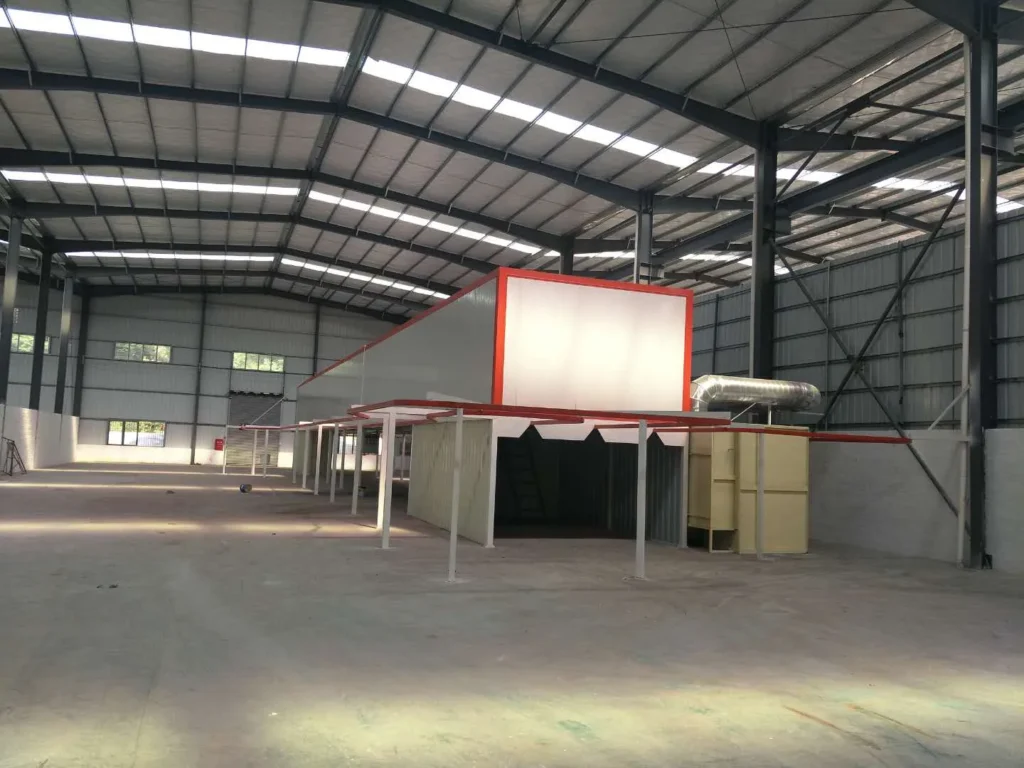
A Simple Conversation with a Peruvian Customer About Powder Coating: From Questions to Solutions
When we first received the inquiry from Peru, I knew this would be more than just a routine equipment consultation. The customer's questions were precise, their concerns were practical, and their timeline was tight. Over several weeks of back-and-forth communication and eventually an on-site visit to our factory, we worked through every detail—from pre-treatment logistics to local compliance standards. What emerged was a real conversation about what it takes to make electrostatic powder coating work in a new market.
This is that story, told through the actual questions a Peruvian manufacturing customer asked us, and how we answered them. If you're considering a powder coating line for your own operation, or if you're evaluating suppliers across borders, this conversation reflects the real concerns that matter most.
Why Powder Coating? Understanding the Customer's Initial Challenge
The customer's first message was straightforward: they were currently using traditional liquid spray painting, and the results were inconsistent. They lost 30-40% of their coating material to overspray, their drying times were long, and their monthly solvent disposal costs were becoming unsustainable. They'd heard about electrostatic powder coating but weren't entirely convinced it would solve their problems in Peru's tropical climate.
This is exactly where we start with most customers. The confusion between powder coating and traditional paint coating runs deep, and for good reason—the two processes are fundamentally different, and the choice isn't just about "better" or "worse." It's about fit.
I explained it this way: Powder coating uses charged particles that cling electrostatically to a grounded workpiece, then harden through heat. Traditional paint relies on solvent evaporation.
For this customer, the immediate benefits were clear:
- Material recovery: Powder that doesn't stick to the workpiece falls back to the collection system. We can recycle 85-95% of unused powder. With liquid paint, that overspray is waste.
- Coating thickness consistency: Electrostatic deposition naturally creates uniform coverage. Their current process had noticeable variations.
- VOC emissions: Powder produces minimal volatile organic compounds. Peru's environmental regulations are tightening, and this matters.
- Faster production: Powder cures in 10-20 minutes at 170-200°C, versus hours for wet paint in high humidity.
The customer wasn't entirely sold yet. "But does it work in our humidity?" they asked. "We're in the Andes region, near Lima. Temperature swings are significant, especially during the wet season."
That's when we pivoted to specifics.
Meeting the Peruvian Customer: Key Requirements and Expectations
Product specifications and coating quality demands
The customer manufactures steel safety cabinets and metal storage enclosures. These are industrial products—they need to withstand salt spray environments (they're sometimes used in coastal logistics facilities), resist corrosion for 5+ years, and maintain a premium appearance. Scratch resistance matters too; these cabinets get handled roughly in warehouses.
They showed us samples of their current output. The paint finish was reasonably smooth, but we could see color variation between batches, occasional runs and drips where the applicators had moved too slowly, and some areas where the coating was noticeably thinner than others. This inconsistency was hurting their customer satisfaction ratings.
I walked them through what powder coating would deliver:
- Color consistency: All units sprayed in the same batch, with the same powder batch, will have identical color. We use a single powder material throughout, not multiple spray passes with potential mixing variations.
- Coating thickness uniformity: Electrostatic charge distribution is physics-based. The powder lands and adheres proportionally across all surfaces, including difficult angles and internal edges.
- Adhesion strength: For these steel cabinets, powder provides superior adhesion. We prep the steel with a phosphate conversion coating beforehand, creating a micro-textured surface. The powder bonds directly to this, not through a wet carrier that will eventually evaporate and weaken over time.
- Salt spray resistance: We run salt spray tests on samples. Properly applied and cured powder coating typically exceeds 1000 hours on steel substrates, depending on the powder formulation. Their liquid paint was testing around 300-400 hours.
"How do we know you're not overselling?" the customer asked, directly and fairly.
We offered to send samples—cabinet panels sprayed with our system, tested to Peru's maritime corrosion standards. We also gave them contact information for two existing clients in Mexico and Chile who manufacture similar products and use our lines. The customer could verify independently.
Production capacity and timeline considerations
They needed the line installed and operational within 8 months. Current production was 80-100 cabinets per week, but they were growing and wanted capacity for 150 per week within two years.
This matters enormously for line design. A line designed for 100 units/week has a very different footprint, throughput speed, oven residence time, and cooling strategy than one designed for 150.
We ran the math:
- 150 cabinets per week = roughly 30 units per day (assuming 5-day operation)
- 30 units per day = 3-4 units per hour, depending on shift patterns
- Average cabinet dimensions: 1200mm L × 800mm W × 1400mm H
- Line speed: We'd need roughly 8-10 minutes per unit in the oven, plus handling and cooling time
- Oven size: Approximately 5.5m long, 2.2m wide, 2.1m tall
- Installation timeline: 6-7 weeks for fabrication in our factory, 2-3 weeks for shipping and on-site installation/commissioning
We were comfortable with the timeline, but only if:
- They finalized specifications within 3 weeks (we needed time for detailed engineering drawings)
- Their facility was ready: proper electrical infrastructure, foundation prep, ventilation exhaust routing
- They had designated personnel for 2-week on-site training during installation
"What if something goes wrong after installation?" they asked. This is the moment suppliers often gloss over. We didn't.
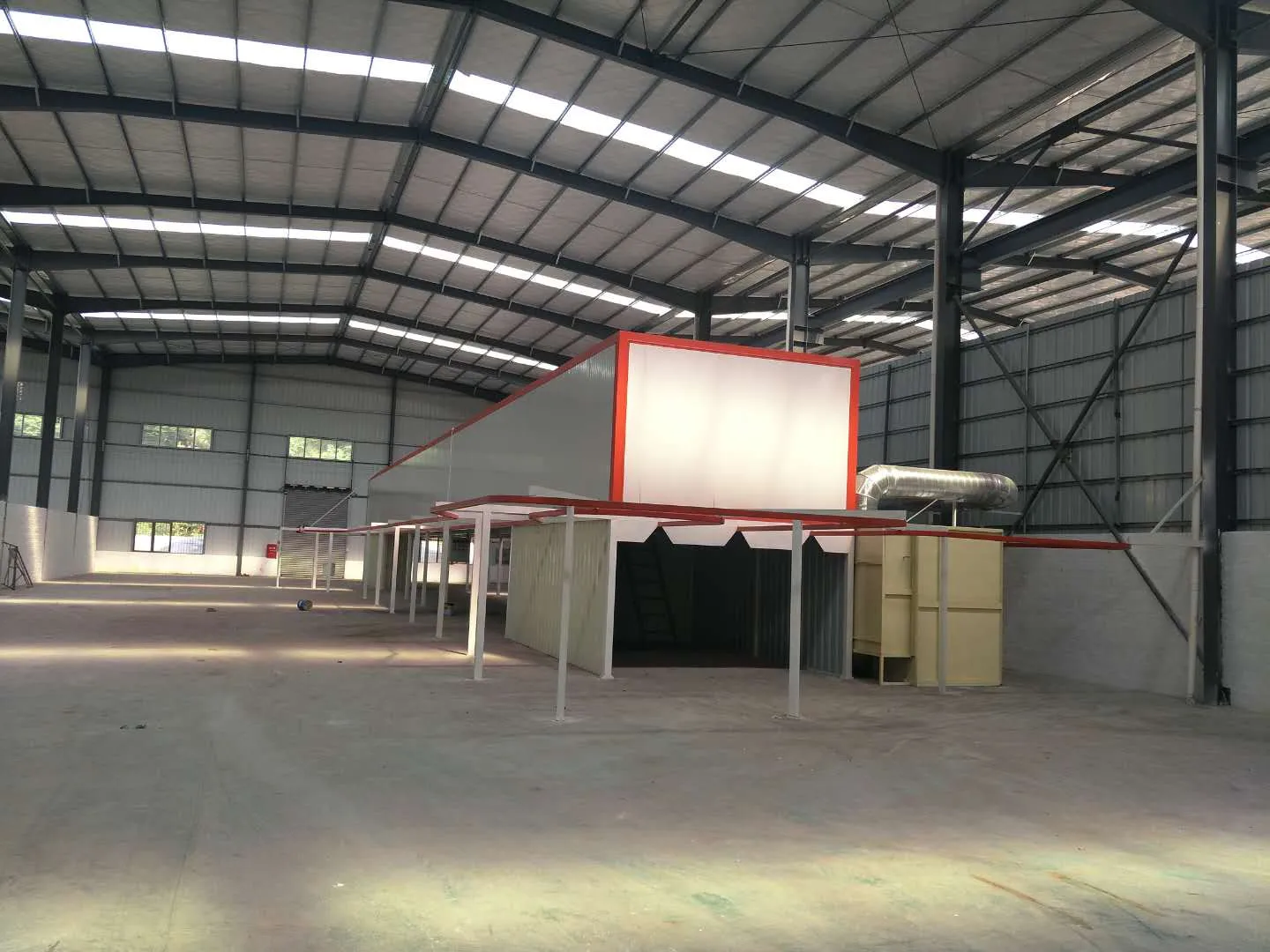
The Three Critical Stages: Pre-treatment, Spray Application, and Curing
Why pre-treatment is the foundation of coating success
This is where most projects either succeed or fail, and it's where we had to be most direct with the Peruvian customer.
"Your current paint system works on the surface. If the surface is dirty, you just paint over it—the dirt gets sealed in, but the paint still clings. Powder coating is different. If the surface isn't clean, the powder won't adhere properly. Incomplete pre-treatment is the #1 cause of coating failure we see in field installations."
Their current process: manual wire brushing, followed by spray with compressed air. That's not enough for powder coating.
We proposed a three-stage pre-treatment system:
Stage 1: Alkaline Wash — Remove cutting oils, machining residues, dust, and handling oils using a heated alkaline solution. Cabinet parts are sprayed or immersed for 3-5 minutes.
Stage 2: Phosphate Conversion Coating — Apply a zinc or iron phosphate layer. This creates microscopic texture and chemical bonding sites for the powder. Duration: 2-3 minutes. This step is non-negotiable for steel cabinets exposed to corrosive environments.
Stage 3: Pure Water Rinse + Blow-Dry — Remove all phosphate residue with DI water (critically important in Peru's high-humidity climate; tap water mineral content can interfere), then blow-dry with compressed air at 6 bar pressure.
Total time: approximately 12-15 minutes per batch, depending on cabinet size and immersion tank design.
"But that's longer than our current paint prep," the customer objected.
"Yes. And it's also why your coatings will last 5+ years instead of 1-2. Think of it as paying 12 minutes now to avoid warranty claims and customer dissatisfaction later."
We also flagged something critical for Peru's climate: compressed air quality. In high-humidity regions, water condenses in air lines constantly. We required them to install:
- An air dryer (compressed air must be ≤-40°C dew point)
- Multi-stage coalescing filters
- Regular water trap drainage (daily, not weekly)
One customer in a similar humid climate skipped this. They got pinhole defects—microscopic voids caused by water vapor escaping during cure. It took them two months and a complete system flush to diagnose the problem.
Addressing spray consistency and finish quality concerns
The customer's main question: "How do we avoid the uneven coverage we see with our current spray painters?"
The answer isn't about hiring better painters. It's about removing human variability from the process.
We explained the electrostatic spray system:
-
High-voltage generation: The spray gun is connected to a 60-90 kV power supply. This charges the powder particles instantly as they're atomized by compressed air.
-
Electrostatic attraction: The cabinet parts sit on a grounded conveyor or cart. The charged powder particles are naturally attracted to the workpiece, following the contours of the metal surface. They land perpendicular to the surface—not at shallow angles like manual spray painters often achieve.
-
Faraday cage compensation: Internal cavities and deep recesses naturally receive less powder because the electric field lines don't penetrate deeply (this is called the Faraday cage effect). We compensate by:
- Using multiple spray guns angled to reach internal surfaces
- Slightly lower voltage to reduce the "throw distance" for tighter deposition
- Slower line speed to extend spray time
- Occasionally pre-positioning parts to optimize spray gun access
For their steel cabinets with door openings, this required careful line design. We allocated 3 spray gun positions instead of the standard 2, specifically to handle the interior surfaces.
"What about edge buildup?" they asked—a valid concern. Paint and powder both tend to accumulate at sharp edges and corners.
We addressed this through:
- Rounded internal edges in their cabinet design (we suggested this improvement; they accepted)
- Spray gun positioning to avoid direct perpendicular spray on edges
- Gun parameter tuning: Slightly reduced air pressure and powder flow at edge zones
We also committed to providing them with powder application samples before full production—short runs (5-10 cabinets) where we'd test different parameter combinations on their exact cabinet geometry and show them the results.
Curing specifications for tropical climates
Here's where Peru's climate becomes critical.
Standard powder coating cure: 170-200°C for 10-20 minutes. But that's generic. In Peru's high-altitude regions (some facilities are at 2,000-3,000 meters above sea level), air pressure is lower. Oven performance changes.
We consulted with the powder manufacturer they'd selected (a well-known European brand) to confirm cure specs for elevation. The recommendation: 190°C for 15 minutes at their altitude, not 170°C for 10 minutes.
Why? Lower atmospheric pressure means:
- Heat transfer is slightly less efficient
- Powder curing reactions proceed at marginally slower rates
- Under-curing is a real risk if you don't account for elevation
We also had to address humidity after curing. Peru's wet season can mean 70-90% relative humidity. If a just-cured cabinet steps out of the oven and immediately enters a high-humidity zone, moisture can condense on the hot surface and compromise surface finish gloss and adhesion.
Our recommendation: staged cooling zone after the oven.
- Oven exit: 190°C
- Cooling zone 1: Ambient air circulation, 60-90°C (10 minutes)
- Cooling zone 2: Room temperature (5-10 minutes before packaging)
This costs space and adds slight line length, but prevents the "humidity bloom" defect—a whitish haze that can appear on glossy finishes when thermal shock meets moisture.
The customer appreciated this thinking. "Most suppliers just say '170°C, 10 minutes' and leave it at that," they said. "You're actually considering our geography."
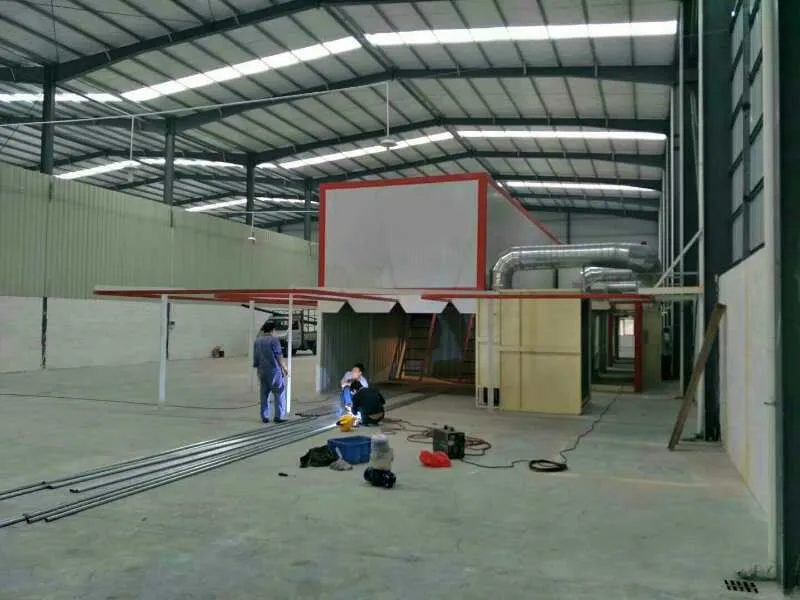
Adapting Solutions to Local Standards: Peru-Specific Challenges
Electrical infrastructure and equipment compatibility
This might seem like a simple checkbox, but it's where international projects often derail.
Peru's standard is 220V, 50Hz, 3-phase. But voltage stability can be inconsistent, especially outside Lima. Surges and drops of ±10% are common.
Our powder coating line requires:
- Curing oven heaters: Typically 60-80 kW (depending on oven size)
- Powder room exhaust fans: 20-30 kW
- Compressor system: 10-15 kW
- Control systems, motors, conveyors: Another 15-20 kW
- Total: Approximately 115-145 kW
That's not trivial. Their facility needed electrical upgrades—a dedicated 150 kW subpanel with proper surge protection and voltage regulation.
We specified:
- A voltage stabilizer (±5%) at the main line entry point
- Soft-start relays on large motors to smooth power draw
- Proper grounding and earth fault protection (Peru's electrical code requires this; many older facilities don't have it)
We also discovered their facility's backup generator was undersized. "What happens if the line is in the middle of a cure cycle and power cuts?" they asked.
Fair point. We recommended either:
- Upgrade the generator to handle the full 150 kW load, or
- Use UPS (uninterruptible power supply) for the control system only, allowing the heaters to cycle off gracefully without causing equipment damage or incomplete cure
They chose option 2—more economical, and sufficient for their risk profile.
Environmental compliance and emission requirements
Peru's environmental regulations (MINAM standards) require monitoring of air emissions from industrial facilities. Powder coating lines emit:
- Volatile organic compounds (VOCs): Minimal with powder (huge advantage over liquid paint)
- Particulate matter (PM10 and PM2.5): Powder dust that escapes filtration
- Noise: Fans and exhaust systems
We designed the line with:
Emission Control:
- Primary separator: Large cyclone (recovers 95% of powder)
- Secondary recovery cabinet with pleated filter cartridges (captures remaining fine particles)
- Final exhaust filter before atmospheric release
- Expected final emission: <10 mg/m³ of particulate (well below Peru's 50 mg/m³ limit)
Noise Control:
- Line equipment noise: ~85 dB
- We specified acoustic enclosure panels around the powder room and oven exhaust
- Final noise level: ~78-80 dB (compliant with Peru's 80 dB limit for industrial facilities)
We also provided emissions testing documentation from our factory and similar installations, showing compliance with Peru's standards. The customer would need to file this with MINAM during their facility's environmental permit renewal.
One detail they appreciated: we didn't just say "it's compliant." We provided the actual technical reports and offered to support their environmental consultant if questions arose during the permitting process.
Logistics and installation considerations
Peru's logistics are more complex than many countries. Getting our equipment there required:
-
Factory pre-assembly in China: We pre-assembled 60-70% of the line to reduce on-site assembly time and reduce risk of damage during shipping.
-
Containerized export: Two 40-foot containers, properly braced and climate-controlled. Total weight: ~45 tons. Cost: ~$8,000-10,000 just for freight.
-
Port entry and customs: 2-3 week clearance window typical for Peru. We provided all documentation in Spanish (not just English), which accelerated customs review.
-
Inland transport: From Lima port to their facility (inland location). Required specialized heavy transport. The customer handled this, but we provided specifications so they could arrange it properly.
-
On-site assembly and installation: Our two technicians + two days of site preparation by their team. This included:
- Foundation verification (concrete pad must be level to ±5mm)
- Utility connections (electrical, compressed air, drainage)
- Safety scaffolding setup
- Equipment positioning and anchoring
Total on-site time: 14 days for full installation and initial dry-run testing.
We also coordinated the installation to avoid their peak production season (October-November), which the customer appreciated. "Most suppliers would just push through," they said.
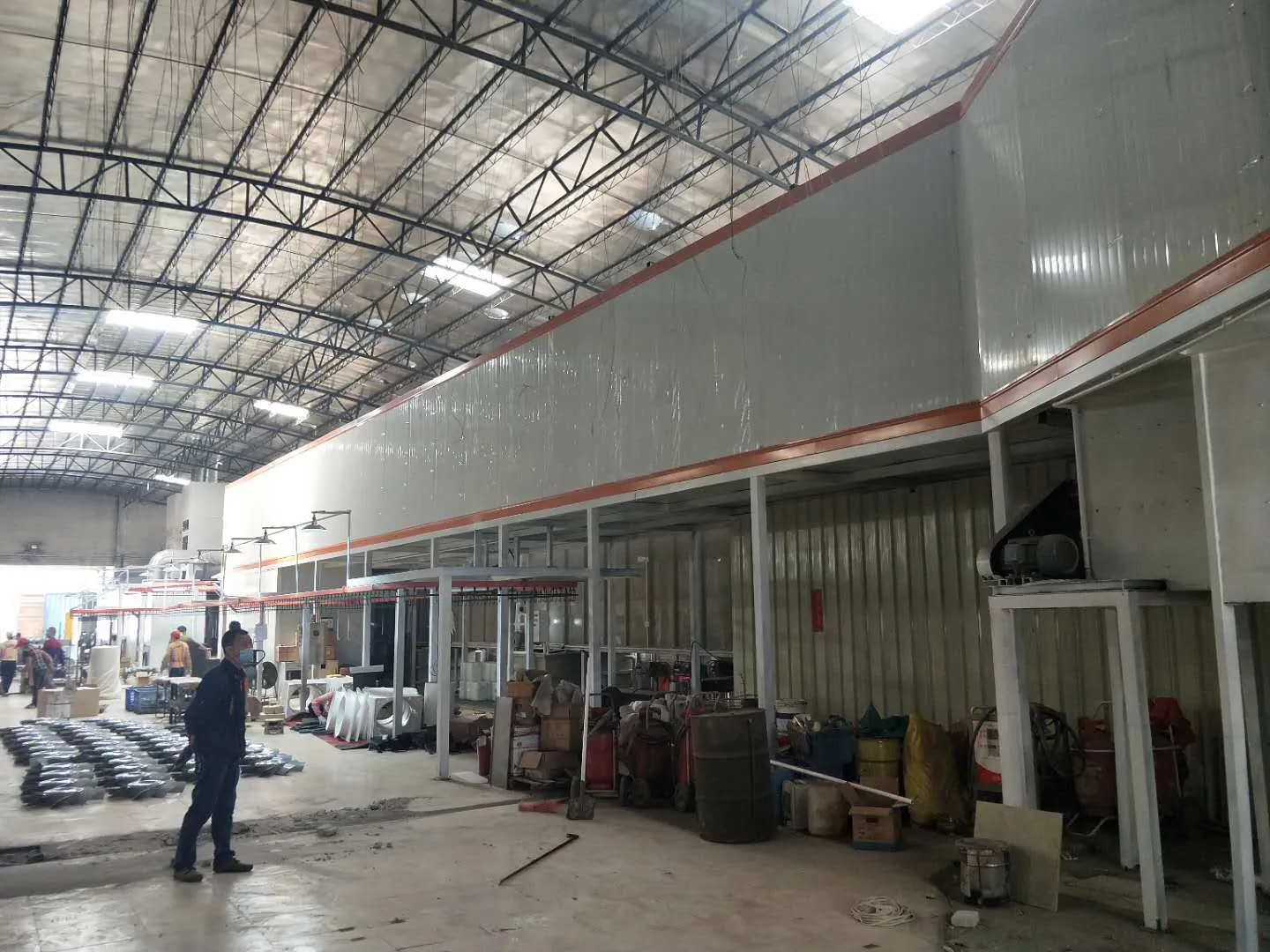
From Concern to Confidence: How We Addressed Customer Doubts
Equipment reliability and ease of maintenance
The customer's underlying worry: "What if something breaks? We're in Peru, not China. How do we get support?"
This is where many suppliers go silent. We didn't.
We committed to:
-
Spare parts kit shipped with the initial equipment
- Replacement spray gun electrodes (wear item, 6-month typical life)
- Filter cartridges for the secondary recovery cabinet
- Circulating pump for the pre-treatment system
- Conveyor chain links and bearings
- Electrical contactors and relays
- Estimated value: $3,000-5,000
-
Remote diagnostics capability
- Control system has internet connectivity and remote monitoring
- Our technicians can log in and view parameter readings, fault codes, and troubleshoot issues via video call or email
- This isn't sci-fi—it's standard industrial IoT now
-
Local supply chain development
- We identified local suppliers in Peru for consumables (compressed air filters, hydraulic oil, standard electrical components)
- We provided the customer with part numbers and supplier contacts
- Estimated lead time for urgent replacements: 2-3 days, not 2-3 months
-
Preventive maintenance schedule
- Weekly: Check filter saturation, oil levels, spray gun condition
- Monthly: Inspect conveyor tension, verify oven thermostat calibration, check for powder accumulation
- Quarterly: Replace filters, inspect bearings, test emergency stop functionality
- Annual: Full system inspection by our technician (we offered a discounted rate for annual support contracts)
We also gave them a maintenance manual in Spanish, not just English. Details matter.
Training, technical support, and spare parts availability
"We need people who can actually run this and keep it running," they said. Fair.
Our training commitment:
On-site training (2 weeks during installation):
- Operators: Line startup, normal operation, basic troubleshooting, emergency shutdown, safety procedures (4 days)
- Maintenance technician: Preventive maintenance, filter replacement, powder system diagnostics, minor electrical/mechanical repairs (5 days)
- Supervisors/Quality personnel: How to test coating thickness, adhesion, cure verification, visual defect inspection (3 days)
We trained 8 people total—more than they probably needed, but we wanted to ensure continuity if someone left the team.
Remote support (ongoing):
- Email support during business hours (we respond within 24 hours, usually within 4 hours)
- Video call troubleshooting for complex issues
- Annual on-site visit by our technician for preventive inspection and parameter optimization
- Access to our technical resource library (manuals, troubleshooting flowcharts, parameter reference guides) in Spanish and English
Spare parts logistics:
We set up a simple system. They can order parts through our local distributor in Lima (we connected them during the project), with 3-5 day delivery to their facility. Common wear items are kept in stock there. Uncommon items (like a replacement power supply for the spray gun control unit) are drop-shipped from our factory, typically arriving within 2-3 weeks.
"What about cost?" they asked. "Are spare parts marked up 300%?"
We showed them our pricing. Spray gun electrode: $45 (retail). Our margin: $15. This is reasonable, not exploitative. They felt respected by this transparency.
The customer made a comment that stuck with me: "You're not just selling us a machine. You're selling us a partnership."
That's exactly right. And it's why we invest in this level of support, even though it cuts into short-term margins. Long-term reputation and customer retention matter more.
The Path to Closing: Investment, Delivery, and Long-term Partnership
Transparent pricing and payment terms
By the time we reached pricing discussion, we'd spent 8 weeks on site visits, technical drawings, sample testing, and environmental compliance verification. The customer knew exactly what they were getting.
Equipment package:
- Pre-treatment system (alkaline wash + phosphate conversion + rinse/dry): $28,000
- Electrostatic spray booth with powder recovery: $35,000
- Curing oven (190°C, variable speed, altitude-compensated): $42,000
- Conveyor system (speed-adjustable, properly sized for 150 units/week): $18,000
- Control system (PLC-based, with monitoring capability): $15,000
- Spare parts kit + documentation (Spanish): $5,000
- Equipment subtotal: $143,000
Installation and services:
- On-site installation and commissioning: $12,000
- Operator and technician training: $8,000
- Environmental compliance filing support: $2,000
- Freight and customs coordination: $10,000
- Services subtotal: $32,000
Total project cost: $175,000
Payment terms:
- 30% deposit upon contract signature ($52,500)
- 40% upon shipment from our factory ($70,000)
- 30% upon successful on-site commissioning ($52,500)
This is standard in our industry. We explained why: the first payment covers materials and manufacturing; the second ensures they're committed before we incur freight costs; the third happens after we've successfully installed and trained their team. It's fair to both parties.
The customer asked about financing. We don't directly offer it, but we provided contact information for equipment financing companies that work in Peru. We also showed them ROI projections:
- Current coating cost per unit (labor + materials + waste): $8.50
- New powder coating cost per unit: $3.20
- Savings: $5.30 per unit × 150 units/week × 50 weeks/year = $39,750 annual savings
- Payback period: 4-5 years (accounting for equipment, utilities, maintenance)
Actually, it was better than that because they could increase production volume and charge premium prices for higher-quality finishes. But we didn't oversell the financial upside.
Installation timeline and on-site commissioning
Manufacturing phase (our factory):
- Design finalization: 2 weeks
- Parts fabrication and assembly: 8 weeks
- Quality testing: 2 weeks
- Pre-shipment inspection: 1 week
- Total: 13 weeks
Shipping and logistics:
- Container loading and port processing: 1 week
- Transit (China → Peru): 2-3 weeks
- Port entry and customs clearance: 2-3 weeks
- Inland transport to facility: 1 week
- Total: 6-8 weeks
On-site installation:
- Facility preparation and foundation verification: 3 days
- Equipment positioning and electrical/utility connections: 5 days
- Assembly of auxiliary systems (pre-treatment tanks, powder storage): 3 days
- Control system programming and testing: 2 days
- Dry-run trials (no actual spraying): 1 day
- Total: 14 days
Operator training and hand-off:
- Phase 1 (days 1-3): Basics, safety, normal startup/shutdown
- Phase 2 (days 4-7): Production runs at low volume, troubleshooting
- Phase 3 (days 8-10): Full production trials, quality verification
- Phase 4 (days 11-14): Independent operation by customer team, with our support
- Total: 14 days
Full timeline from contract signature to operational production: approximately 24-26 weeks (6 months).
The customer had said 8 months was their deadline. We were within that window with margin.
During commissioning, we run a series of acceptance tests:
| Test | Target | Method |
|---|---|---|
| Coating thickness uniformity | 60-80 microns ±5% | PosiTector meter, 10 locations per cabinet |
| Color consistency | ΔE < 1 | Spectrophotometer, batch comparison |
| Gloss level | 60-80 GU (semi-gloss) | Gloss meter, 5 locations per cabinet |
| Adhesion (cross-hatch) | 4B (no removal) | ASTM D3359 standard |
| Salt spray resistance | ≥500 hours | ASTM B117, per powder spec |
| Production rate | ≥150 units/week | Measured over 1-week trial |
All tests must pass before we sign off. If they don't, we troubleshoot and retest.
Ongoing support and customer success
We structured a 2-year support agreement:
Year 1 (premium support):
- Unlimited remote technical support (email, phone, video)
- 2 on-site visits by our technician (3 days each) for preventive maintenance and optimization
- Spare parts at cost (no markup, just reimbursement of our purchase price)
- Software updates and parameter adjustments at no charge
- Cost to customer: $3,000
Year 2+ (standard support):
- Remote technical support during business hours
- 1 on-site preventive maintenance visit per year (2 days)
- Spare parts at standard retail prices (15% markup to cover logistics)
- Software updates available
- Cost to customer: $1,500/year
We also promised:
- Within 48 hours of any production stoppage caused by equipment failure, we'll either fix it remotely or dispatch a technician (cost covered by support agreement, not separate)
- If new versions of their powder coating arrive on the market with different cure specs or application parameters, we'll test them and send updated settings
The customer appreciated this level of commitment. "You're not disappearing after the sale," they said.
Exactly. Our reputation depends on their success. If their cabinets fail prematurely or the line breaks down repeatedly, they'll share that story with other buyers in Peru. If it runs smoothly and increases their productivity, they'll recommend us.
Why This Customer Chose Us: The Decisive Factors Behind the Deal
Looking back at the journey, several factors clearly influenced their decision:
1. We understood their specific context.
We didn't just talk about "powder coating." We talked about humidity, altitude, electrical instability, and customs logistics—the actual realities of operating in Peru. This showed we weren't applying a one-size-fits-all template.
2. We were transparent about trade-offs.
When they asked, "Will this work in our climate?" we didn't say "Yes, 100% guaranteed." We said, "Yes, with these specific design choices to compensate for humidity and elevation." We explained the reasoning.
3. We provided proof, not just promises.
We offered them contact details for other customers they could call directly. We provided technical test data. We showed them our own facility and working equipment. We offered sample cabinets sprayed on our system.
4. We addressed the full project, not just the machine.
We didn't stop at "here's the spray booth." We helped them understand pre-treatment requirements, electrical upgrades, environmental compliance, training needs, and spare parts logistics. This turned a complicated purchase into a manageable, well-planned project.
5. We invested in understanding their real needs.
Our process took time—multiple video calls, detailed site assessments, competitor analysis, ROI modeling. Some suppliers would have quoted within days. We took weeks. The customer saw the difference.
6. We structured pricing fairly.
We showed them exactly where their money went and why. No inflated spare parts markup. No hidden fees. This built trust.
7. We committed to partnership, not just delivery.
Support, training, remote diagnostics, preventive maintenance, local supply chain development—these things cost us money and time. But they communicate that we care about their long-term success, not just the initial sale.
On week 24 of the project, we signed the contract. On week 25, we received the 30% deposit. On week 52, their cabinet production line was running at 85% utilization, producing coated cabinets that passed every quality test and looked significantly better than their previous liquid-painted output.
One year later, we did our first annual maintenance visit. The equipment had run 10,000+ operating hours with zero unscheduled downtime. The customer was running it at full capacity—150+ units per week.
"We've cut our scrap rate in half," they told us. "The coating defects are almost zero now. Our customers are seeing the difference. We've raised our prices 8% because the quality is noticeably better."
That's the outcome we aim for every time: not just a sale, but a transformation in how they operate.
Key Takeaways for Evaluating Your Own Powder Coating Solution
If you're considering a powder coating line for your operation, here's what this conversation with our Peruvian customer teaches us:
| Decision Factor | Why It Matters | What to Ask Your Supplier |
|---|---|---|
| Pre-treatment design | Poor pre-treatment = coating failure, regardless of everything else | What specific pre-treatment stages are included? Can they justify each step for your substrate type? |
| Environmental adaptation | Altitude, humidity, temperature, electrical stability vary by region | How does your design account for MY specific geography and climate? |
| Local compliance | Regulations differ by country. Non-compliance = fines and shutdowns | Can you provide compliance documentation in MY country's language and format? |
| Spare parts strategy | When something fails, can you get it fixed in days or months? | Where are spare parts stocked? What's the typical lead time? |
| Training depth | Your team needs real knowledge, not just a quick demo | How long is on-site training? How many of my staff will be trained? |
| Support model | Equipment failures hurt revenue. Good support prevents this | Do you offer remote diagnostics? What's your response time? |
| Financial transparency | Hidden costs appear later and poison the relationship | Can I see a detailed cost breakdown for every component? |
| Reference customers | Talk to people who actually use the equipment in similar conditions | Can you provide 3-5 reference customers in my region or industry? Can I call them directly? |
Conclusion: From Questions to Production
What started as a straightforward inquiry from Peru became a 6-month journey of technical alignment, environmental compliance, logistics coordination, and relationship building. The customer came to us with concerns about humidity, consistency, cost, and support. We addressed each one—not with generic assurances, but with specific, documented solutions tailored to their context.
The result wasn't just a sale. It was a partnership that's now running smoothly, generating value for their business, and serving as a reference case for other potential customers in Latin America.
If you're ready to explore how a customized powder coating line could work for your operation, whether you're in Peru, elsewhere in Latin America, or anywhere else, we're here to have this conversation with you. We'll ask the right questions about your products, your facility, your climate, and your goals. We'll show you our equipment in action. We'll introduce you to similar customers. And we'll design a solution that actually fits your reality—not a template that happens to fit poorly.
Let's talk. Contact us at WhatsApp: +8618064668879 or Email: ketumachinery@gmail.com to schedule a consultation. Whether you need a full-scale production line or want to understand if powder coating is right for you at all, we'll take the time to explore it properly.
Your best coating solution is waiting. It just requires the right questions and the right partner to help you find it.
 English
  German
  Vietnamese
  French