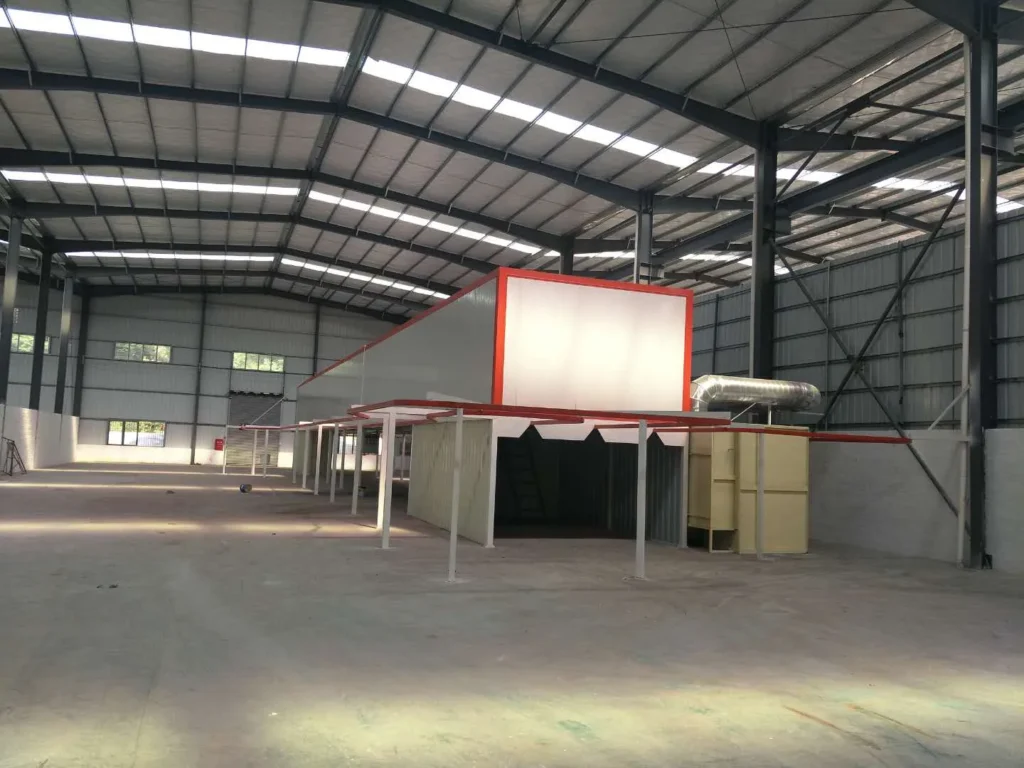
Comparing Efficiency of Various Powder Coating Techniques in Electrostatic Spray Application
Introduction
When I work with manufacturing clients on powder coating line optimization, I notice that efficiency discussions often focus narrowly on spray gun technology—as if choosing the right electrostatic gun automatically solves all production challenges. From my years managing projects across cabinet manufacturers, furniture producers, and aluminum profile shops, I've learned that spray gun selection is only one piece of the efficiency puzzle.
The reality is this: overall coating line efficiency depends on how well your spray technique integrates with pre-treatment quality, air system stability, workpiece grounding, and curing parameters. A theoretically superior spray gun won't deliver expected transfer rates if your compressed air carries moisture, or if pre-treatment leaves residual salts on the surface.
This article breaks down how different powder coating techniques actually perform in real production environments—not just on paper. I'll compare corona electrostatic guns, friction spray systems, and rotary atomizers across the dimensions that matter most: transfer efficiency, material utilization, production speed, coating quality, and long-term operational cost.
Table of Contents
- Different Powder Coating Techniques: Types and Working Principles
- Transfer Efficiency and Powder Utilization Rate Comparison
- Production Efficiency: Impact on Throughput and Cycle Time
- Coating Quality Performance Across Different Techniques
- Cost Analysis: Long-Term Operational Expenses
- Application Suitability: Matching Techniques to Workpiece Types
- Critical Success Factors Beyond Spray Gun Selection
Different Powder Coating Techniques: Types and Working Principles
Electrostatic Corona Spray Guns
Corona discharge electrostatic guns are the industry standard. They work by ionizing air at the spray gun tip, creating a high-voltage electric field (typically 60–90 kV) that charges powder particles as they exit the nozzle.
How it works:
The gun generates a corona discharge between the electrode and the target. Powder passes through this ionized region and becomes negatively charged. Because the grounded workpiece is positively charged in relation, the powder is electrostatically attracted to the surface.
Key characteristics:
- Spray range: Typically 150–300 mm, depending on gun design and air pressure
- Particle charge efficiency: Can be very high with proper setup
- Operational simplicity: Relatively straightforward control via voltage and air pressure adjustment
- Powder recovery potential: Works well with cyclone and secondary recovery systems
From my observation on cabinet and sheet metal projects, corona guns excel when workpieces are relatively flat or have moderate geometric complexity. The challenge emerges with deep cavities or internal recesses—the electric field lines struggle to penetrate these areas effectively (Faraday cage effect), leaving some surfaces undercoated.
Friction Spray Guns
Friction systems charge powder particles through mechanical interaction rather than corona discharge. As powder particles are forced through a specially designed nozzle (often made of ceramic or low-friction material), they acquire static charge through friction between particles and the nozzle walls.
How it works:
Powder is pneumatically conveyed at high pressure through a small-diameter nozzle. Friction between particles and the nozzle generates electrostatic charge. The charged powder exits with more forceful atomization than corona systems.
Key characteristics:
- No high-voltage electrode: Simpler electrical system, fewer grounding sensitivity issues
- Better penetration into complex geometries: Higher atomization force helps powder reach deep recesses
- Powder formula sensitivity: Requires powder specifically designed for friction charging—not all powders work equally well
- Air pressure dependency: Requires stable, higher pressure (typically 6–8 kg/cm²)
I've used friction guns successfully on furniture projects with intricate joint details and on aluminum profiles with complex cross-sections. The trade-off is operational complexity—friction systems are more sensitive to powder moisture content and particle size distribution. If your powder sits in a humid environment or absorbs moisture, friction charging becomes unreliable.
Rotary Cup Spray Systems
Rotary atomizers use a spinning cup or disk to atomize powder. Powder fed into the cup is flung outward by centrifugal force, creating a fine mist that can be charged electrostatically or applied without charge.
How it works:
Powder is deposited on a rotating cup (typically 1,500–3,000 rpm). Centrifugal force throws the powder radially outward, breaking it into a uniform mist. Electrostatic charge can be applied to this mist for enhanced deposition.
Key characteristics:
- Finest particle distribution: Generally produces more uniform, smoother finish
- Lower overspray sensitivity: Better suited for finishing applications requiring aesthetic quality
- Higher air consumption: Requires more compressed air than corona or friction systems
- Flexibility for part size variation: Can handle wider range of workpiece dimensions without significant parameter changes
Rotary systems work well for outdoor furniture and premium decorative coatings where surface finish quality matters more than pure throughput. However, the higher compressed air demand increases operating cost—something to consider if your facility has air generation constraints.
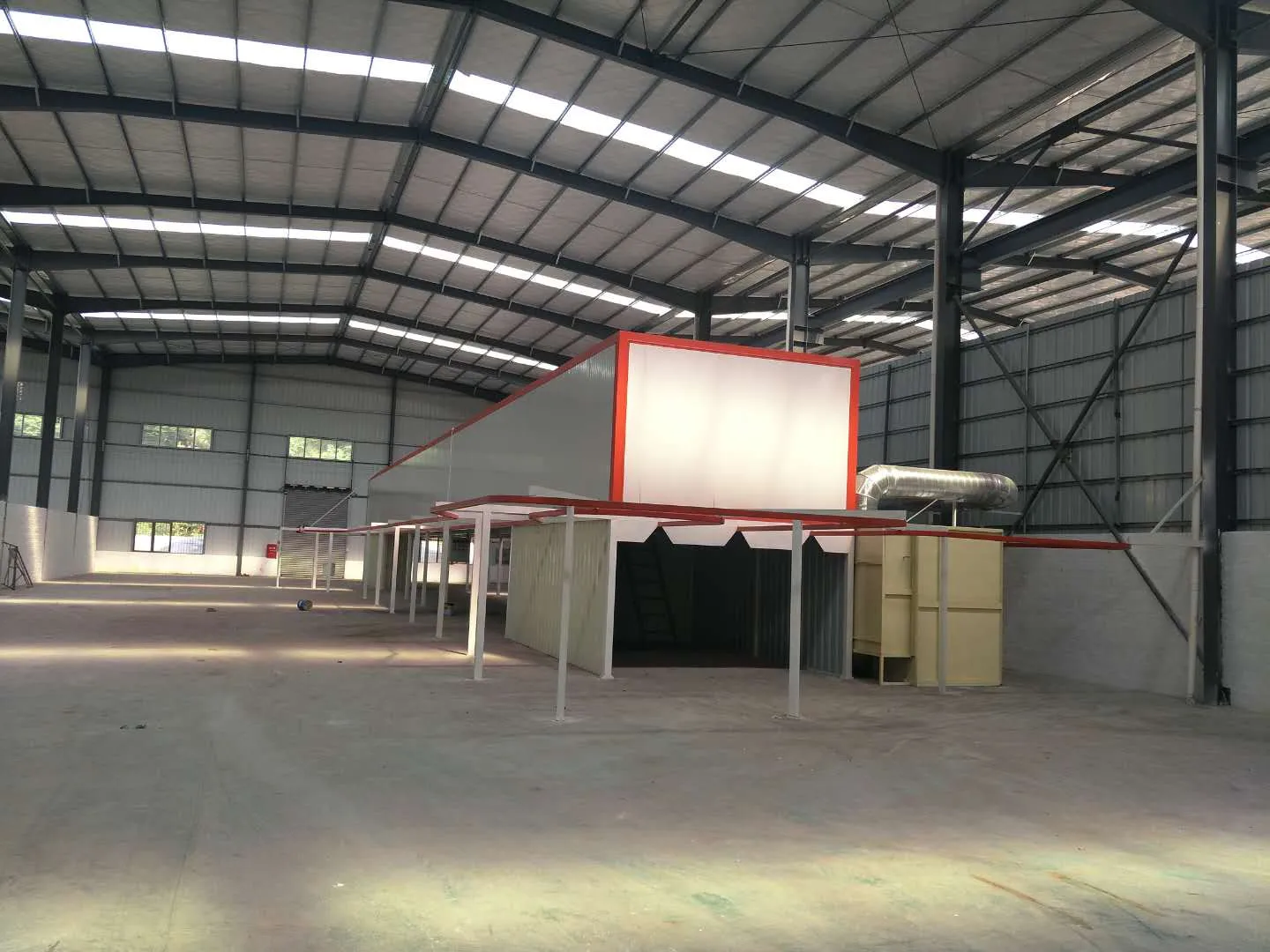
Transfer Efficiency and Powder Utilization Rate Comparison
Theoretical vs. Actual Transfer Efficiency in Field Operations
Transfer efficiency is the percentage of powder sprayed that actually adheres to the workpiece. On paper, corona guns can achieve 80–95% transfer rates. But I've seen this drop significantly on real production lines when conditions aren't optimized.
Why the gap exists:
| Factor | Impact on Transfer Efficiency |
|---|---|
| Pre-treatment residue (oils, salts) | Can reduce adhesion by 15–25%, causing powder rebound |
| Workpiece grounding quality | Poor grounding causes powder to drift rather than adhere; efficiency drops 20–40% |
| Compressed air moisture | Water-laden air causes powder clustering; efficiency loss of 10–20% |
| Spray gun distance variation | Inconsistent distance creates pockets of under/over-application; 10–15% efficiency loss |
| Faraday cage effect (complex geometries) | Deep recesses receive minimal coating; localized efficiency near 0% |
| Environmental humidity | High humidity reduces powder's charge retention; efficiency down 5–15% |
Corona guns in real conditions: When I audit cabinet coating lines, typical actual transfer rates range from 65–80%, not the theoretical 80–95%. The difference usually traces to one of the factors above.
Friction guns in real conditions: Friction systems often maintain 75–85% actual efficiency on complex parts because their mechanical atomization force compensates for geometry challenges. However, this assumes your powder formula is friction-compatible and your air system delivers consistent, dry pressure.
Rotary systems in real conditions: Rotary atomizers typically achieve 70–82% transfer efficiency. The finer mist reduces overspray, but the broader spray pattern means more powder reaches non-target areas in confined booth spaces.
Powder Recovery Rate and Overall Material Utilization
Transfer efficiency tells only half the story. What happens to the 15–35% of powder that doesn't stick to workpieces?
Cyclone separation efficiency: A well-designed cyclone can recover 90–95% of overspray powder. This recovered powder can be re-fed to the spray system, improving overall material utilization to 80–92%.
Second-stage recovery systems: My installations typically include both cyclone (primary) and secondary filtration cabinets. The combination can push total powder utilization to 85–94%, depending on powder type and system maintenance.
Key point from my experience: Total powder utilization matters more than single-pass transfer efficiency. A corona gun with 75% transfer + 90% recovery system beats a friction gun with 82% transfer but only 70% recovery.
| Technique | Typical Transfer Efficiency | Recovery System Efficiency | Overall Utilization |
|---|---|---|---|
| Corona + Cyclone only | 70–80% | 85–90% | 82–87% |
| Corona + Cyclone + Secondary | 70–80% | 90–95% | 85–92% |
| Friction + Cyclone + Secondary | 75–85% | 88–92% | 84–90% |
| Rotary + Cyclone + Secondary | 70–82% | 88–92% | 83–89% |
The practical implication: invest in your recovery system quality as much as your spray gun. I've seen clients cut powder waste by 20% simply by upgrading from a basic cyclone to a properly configured two-stage system.
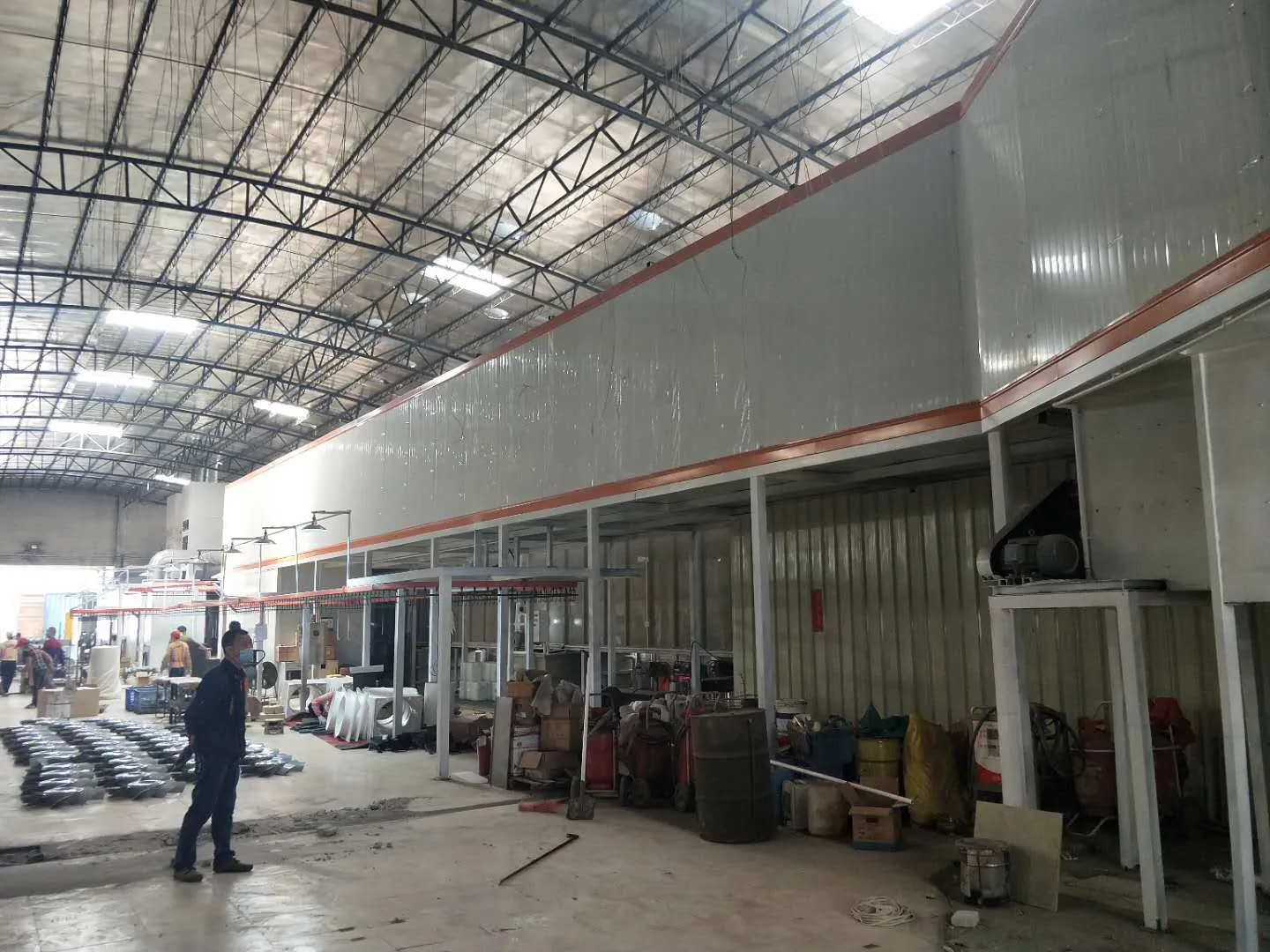
Production Efficiency: Impact on Throughput and Cycle Time
Spray Time Requirements and Line Speed Matching
Production efficiency isn't determined by spray gun alone—it's determined by whether spray time matches conveyor speed and whether the spray booth provides adequate dwelling time for complete coverage.
For a cabinet measuring 1,500 mm × 1,100 mm × 1,200 mm:
- If line speed is 6 meters/minute (4 pieces/hour), each workpiece has roughly 15 seconds in the spray zone
- Corona gun with proper parameters typically needs 10–12 seconds to achieve target film thickness (60–100 microns)
- This leaves minimal margin for operator adjustment or quality variation
What I've learned: Spray time requirements depend not just on gun type, but on booth design, gun count, and gun positioning.
- Single spray gun per workpiece: Corona gun needs 12–18 seconds; friction gun needs 10–15 seconds; rotary needs 8–12 seconds
- Three-gun arrangement (front, top, back): Time reduces to 4–8 seconds per gun
- Automatic reciprocating system: Can cover a 1,500 mm workpiece in 6–10 seconds with proper gun spacing
The efficiency implication: If your line operates at 3 pieces/hour but you only have one manual spray operator, upgrading the gun won't increase throughput—you need booth redesign or additional spray guns. I've seen clients install faster spray equipment only to find their actual production rates unchanged because the physical spray dwelling time was already optimized.
How Spray Gun Selection Affects Overall Production Capacity
Production capacity is determined by the slowest process step, not the spray gun speed.
In a typical cabinet coating line:
- Pre-treatment: 5–8 minutes (chemical + rinsing + drying)
- Spray: 1–2 minutes (depending on gun type and technique)
- Curing: 15–25 minutes (depending on oven design and temperature profile)
- Cooling: 5–10 minutes
Spray time is typically only 5–10% of total cycle time. Even if you switch from corona to friction and reduce spray time from 2 minutes to 1.5 minutes, you save only 30 seconds per piece—a 5% capacity gain at most.
Where spray gun choice actually impacts capacity:
- Complex geometries: Friction or rotary guns handle corners, recesses, and internal surfaces faster than corona, reducing rework and masking time
- Multi-color production: Friction and rotary systems allow faster color changes (5–10 minutes) vs. corona systems (10–15 minutes), because they require less interior booth cleaning
- Automatic vs. manual: Spray gun sophistication (programmable oscillation, multiple nozzle configurations) matters more than spray gun type. An automated corona system outproduces a manual friction gun.
From my cabinet and aluminum profile projects, I've found that integrating spray selection with line layout yields better capacity gains than upgrading the gun alone. A well-configured automatic line with three corona guns often outperforms a line with a single advanced rotary system.
Coating Quality Performance Across Different Techniques
Surface Uniformity and Adhesion Characteristics
Clients often ask: which gun produces the best-looking finish?
Corona guns:
- Produce uniform coverage on flat surfaces (±10% film thickness variation)
- Adhesion: 8–9/10 when pre-treatment is solid
- Surface appearance: Smooth, consistent gloss (if powder formula is optimized)
- Challenge: Edges and corners tend to build up excess powder (5B classification defects possible)
Friction guns:
- Produce slightly more uniform coverage on complex shapes
- Adhesion: 8–10/10 (mechanical atomization force helps coating flow into surface irregularities)
- Surface appearance: Smooth, excellent flow characteristics
- Challenge: May oversaturate edges if air pressure is too high
Rotary atomizers:
- Produce the finest, most uniform surface finish
- Adhesion: 9–10/10 (smallest particle size allows optimal flow and wetting)
- Surface appearance: Premium finish quality, higher gloss retention
- Challenge: Require tighter air pressure and powder feed control; more sensitive to process drift
My observation: If surface uniformity and premium appearance matter (furniture, decorative items), rotary systems edge ahead. If you prioritize robustness and tolerance to process variation (cabinets, structural parts), corona or friction systems perform adequately and are more forgiving of parameter drift.
Suitability for Complex Geometries and Internal Surfaces
This is where spray technique choice becomes operationally critical.
Cabinet internal spray test (internal cavity 400 mm deep, 100 mm opening):
| Technique | Coverage Inside Cavity | Coating Thickness Uniformity | Rework Required |
|---|---|---|---|
| Corona gun | 60–70% | ±25% | 15–20% of parts |
| Friction gun | 80–90% | ±15% | 5–10% of parts |
| Rotary (angled) | 75–85% | ±18% | 8–12% of parts |
Corona guns struggle with internal cavities due to Faraday cage effect—the electric field lines cannot penetrate deep recesses effectively. Friction guns, with their higher atomization force, overcome this better. Rotary systems, when positioned at angles, also perform well.
Practical implication for my projects: If your workpieces include complex internal geometry (electrical enclosures, heat sinks, nested channels), friction or rotary guns reduce rework costs significantly. The 5–10% reduction in defect rates often justifies the higher equipment cost within 12–18 months.
Cost Analysis: Long-Term Operational Expenses
Energy Consumption and Maintenance Requirements
Spray gun selection directly impacts your energy bill and maintenance workload.
Annual energy consumption (for 250 production days, 8 hours/day, 2,000 annual operating hours):
| Component | Corona Gun | Friction Gun | Rotary System |
|---|---|---|---|
| Electrostatic generator | 2–3 kW | 1–1.5 kW (lower voltage) | 1.5–2 kW |
| Compressed air (spray function) | 15–18 CFM @ 6 bar | 20–25 CFM @ 7–8 bar | 25–35 CFM @ 6–7 bar |
| Booth ventilation fan | 22–30 kW | 22–30 kW | 22–30 kW |
| Total spray system energy | ~2,500–3,200 kWh/year | ~2,800–3,500 kWh/year | ~3,200–4,000 kWh/year |
| Estimated energy cost (@ $0.10/kWh) | $250–$320 | $280–$350 | $320–$400 |
The difference seems modest until you add compressed air generation. If your facility generates compressed air on-site, the friction and rotary systems' higher air demand increases compressor runtime by 15–25%, potentially adding $800–$1,500/year in electricity costs.
Maintenance and consumables:
| Item | Corona | Friction | Rotary |
|---|---|---|---|
| Nozzle replacement interval | 6–12 months | 3–6 months (ceramic wears) | 8–12 months |
| Electrode cleaning | Monthly | Monthly | N/A |
| Filter element replacement | 6–12 months | 6–12 months | 6–12 months |
| Annual maintenance labor | 20–30 hours | 30–40 hours | 25–35 hours |
| Estimated annual maintenance cost | $800–$1,200 | $1,200–$1,800 | $1,000–$1,500 |
From my experience managing production line budgets: corona systems are the most cost-efficient for standard applications. Friction and rotary systems justify their higher maintenance cost only when product complexity or aesthetic requirements demand their superior coverage and finish quality.
Powder Recovery Systems and Cost Optimization Strategies
Here's what clients often miss: the powder recovery system investment pays back faster than anything else.
Cost scenario for 20,000 cabinet pieces annually:
Assuming 75% transfer efficiency (standard corona gun, real-world conditions):
- Powder applied: 60,000 kg/year (to coat 20,000 cabinets with 3 kg each)
- Powder adhered: 45,000 kg
- Powder overspray: 15,000 kg/year
Without recovery:
- Cost of wasted powder: 15,000 kg × $8/kg = $120,000/year
- Environmental disposal cost: $15,000–$20,000/year
- Total waste cost: $135,000–$140,000/year
With basic cyclone recovery (90% efficiency):
- Recovered powder: 13,500 kg
- Recovered value: 13,500 × $8 = $108,000/year
- Recovery system cost (amortized over 5 years): $3,000/year
- Maintenance cost: $2,000/year
- Net annual savings: $103,000/year
Payback on cyclone investment: 4–6 months
Add a secondary recovery cabinet (90–95% total efficiency), and you recover an additional 1,500 kg annually—but the infrastructure investment is higher. I recommend the two-stage system for facilities running 3+ shifts or producing high volumes, where the extra recovery justifies the capital outlay.
Application Suitability: Matching Techniques to Workpiece Types
Best Practices for Cabinet and Sheet Metal Components
Cabinet spray strategy (electrical enclosures, distribution boxes):
Cabinets typically feature:
- Large flat surfaces (need uniform coverage)
- Sharp edges and corners (prone to overspray buildup)
- Some internal cavities (doors, cable routing channels)
Recommended approach: Corona electrostatic gun with 2–3 spray stations (front, back, top angles) and proper masking on edges.
- Transfer efficiency target: 75–85%
- Spray time: 12–15 seconds per cabinet
- Booth configuration: Single-pass manual or semi-automatic reciprocation
- Expected film thickness: 60–90 microns (controlled via voltage and air pressure)
From my cabinet projects (cabinet shop in Foshan serving Southeast Asia), this setup delivers:
- Coating cost per unit: $1.20–$1.60
- Defect rate: 3–5% (mostly edge overspray, manageable via masking improvement)
- Production rate: 15–20 cabinets/hour (8-hour shift = 120–160 units/day)
Sheet metal spray strategy (structural parts, automotive brackets):
Sheet metal introduces:
- Varied thickness and rigidity
- Need for consistent adhesion across dissimilar surfaces
- Potential for wrinkled or oil-contaminated surfaces
Recommended approach: Corona or friction gun depending on pre-treatment robustness.
If pre-treatment is robust (thorough degreasing + chromate conversion coating):
- Use corona gun; simpler, lower cost
If pre-treatment is borderline (parts arrive from vendor with variable cleanliness):
- Use friction gun; mechanical atomization force compensates for surface irregularities and provides better adhesion confidence
Handling Complex Structures and Intricate Part Geometries
Aluminum profile spray (HVAC ducts, window frames, structural channels):
Aluminum profiles challenge spray systems because:
- Narrow channels trap powder if sprayed at wrong angle
- Recessed areas easily accumulate overspray (environmental concern)
- High aesthetic standard (visible parts demand uniform finish)
Recommended approach: Friction or rotary gun with angled booth nozzles.
- Friction gun positioned at 45° angles covers channels effectively
- Line speed: 3–4 meters/minute (slower than cabinets, allows adequate dwell time)
- Transfer efficiency target: 78–88%
- Expected throughput: 10–15 linear meters/hour (depending on profile complexity)
From my aluminum projects (working with 10+ profile manufacturers in China and Southeast Asia):
- Friction gun reduces rework by 12–18% vs. corona gun
- Justifies 15–20% higher equipment cost through defect reduction
- Color change time: 8–12 minutes (acceptable for multi-color production runs)
Complex enclosure spray (server racks, nested electronic housings):
These workpieces demand:
- 360° coverage (all internal surfaces must be coated)
- Minimal overspray in sensitive internal cavities
- Fast cycle time (high-volume production pressure)
Recommended approach: Rotary atomizer with multi-angle positioning or friction gun with manual rotation between spray passes.
- Rotary system: Single-pass coverage, 6–8 second spray time, but requires $25,000–$35,000 equipment investment
- Friction gun + manual rotation: Two spray passes (8–12 seconds), lower equipment cost (~$8,000–$12,000), but requires operator skill
Cost-benefit decision:
- If producing 50+ units/day: Rotary system ROI within 18 months
- If producing 10–20 units/day: Friction gun with rotation protocol is more economical
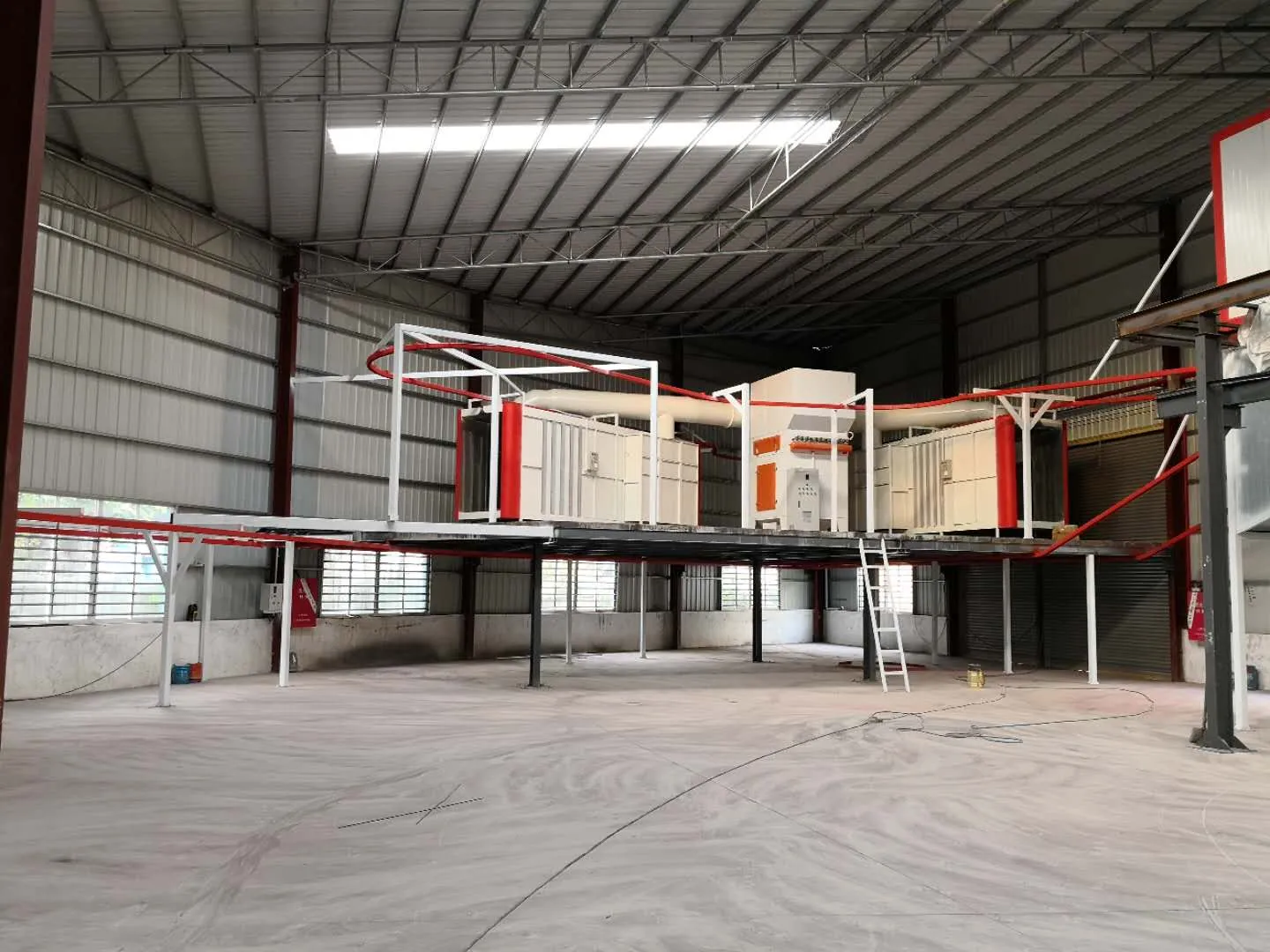 powder coating application techniques" />
Critical Success Factors Beyond Spray Gun Selection
I need to emphasize this because it's where most efficiency improvements actually happen.
Pre-treatment Quality and Its Impact on Overall Efficiency
Pre-treatment determines whether your spray gun choice matters at all.
Real example from a cabinet project (Algeria, 2023):
Client complained of low transfer efficiency (68%) with new corona guns. Investigation revealed:
- Pre-treatment phosphate film too thin (inadequate immersion time)
- Rinse water contaminated with mineral deposits
- Drying incomplete; residual moisture on surfaces
Fixes implemented:
- Increased immersion time from 3 to 5 minutes
- Installed water softening for rinse stage
- Added high-temperature dryer (70°C air)
Result: Transfer efficiency improved from 68% to 82% without changing the spray gun. Cost to fix pre-treatment: $8,000. Cost to replace spray guns and booth: $60,000.
Pre-treatment checklist for maximum spray efficiency:
-
Degreasing: Remove all oil, cutting fluid, fingerprints. Verify alkalinity of degreasing solution (target: pH 11–13). Replace every 3–6 months or when contamination visible.
-
Rinsing: First rinse removes chemical residue. Second rinse (preferably demineralized water) ensures no salts remain. Residual salt = reduced adhesion and corrosion risk.
-
Phosphate/conversion coating: Builds chemical bond between substrate and powder. Film thickness: 15–50 mg/dm² (verify via X-ray fluorescence annually). Too thin = poor adhesion; too thick = reduced spray efficiency.
-
Drying: Water remaining on surface when entering spray booth causes:
- Powder agglomeration (clumping)
- Reduced transfer efficiency (15–20% loss)
- Higher defect rate
Target: Surface temperature 40–50°C, relative humidity <30% at booth entrance.
-
Time delay: Don't spray immediately after drying. Flash-off time of 30–60 seconds allows surface to stabilize and moisture to fully evaporate.
Supporting Systems: Air Quality, Grounding, and Environmental Conditions
These factors can eliminate 10–40% of your spray efficiency.
Compressed air quality:
Rule: Your spray efficiency cannot exceed your air quality.
- Water in air → powder absorbs moisture → loses charging ability → transfer efficiency drops 15–25%
- Oil aerosol in air → contaminates powder → adhesion issues → 10–20% transfer loss
- Particulates → clog powder nozzles → inconsistent spray pattern → 5–15% efficiency loss
Solution:
Install air treatment:
- Dryer (refrigerated or desiccant type): Removes water vapor
- Oil/water separator: Removes compressor oil aerosol
- Particulate filter: Removes solid contaminants
- Pressure regulator with gauge: Maintains stable 6–7 bar pressure
Cost: $3,000–$6,000. Payback: 6–12 months (through reduced defects and improved transfer efficiency).
From my facility audits: 90% of low-efficiency operations have compromised air quality. It's the easiest $3–6K to invest in efficiency improvement.
Workpiece grounding:
Faulty grounding is the silent killer of transfer efficiency.
- Workpiece not touching hanging contact point? Efficiency drops 20–40%
- Hanging contact point corroded or powder-coated? Electrical connection compromised; efficiency -25%
- Hanging system has plastic or rubber insulation? Ground path broken; efficiency -50%
Verification:
Test grounding resistance with a multimeter:
- Target: <5 ohms between workpiece and booth earth
- Acceptable range: <10 ohms
- If >50 ohms: Grounding is failing
In every cabinet or aluminum profile project, I measure grounding resistance before troubleshooting spray parameters. Half the time, "spray gun malfunction" is actually "grounding failure."
Environmental conditions:
Booth humidity above 60% reduces powder charge retention by 15–30%. Temperature swings >10°C can destabilize powder flow and spray pattern consistency.
Ideal booth conditions:
- Temperature: 18–28°C (stable within ±3°C)
- Humidity: 35–55% RH
- Air circulation: 200–300 CFM/m² (prevents dead zones)
Installing HVAC control in the spray booth costs $8,000–$15,000 but typically recovers investment within 18–24 months through efficiency gains.
Selecting the Right Technology for Your Production Goals
Decision framework:
-
Define your primary goal:
- Maximum throughput → Corona gun + multi-station booth
- Lowest defect rate → Friction gun + secondary recovery
- Highest finish quality → Rotary system
- Most cost-efficient → Corona gun + robust pre-treatment
-
Assess your constraint:
- Is your air system a bottleneck? → Corona gun (lowest CFM demand)
- Is your product quality margin tight? → Friction or rotary
- Is your facility space limited? → Compact rotary or single corona station
- Is your labor cost high? → Automation (reciprocating or robotic application)
-
Calculate total cost of ownership (TCO) over 5 years:
| Cost Component | Corona | Friction | Rotary |
|---|---|---|---|
| Equipment | $8,000 | $12,000 | $30,000 |
| Installation/training | $2,000 | $3,000 | $5,000 |
| 5-year energy cost | $12,500 | $14,000 | $16,000 |
| Maintenance/consumables | $5,000 | $7,500 | $6,000 |
| Downtime/defect rework | $8,000 | $5,000 | $3,000 |
| 5-year TCO | $35,500 | $41,500 | $60,000 |
| Cost per piece (20,000 pieces/year × 5 years = 100,000 pieces) | $0.36 | $0.42 | $0.60 |
For high-volume, standard geometry production (cabinets, sheet metal), corona gun + good pre-treatment + solid recovery system delivers best TCO.
For lower-volume, complex geometry, or premium finish requirements, friction or rotary justifies higher cost.
Summary and Recommendations
Key takeaway: Spray gun efficiency is not determined by spray gun type alone. It's determined by spray gun type + pre-treatment quality + air system integrity + workpiece grounding + environmental control + recovery system design.
Efficiency Comparison Summary
| Spray Technique | Transfer Efficiency (Real-World) | Recovery Potential | Suitable For | Long-Term Cost |
|---|---|---|---|---|
| Corona electrostatic | 70–80% | 90–95% | Flat/moderate geometry; high volume | Lowest |
| Friction spray | 75–85% | 88–92% | Complex geometry; medium volume | Medium |
| Rotary atomizer | 70–82% | 88–92% | Premium finish; lower volume | Highest |
Actionable Steps to Improve Your Current Line Efficiency
-
This week: Measure compressed air quality (moisture, pressure stability). If poor, budget for air treatment ($3–6K).
-
This month: Audit pre-treatment process. Verify phosphate film thickness, rinse water purity, drying effectiveness. This single improvement often yields 5–15% efficiency gain at minimal cost.
-
This quarter: Test workpiece grounding resistance. Replace corroded hang contacts and verify ground continuity. Budget: $500–$2,000. Expected efficiency gain: 5–20%.
-
This year: Evaluate spray booth environmental control (temperature, humidity). If variance exceeds ±5°C or 15% RH, invest in HVAC control. Budget: $8–15K. Payback: 18–24 months.
-
Strategic: If producing complex geometry parts, pilot a friction or rotary gun system on a limited run. Compare defect rates, rework time, and cost-per-piece vs. your current corona setup. Use real data to justify capital upgrade.
Contact Us for Efficiency Optimization
If you're managing a powder coating operation and want to assess your current spray system efficiency—or if you're considering an upgrade—I'm available for line audits and customized recommendations based on your specific product type, volume, and quality requirements.
Reach out to discuss:
- Spray technique selection for your workpiece geometry
- Pre-treatment optimization strategies
- Air system and grounding diagnostics
- Recovery system configuration for maximum material utilization
- Complete line efficiency analysis
WhatsApp: +8618064668879
Email: ketumachinery@gmail.com
We've helped cabinet manufacturers, aluminum profile producers, and furniture makers increase coating efficiency by 12–28% through systematic optimization of spray technique, supporting systems, and process control—often without replacing core equipment.
Let's talk about what your operation can achieve.
 English
  German
  Vietnamese
  French