In-Depth Analysis of Spray Equipment Development Trends in the Hardware Industry
Why Hardware Manufacturers Are Upgrading Their Spray Equipment Lines
Over the past five years, I've observed a fundamental shift in how hardware manufacturers approach surface treatment. It's no longer enough to simply "apply a coat"—today's market demands precision, consistency, and sustainability. Hardware companies producing metal cabinets, fasteners, aluminum profiles, and structural components are actively upgrading their spray equipment because the old approach has become economically and competitively unsustainable.
The drivers are clear. Customer expectations for surface quality have risen sharply. Regulatory pressures around environmental compliance and energy consumption continue to tighten. Labor availability and wage pressures have made manual spraying operations increasingly difficult to maintain. At the same time, hardware manufacturers compete globally, where cost efficiency and product reliability directly impact market share. The only viable response is systematic equipment modernization.
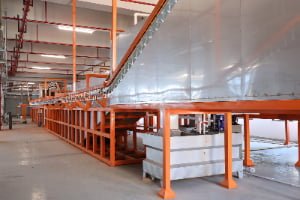
What's changed most dramatically is the shift from viewing spray equipment as a "necessary cost" to viewing it as a strategic investment in production capability. I've worked with dozens of hardware manufacturers who were still using antiquated spray systems just three to five years ago. Today, nearly every serious player in the cabinet, fastener, and structural components sector is either in the middle of an upgrade or planning one. This isn't cyclical—it's structural.
 )
)
Current State of Spray Technology in Hardware Manufacturing
Main Spray Technologies and Their Market Adoption in Hardware Production
The hardware industry has largely consolidated around elektrostatische Pulverbeschichtung[^1] as the dominant technology, but the reasons why deserve closer examination.
Electrostatic powder coating now accounts for roughly 60-70% of spray applications in hardware manufacturing, and this dominance is deliberate. Unlike liquid spray systems, powder coating offers several inherent advantages: zero VOC emissions during application, significantly higher material utilization rates (typically 90%+ versus 40-60% for liquid systems), superior coating thickness and uniformity, and exceptional durability for products destined for outdoor or industrial use.
However, I want to be precise about what "electrostatic powder coating" actually means in current practice. There are meaningful differences between:
Corona-discharge electrostatic systems (most common)—These use high-voltage electrostatic guns to charge powder particles, which are then attracted to grounded workpieces. They're reliable, relatively simple to maintain, and suitable for most hardware applications.
Friction-charge (tribo) electrostatic systems—Less common but increasingly adopted for complex geometries or applications requiring finer control. These charge particles through friction rather than high voltage, offering better performance on certain intricate shapes or when spraying reclaimed powder.
Hybridsysteme—Emerging in high-end operations where both corona and friction charging are available, allowing operators to switch methods depending on product geometry.
In my experience with hardware manufacturers, the technology choice matters less than the integration quality. I've seen corona-discharge systems deliver superior results compared to friction systems simply because the overall line integration was better—superior pre-treatment, more stable powder supply, better electrostatic grounding, optimized oven temperatures.
Liquid spray systems (HVLP, airless, etc.) persist in specific niches—primarily for specialty coatings, very small production runs, or when extreme gloss or special effects are required. But for volume production of hardware components, liquid spraying is increasingly rare, and for good reason: higher solvent costs, VOC compliance complexity, disposal expenses, and labor intensity make it economically uncompetitive.
How Automated Spray Systems Are Reshaping Hardware Production Lines
The transformation from manual to automated spray systems[^2] represents perhaps the most significant operational shift I've witnessed in hardware manufacturing over the past decade.
Five years ago, a typical mid-sized hardware manufacturer would have semi-automated or fully manual spray operations. Today, fully automated inline systems are becoming standard for any production volume above 5,000 units per month. This shift has fundamentally changed how hardware companies think about production planning, quality control, and labor allocation.
What's driving this automation?
Consistency and repeatability. Manual sprayers—even experienced ones—produce inherent variation in spray pattern, distance, and technique from part to part and day to day. Automated systems eliminate this human variability. Electrostatic spray guns mounted on robotic arms or reciprocating mechanisms follow precisely programmed paths, maintaining exact spray angles, distances, and dwell times. For hardware products where surface uniformity directly impacts customer satisfaction and warranty claims, this consistency is worth significant capital investment.
Quality metrics. I regularly see hardware manufacturers who switched to automation report 30-40% reductions in coating defects (pinholes, runs, uneven coverage, etc.). These improvements compound over time—fewer returns, fewer warranty issues, higher customer retention.
Labor efficiency. Modern automated lines require operators primarily for loading, unloading, quality inspection, and maintenance—not for the spray operation itself. A single operator can now oversee equipment that once required 3-4 dedicated spray workers. This isn't about eliminating jobs; it's about redirecting labor to higher-value activities.
Speed and throughput. Automated lines operate at consistent, optimizable speeds. A well-designed system can cycle through parts much faster than manual spraying while maintaining superior quality. This means higher throughput per square meter of floor space—critical for hardware manufacturers with tight production schedules.
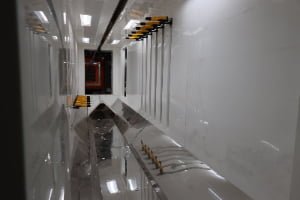
The architecture of modern automated spray lines in hardware manufacturing typically includes:
- Input conveyor and workpiece positioning cURL Too many subrequests by single Worker invocation. To configure this limit, refer to https://developers.cloudflare.com/workers/wrangler/configuration/#limits
- cURL Too many subrequests by single Worker invocation. To configure this limit, refer to https://developers.cloudflare.com/workers/wrangler/configuration/#limits cURL Too many subrequests by single Worker invocation. To configure this limit, refer to https://developers.cloudflare.com/workers/wrangler/configuration/#limits
- cURL Too many subrequests by single Worker invocation. To configure this limit, refer to https://developers.cloudflare.com/workers/wrangler/configuration/#limits cURL Too many subrequests by single Worker invocation. To configure this limit, refer to https://developers.cloudflare.com/workers/wrangler/configuration/#limits
- cURL Too many subrequests by single Worker invocation. To configure this limit, refer to https://developers.cloudflare.com/workers/wrangler/configuration/#limits cURL Too many subrequests by single Worker invocation. To configure this limit, refer to https://developers.cloudflare.com/workers/wrangler/configuration/#limits
- Härtungsofen cURL Too many subrequests by single Worker invocation. To configure this limit, refer to https://developers.cloudflare.com/workers/wrangler/configuration/#limits
- cURL Too many subrequests by single Worker invocation. To configure this limit, refer to https://developers.cloudflare.com/workers/wrangler/configuration/#limits cURL Too many subrequests by single Worker invocation. To configure this limit, refer to https://developers.cloudflare.com/workers/wrangler/configuration/#limits
- cURL Too many subrequests by single Worker invocation. To configure this limit, refer to https://developers.cloudflare.com/workers/wrangler/configuration/#limits cURL Too many subrequests by single Worker invocation. To configure this limit, refer to https://developers.cloudflare.com/workers/wrangler/configuration/#limits
cURL Too many subrequests by single Worker invocation. To configure this limit, refer to https://developers.cloudflare.com/workers/wrangler/configuration/#limits.
 )
)
cURL Too many subrequests by single Worker invocation. To configure this limit, refer to https://developers.cloudflare.com/workers/wrangler/configuration/#limits
cURL Too many subrequests by single Worker invocation. To configure this limit, refer to https://developers.cloudflare.com/workers/wrangler/configuration/#limits
cURL Too many subrequests by single Worker invocation. To configure this limit, refer to https://developers.cloudflare.com/workers/wrangler/configuration/#limits.
cURL Too many subrequests by single Worker invocation. To configure this limit, refer to https://developers.cloudflare.com/workers/wrangler/configuration/#limits
cURL Too many subrequests by single Worker invocation. To configure this limit, refer to https://developers.cloudflare.com/workers/wrangler/configuration/#limits. cURL Too many subrequests by single Worker invocation. To configure this limit, refer to https://developers.cloudflare.com/workers/wrangler/configuration/#limits. cURL Too many subrequests by single Worker invocation. To configure this limit, refer to https://developers.cloudflare.com/workers/wrangler/configuration/#limitscURL Too many subrequests by single Worker invocation. To configure this limit, refer to https://developers.cloudflare.com/workers/wrangler/configuration/#limits.
cURL Too many subrequests by single Worker invocation. To configure this limit, refer to https://developers.cloudflare.com/workers/wrangler/configuration/#limits. Spray equipment—particularly curing ovens—represents a significant portion of manufacturing energy use. In some hardware facilities, the spray line consumes 15-25% of total facility energy. Regulations around industrial energy efficiency (such as the US Industrial Assessment Center program or EU Energy Efficiency Directive) increasingly pressure manufacturers to optimize this consumption.
Waste disposal. Spent powder, contaminated filter media, and wastewater from pre-treatment systems require compliant disposal. Modern equipment design now prioritizes powder recovery (to minimize waste) and integrated waste management systems.
What this means in practice: hardware manufacturers are actively seeking spray equipment that delivers lower total cost of ownership through reduced energy consumption and waste. Modern powder recovery systems can achieve 95%+ powder utilization (versus 70-75% on older systems), directly reducing material costs. Energy-efficient ovens with better insulation and optimized hot-air circulation can reduce curing energy by 20-30% compared to equipment from even five years ago.
I've observed that the most forward-thinking hardware manufacturers are now specifying "sustainability credentials" as a primary equipment selection criterion, not an afterthought. They're asking: How much energy does this system consume per unit of coating applied? What percentage of powder is recovered? What's the waste-per-part ratio? These metrics are increasingly tied to corporate sustainability goals and customer expectations.
Rising Quality Standards and Surface Finish Expectations
The hardware industry—particularly segments serving architectural, automotive, and industrial applications—is experiencing rapid escalation in surface finish expectations. This directly drives equipment specification changes.
Customers today demand:
Uniform, gloss-controlled surfaces. The days of "acceptable spray marks" are over. Modern hardware components, particularly those in visible applications (exterior cabinetry, aluminum profiles, structural supports), require cosmetically flawless finishes. Even minor inconsistencies—variations in gloss, subtle color differences, surface texture irregularities—are increasingly grounds for rejection.
Specific mechanical properties. Hardness, adhesion, impact resistance, flexibility, and abrasion resistance have all become standard specification items. Hardware manufacturers can no longer simply accept "the coating works"; they must verify that it meets defined performance thresholds through testing.
Corrosion resistance. For hardware destined for outdoor or harsh environments, accelerated corrosion testing[^4] (typically salt-spray testing per ASTM B117 standards) is now routine. Equipment must be capable of applying coatings that reliably achieve 500+ hour salt-spray performance without failure.
Consistency lot-to-lot and batch-to-batch. Because hardware is often supplied into larger systems or assemblies, customers expect that a cabinet painted today will look visually identical to the same cabinet painted in three months. This requires rigid control of spray parameters, powder formulations, and process variables.
These rising standards translate directly into equipment requirements:
- Better pre-treatment systems (to ensure coating adhesion)
- More precise spray parameter control (maintaining exact electrical characteristics, air flow, pattern consistency)
- Superior oven temperature uniformity (minimizing variations in cure profile across different parts of the load)
- Tighter process monitoring and documentation (enabling traceability and forensic analysis if quality issues arise)
I've worked with hardware manufacturers who've upgraded their spray lines specifically to achieve consistent salt-spray performance or to meet new customer cosmetic specifications. The cost of the equipment upgrade typically pays for itself within 18-24 months through reduced warranty claims, customer returns, and re-work.
Labor Constraints and Shift Toward Production Automation
Perhaps the most underappreciated driver of spray equipment evolution is the labor market reality.
Skilled spray operators are increasingly difficult to recruit and retain. Several factors converge here:
- Demographic shifts reducing the working-age population in developed economies
- Health and safety concerns around spray operation (exposure to powder particulates, noise, temperature)
- Career preference trends cURL Too many subrequests by single Worker invocation. To configure this limit, refer to https://developers.cloudflare.com/workers/wrangler/configuration/#limits
- cURL Too many subrequests by single Worker invocation. To configure this limit, refer to https://developers.cloudflare.com/workers/wrangler/configuration/#limits cURL Too many subrequests by single Worker invocation. To configure this limit, refer to https://developers.cloudflare.com/workers/wrangler/configuration/#limits
cURL Too many subrequests by single Worker invocation. To configure this limit, refer to https://developers.cloudflare.com/workers/wrangler/configuration/#limits.
cURL Too many subrequests by single Worker invocation. To configure this limit, refer to https://developers.cloudflare.com/workers/wrangler/configuration/#limits.
cURL Too many subrequests by single Worker invocation. To configure this limit, refer to https://developers.cloudflare.com/workers/wrangler/configuration/#limits
- cURL Too many subrequests by single Worker invocation. To configure this limit, refer to https://developers.cloudflare.com/workers/wrangler/configuration/#limits cURL Too many subrequests by single Worker invocation. To configure this limit, refer to https://developers.cloudflare.com/workers/wrangler/configuration/#limits
- cURL Too many subrequests by single Worker invocation. To configure this limit, refer to https://developers.cloudflare.com/workers/wrangler/configuration/#limits cURL Too many subrequests by single Worker invocation. To configure this limit, refer to https://developers.cloudflare.com/workers/wrangler/configuration/#limits
- cURL Too many subrequests by single Worker invocation. To configure this limit, refer to https://developers.cloudflare.com/workers/wrangler/configuration/#limits cURL Too many subrequests by single Worker invocation. To configure this limit, refer to https://developers.cloudflare.com/workers/wrangler/configuration/#limits
- cURL Too many subrequests by single Worker invocation. To configure this limit, refer to https://developers.cloudflare.com/workers/wrangler/configuration/#limits cURL Too many subrequests by single Worker invocation. To configure this limit, refer to https://developers.cloudflare.com/workers/wrangler/configuration/#limits
cURL Too many subrequests by single Worker invocation. To configure this limit, refer to https://developers.cloudflare.com/workers/wrangler/configuration/#limits.
 )
)
cURL Too many subrequests by single Worker invocation. To configure this limit, refer to https://developers.cloudflare.com/workers/wrangler/configuration/#limits
cURL Too many subrequests by single Worker invocation. To configure this limit, refer to https://developers.cloudflare.com/workers/wrangler/configuration/#limits
cURL Too many subrequests by single Worker invocation. To configure this limit, refer to https://developers.cloudflare.com/workers/wrangler/configuration/#limits cURL Too many subrequests by single Worker invocation. To configure this limit, refer to https://developers.cloudflare.com/workers/wrangler/configuration/#limitscURL Too many subrequests by single Worker invocation. To configure this limit, refer to https://developers.cloudflare.com/workers/wrangler/configuration/#limits. cURL Too many subrequests by single Worker invocation. To configure this limit, refer to https://developers.cloudflare.com/workers/wrangler/configuration/#limits.
cURL Too many subrequests by single Worker invocation. To configure this limit, refer to https://developers.cloudflare.com/workers/wrangler/configuration/#limits.
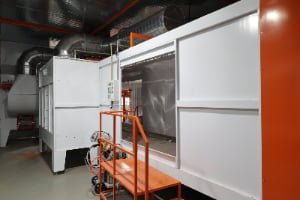
Effective pre-treatment for hardware components typically involves:
Degreasing. Removal of machining oils, cutting fluids, handling residues, and environmental contaminants. Hardware components often carry residual machining oils that must be completely removed before coating. Incomplete degreasing is probably the single most common cause of adhesion failure and coating defects I encounter in the field.
Ätzen mit Säure oder mechanische Abnutzung (for steel components). Steel surfaces develop oxide layers and scale that must be removed to expose bare metal suitable for coating adhesion. This can be accomplished through chemical acid pickling or mechanical methods (sandblasting, shot peening).
Umwandlungsbeschichtung (phosphate or titanium/zirconium-based). After cleaning and pickling, the bare metal surface requires a chemical conversion coating to improve adhesion and provide corrosion protection. For ferrous metals, phosphate conversion is traditional; for aluminum and zinc-coated substrates, non-chromate conversion coatings are increasingly mandatory for environmental compliance.
Water rinsing and final drying. Residual process water, salts, or rinse water must be completely removed before the component reaches the spray booth. Any residual moisture or ionic contamination will cause coating defects (pinholes, blistering, reduced adhesion).
Why is pre-treatment so critical? Because coating adhesion is fundamentally a surface chemistry problem. Electrostatic powder coating works through electrostatic attraction followed by thermal fusion and chemical cross-linking. None of this happens effectively on a contaminated surface. A microscopic layer of oil or residual salt will prevent the powder from developing proper adhesion, regardless of how sophisticated the spray equipment is.
In my experience, hardware manufacturers who achieve superior coating durability and minimal defect rates share a common trait: they treat pre-treatment as a core competency requiring investment in equipment, operator training, and process documentation. They implement regular testing of pre-treatment quality (water drop tests, salt-spray baseline testing, conductivity measurements).
The financial impact is substantial. A hardware manufacturer investing in optimized pre-treatment systems typically sees:
- 25-35% reduction in coating-related defects
- 40-50% reduction in warranty claims attributable to coating failure
- 15-20% improvement in first-pass coating acceptance rate
- Superior salt-spray and humidity testing performance
This return often exceeds the ROI from spray equipment upgrades alone.
System Integration: Why Spray Gun Capability Alone Doesn't Guarantee Results
Here's a misconception I encounter frequently: "If we buy the latest high-performance electrostatic spray guns, we'll solve our coating problems."
This is incorrect. Spray gun quality is necessary but not sufficient.
Modern spray equipment operates as an integrated system where each component affects overall performance:
Powder supply subsystem. The spray gun is only useful if it receives consistent, properly fluidized powder at correct pressure and flow rate. I've seen installations with premium spray guns paired with inadequate powder supply systems that delivered poor results. The powder feeder must:
- Maintain consistent powder flow (within ±5% variation)
- Preserve powder integrity (avoid compaction or aeration problems)
- Minimize moisture absorption
- Deliver the correct particle size distribution
Air quality. Electrostatic spray systems require compressed air[^6] that is clean, dry, and oil-free. Air containing moisture, oil aerosols, or particulates causes:
- Powder bridging and flow problems
- Spray pattern distortion
- Electrical charge instability
- Equipment component wear
I've observed hardware manufacturers who achieved dramatic improvements simply by upgrading their air compressors, adding proper filtration and desiccant drying, and implementing regular air quality testing.
Electrical grounding. The workpiece must be reliably grounded with resistance typically below 1 MΩ for effective electrostatic attraction. Poor grounding—due to contamination on contact points, inadequate conductive fixtures, or worn grounding hardware—directly reduces powder transfer efficiency and coating quality.
Conveyor and positioning systems. cURL Too many subrequests by single Worker invocation. To configure this limit, refer to https://developers.cloudflare.com/workers/wrangler/configuration/#limits.
cURL Too many subrequests by single Worker invocation. To configure this limit, refer to https://developers.cloudflare.com/workers/wrangler/configuration/#limits. cURL Too many subrequests by single Worker invocation. To configure this limit, refer to https://developers.cloudflare.com/workers/wrangler/configuration/#limits.
cURL Too many subrequests by single Worker invocation. To configure this limit, refer to https://developers.cloudflare.com/workers/wrangler/configuration/#limits. cURL Too many subrequests by single Worker invocation. To configure this limit, refer to https://developers.cloudflare.com/workers/wrangler/configuration/#limits.
cURL Too many subrequests by single Worker invocation. To configure this limit, refer to https://developers.cloudflare.com/workers/wrangler/configuration/#limits cURL Too many subrequests by single Worker invocation. To configure this limit, refer to https://developers.cloudflare.com/workers/wrangler/configuration/#limits. cURL Too many subrequests by single Worker invocation. To configure this limit, refer to https://developers.cloudflare.com/workers/wrangler/configuration/#limits.
cURL Too many subrequests by single Worker invocation. To configure this limit, refer to https://developers.cloudflare.com/workers/wrangler/configuration/#limits
cURL Too many subrequests by single Worker invocation. To configure this limit, refer to https://developers.cloudflare.com/workers/wrangler/configuration/#limits.
cURL Too many subrequests by single Worker invocation. To configure this limit, refer to https://developers.cloudflare.com/workers/wrangler/configuration/#limits.
cURL Too many subrequests by single Worker invocation. To configure this limit, refer to https://developers.cloudflare.com/workers/wrangler/configuration/#limits cURL Too many subrequests by single Worker invocation. To configure this limit, refer to https://developers.cloudflare.com/workers/wrangler/configuration/#limitscURL Too many subrequests by single Worker invocation. To configure this limit, refer to https://developers.cloudflare.com/workers/wrangler/configuration/#limits. cURL Too many subrequests by single Worker invocation. To configure this limit, refer to https://developers.cloudflare.com/workers/wrangler/configuration/#limits
cURL Too many subrequests by single Worker invocation. To configure this limit, refer to https://developers.cloudflare.com/workers/wrangler/configuration/#limits
- cURL Too many subrequests by single Worker invocation. To configure this limit, refer to https://developers.cloudflare.com/workers/wrangler/configuration/#limits
- cURL Too many subrequests by single Worker invocation. To configure this limit, refer to https://developers.cloudflare.com/workers/wrangler/configuration/#limits
- cURL Too many subrequests by single Worker invocation. To configure this limit, refer to https://developers.cloudflare.com/workers/wrangler/configuration/#limits
cURL Too many subrequests by single Worker invocation. To configure this limit, refer to https://developers.cloudflare.com/workers/wrangler/configuration/#limits
cURL Too many subrequests by single Worker invocation. To configure this limit, refer to https://developers.cloudflare.com/workers/wrangler/configuration/#limits. cURL Too many subrequests by single Worker invocation. To configure this limit, refer to https://developers.cloudflare.com/workers/wrangler/configuration/#limits.
Environmental compliance. Regulatory agencies increasingly audit powder disposal methods. Systems with superior powder recovery require less aggressive environmental remediation and disposal documentation.
Powder quality maintenance. Reclaimed powder from recovery systems can typically be reused (90-95% of recovered powder is reusable if proper separation methodology is employed). This further reduces net material consumption.
Personnel and equipment protection. Superior powder recovery keeps the work environment cleaner, reducing personal protective equipment requirements and improving long-term equipment life.
I've observed that the most sophisticated hardware manufacturers now specify recovery efficiency and recirculation rates as primary equipment evaluation criteria, often dedicating entire capital budget line items specifically to recovery system optimization.

Flexibility and Adaptability in Modern Spray Equipment Design
Multi-Product Capability and Quick Color Changeover Systems
Hardware manufacturers typically spray multiple product types and colors within a single production week. Equipment that requires lengthy and complex color changeover processes creates substantial operational friction.
Modern spray equipment increasingly incorporates design features enabling rapid color transitions:
Modular powder supply systems. Contemporary spray lines often include quick-disconnect powder supply modules that can be swapped within 10-20 minutes. This enables operators to maintain multiple color-specific supply systems ready for immediate use, rather than requiring complete system purging and flushing between colors.
Spray booth design with easy-access materials. Booth liners, filters, and internal components are increasingly designed for rapid removal and replacement, enabling color change without extended downtime.
Automated control systems. Modern spray equipment integrates programmable logic controllers (PLCs) that store spray parameter profiles for different products and colors. Operators simply select the product/color combination, and the system automatically adjusts spray voltage, powder flow, oven temperature, and conveyor speed to optimized values. This standardization reduces operator error and transition time.
Color identification and automatic recipe selection. Some advanced systems now incorporate vision systems that automatically identify incoming workpieces and select the appropriate spray parameters without operator intervention.
What does this mean in practice? A hardware manufacturer producing three different cabinet styles in five colors can achieve full color changeovers in under 30 minutes with modern equipment, versus 2-4 hours with older systems. Over a production year involving frequent color changes, this represents hundreds of hours of reclaimed productivity.
I've advised hardware manufacturers that this flexibility directly impacts market responsiveness. Manufacturers able to quickly accommodate custom color orders or small-batch specialty products can command market premium pricing and maintain customer loyalty that pure volume competitors cannot match.
Balancing Automation Levels with Maintenance Accessibility
Hardware manufacturers face a common tension: highly automated systems deliver superior consistency and throughput, but complex automation can become a liability if maintenance accessibility is poor.
I've observed this dynamic repeatedly: a manufacturer invests in a sophisticated fully-automated spray line but then discovers that:
- Spray gun replacement requires extensive disassembly and re-calibration
- Powder supply system modifications require specialized technician visits
- Routine filter or component replacement is unnecessarily complicated
- Troubleshooting equipment problems requires vendor support rather than internal capability
The result is "expensive idle time"—the system sits down waiting for specialized maintenance when simpler design could have enabled internal crews to perform the necessary repairs.
Modern high-performance spray equipment increasingly balances automation sophistication with maintenance practicality through:
Modular component design. Spray guns, powder feeders, electrical systems, and mechanical components are increasingly designed as quick-connect modules that can be swapped without specialized tools or deep technical knowledge.
Standardized component specifications. Using industry-standard components from multiple suppliers (rather than proprietary systems) enables hardware manufacturers to maintain spare inventory and perform repairs without vendor dependency.
Accessible design for routine maintenance. Filter cartridge removal, powder supply refilling, grounding contact cleaning, and other routine tasks are increasingly designed to be performable by operators without specialized training.
Built-in diagnostics. Modern spray equipment includes comprehensive self-diagnostic systems that identify component problems and guide maintenance procedures through intuitive interfaces or web-based dashboards.
cURL Too many subrequests by single Worker invocation. To configure this limit, refer to https://developers.cloudflare.com/workers/wrangler/configuration/#limits. cURL Too many subrequests by single Worker invocation. To configure this limit, refer to https://developers.cloudflare.com/workers/wrangler/configuration/#limits.
cURL Too many subrequests by single Worker invocation. To configure this limit, refer to https://developers.cloudflare.com/workers/wrangler/configuration/#limits.
cURL Too many subrequests by single Worker invocation. To configure this limit, refer to https://developers.cloudflare.com/workers/wrangler/configuration/#limits
cURL Too many subrequests by single Worker invocation. To configure this limit, refer to https://developers.cloudflare.com/workers/wrangler/configuration/#limits
cURL Too many subrequests by single Worker invocation. To configure this limit, refer to https://developers.cloudflare.com/workers/wrangler/configuration/#limits.
cURL Too many subrequests by single Worker invocation. To configure this limit, refer to https://developers.cloudflare.com/workers/wrangler/configuration/#limits
cURL Too many subrequests by single Worker invocation. To configure this limit, refer to https://developers.cloudflare.com/workers/wrangler/configuration/#limits
- cURL Too many subrequests by single Worker invocation. To configure this limit, refer to https://developers.cloudflare.com/workers/wrangler/configuration/#limits
- cURL Too many subrequests by single Worker invocation. To configure this limit, refer to https://developers.cloudflare.com/workers/wrangler/configuration/#limits
- cURL Too many subrequests by single Worker invocation. To configure this limit, refer to https://developers.cloudflare.com/workers/wrangler/configuration/#limits
- cURL Too many subrequests by single Worker invocation. To configure this limit, refer to https://developers.cloudflare.com/workers/wrangler/configuration/#limits
- cURL Too many subrequests by single Worker invocation. To configure this limit, refer to https://developers.cloudflare.com/workers/wrangler/configuration/#limits
cURL Too many subrequests by single Worker invocation. To configure this limit, refer to https://developers.cloudflare.com/workers/wrangler/configuration/#limits
- cURL Too many subrequests by single Worker invocation. To configure this limit, refer to https://developers.cloudflare.com/workers/wrangler/configuration/#limits
- cURL Too many subrequests by single Worker invocation. To configure this limit, refer to https://developers.cloudflare.com/workers/wrangler/configuration/#limits
- cURL Too many subrequests by single Worker invocation. To configure this limit, refer to https://developers.cloudflare.com/workers/wrangler/configuration/#limits
- cURL Too many subrequests by single Worker invocation. To configure this limit, refer to https://developers.cloudflare.com/workers/wrangler/configuration/#limits
- cURL Too many subrequests by single Worker invocation. To configure this limit, refer to https://developers.cloudflare.com/workers/wrangler/configuration/#limits
cURL Too many subrequests by single Worker invocation. To configure this limit, refer to https://developers.cloudflare.com/workers/wrangler/configuration/#limits.
cURL Too many subrequests by single Worker invocation. To configure this limit, refer to https://developers.cloudflare.com/workers/wrangler/configuration/#limits
cURL Too many subrequests by single Worker invocation. To configure this limit, refer to https://developers.cloudflare.com/workers/wrangler/configuration/#limits. Premium suppliers typically employ more sophisticated air drying, compression, and filtration systems. The practical difference: less downtime from air-quality-related defects, typically 2-5% fewer spray defects attributable to air quality issues.
Electrical system reliability and safety redundancy. European equipment often includes superior electrical isolation, emergency shutdown systems, and component redundancy. This translates to fewer electrical-system-related failures but also higher capital cost.
Integration sophistication. Premium suppliers typically offer more sophisticated integration of conveyor systems, pre-treatment equipment, curing ovens, and control systems into seamless production lines. This typically reduces integration cost at the customer site and enables superior overall line performance.
Support and spare parts availability. Established suppliers maintain global networks enabling rapid spare parts delivery and technical support. Regional suppliers may require extended lead times for problem resolution.
Cost-performance analysis:
For hardware manufacturers, the relevant comparison isn't "which equipment is best in absolute terms" but rather "which provides superior total cost of ownership for my specific application?"
For a mid-volume hardware manufacturer (1,000-5,000 units/month), the total cost of ownership typically includes:
- Capital equipment cost
- Installation and integration cost
- Bedienerschulung
- Spare parts and maintenance cost (typically 8-12% of capital cost annually)
- Energy consumption cost
- Downtime and lost production cost
Established premium suppliers often justify their higher capital cost through lower total operating cost. A premium line might cost $150,000 more than a comparable regional system but consume 15% less energy annually ($8,000-12,000 savings) and experience 30% fewer breakdowns (saving $15,000-20,000 in lost production annually). The premium is recovered in 5-8 years.
However, for high-volume manufacturers (10,000+ units/month) with internal technical resources and established supply chains, regional suppliers often deliver superior total cost of ownership.
How to Evaluate Equipment Through Real-World Production Validation
I cannot overstate the importance of validating spray equipment through real-world production testing before commitment.
Here's why: spray equipment performance is fundamentally contextual. Equipment performing excellently in controlled factory demonstrations may perform mediocrely with your specific product geometry, material, and production volumes. This disconnect is probably the most common source of disappointment in hardware industry equipment procurement.
Proper evaluation methodology:
Stage 1: Factory demonstration.
Visit the equipment manufacturer's facility and observe their demonstration equipment operating. Specifically evaluate:
- Spray pattern consistency and uniformity
- Powder utilization rate (what percentage of sprayed powder actually adheres)
- Ease of color changeover
- Control system intuitiveness
- Booth ergonomics and operator accessibility
Ask the supplier to spray your actual product samples (not just demonstration panels). Examine the resulting coating quality against your specifications.
Stage 2: Customer site visits.
Request to visit reference customers operating similar equipment. Specifically observe:
- Equipment uptime and reliability in actual production
- Quality consistency after extended operation (not just initial setup)
- Maintenance frequency and ease
- Operator capability and training requirements
- Overall production rate achieved
- Customer satisfaction and willingness to recommend
Ask reference customers specifically about problem areas and what they'd change if re-purchasing.
cURL Too many subrequests by single Worker invocation. To configure this limit, refer to https://developers.cloudflare.com/workers/wrangler/configuration/#limits.
cURL Too many subrequests by single Worker invocation. To configure this limit, refer to https://developers.cloudflare.com/workers/wrangler/configuration/#limits
- cURL Too many subrequests by single Worker invocation. To configure this limit, refer to https://developers.cloudflare.com/workers/wrangler/configuration/#limits
- cURL Too many subrequests by single Worker invocation. To configure this limit, refer to https://developers.cloudflare.com/workers/wrangler/configuration/#limits
- cURL Too many subrequests by single Worker invocation. To configure this limit, refer to https://developers.cloudflare.com/workers/wrangler/configuration/#limits
- cURL Too many subrequests by single Worker invocation. To configure this limit, refer to https://developers.cloudflare.com/workers/wrangler/configuration/#limits
- cURL Too many subrequests by single Worker invocation. To configure this limit, refer to https://developers.cloudflare.com/workers/wrangler/configuration/#limits
- cURL Too many subrequests by single Worker invocation. To configure this limit, refer to https://developers.cloudflare.com/workers/wrangler/configuration/#limits
- cURL Too many subrequests by single Worker invocation. To configure this limit, refer to https://developers.cloudflare.com/workers/wrangler/configuration/#limits
cURL Too many subrequests by single Worker invocation. To configure this limit, refer to https://developers.cloudflare.com/workers/wrangler/configuration/#limits
- cURL Too many subrequests by single Worker invocation. To configure this limit, refer to https://developers.cloudflare.com/workers/wrangler/configuration/#limits
- cURL Too many subrequests by single Worker invocation. To configure this limit, refer to https://developers.cloudflare.com/workers/wrangler/configuration/#limits
- cURL Too many subrequests by single Worker invocation. To configure this limit, refer to https://developers.cloudflare.com/workers/wrangler/configuration/#limits
- cURL Too many subrequests by single Worker invocation. To configure this limit, refer to https://developers.cloudflare.com/workers/wrangler/configuration/#limits
- cURL Too many subrequests by single Worker invocation. To configure this limit, refer to https://developers.cloudflare.com/workers/wrangler/configuration/#limits
- Energieverbrauch
- cURL Too many subrequests by single Worker invocation. To configure this limit, refer to https://developers.cloudflare.com/workers/wrangler/configuration/#limits
cURL Too many subrequests by single Worker invocation. To configure this limit, refer to https://developers.cloudflare.com/workers/wrangler/configuration/#limits.
cURL Too many subrequests by single Worker invocation. To configure this limit, refer to https://developers.cloudflare.com/workers/wrangler/configuration/#limits
| Hier ist, wie ihre tatsächlichen jährlichen Kosten aussahen: | cURL Too many subrequests by single Worker invocation. To configure this limit, refer to https://developers.cloudflare.com/workers/wrangler/configuration/#limits |
|---|---|
| Capital equipment cost | cURL Too many subrequests by single Worker invocation. To configure this limit, refer to https://developers.cloudflare.com/workers/wrangler/configuration/#limits |
| cURL Too many subrequests by single Worker invocation. To configure this limit, refer to https://developers.cloudflare.com/workers/wrangler/configuration/#limits | cURL Too many subrequests by single Worker invocation. To configure this limit, refer to https://developers.cloudflare.com/workers/wrangler/configuration/#limits |
| Training | cURL Too many subrequests by single Worker invocation. To configure this limit, refer to https://developers.cloudflare.com/workers/wrangler/configuration/#limits |
| Annual energy cost (5 years) | cURL Too many subrequests by single Worker invocation. To configure this limit, refer to https://developers.cloudflare.com/workers/wrangler/configuration/#limits |
| Annual maintenance/spare parts (5 years) | cURL Too many subrequests by single Worker invocation. To configure this limit, refer to https://developers.cloudflare.com/workers/wrangler/configuration/#limits |
| Reduced defect costs vs. baseline (5 years benefit) | ($XX,XXX) |
| Increased throughput value (5 years benefit) | ($XXX,XXX) |
| Net 5-year cost | cURL Too many subrequests by single Worker invocation. To configure this limit, refer to https://developers.cloudflare.com/workers/wrangler/configuration/#limits |
This analysis often reveals surprises. Equipment with higher capital cost may deliver superior total cost of ownership through reduced operating expenses. Conversely, cheaper equipment may prove expensive when maintenance burden and defect costs are factored.
Infrastructure and Implementation Considerations for Hardware Facilities
Essential Pre-Installation Facility Assessments
Spray equipment installation failures often trace to inadequate pre-installation facility assessment. I've observed this pattern repeatedly:
A hardware manufacturer purchases spray equipment designed for a facility with specific electrical, compressed air, ventilation, and structural requirements. Equipment arrives at the facility, but the facility doesn't meet those requirements. The result: expensive modifications or equipment performance below specification.
Essential pre-installation assessments:
Electrical infrastructure:
- Three-phase or single-phase available? What voltage and amperage capacity?
- Electrical panel capacity adequate for spray equipment plus supporting systems (air compressor, ventilation fans)?
- Quality of electrical service (voltage stability, harmonic distortion)
- Grounding and bonding system adequate for electrostatic equipment?
Spray equipment typically requires 30-100 kW depending on automation level and oven type. Many older hardware manufacturing facilities have constrained electrical capacity. Upgrading electrical infrastructure can cost $20,000-50,000+, easily matching equipment cost.
Compressed air infrastructure:
- Compressor capacity adequate? (Modern spray lines typically require 8-15 CFM at 90-100 PSI)
- Air quality adequate? (Moisture, oil, and particulate content must meet spray equipment specifications)
- Distribution piping material adequate? (Corroded piping introduces contamination)
- Storage tank capacity adequate?
Many hardware facilities operate air compressors designed for pneumatic tools, not precision spray equipment. Upgrading air quality through proper drying, filtration, and separation typically costs $10,000-25,000.
Ventilation and exhaust:
- Sufficient ventilation capacity to handle spray booth exhaust?
- Ventilation ducting material compatible with powder overspray? (Plastic ductwork accumulates conductive powder buildup—a fire hazard)
- Exhaust filtration adequate?
- Local building codes and zoning regulations permitting spray operation?
Inadequate ventilation is a common problem. Spray booths typically require 80-200+ cubic feet per minute of exhaust, depending on size. Many facilities lack adequate exhaust capacity.
Structural and facility layout:
- Floor load capacity adequate for equipment weight?
- Ceiling height adequate for equipment installation and operator movement?
- Space adequate for material storage, pre-treatment if integrated, powder supply, curing oven?
- Layout enabling logical product flow without congestion?
I've observed projects delayed months because facilities lacked adequate floor load capacity for heavy equipment, requiring structural reinforcement.
cURL Too many subrequests by single Worker invocation. To configure this limit, refer to https://developers.cloudflare.com/workers/wrangler/configuration/#limits
- cURL Too many subrequests by single Worker invocation. To configure this limit, refer to https://developers.cloudflare.com/workers/wrangler/configuration/#limits
- cURL Too many subrequests by single Worker invocation. To configure this limit, refer to https://developers.cloudflare.com/workers/wrangler/configuration/#limits
- cURL Too many subrequests by single Worker invocation. To configure this limit, refer to https://developers.cloudflare.com/workers/wrangler/configuration/#limits
cURL Too many subrequests by single Worker invocation. To configure this limit, refer to https://developers.cloudflare.com/workers/wrangler/configuration/#limits
cURL Too many subrequests by single Worker invocation. To configure this limit, refer to https://developers.cloudflare.com/workers/wrangler/configuration/#limits
cURL Too many subrequests by single Worker invocation. To configure this limit, refer to https://developers.cloudflare.com/workers/wrangler/configuration/#limits.
Vorbeugung: cURL Too many subrequests by single Worker invocation. To configure this limit, refer to https://developers.cloudflare.com/workers/wrangler/configuration/#limits.
cURL Too many subrequests by single Worker invocation. To configure this limit, refer to https://developers.cloudflare.com/workers/wrangler/configuration/#limits.
Vorbeugung: cURL Too many subrequests by single Worker invocation. To configure this limit, refer to https://developers.cloudflare.com/workers/wrangler/configuration/#limits.
cURL Too many subrequests by single Worker invocation. To configure this limit, refer to https://developers.cloudflare.com/workers/wrangler/configuration/#limits.
Vorbeugung: cURL Too many subrequests by single Worker invocation. To configure this limit, refer to https://developers.cloudflare.com/workers/wrangler/configuration/#limits.
cURL Too many subrequests by single Worker invocation. To configure this limit, refer to https://developers.cloudflare.com/workers/wrangler/configuration/#limits.
Vorbeugung: cURL Too many subrequests by single Worker invocation. To configure this limit, refer to https://developers.cloudflare.com/workers/wrangler/configuration/#limits.
cURL Too many subrequests by single Worker invocation. To configure this limit, refer to https://developers.cloudflare.com/workers/wrangler/configuration/#limits.
Vorbeugung: cURL Too many subrequests by single Worker invocation. To configure this limit, refer to https://developers.cloudflare.com/workers/wrangler/configuration/#limits.
cURL Too many subrequests by single Worker invocation. To configure this limit, refer to https://developers.cloudflare.com/workers/wrangler/configuration/#limits.
Vorbeugung: cURL Too many subrequests by single Worker invocation. To configure this limit, refer to https://developers.cloudflare.com/workers/wrangler/configuration/#limits.
cURL Too many subrequests by single Worker invocation. To configure this limit, refer to https://developers.cloudflare.com/workers/wrangler/configuration/#limits.
Vorbeugung: cURL Too many subrequests by single Worker invocation. To configure this limit, refer to https://developers.cloudflare.com/workers/wrangler/configuration/#limits.
| cURL Too many subrequests by single Worker invocation. To configure this limit, refer to https://developers.cloudflare.com/workers/wrangler/configuration/#limits | Typische Kosten | cURL Too many subrequests by single Worker invocation. To configure this limit, refer to https://developers.cloudflare.com/workers/wrangler/configuration/#limits |
|---|---|---|
| Facility electrical upgrade | $15,000-50,000 | 4-8 weeks |
| Air system upgrade | $10,000-25,000 | 2-4 Wochen |
| Ventilation upgrade | $15,000-40,000 | 3-6 weeks |
| Equipment installation | $5,000-15,000 | 1-2 weeks |
| Bedienerschulung | $2,000-5,000 | 2-4 Wochen |
| Total implementation cost | $47,000-135,000 | ~12-16 weeks |
How to Choose the Right Equipment
The decision process requires balancing multiple competing criteria:
1. Product-specific requirements:
What product geometry, materials, and finish specifications must the equipment accommodate? Evaluate whether equipment accommodates your specific product mix without requiring separate systems.
2. Production volume and throughput:
What throughput does your business require? Match equipment capacity to your production targets with 15-20% overhead. Undersized equipment becomes a production bottleneck; oversized equipment wastes capital.
3. Quality requirements:
What coating quality standards must you meet? If your customers require superior surface consistency or specific mechanical properties, prioritize equipment with superior pre-treatment integration and curing precision.
4. Color and product flexibility:
If you spray multiple colors and product types, prioritize equipment with quick changeover capability and flexible spray programming.
5. Total cost of ownership:
Compare capital cost, operating cost (energy, maintenance, spare parts), and expected downtime cost across candidate systems. Lowest capital cost often doesn't equal lowest total cost of ownership.
6. Facility constraints:
Assess your facility electrical, air, ventilation, and space limitations. Rank candidate systems based on compatibility with your facility constraints.
7. Support and service:
Evaluate supplier support infrastructure, spare parts availability, and training resources. Geographic proximity to supplier often matters.
8. Environmental compliance:
Verify that candidate equipment meets environmental regulations in your jurisdiction. Don't discover compliance gaps after purchase.
Fazit
The spray equipment landscape for hardware manufacturers has undergone profound transformation over the past five years. Fully automated electrostatic powder coating systems have become industry standard for serious manufacturers. Environmental compliance, rising quality expectations, and labor constraints have all driven this evolution.
The manufacturers succeeding today are those who view spray equipment not as a standalone purchase but as a comprehensive system requiring attention to pre-treatment, powder supply, air quality, curing, and process controls. They invest in real-world validation before commitment. They plan installation carefully, accounting for facility infrastructure requirements. They emphasize maintainability alongside automation sophistication.
Most importantly, they recognize that superior spray equipment is a competitive advantage—one that compounds over time through improved quality, higher throughput, and reduced operating costs. In markets where product differentiation increasingly depends on surface quality and reliability, this advantage translates directly to market share and profitability.
If you're evaluating spray equipment for your hardware manufacturing operation, I encourage you to begin with a comprehensive facility assessment, then engage in structured evaluation involving factory demonstrations, customer site visits, and if possible, trial operation at your facility. This investment in evaluation typically pays for itself through superior purchasing decisions and smoother implementation.
I'm available to discuss your specific requirements, facility constraints, and application challenges. Contact me to explore how modern spray equipment can improve your hardware manufacturing operation.
Contact us for a detailed facility assessment and equipment recommendation:
WhatsApp: +8618925987762
Email: ketucoatingline@gmail.com
[^1]: Overview of the powder coating process, including electrostatic application methods, environmental benefits, and industrial applications.
[^2]: International standards for automated spray systems and robotic coating applications in industrial manufacturing environments.
[^3]: European Union regulation on industrial emissions, setting VOC emission limits and environmental compliance requirements for spray coating operations.
[^4]: ASTM B117 standard salt-spray testing methodology for evaluating corrosion resistance of industrial coatings and protective finishes.
[^5]: Surface preparation and treatment techniques including degreasing, pickling, and conversion coating for improving adhesion and durability.
[^6]: International standards for compressed air quality, drying, and purity specifications required for precision spray equipment operation.
[^7]: Overview of cartridge filter technology and efficiency in capturing airborne powder particles in industrial coating recovery systems.
 German
  English
  Vietnamese
  French