Many factories want an “industrial line” fast, but the first quote feels shocking. Then the next quote feels even more confusing. Most of the pain comes from missing scope.
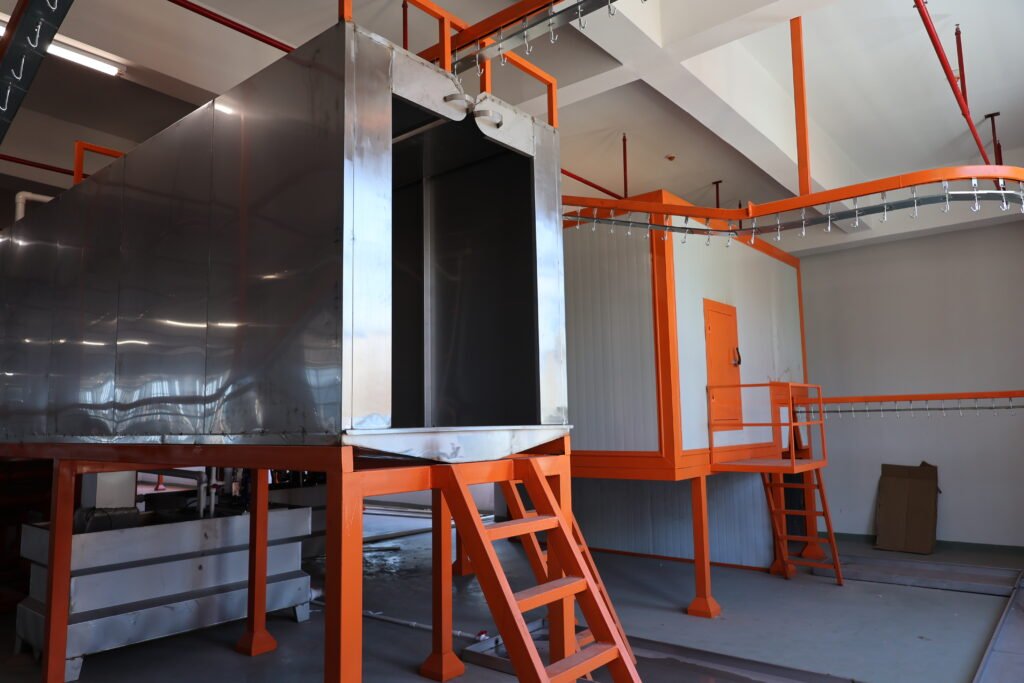
A true industrial, conveyorized powder coating system usually lands around $200,000 to $2,000,000+ installed, because you are buying a controlled production process, not a single machine.
When I price projects from a factory view, I do not start with a “fixed number.” I break cost into the few switches that move the budget the most: throughput, pretreatment, ovens, automation, changeover, and local compliance. If you understand those switches, you can build a realistic budget fast, and you can avoid paying for things you do not need.
How Much Does Professional Powder Coating Cost?
If you ask for “professional powder coating cost,” you might mean the price you pay a coating shop. That is not the same as buying your own line. Still, it helps to understand how shops price jobs, because those drivers are the same drivers inside your own factory cost.
Professional powder coating cost is usually driven by part size, surface condition, color changes, masking, inspection level, and rework risk, not only by the square meters you see on the part.
What “professional cost” includes in real life
When a shop quotes you, the price often includes more than coating:
- cleaning and prep time
- masking and unmasking time
- racking and unracking time
- booth time and oven time
- inspection and packing time
- risk buffer for rejects
A part that looks small can still be expensive if it is hard to rack, hard to ground, or easy to scratch.
The simple cost model I use (to make quotes make sense)
I often think in four buckets:
1) Labor minutes per part
This includes prep, hanging, spraying, checking, and packing. For many fabricators, labor is the largest variable.
2) Material cost
Powder use depends on transfer efficiency, film thickness target, and recovery setup. The powder you lose is cash.
3) Energy cost
Ovens and dry-off are the big ones. Stop-and-go production wastes energy.
4) Rework and scrap
This is the hidden killer. If a shop has rework risk, they price it in.
A quick table of what increases job cost the fastest
| Cost driver | Why it raises cost | What to ask a shop (or yourself) |
|---|---|---|
| poor surface condition | more prep and more rejects | “What prep step is needed?” |
| frequent color changes | downtime and cleaning | “How many colors per shift?” |
| heavy masking | manual labor grows fast | “Which areas must stay uncoated?” |
| thick or high-spec coating | slower, more powder, more control | “What film thickness target?” |
| high appearance standard | more inspection and rework | “What defects are allowed?” |
If you plan to bring coating in-house, these same drivers will define your line type and your installed cost.
How Much Does a Powder Coating Machine Cost?
People search “machine cost,” but an industrial system is a package. You might buy one machine, but you cannot ship stable quality without the supporting modules.
A powder coating “machine” can cost from tens of thousands to hundreds of thousands, but an industrial system cost is mainly decided by the full line scope: pretreatment, ovens, booth and recovery, conveyor, controls, and utilities.
What counts as “the machine” in a real factory
A typical industrial project includes:
- conveyor system (monorail, power & free, loop, or other)
- pretreatment (spray tunnel or immersion) and rinses
- dry-off oven
- spray booth (manual or automatic) plus powder feed
- recovery and filtration (cyclone + filters, or filter-only)
- curing oven
- PLC, sensors, safety interlocks, fire protection options
- installation and commissioning
If you only compare booth or guns, you will get a fake low number.
Budget bands I use for planning (installed, not only equipment)
These are broad planning ranges. Real projects can sit outside these if building work is heavy or compliance is strict.
-
Entry industrial line: about $200k–$500k installed
Usually basic conveyor, basic pretreatment, manual or simple automatic spray, standard recovery, and a standard curing oven. -
Mid-range production line: about $500k–$1.2M installed
Stronger pretreatment, better recovery, higher throughput, better controls, and better stability for long runs. -
Large, high-throughput automated line: about $1.2M–$2.0M+ installed
Power & free, larger ovens, more automation, faster changeover features, and stronger compliance systems.
The biggest switches that move the “installed” cost
| Switch | Why it changes the budget so much | What I clarify first |
|---|---|---|
| pretreatment strength | tanks, chemistry, water treatment add fast | indoor vs outdoor requirement |
| oven design | dwell time and insulation cost real money | part thermal mass and takt |
| conveyor type | buffering and routing change complexity | mix and need for accumulation |
| automation level | guns, reciprocators, robots, controls | repeatability vs flexibility |
| compliance scope | dust, exhaust, wastewater, fire rules | local standards and permits |
From Ketu’s view, I like to lock scope early. That is how we prevent “surprise costs” after the order.
How Much Does Powder Coating Cost per m2?
Cost per m² is a useful KPI, but it can trick you if you compare unlike parts. A flat panel and a complex welded frame do not behave the same.
Powder coating cost per m² depends on coating thickness, transfer efficiency, racking time, masking, color changes, and cure time, so you should treat it as a production KPI, not a universal price tag.
Why “per m²” is not stable across products
Fabricators often run mixed work:
- small brackets with many hooks
- frames with recesses and Faraday areas
- parts with weld spatter and oil
- parts that need masking
- parts that scratch easily after cure
All of that changes labor minutes and rework risk. Those two items can dominate the “per m²” result.
A simple way I estimate cost per m² inside a factory
I use a “three-line” breakdown:
1) Powder usage per m²
This depends on film thickness and transfer efficiency.
- If you target higher film build, powder use rises.
- If your recovery is weak, powder loss rises.
- If your grounding is weak, you spray more to “cover corners,” and powder loss rises.
2) Labor per m²
This depends on racking and handling speed.
- If racking is slow, your cost per m² explodes even if powder is cheap.
- If you need heavy masking, labor dominates.
3) Energy per m²
This depends on oven loading and idle time.
- If the oven is under-loaded, you burn money on empty air.
- If you stop and start all day, your energy per m² rises.
The table I use to find “why per m² is high”
| Symptom | Likely cause | First fix I try |
|---|---|---|
| powder use is high | low transfer efficiency, bad recovery, over-thick target | stabilize parameters and recovery |
| labor is high | slow racking, too many hooks, heavy masking | standardize fixtures by part family |
| energy is high | idle oven time, poor insulation, wrong takt | match takt and reduce empty running |
| rework is high | pretreatment drift, cure not verified, contamination | lock prep and verify part temperature |
If you want a reliable per m² number, I always recommend you calculate it by product family, not by “whole factory average.”
How Much Is Powder Coating per sqm?
“Per sqm” is the same idea as per m². The practical question is how to quote it in a way that protects margin and still stays fair to customers. I like simple quote structures that reflect real production.
Powder coating per sqm should be quoted with clear assumptions for prep level, thickness target, color-change frequency, masking, and inspection, because those factors decide labor and rework, not just area.
A quote structure I use for clarity (and fewer disputes)
I split the quote into visible drivers:
- base rate per sqm for a defined condition
- adders for complexity and risk
This keeps both sides honest. It also helps the buyer understand how to reduce their own cost.
Example quote framework (not a promise, a structure)
| Line item | What it covers | How I define it |
|---|---|---|
| Base coating per sqm | normal steel, normal clean, standard color | defined thickness range and gloss |
| Prep add-on | heavy oil, rust, weld scale | defined prep level |
| Masking add-on | holes, threads, grounding areas | masking minutes or per part |
| Color change add-on | frequent switches | changeovers per shift |
| Quality add-on | high appearance, special tests | inspection and record level |
This structure matches how the line actually spends time and money.
The factory truth about “why it costs so much”
When customers ask “why is powder coating expensive,” the answer is rarely “powder is expensive.” The answer is usually one of these:
- too much manual handling and racking time
- too much changeover downtime
- too much rework caused by unstable prep or cure
- too much energy wasted by low oven loading
- too much masking and touch-up
If you want to cut cost hard, you do not start by cutting powder price. You start by cutting downtime and rework.
My factory-style planning checklist (fast, practical)
If you want a tight budget bracket for an industrial-sized system, I only need four inputs:
1) Max part size and weight
2) Target throughput (parts/hour or shift output)
3) Colors per day (and changeover expectation)
4) Quality target (indoor vs outdoor, corrosion expectation)
With these, I can map you to a realistic system band and show where you can save without breaking stability.
Conclusion
An industrial-sized powder coating system usually costs about $200k to $2M+ installed because pretreatment, ovens, conveying, automation, and compliance define the real scope, not a single “machine price.”
 English
  German
  Vietnamese
  French