Is Powder Coating Cheaper Than Painting? A Complete Cost Analysis from Initial Investment to Long-term Operations
When manufacturing enterprises face the choice between powder coating and traditional liquid paint spraying, the first question they ask is almost always about cost. On the surface, the answer seems straightforward—powder coating equipment requires a larger upfront investment. But this perspective only captures part of the picture. After working with hundreds of manufacturing clients across cabinet production, furniture manufacturing, and aluminum extrusion industries, I've learned that the real cost comparison depends on your production volume, product cycles, and coating durability requirements.
Most factories making this decision focus only on equipment purchase price and miss the bigger financial story. The true cost advantage of powder coating emerges when you account for material consumption, operational efficiency, energy usage, and coating lifespan. In this article, I'll break down exactly where powder coating saves money—and where it doesn't.
Initial Investment: Yes, Powder Coating Equipment Costs More Upfront
Let me be direct: if you're comparing purchase price alone, an electrostatic powder coating line typically costs 1.3 to 1.5 times more than a traditional liquid paint spraying system.
Why the higher initial cost?
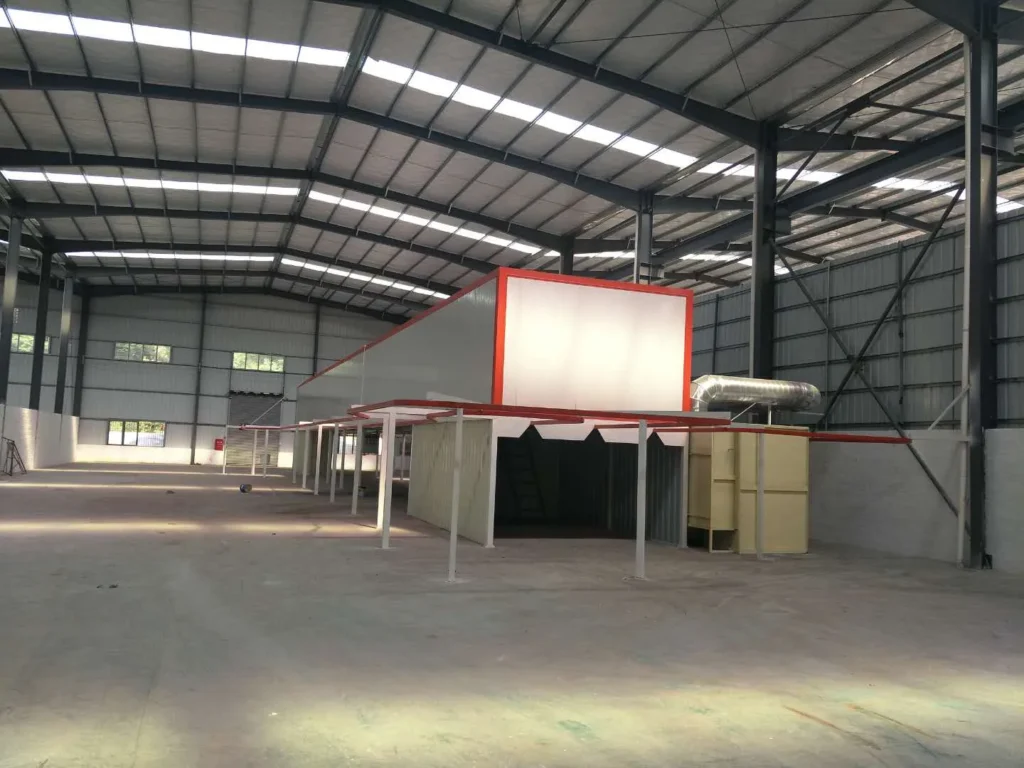
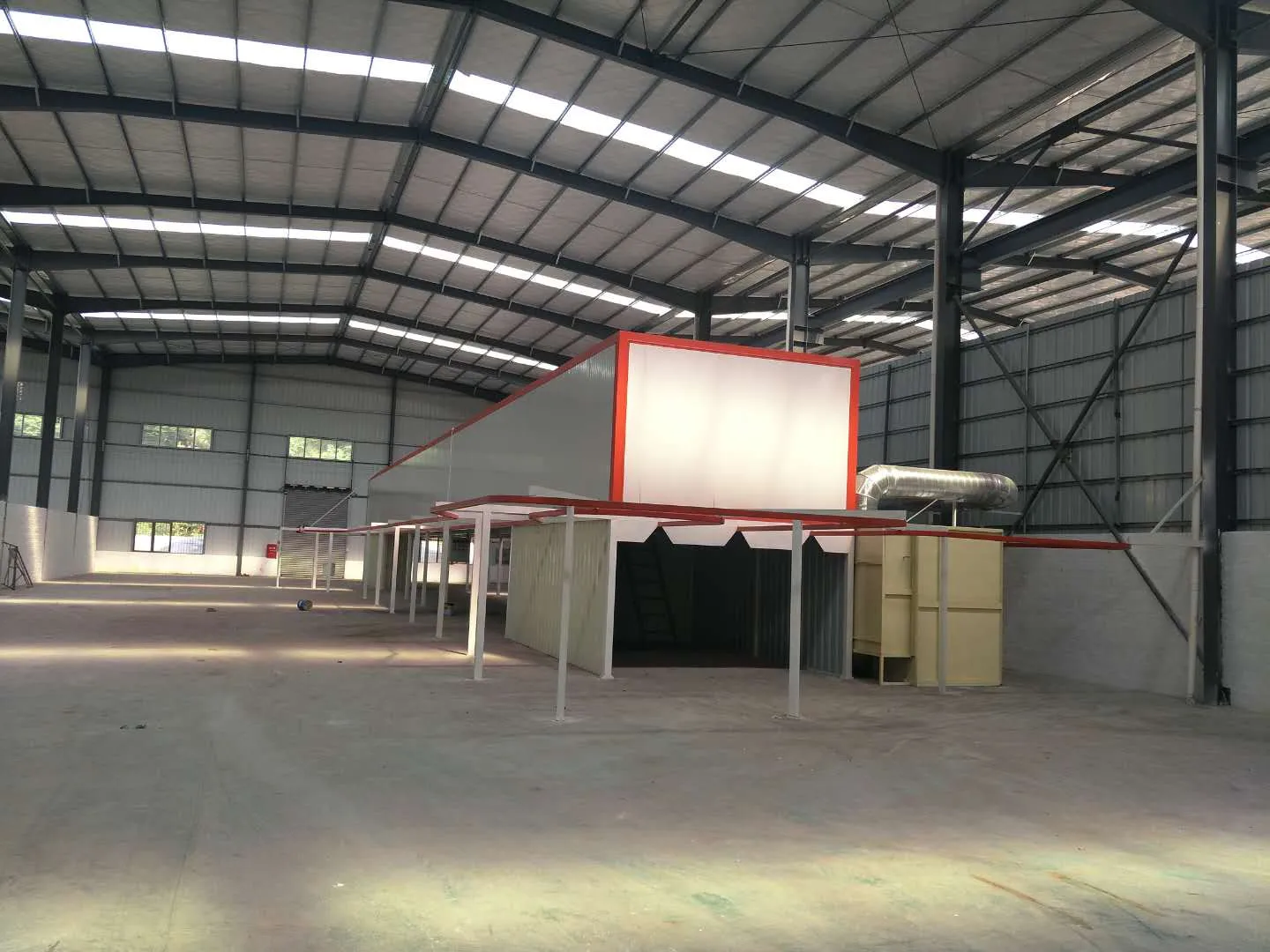
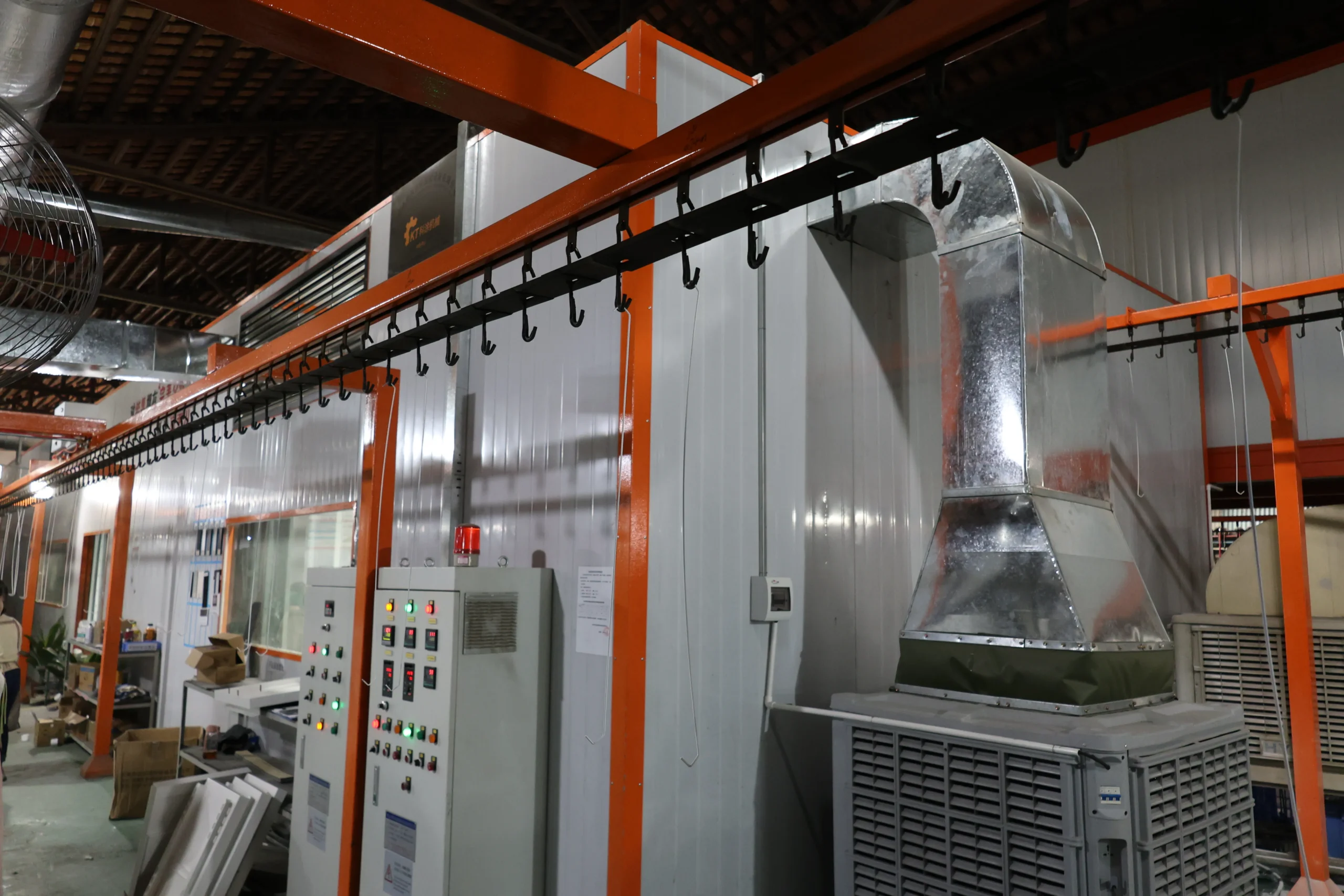
A complete powder coating production line requires:
- Pre-treatment system (degreasing, rust removal, phosphating, drying)
- Electrostatic spray booth (with cyclone separation and secondary recovery)
- Curing oven (precision temperature control, thermal circulation)
- Automated or semi-automated conveyor system (stable speed, proper positioning)
- Powder recovery system (efficient particle separation and reuse)
- Intelligent control system (parameter monitoring, temperature regulation)
Each component demands precision engineering and premium materials. Liquid paint systems can be far simpler—sometimes just a spray booth, spray guns, and basic ventilation.
But here's what I tell clients: you're not paying extra for complexity; you're paying for your next 3-5 years of lower operational costs.
Operating Costs: Where Powder Coating Delivers Real Savings
Once the equipment is running, the cost dynamics shift dramatically in powder coating's favor. This is where the financial advantage becomes undeniable.
Material Consumption and Recovery Efficiency
This is the single biggest factor in long-term cost reduction.
Traditional liquid paint reality:
- Typical utilization rate: 60-70%
- Spray pattern loses significant material as mist
- For every 10 kg of paint applied, only 6-7 kg bonds to the workpiece
- The remaining 3-4 kg becomes airborne waste requiring environmental treatment
Powder coating reality:
- Recovery rate: 90-95%+ (our projects typically achieve 92-95%)
- Unapplied powder is captured by cyclone separation and secondary recovery systems
- Recovered powder returns directly to the spray system—no waste processing costs
- Material reuse is seamless across color changes when managed properly
Real-world example: A cabinet manufacturer spraying 1,000 electrical enclosures monthly with the specifications L1500×W1100×H1200mm:
| Cost Factor | Liquid Paint | Powder Coating |
|---|---|---|
| Paint/powder consumption | 500 kg/month | 350 kg/month |
| Material cost (per kg) | $8-12 | $10-15 |
| Monthly material cost | $4,000-6,000 | $3,500-5,250 |
| Annual material cost | $48,000-72,000 | $42,000-63,000 |
| 5-year material cost | $240,000-360,000 | $210,000-315,000 |
5-year savings on material alone: $30,000-$45,000
This assumes no environmental remediation costs for liquid paint overspray—which would only increase the gap further.
Labor Configuration and Production Efficiency
Powder coating's automation advantage directly reduces per-unit labor costs.
Liquid paint operations typically require:
- More frequent operator supervision (quality varies with skill)
- Manual spray adjustments throughout the shift
- Longer spray times due to lower material efficiency
- Color changes require extensive spray booth purging and cleanup
Powder coating operations offer:
- Semi-automated or fully automated spray sequences
- Consistent results with minimal manual intervention
- Faster color changes (optimized cyclone design allows powder switching in minutes, not hours)
- Reduced training requirements once systems are calibrated
When you produce 20 cabinets per 5-hour shift (as in our safe cabinet project), labor productivity directly impacts cost-per-unit. Automation reduces headcount dependency and allows single operators to monitor multiple production stages.
Energy Consumption: The Hidden Advantage
This is where many cost analyses fall short—they overlook energy performance.
| System Component | Powder Coating | Liquid Paint |
|---|---|---|
| Spray booth ventilation | 30-40 kW | 25-35 kW |
| Curing oven (electric) | 60-80 kW | N/A (air dry common) |
| Powder supply system | 5-10 kW | N/A |
| Total per cycle | ~96 kW | ~30 kW |
| Cycles per day (8-hour shift) | 20 | 16 |
| Daily consumption | 1,920 kWh | 480 kWh |
At first glance, powder coating uses 4x more energy. But the critical detail: powder coating produces a hardened, durable finish immediately. Liquid paint requires extended ambient air-drying or low-temperature curing—extending production schedules and preventing immediate quality inspection.
When you factor in throughput (powder coating completes a full cycle including curing in ~25 minutes vs. liquid paint's longer timeline), the per-unit energy cost becomes competitive, especially when energy pricing is high in your region.
Key Factors Affecting Your Powder Coating Total Cost
The decision between powder and liquid coating is never one-size-fits-all. Multiple variables shift the economics in different directions.
Production Volume and Product Cycle
Low-volume scenarios (< 50 units/month):
Powder coating's advantages shrink. Equipment utilization is poor, and the high fixed costs matter more. Liquid paint becomes economically sensible.
Medium-volume scenarios (50-500 units/month):
This is powder coating's sweet spot. Fixed costs distribute across enough production to justify automation investment. Typical payback period: 18-36 months.
High-volume scenarios (500+ units/month):
Powder coating's cost advantage compounds. Every efficiency gain multiplies across thousands of units. Payback often occurs within 12-18 months.
Product Complexity, Dimensions, and Surface Preparation
Simple, flat panels:
Easier for both systems. Powder coating's precision advantage is less critical.
Complex geometries, deep cavities, internal chambers:
Powder coating excels. The Faraday cage effect (difficulty reaching recessed areas) is real but manageable with angled spray guns. Liquid paint struggles equally here, with added re-spray risk.
Pre-treatment requirements:
Cabinet and cabinet-style products (electrical enclosures, switchgear) need robust phosphate conversion coatings for corrosion resistance. This is standard in our pre-treatment systems. Liquid paint requires similar prep—so no advantage either way.
Color Variety and Finish Requirements
Single color, consistent finish:
Both systems perform well. Setup is straightforward for either.
Multiple colors, rapid changeovers:
Powder coating gains advantage. Color changes take 10-15 minutes with optimized cyclone design. Liquid paint spray booth purging often takes 30-60 minutes, reducing overall productivity.
Premium finishes (high-gloss, textured, matte):
Powder coating offers broader finish variety without additional material cost. Liquid paint requires solvent adjustments and spray pattern modifications—increasing complexity and waste.
Logistics, Throughput Time, and Additional Services
Transport and storage:
Powder is safer, more stable, and doesn't require humidity-controlled storage like liquid paint can.
Local standards and environmental regulations:
Different regions impose different VOC (volatile organic compound) restrictions. Powder coating—with virtually zero VOC—sidesteps these regulatory costs. Liquid paint often requires additional filtration or emission treatment systems, adding $10,000-$30,000 in infrastructure.
Rapid project turnaround:
Powder coating's immediate curing allows faster quality inspection and shipment. Liquid paint's extended dry times can delay delivery.
Durability and Service Life: Why Powder Coating's Cost Advantage Extends Beyond Year One
Here's where the true long-term economics become apparent.
Powder Coating vs. Liquid Paint Durability Comparison
| Performance Metric | Powder Coating | Liquid Paint |
|---|---|---|
| Typical service life | 15-20+ years | 5-10 years |
| Corrosion resistance (salt spray) | 500-1000+ hours | 200-500 hours |
| Abrasion resistance | Excellent | Moderate |
| UV resistance (outdoor) | Very high (epoxy/polyester blend) | Variable (often needs topcoat) |
| Coating thickness | 40-100 microns (uniform) | 20-60 microns (variable) |
| Impact resistance | High | Moderate to high |
| Chemical resistance | Excellent | Good to excellent |
The data is clear: powder coating typically lasts 2-3 times longer than liquid paint under equivalent conditions.
For a cabinet destined for outdoor installation or harsh industrial environments, this means:
- Liquid paint: Complete refinishing required every 5-7 years
- Powder coating: Often maintains integrity for 15+ years
Maintenance Frequency and Recoating Costs
Liquid paint maintenance reality:
- Annual cleaning and touch-up: $500-1,500 per cabinet
- Major refinishing every 5-7 years: $5,000-15,000 per cabinet
- 20-year total maintenance: $25,000-60,000
Powder coating maintenance reality:
- Annual cleaning and minor inspection: $200-500 per cabinet
- Potential refinishing at year 15+: $5,000-10,000 (if needed at all)
- 20-year total maintenance: $3,000-12,000
For a fleet of 50 cabinets over 20 years, powder coating saves $1,100,000-$2,400,000 in maintenance and recoating costs.
How to Determine If Powder Coating Makes Economic Sense for Your Business
The question isn't just "is powder coating cheaper?" It's "is powder coating cheaper for my specific situation?"
Choose powder coating if:
- Production volume exceeds 100 units per month consistently
- Coating durability matters (5+ years of outdoor or harsh exposure expected)
- Color consistency and finish quality are competitive differentiators
- Your products have complex geometries requiring uniform coverage
- Local regulations impose strict VOC or emissions limits
- You operate in a high-labor-cost region (automation ROI accelerates faster)
- You need predictable quality for repeat customers
Stick with liquid paint if:
- Production is sporadic or seasonal (< 50 units/month)
- Coating lifespan requirements are short (1-3 years acceptable)
- Products are simple, flat items with minimal surface complexity
- Rapid color variety is essential, and changeovers are frequent
- Your facility can't accommodate curing oven infrastructure
- Budget is severely constrained and you can't finance equipment over time
Cost Decision Framework for Powder Coating Projects
When I help clients evaluate this decision, I use this framework:
Step 1: Calculate the 5-year total cost of ownership
| Item | Liquid Paint | Powder Coating |
|---|---|---|
| Equipment purchase | $50,000 | $100,000-150,000 |
| Installation/setup | $10,000 | $20,000-30,000 |
| Annual material | $60,000 | $45,000 |
| Annual labor (5 years) | $80,000 | $60,000 |
| Annual energy | $20,000 | $35,000 |
| Maintenance (5 years) | $15,000 | $8,000 |
| Environmental compliance | $10,000 | $2,000 |
| 5-year total | $395,000 | $395,000-450,000 |
This looks close. But look deeper:
Step 2: Project beyond 5 years
If you operate continuously:
- Years 6-10: Liquid paint system needs major maintenance/replacement. Powder coating runs efficiently.
- Years 11-15: Liquid paint struggles with declining efficiency. Powder coating still performing at baseline.
- Product durability: Liquid-painted products require refinishing. Powder-coated products often remain market-ready.
Step 3: Calculate per-unit costs at different volumes
At 200 units/month over 10 years (24,000 total units):
- Liquid paint: ~$16-20 per unit (material + labor + energy + maintenance allocated)
- Powder coating: ~$12-15 per unit (same allocation)
At 500 units/month over 10 years (60,000 total units):
- Liquid paint: ~$14-18 per unit
- Powder coating: ~$9-12 per unit
The higher your volume, the more dramatic powder coating's advantage becomes.
The Bottom Line: When Powder Coating Is Truly Cheaper
In the first 1-2 years: Powder coating is more expensive due to equipment investment. This is unavoidable.
In years 3-5: Costs equalize or favor powder coating, depending on volume and durability requirements. This is where ROI becomes visible.
In years 6-10 and beyond: Powder coating's cost advantage compounds significantly. Lower material waste, reduced maintenance, and extended product lifespan create substantial savings.
The financial logic is strongest when:
- Your production volume is stable and medium-to-high (100+ units/month)
- Your products require durability (outdoor exposure, heavy use, corrosion risk)
- You operate the same line for 5+ years
- Your labor costs are moderate to high
- You value consistency and predictable quality
For cabinet manufacturers, furniture producers, and aluminum specialists—which represent the majority of our client base—powder coating is almost always cheaper on a 10-year horizon, despite higher initial investment.
Questions to Ask Before Committing to Either Technology
About your products:
- What is the minimum acceptable coating lifespan?
- Will products face outdoor exposure, salt environments, or chemical contact?
- How complex is the geometry? (Simple flat panels vs. deep cavities)
- What finish quality do customers expect?
About your operation:
- What is your realistic monthly production volume? (Be conservative)
- How stable is this volume? (Growing, declining, seasonal?)
- What is your facility's available space for equipment?
- Can you source reliable pre-treatment capabilities?
About your business:
- What is your typical product markup? (Coating cost as % of selling price)
- What is your customer retention rate? (Do repeat customers expect consistent quality?)
- Are you competing on price or quality?
- What local regulations affect coating choices?
Bringing It Together: A Practical Recommendation
After working with hundreds of manufacturing operations, I've observed a clear pattern: most operations that switch to powder coating regret not doing it sooner. The complexity is often overestimated, and the financial benefits are frequently underestimated.
Powder coating isn't universally cheaper than painting—but for serious, volume-based manufacturing operations with durability requirements, it nearly always is when you measure correctly. The mistake most factories make is measuring only the first year. Measure the full 10 years instead, and the decision becomes clear.
If you're operating above 100 units per month and your products need to survive multiple years in the field, scheduling a technical consultation to evaluate your specific scenario makes financial sense. The difference between choosing correctly and choosing poorly often exceeds the cost of expert guidance.
Ready to explore whether powder coating makes sense for your operation? We've helped cabinet manufacturers, aluminum specialists, and furniture makers across three continents design systems that pay for themselves in 18-36 months. Contact us to discuss your production requirements, volume goals, and coating performance expectations. We'll provide an honest cost analysis—not just equipment specifications.
WhatsApp: +8618064668879
Email: ketumachinery@gmail.com
 English
  German
  Vietnamese
  French