Introduction
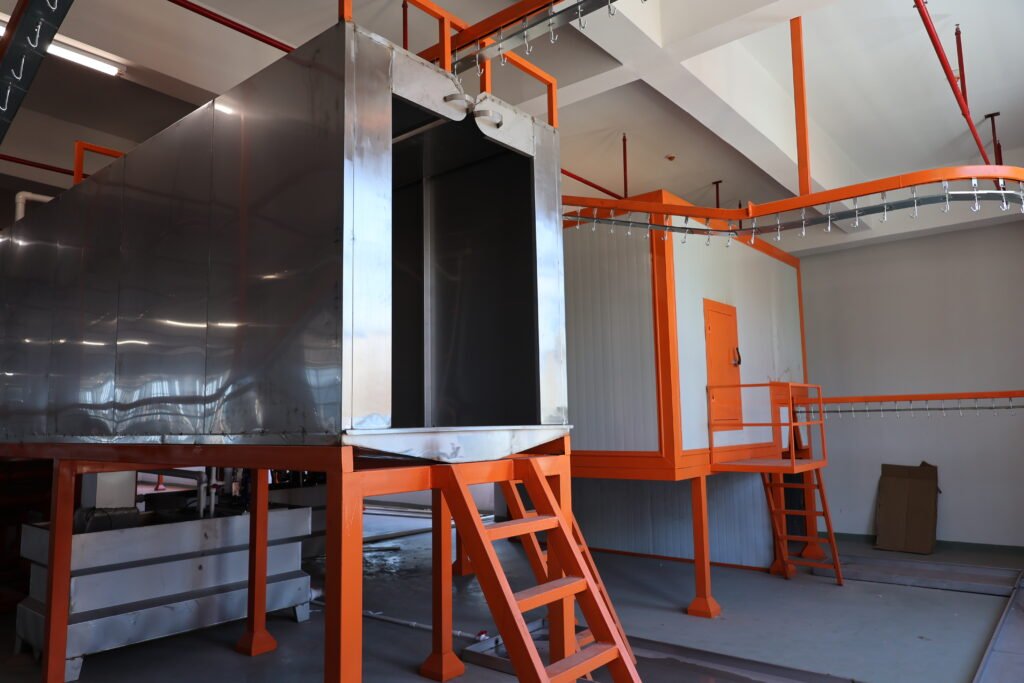
Electrostatic powder coating technology has become the go-to solution for manufacturers seeking uniform, durable, and environmentally responsible surface finishes. After working with 50+ manufacturing enterprises across cabinet fabrication, furniture production, and aluminum extrusion industries, we've observed that the real competitive edge lies not in individual machine specs, but in how seamlessly every component of a complete coating line works together.
This article draws from our factory experience designing and deploying integrated electrostatic powder coating systems. We'll walk you through current innovations, industry-specific applications, the critical role of pre-treatment, production line design methodology, cost dynamics, and how to identify the right partner for your coating system needs.
Why Powder Coating Technology Matters: Core Advantages Over Traditional Methods
Powder coating outperforms traditional liquid spray in nearly every measurable dimension. Let's be direct about why manufacturers are shifting toward this technology at scale.
Superior coating quality. Electrostatic attraction ensures powder adheres uniformly to workpiece surfaces without runs, drips, or thin spots. We regularly see clients achieve film thickness consistency within ±10–15 micrometers across complex geometry—something manual liquid spray struggles with.
Environmental and operational efficiency. Unlike solvent-based coatings, powder releases minimal VOC emissions. Unused powder recovers and recycles, reducing material waste to 5–10% rather than the 30–40% typical of liquid systems. Monthly powder costs drop significantly once a mature recovery infrastructure is in place.
Faster production cycles. Powder cures in 10–20 minutes at standard temperatures (180–200°C), versus 24+ hours for air-dry liquid coatings. This acceleration directly translates to higher throughput and lower work-in-process inventory.
Superior corrosion and wear resistance. Properly cured powder coatings deliver salt-spray ratings of 1000+ hours, suitable for outdoor and high-humidity environments. Adhesion strength and mechanical hardness exceed what liquid spray achieves at equivalent dry-film thickness.
Flexibility for color changes and automation. Powder systems switch colors in 15–30 minutes with minimal contamination risk. Full automation becomes viable—spray guns, conveyors, and curing sequences synchronize without the complexity or cost that liquid spray automation demands.
The trade-off: powder coating requires higher upfront capital, stricter pre-treatment discipline, and more rigorous compressed-air management. But for manufacturers targeting consistency, scale, and long-term cost efficiency, the ROI typically surfaces within 18–36 months.
Latest Innovations in Powder Coating Technology (2024–2025)
The powder coating sector is advancing on three fronts: precision control, sustainability, and digital integration.
Advanced electrostatic gun design. Modern spray guns now feature variable pulse frequency and dual-electrode technology, enabling operators to achieve superior coverage on complex geometries—particularly internal cavities and recessed edges that traditional fixed-voltage guns leave under-coated. These systems reduce the "Faraday cage effect" through intelligent spray pattern adaptation.
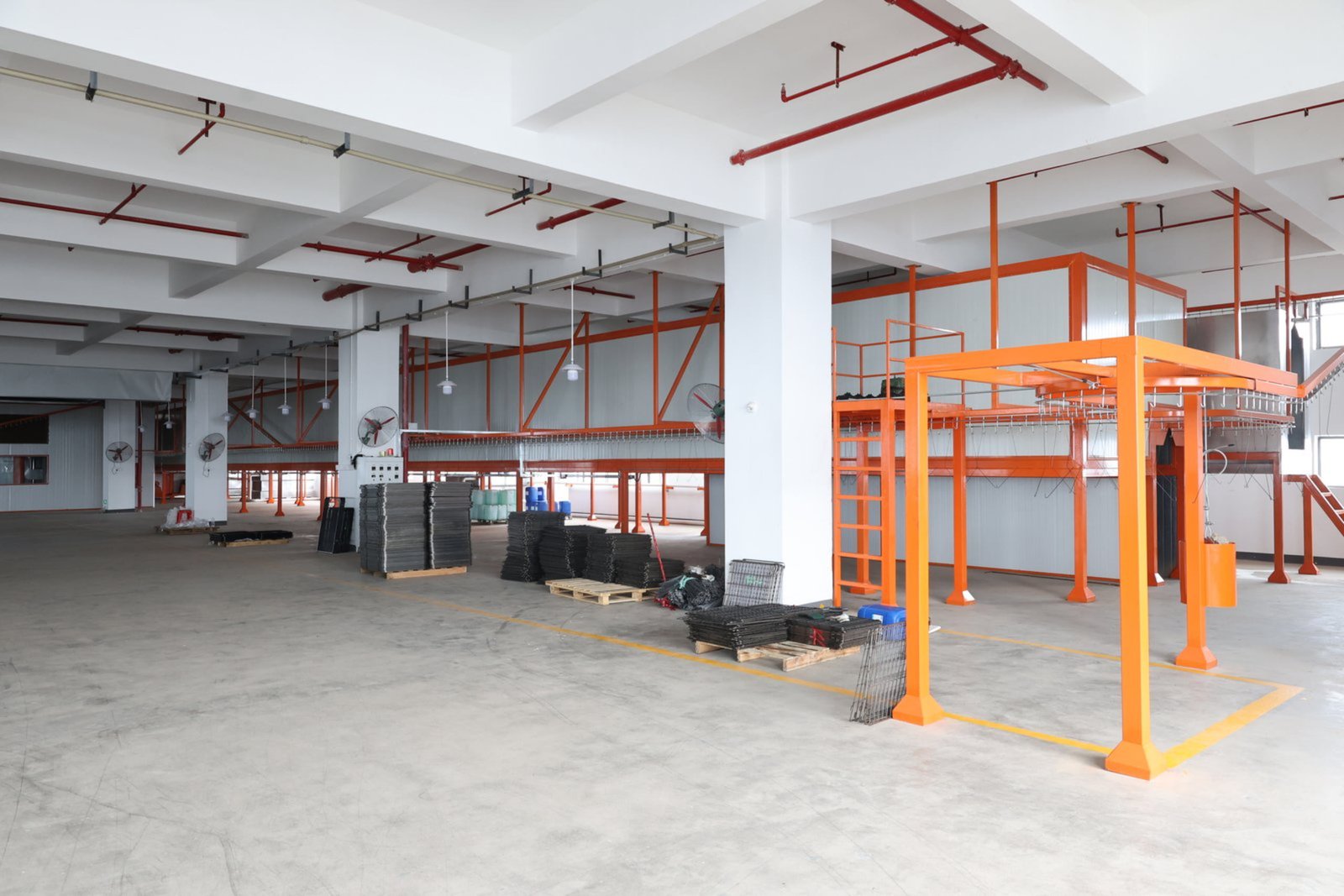
High-speed curing furnace technology. Infrared preheating combined with convection finishing shortens cure time from 15 minutes to as little as 8–10 minutes without compromising film properties. Some facilities now run three-shift production on line lengths that previously required two shifts.
Real-time film thickness monitoring. Embedded sensors now track dry-film thickness (DFT) continuously during spray, automatically adjusting gun voltage and air pressure to maintain target thickness. We've seen this reduce scrap rates by 12–18% on first-run batches and eliminate post-cure sorting entirely.
Low-temperature powder formulations. Chemistries now cure effectively at 150–160°C instead of traditional 200°C, cutting furnace energy consumption by 15–20% while widening substrate compatibility (important for thermally sensitive materials and certain aluminum alloys).
Closed-loop powder recovery with AI sorting. Next-generation cyclone separators paired with optical particle analysis now sort recovered powder by batch and contamination level automatically, extending usable recycle cycles and reducing waste disposal costs.
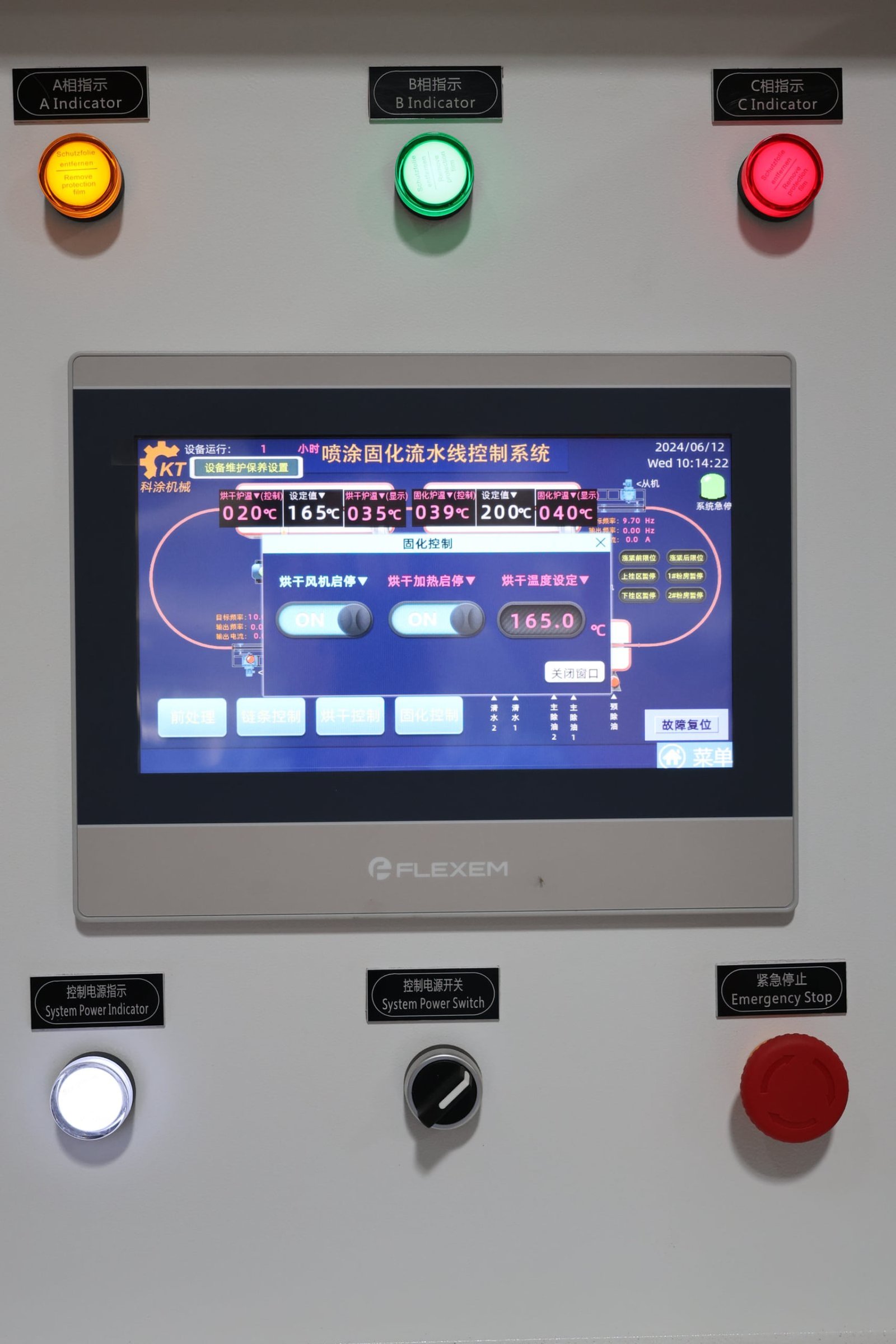
IoT-enabled production tracking. Modern control systems log spray pressure, gun position, furnace temperature profiles, and cure times in real time. Operators and quality teams access dashboards showing DFT trends, defect correlations, and energy consumption per part—enabling continuous process refinement.
These innovations aren't luxury add-ons; they're becoming baseline expectations in competitive mid-to-high-volume manufacturing. The facility that lags 3–5 years behind current tech typically sees 8–15% higher scrap rates and 10–20% longer cycle times than market leaders.
Industry-Specific Applications: Tailored Solutions for Different Manufacturing Sectors
Powder coating isn't one-size-fits-all. Material choice, coating thickness, cure profile, and automation level must align with the specific demands of each product category. We'll detail three sectors where we see the strongest alignment with powder technology.
Cabinet & Sheet Metal Fabrication
Electrical enclosures, switchgear cabinets, and control boxes demand high surface uniformity, strong adhesion, and corrosion resistance. Typical workpiece dimensions range from 0.8 m × 1.2 m × 1.5 m up to 2.0 m × 3.0 m × 2.5 m.
Key requirements:
- Film thickness: 60–90 micrometers (DFT)
- Surface finish: RAL-grade color match, minimal orange-peel
- Adhesion: ASTM B733 5B (cross-hatch adhesion test)
- Salt-spray performance: 500–1000+ hours at ASTM B117
Coating system specifics:
Pre-treatment focuses on alkaline degreasing followed by zinc or iron-based phosphate conversion. Most cabinets run through automated spray booths with 2–4 electrostatic guns positioned to reach internal surfaces and panel edges. Furnaces typically operate at 180–200°C with 12–15 minute dwell.
Automation sweet spot: Semi-automatic to fully automatic conveyors with indexing stops allow operators to hand-load/unload while guns fire on timed cycles.
Our experience: We've sized cabin spray systems for clients producing 40–80 cabinets per shift. The key variable is workpiece geometry—boxes with complex internal baffles or thin-wall panels need lower gun voltage (to avoid powder bounce-back) and longer dwell time (to ensure even cure).
Furniture Manufacturing
Residential and commercial furniture—chairs, tables, frames, outdoor units—presents different challenges: varied product geometry, multi-color SKUs, and growing emphasis on outdoor durability.
Key requirements:
- Film thickness: 40–70 micrometers (aesthetics + durability)
- Finish quality: high-gloss or matte, minimal surface defects, uniform color
- Adhesion: ASTM B733 3B–5B (depends on substrate prep)
- Outdoor exposure: 3–5 year durability for weather resistance
Coating system specifics:
Furniture typically skips aggressive phosphate conversion; instead, a lighter iron-based pre-treatment or even organic conversion coating suffices for indoor pieces. For outdoor furniture, we recommend powder chemistry specifically formulated for UV and moisture resistance (polyester or acrylic-polyester blends).
Spray booth layout often accommodates hanging or carousel systems, allowing 6–12 pieces per batch. Furnaces run 12–18 minutes at 180–200°C. Color changes between SKUs require 20–30 minute booth purges to avoid cross-contamination.
Automation sweet spot: Carousel or reciprocating conveyors with multiple color zones work well here. Lower production speeds (compared to cabinets) make semi-manual systems economically viable.
Our experience: Furniture clients often want flexibility—ability to run small batches (10–50 units) of different colors without excessive downtime. We've designed systems with modular powder supply centers and quick-disconnect spray gun stations to achieve 15–20 minute color changeovers.
Aluminum Profile & Extrusion
Anodized or powder-coated aluminum architectural profiles face stringent demands: corrosion resistance in marine/coastal environments, thermal performance (for building systems), and dimensional precision.
Key requirements:
- Film thickness: 50–80 micrometers, tight tolerance (±5 micrometers)
- Substrate prep: silane or zirconia conversion, not traditional phosphate
- Adhesion: ASTM B733 4B–5B minimum
- Salt-spray: 1000+ hours (often 2000+ for marine exposure)
- Production speed: 50–100 linear meters per minute (requires high-speed conveyors)
Coating system specifics:
Aluminum extrusion demands continuous, high-speed spray and cure. Pre-treatment emphasizes chromium-free conversion coatings (silane or zirconia) to avoid substrate etching. Powder chemistry is typically polyester or PVDF, with strict color matching to architectural specs.
Spray systems often use reciprocating or multi-arm auto-spray equipment to ensure even coverage across profile faces and internal channels. Conveyor speeds typically run 50–150 m/min, with furnace zones for heating, curing, and cooling.
Automation sweet spot: Fully automatic, high-speed inline systems. Manual operation is not feasible at these speeds.
Our experience: Aluminum clients emphasize two things: (1) thickness consistency—we use real-time DFT monitoring to hold ±5 micrometers; (2) powder recovery efficiency—we design secondary filtration to recycle 90%+ of unused powder, cutting resin costs by 30–40% annually.
Pre-treatment Foundation: The Critical Factor Behind Coating Success
Here's an uncomfortable truth from our factory floor: 70% of coating failures we investigate trace back to pre-treatment shortcuts, not spray or cure problems.
Why Pre-treatment Quality Directly Impacts Final Coating Performance
Pre-treatment removes oils, oxides, and contaminants while creating a chemically receptive surface. When it's done poorly, no amount of spray-gun tweaking or furnace calibration saves the coating.
Adhesion suffers. If oil, salt, or rust residue remains under the powder film, adhesion drops below 3B (ASTM B733). The coating adheres to contamination, not substrate—and contamination doesn't stick to metal.
Corrosion accelerates. Oxides trap moisture beneath the coating. Once humidity breaches the edge (at scratches or fastener holes), corrosion spreads laterally under the film, eventually causing blistering and flaking.
Surface defects multiply. Water droplets left on the surface after rinse stage cause pinholes. Phosphate sludge causes orange-peel and dull finish. Dust particles cause spikes and craters.
Batch consistency fails. Without consistent pre-treatment, DFT varies, cure profiles vary, and color batch-to-batch shifts. Scrap rates climb.
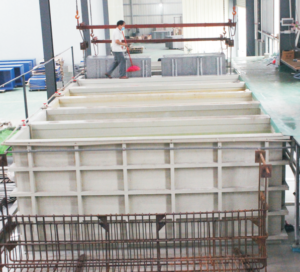
Key Pre-treatment Stages & Common Failure Points
| Stage | Purpose | Common Failure |
|---|---|---|
| Alkaline Degreasing | Remove oils, cutting fluid, fingerprints | Insufficient immersion time; dirty/depleted solution |
| Water Rinse | Flush degreaser residue | Inadequate spray pressure; recontamination from recycle water |
| Acid Cleaning (for steel) | Remove rust, mill scale, oxides | Over-time in acid (substrate thinning); inadequate agitation |
| Phosphate Conversion | Build protective conversion layer | Weak solution; iron/zinc depletion; excessive sludge buildup |
| Final Rinse | Remove phosphate salts | Insufficient final spray; use of hard/dirty water |
| Drying | Evaporate residual moisture | Inadequate air temperature (< 70°C); slow line speed; humid ambient |
Practical fixes we implement:
- Alkaline soak: Maintain 8–12% concentration, 50–60°C, 3–5 minute immersion. Test solution weekly with titration kit.
- Spray rinse: Minimum 3 bar (45 psi) pressure across all surfaces. Use filtered, DI water for final rinse to prevent hard-water stains.
- Phosphate: Run at manufacturer's recommended pH (typically 3.5–4.5) and maintain ferrous-iron concentration above 0.5%. Replace solution quarterly or when sludge accumulates beyond 2–3% by volume.
- Final dry: Oven set to 70–80°C minimum, with parts exiting furnace below 35°C surface temperature (to avoid humidity reabsorption).
When clients skip these disciplines to "save time," we see defect rates jump from 2–3% to 12–20% within weeks.
Designing Your Powder Coating Production Line: From Process Flow to Equipment Configuration
Moving from concept to operational line requires balancing three variables: target output (parts per hour), workpiece geometry/size, and product quality requirements. Most clients underestimate the complexity—and those who do end up with bottlenecks, energy waste, or chronic quality drift.
Calculating Line Speed, Dwell Time & Production Capacity
Step 1: Define target output.
Say you want 100 cabinet units per 8-hour shift (12.5 units/hour). Each cabinet spends approximately:
- Spray booth: 2–3 minutes (including positioning)
- Flash-off zone: 2–3 minutes (powder cure initiation)
- Furnace: 15 minutes at 180°C
- Cool-down: 5–8 minutes
- Total line time per part: ~27–32 minutes
If one part occupies the line every 30 minutes, throughput = 2 parts/hour × 8 hours = 16 parts/day. To hit 100/day, you need a line that processes 6–7 parts simultaneously—meaning the spray booth, furnace, and cooler must be sized to hold multiple parts at once.
Step 2: Size equipment accordingly.
- Spray booth dimensions: Length must accommodate spray gun sweep + rebound zone. Typical: 4–6 m long, 2–3 m wide, 2.5 m tall.
- Furnace internal length: If you need 6 parts in furnace and each part occupies 0.5 m linear space, furnace inner length ≥ 3 m. Add another 1–1.5 m for entry/exit transition zones.
- Conveyor speed: If 15-minute furnace dwell at 3 m internal length = 0.2 m/min conveyor speed (very slow, typical for cabinet lines).
- Cyclone recovery: Size to match spray booth exhaust volume. Typical: 8–12 m³/min for medium cabinets.
Step 3: Identify the bottleneck.
Usually the furnace becomes the constraint. A cabinet line running 100 units/day needs a furnace that never idles. Any spray booth inefficiency (gun clogs, color changes, misloads) backs up the furnace, dropping throughput below 100/day. Build in 15–20% buffer capacity in the furnace section.
Equipment Specification & Performance Standards
| Component | Specification | Rationale |
|---|---|---|
| Spray Booth | 5 m L × 2.5 m W × 2.5 m H; 12 m³/min exhaust | Adequate gun maneuverability; 8–10 air changes/min for safety |
| Electrostatic Guns | Dual-electrode, 90 kV, 2–3 guns per booth | Covers cabinet faces + internal surfaces; reduces Faraday effect |
| Furnace | 5 m inner length; ±5°C temperature uniformity | Ensures even cure across batch; prevents under/over-baking |
| Conveyor | Chain-driven, 0.1–0.3 m/min adjustable speed | Matches dwell times; supports 150+ kg cabinet weight |
| Recovery System | Cyclone + secondary filter (2 cartridges) | 90%+ powder recovery; sub-5 μm filtration for reuse |
| Compressed Air | 5–8 bar, ≥50 cfm, dried to −40°C dew point | Prevents gun clogs, powder quality; reduces surface defects |
Our firm sizes equipment to run 3–5% headroom above target capacity, preventing the stress-induced failures we see when lines run perpetually at 95%+ utilization.
Maintenance Design & Long-term Operational Stability
Build accessibility into the design. Spray gun nozzles, furnace heating elements, and filter cartridges must be replaceable without crane access or major disassembly. Lines where technicians spend 30+ minutes on routine maintenance hemorrhage productivity.
Plan for color changes. Size the powder supply center with modular feed canisters so operators swap colors in <20 minutes without purging the entire system. Include a quick-flush cycle to minimize cross-contamination between batches.
Design thermal management. Furnace insulation quality directly affects energy cost. A 100-cabinet/day line burns 80–120 kWh in furnace energy alone. 10 mm extra insulation pays for itself in 18–24 months of reduced utility bills.
Archive calibration data. Install temperature data loggers in furnaces and pressure gauges on spray guns. Two years of baseline data lets technicians spot drift early—a heating element that's degrading at 2% per month shows up in logs before catastrophic failure.
Cost Analysis & ROI: Investment, Operating Expenses & Payback Period
A complete powder coating system isn't cheap. Cabinet-line customers typically spend $180k–$320k USD on integrated equipment, depending on capacity and degree of automation. But the operational math favors powder significantly over incumbent liquid spray.
Typical Capex Breakdown (100-cabinet/day semi-automatic system)
| Item | Cost (USD) |
|---|---|
| Spray booth + air handling | $35k–$45k |
| Electrostatic guns (3 units) + controllers | $18k–$25k |
| Furnace (5 m, 70–80 kW electric or gas) | $45k–$65k |
| Conveyors + support structure | $25k–$35k |
| Cyclone + secondary recovery | $20k–$28k |
| Powder supply + controls | $12k–$18k |
| Compressed-air system upgrades | $8k–$12k |
| Electrical, plumbing, installation labor | $20k–$30k |
| Total | $183k–$258k |
Add 15–20% for contingencies and site-specific custom work.
Annual Operating Expenses
| Cost Category | Annual (USD) | Notes |
|---|---|---|
| Powder | $18k–$24k | 50–60 kg/day @ $8–$12/kg; 90% recovery rate assumed |
| Furnace fuel (electric or gas) | $28k–$42k | 80–120 kWh/day electric or 120–180 therms/day gas |
| Compressed air | $6k–$10k | 50 cfm @ 8 bar; typical industrial rate $0.15–$0.20/cfm |
| Filtration (cartridge replacement) | $3k–$5k | 4 cartridge sets/year × $800–$1,200 per set |
| Maintenance + spare parts | $5k–$8k | Annual upkeep; gun tip wear, seals, pneumatic lines |
| Labor (1 full-time operator) | $32k–$45k | Depends on geography; assumes 8 hrs/day, 5 days/week |
| Waste disposal | $2k–$4k | Sludge from pre-treatment; phosphate conversion byproducts |
| Quality/Testing | $1k–$2k | DFT calipers, salt-spray samples (every 50 batches) |
| Total Annual Opex | $95k–$140k | Average: ~$117k/year |
Payback Calculation (Switching from Liquid Spray)
Incumbent liquid spray system assumed to cost:
- Annual powder cost: $55k–$75k (higher material waste)
- Furnace/oven cost: $35k–$50k (longer cure = higher energy)
- Labor: $45k–$60k (more rework due to runs/sags)
- Waste disposal: $8k–$12k (solvent cleanup + hazmat)
- Total liquid opex: ~$143k–$197k/year
Powder system annual opex: ~$95k–$140k (from above)
Year-1 savings: $48k–$57k annually
Capex: $220k (middle estimate, with contingency)
Breakeven: 3.8–4.6 years
By year 5–6, cumulative net savings exceed $150k. And this ignores secondary benefits:
- 40–50% fewer defects = lower rework labor
- Faster cure = 2–3 additional shifts of capacity per week
- Improved outdoor durability = fewer warranty claims
Most clients see ROI tighten to 3–3.5 years once they factor in rework reduction and throughput gains.
How to Select the Right Partner: Evaluation Criteria & Cooperation Model
Choosing a powder coating system supplier isn't a commodity purchase. You're betting on design quality, installation discipline, and long-term support. Here's how we recommend you evaluate candidates.
Key Supplier Evaluation Matrix
| Criterion | Weight | Red Flag | Green Flag |
|---|---|---|---|
| Factory Tour / Visible Operations | 20% | Supplier won't show floor; references are generic | Own in-house manufacturing; 2+ demo lines running; clear quality control |
| Industry Experience | 15% | Vague customer list; <5 years in business | Named references (similar product/volume); 10+ years operating; verifiable case studies |
| Design Customization | 15% | "We have 3 standard models; pick one" | Customizes pre-treatment, spray booth, furnace layout per workpiece geometry |
| Technical Documentation | 10% | Sparse drawings; incomplete electrical schematics | Detailed P&IDs, equipment datasheets, wiring diagrams, PLC code (for automation) |
| Installation & Commissioning | 15% | "We ship equipment; you install" | On-site crew included; calibration/testing done before handoff; staff training at site |
| Maintenance Support | 10% | "See local technician" (no relationship) | Factory technical hotline; spare parts stocked locally or shipped within 48 hrs; annual preventive visit |
| References (Verifiable Calls) | 10% | 1–2 vague names; won't take direct calls | 3+ calls with actual operators; they describe production, uptime %, pain points honestly |
| Warranty & Liability | 5% | 1-year parts only; zero labor coverage | 2-year parts + labor on defects; performance guarantees (e.g., DFT ±10 μm within 90 days commissioning) |
Three Cooperation Models
1. Equipment Supply + Installation
Supplier delivers equipment, installs, commissions, and trains your team. You own operations and maintenance. Typical cost: Equipment + 10–15% for site labor.
Best for: Mid-sized manufacturers with in-house maintenance; budget-conscious buyers.
2. Equipment Leasing + Managed Service
Supplier retains ownership; you pay monthly fee covering equipment, preventive maintenance, spare parts, and regular technician visits. You focus on production, not upkeep.
Typical cost: 25–35% monthly premium vs. purchase price amortized.
Best for: Startups, seasonal producers, those wanting zero capex impact.
3. Build-Operate-Transfer (BOT) or Turnkey Service
Supplier designs, builds, commissions, and operates the line for 2–3 years. You contract to buy coated parts at a per-unit rate. After 2–3 years, equipment transfers to you fully trained.
Typical cost: 8–12% markup per coated unit vs. in-house.
Best for: Large manufacturers entering new markets; those wanting zero technical risk.
We recommend model 1 for most clients. You own the equipment, control the operation, and have financial incentive to maintain quality. But buyers should negotiate installation/commissioning clause: equipment warranty doesn't activate until on-site testing proves it meets spec (DFT ±10 μm, adhesion ≥4B, cycle time ≤ spec).
Conclusion: Making the Powder Coating Transition With Confidence
Powder coating technology has matured. The innovation frontier is no longer "can we spray it?"—it's "how do we spray it faster, cleaner, and more consistently than our competitors?"
The manufacturers we work with who win are those who treat line commissioning as seriously as equipment selection. They invest in pre-treatment discipline, compressed-air quality, and team training. They measure, log, and refine continuously. And they choose suppliers willing to stand behind their work with real data, on-site support, and verifiable customer references.
If you're considering a powder coating line upgrade—whether your first system or a replacement—the ROI and competitive advantage are substantial. But success hinges on three things:
- Honest assessment of your production rhythm. Don't oversize for hope; size for realistic volume.
- Selection of a supplier who thinks like a manufacturer, not a salesman. Real partners ask hard questions about your workpiece geometry, pre-treatment habits, and team skill level.
- Commitment to process discipline. Spray and cure parameters matter far less than consistent pre-treatment, dry air, and stable line speed.
The powder coating systems deployed today routinely deliver 3–5 year service life with minimal downtime—provided they're designed for your product, installed by professionals who understand the details, and operated with respect to documented best practices.
We've seen what happens when corners are cut. We've also seen the competitive leap when everything aligns. The difference isn't subtle.
Ready to evaluate your coating system needs? Reach out to discuss your specific product, volume targets, and current challenges. We offer confidential technical consultation and, if appropriate, can arrange a factory visit to see live production examples matching your application.
Contact us:
- WhatsApp / WeChat: +8618064668879
- Email: ketumachinery@gmail.com
We look forward to exploring how an optimized powder coating line can drive your manufacturing forward.
 English
  German
  Vietnamese
  French