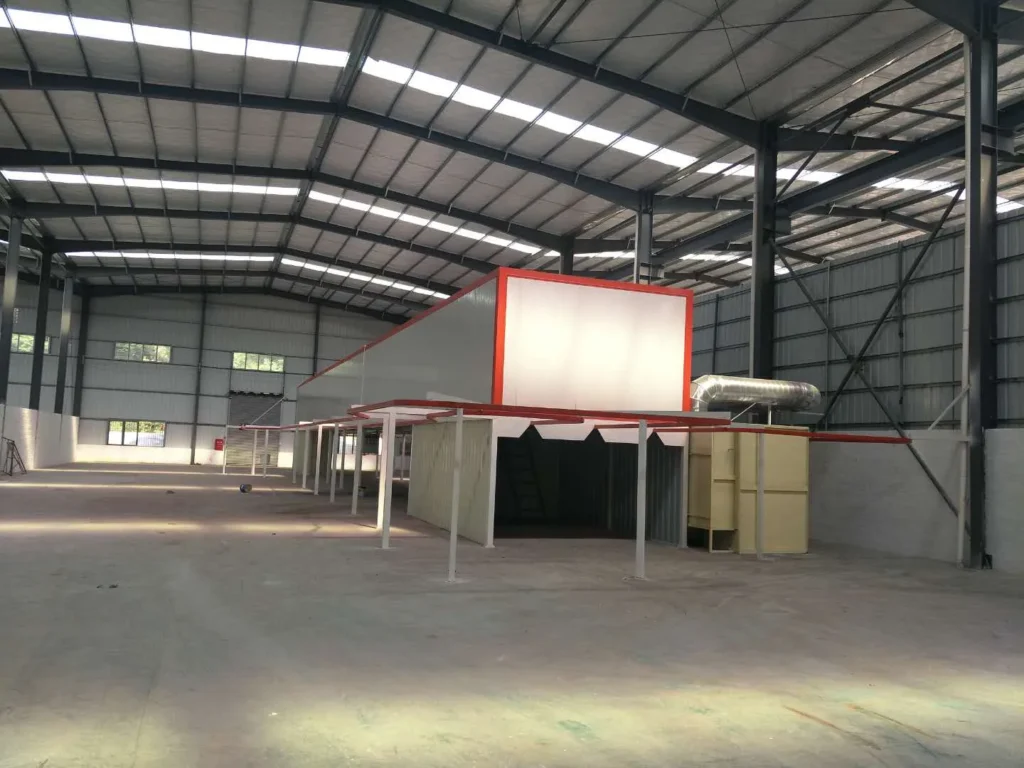
The Difference Between Powder Spray and Spray Paint: A Complete Comparison Guide
When manufacturing companies come to me asking about surface treatment options, I often hear the same question: "Should we use powder coating or traditional spray painting?" On the surface, it seems like a simple choice. But after years of working with factories across industries—from cabinet makers to furniture producers to aluminum profile manufacturers—I've learned that this decision profoundly affects product quality, production costs, and long-term operational efficiency.
The difference between these two processes isn't just technical; it's strategic. Many manufacturers choose wrong at the outset, then spend years dealing with the consequences: inconsistent finishes, rising labor costs, environmental compliance headaches, or products that fail durability tests. This guide exists to help you avoid that mistake.
What Are Powder Spray and Spray Paint? Understanding the Basics
Before we compare, let's establish what each process actually is and how it works. The terminology alone can be confusing—some people use "powder spray" and "powder coating" interchangeably, while others conflate spray painting with traditional liquid coating. Let me clarify.
How Powder Coating Works
Powder coating—what I call "powder spray" in a manufacturing context—is an electrostatic process. Here's the essential sequence:
Dry powder particles (typically epoxy, polyester, or hybrid formulations) are stored in a hopper and fed into a spray gun. Inside the gun, the powder particles receive an electrical charge. The workpiece is grounded, creating a potential difference. Under electrostatic attraction, the charged powder particles adhere to the grounded workpiece surface.
The workpiece then enters a curing oven, typically heated to 170–220°C depending on the powder chemistry. Under heat, the powder melts, flows across the surface, and undergoes a chemical cross-linking reaction. This creates a continuous, dense, durable coating film.
Why this matters in the factory: The electrostatic mechanism means adhesion happens at the particle level—not through evaporation or air drying, but through physical attraction and chemical bonding. This fundamental difference cascades through every downstream advantage powder coating offers.
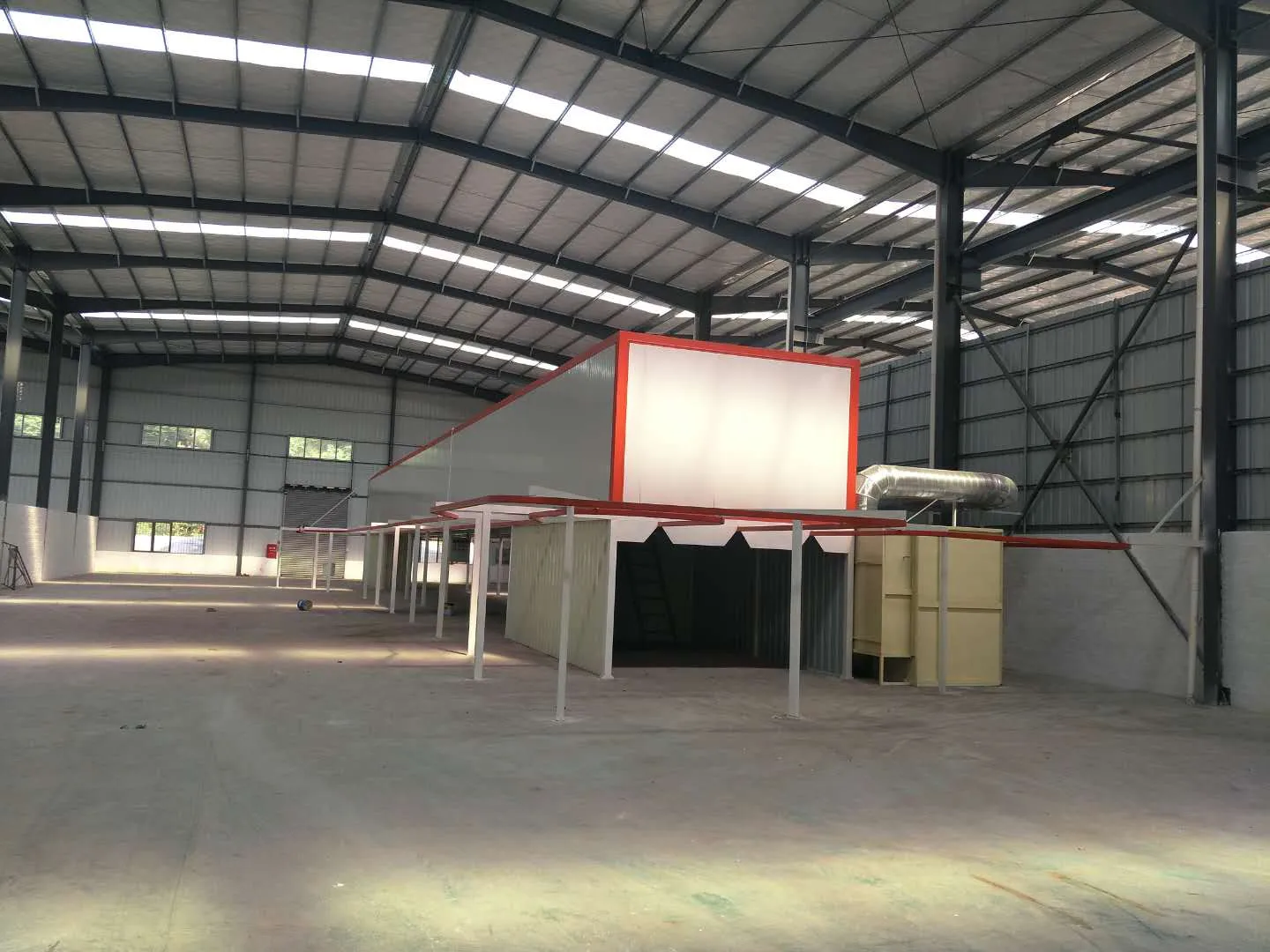 powder coating line production" />
How Traditional Spray Painting Works
Traditional spray painting (liquid paint spraying) uses a different mechanism entirely. Liquid paint—a mixture of pigment, resin, solvent, and additives—is atomized by a spray gun, either pneumatically or hydraulically. The atomized mist settles on the workpiece surface.
Depending on the paint system, curing happens through:
- Air drying (solvent evaporation allows the paint film to harden)
- Chemical curing (two-component systems where resin and hardener react)
- Thermal curing (some systems require heat to accelerate the cross-linking reaction)
Crucially, the solvent must evaporate into the environment. This is where VOC (volatile organic compound) emissions originate—and where environmental and safety complications emerge.
Why this matters in the factory: The paint film's quality depends heavily on environmental conditions (temperature, humidity, air movement) and operator technique. Faster evaporation isn't always better; too-rapid drying causes surface defects like pinholing and cratering.
Key Differences in Application Process and Equipment
Now that you understand the basic mechanisms, let's look at how these differences play out in a real manufacturing environment.
Coating Application Method
Powder coating is highly controllable and repeatable:
- Electrostatic attraction ensures uniform powder distribution across the workpiece, even on complex geometries (with some caveats for recessed areas)
- Coating thickness is regulated by spray gun parameters (voltage, amperage, spray distance) and conveyor speed
- Overspray powder that doesn't adhere to the workpiece is captured and can be recovered and reused (typically 90%+ recovery rates in modern systems)
- The process requires workpiece grounding to function—poor grounding directly reduces coating quality
Spray painting relies on manual or programmed technique:
- Operator skill is critical. Hand speed, gun distance, and spray angle all affect final finish quality
- Overspray is lost (unless a water-curtain booth recovers it for disposal)
- Paint film quality varies batch-to-batch based on mixing ratios, environmental conditions, and operator consistency
- No strict grounding requirement; substrate preparation focuses on cleanliness and surface profile
From a factory perspective, this is enormous. When I visit a cabinet manufacturer using spray paint, I typically see finish variation between pieces sprayed at the start versus end of a shift. With powder coating, that variation shrinks dramatically.
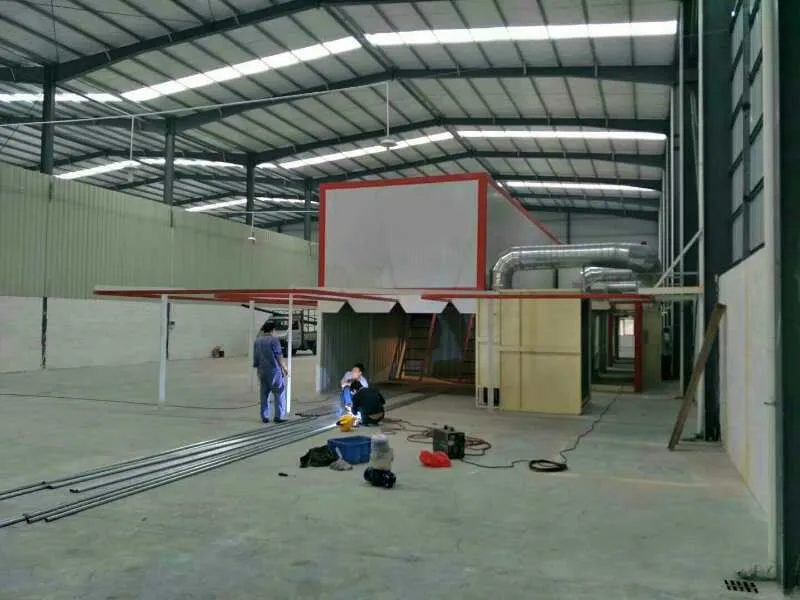
Equipment and Setup Requirements
Powder coating systems demand higher upfront capital:
- Spray booth: Enclosed chamber with dust collection and recovery systems (cyclone separator or secondary cabinet). Cost: typically $30,000–$100,000+ depending on size and recovery sophistication
- Curing oven: Heat chamber (electric, gas, or hybrid). Cost: $40,000–$150,000+ depending on throughput and precision
- Powder supply system: Hopper, pump, distribution lines. Cost: $10,000–$30,000
- Compressed air system: Must be dry and oil-free (higher-quality filtration required). Upgrade cost if existing system is inadequate: $5,000–$20,000
- Convey system: Overhead chain or conveyor designed for the weight and geometry of your workpieces
- Electrical control system: PLC, temperature controllers, variable frequency drives for powder recovery fans
Total installed cost for a complete line: $150,000–$400,000+, depending on automation level and production volume.
Spray painting systems have lower equipment barriers to entry:
- Spray booth: Simpler structure; can be water-curtain style or dry-filter. Cost: $8,000–$30,000
- Curing method: May be passive air-dry (no equipment cost) or simple heat lamps/IR curing ($2,000–$15,000)
- Spray gun: Handheld HVLP or air-assisted sprayer, $500–$3,000
- Ventilation: Standard exhaust fan and ductwork, often less rigorous than powder systems. Cost: $2,000–$10,000
- Paint supply: Simple pump and hose; no specialized control equipment required
Total installed cost for basic setup: $15,000–$60,000.
The real cost difference emerges in operation, which we'll explore in the next section.
Quality and Finish: Coating Thickness, Uniformity, and Durability
Here's where the choice begins to show its true impact—not in the initial purchase, but in what your product looks like and how long it lasts.
Surface Quality and Consistency
Powder coating delivers:
- Uniform thickness across complex geometries. Modern electrostatic systems maintain coating thickness within a tight tolerance (typically ±25 microns), even on edges and corners
- Smooth, even appearance. The melting and flow process during curing self-levels the powder film, eliminating many common spray defects
- High gloss or matte options. Gloss level is controlled by powder formulation, not operator technique
- Superior edge coverage. Edges and sharp corners receive consistent coating, critical for corrosion protection
- No drips, sags, or runs. The dry powder can't "flow" off vertical surfaces before curing
Spray painting delivers:
- Variable thickness depending on spray gun pressure, distance, and operator motion. Thickness variation of ±50 microns or more is common
- Visible application artifacts. Brush marks (if brush-applied), orange-peel texture, or spray pattern inconsistencies
- Edge thinning. Edges and corners often receive thinner coatings than flat surfaces
- Sagging on vertical surfaces. Wet paint can flow downward before drying, creating sags and runs
- Finish inconsistency across a production batch. The afternoon shift rarely looks identical to the morning shift
In my experience working with aluminum profile manufacturers and cabinet makers, powder coating's consistency is the primary reason they adopt it. When your customer specifies "color match across all units" or requires salt-spray testing to a specific standard, powder coating becomes nearly essential.
Long-Term Durability and Weather Resistance
This is where powder coating's superiority becomes undeniable.
Powder-coated finishes:
- Resist corrosion far longer. In salt-spray testing (ASTM B117), powder-coated steel typically shows first failure (red rust formation) after 1,000–3,000+ hours depending on the powder chemistry. Spray-painted steel typically fails in 200–500 hours
- Maintain adhesion through thermal cycling. The cross-linked polymer matrix has high adhesion strength; it doesn't separate from the substrate as paint films can
- Tolerate UV and weathering. Polyester and acrylic powder formulations provide excellent outdoor durability; UV degradation is minimal over 5+ years in outdoor exposure
- Resist mechanical wear. The hard, dense film resists scratching and abrasion better than paint
- Perform reliably in harsh environments. Chemical plants, coastal installations, and high-temperature applications are where powder coating excels
Spray-painted finishes:
- Degrade more rapidly outdoors. Paint films are thinner and more vulnerable to UV; yellowing and chalking typically appear within 2–3 years in full UV exposure
- Develop adhesion failures. Resin-solvent films can lose adhesion at edges or over time if substrate preparation wasn't perfect
- Require more frequent maintenance. Refinishing or touch-up is often necessary within 3–5 years for outdoor applications
- Struggle in corrosive environments. Although marine-grade paints exist, they're more expensive and still don't match powder coating's performance
From my perspective working with furniture and cabinet manufacturers targeting export markets, this durability gap directly affects customer satisfaction and warranty costs. A cabinet manufacturer I worked with in the warehousing industry switched from spray paint to powder coating; warranty claims dropped 60% within the first year.
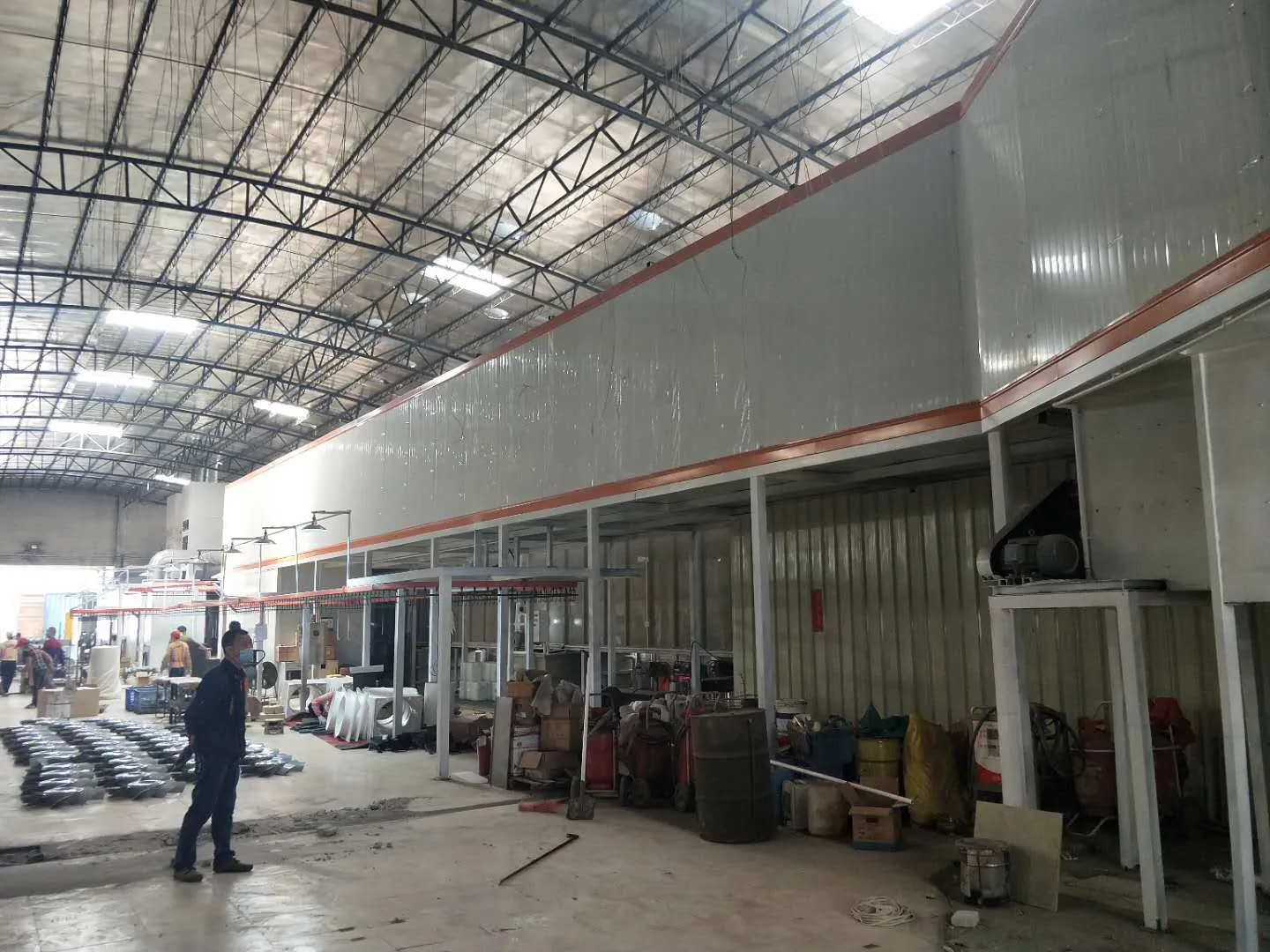
Cost Comparison: Initial Investment vs. Long-Term Operating Expenses
This is the section that often surprises people. Yes, powder coating equipment costs more upfront. But total cost of ownership tells a different story.
Equipment and Installation Costs
I've broken this down based on what we typically advise clients:
| Cost Category | Powder Coating | Spray Painting |
|---|---|---|
| Spray booth/cabin | $40,000–$100,000 | $8,000–$30,000 |
| Curing oven | $50,000–$150,000 | $0–$15,000 |
| Powder/paint supply system | $15,000–$35,000 | $2,000–$8,000 |
| Compressed air upgrade | $5,000–$20,000 | $0–$5,000 |
| Convey/automation | $20,000–$60,000 | $0–$10,000 |
| Electrical/control system | $15,000–$40,000 | $2,000–$8,000 |
| Installation/commissioning | $10,000–$30,000 | $3,000–$10,000 |
| TOTAL | $155,000–$435,000 | $15,000–$86,000 |
Clear winner for initial investment: Spray painting, often by 50–80%.
But here's what matters: that lower upfront cost begins to reverse once production starts.
Material and Labor Costs
Let me illustrate with a real-world scenario. Assume a mid-size manufacturer producing 100 units per month of metal cabinets (0.5m × 1m faces, ~3 m² per unit).
Powder coating monthly operating costs:
- Powder consumption: ~15 kg/month (accounting for 90% recovery rate) = $150–$300/month
- Labor: 1 operator, 40 hours/month = $400–$600 (less skill required due to high process control)
- Electricity (spray booth fan, oven heating): ~$300–$500/month
- Compressed air (dry, clean): ~$100–$200/month
- Maintenance/filter replacement: ~$100–$200/month
- Monthly total: ~$1,050–$1,800
Spray painting monthly operating costs:
- Paint consumption: ~50 liters/month (accounting for 30% loss to overspray) = $500–$1,000/month
- Solvent thinners: ~$150–$300/month
- Labor: 1.5 operators, 60 hours/month (higher skill required, slower throughput) = $600–$900
- Electricity (booth ventilation): ~$200–$300/month
- Maintenance/booth cleaning: ~$150–$300/month
- Environmental disposal (hazardous paint waste): ~$200–$400/month
- Monthly total: ~$1,800–$3,200
Over one year: Powder coating averages $12,600–$21,600; spray painting averages $21,600–$38,400.
At current volumes, powder coating pulls ahead. But the gap widens as you scale.
Total Cost of Ownership Analysis
Let me present a 3-year comparison for the same manufacturer, assuming stable production volumes:
| Metric | Powder Coating | Spray Painting |
|---|---|---|
| Initial capital investment | $250,000 | $40,000 |
| Annual operating costs (materials, labor, utilities) | $16,000 | $28,000 |
| 3-year operating total | $48,000 | $84,000 |
| Annual maintenance/replacement | $2,000 | $3,000 |
| 3-year maintenance total | $6,000 | $9,000 |
| Warranty/rework costs (estimate: powder coating 2% defect rate, spray painting 8% defect rate) | $2,400 | $9,600 |
| TOTAL 3-YEAR COST | $306,400 | $132,600 |
| Cost per unit (3,600 units over 3 years) | $85 | $37 |
Wait—at first glance, spray painting looks cheaper. But this doesn't account for the hidden cost that matters most: customer dissatisfaction and lost market position.
When spray-painted products fail salt-spray testing or show visible wear within 2 years, manufacturers face warranty claims, refunds, and reputation damage. A furniture company I worked with lost a major retail contract because their spray-painted outdoor furniture developed visible rust stains after 18 months. Replacing the entire shipment (500 units) cost far more than the 3-year equipment investment in a powder coating line would have been.
My strong recommendation: If your products require durability assurance, environmental compliance, or premium market positioning, powder coating's true 3-year cost is lower, and the 5+ year cost is dramatically lower.
If you're producing low-margin commodities for price-sensitive buyers
 English
  German
  Vietnamese
  French