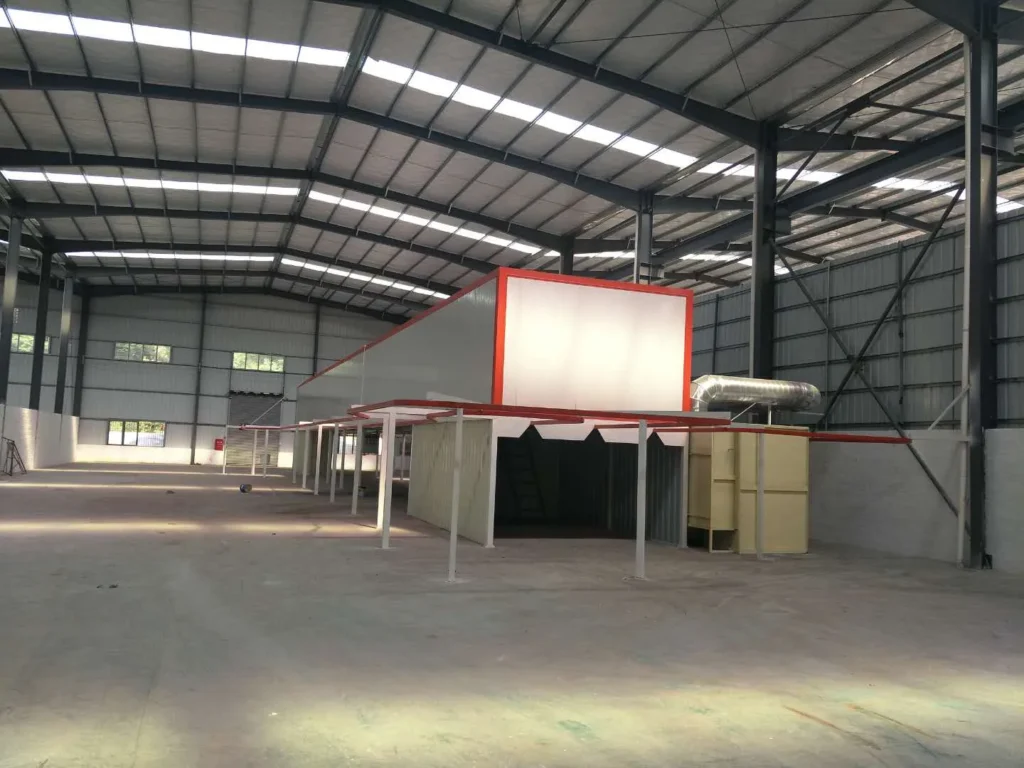
What Are the Benefits of Powder Coating? – Complete Guide to Superior Durability, Cost Savings & Environmental Advantages
Introduction: Why Powder Coating Has Become the Industry Standard
Powder coating has fundamentally changed how manufacturers approach surface treatment. Unlike traditional liquid spray painting, it delivers thicker, more uniform coatings with superior durability, environmental compliance, and significantly lower operational costs. After years of working with cabinet manufacturers, aluminum profile producers, and furniture makers across different continents, we've seen firsthand how powder coating transforms both product quality and production efficiency.
Whether you're producing electrical enclosures, aluminum profiles, outdoor furniture, or metal components, understanding the real benefits of powder coating—beyond marketing claims—can help you make smarter production decisions and maintain competitive advantage in your market.
Why Choose Powder Coating Over Traditional Liquid Paint?
The choice between powder coating and liquid paint isn't just about preference. It's a fundamental decision that affects your product quality, production costs, environmental footprint, and long-term competitiveness.
Powder coating works through electrostatic attraction and thermal curing rather than solvent evaporation. When you spray powder through a charged spray gun onto a grounded workpiece, the particles adhere uniformly to the surface. After heating in a curing oven, these particles melt, flow, and chemically bond into a continuous, durable coating.
This is fundamentally different from liquid paint, where much of the material is solvent that evaporates into the air, leaving only the resin and pigment behind. With powder coating, what you spray is what you get—no waste to VOC emissions, no solvent disposal headaches.
From our experience setting up production lines in Algeria, Turkey, and India, we've observed that manufacturers who switch from liquid to powder coating rarely go back. The reasons are clear: better results, lower costs, and compliance with increasingly strict environmental regulations.
| Comparison Factor | Powder Coating | Liquid Paint |
|---|---|---|
| Coating Thickness | 50–150 micrometers (uniform) | 25–75 micrometers (variable) |
| Material Utilization | 95%+ recovery rate | 30–50% waste to air |
| VOC Emissions | Zero | High (10–50% of material) |
| Cure Time | 10–30 minutes | 1–8 hours or more |
| Coating Uniformity | Highly consistent | Often uneven on complex shapes |
| Environmental Compliance | Meets strict standards easily | Requires expensive emission control |
| Defect Rate (typical) | 2–5% | 8–15% |
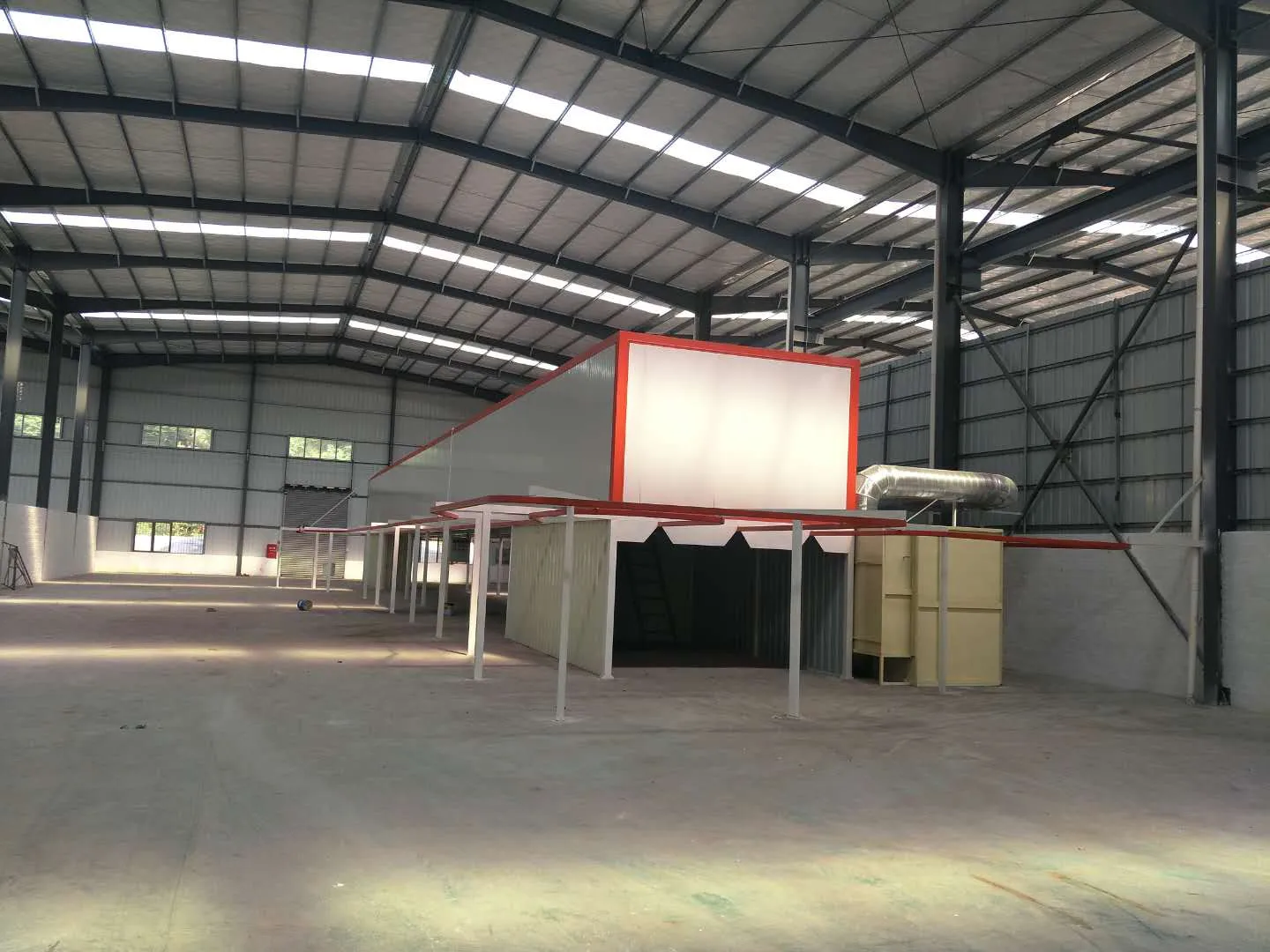
Superior Corrosion Resistance & Coating Quality
How Thicker, More Uniform Coverage Protects Metal Products
One of the most tangible benefits of powder coating is the coating itself. Powder creates a layer that's not just thicker than liquid paint—it's fundamentally more uniform and better bonded to the substrate.
When powder particles melt and flow during curing, they create a continuous film without pinholes, sags, or runs. On complex shapes—cabinets with interior corners, aluminum profiles with channels, furniture legs with multiple angles—powder coating reaches places where liquid paint struggles.
We've measured coating consistency on cabinet frames for electrical enclosures. Liquid spray typically shows 15–20% variation in thickness across the same part. Powder coating? 5% or less. This consistency isn't cosmetic. It directly affects protective performance.
The adhesion is stronger too. Powder doesn't rely on surface tension to stick; electrostatic attraction pulls particles directly onto the substrate surface. After curing, the chemical bond between powder and metal is more durable than what liquid paint achieves.
For metal cabinets destined for outdoor use, this matters enormously. We've tracked performance data from furniture manufacturers in Turkey—their powder-coated outdoor pieces maintain color and gloss after 5 years in harsh Mediterranean conditions. Comparable liquid-painted pieces from competitors often show visible degradation by year 3.
Durability Performance in Salt-Fog & High-Temperature Environments
If your products face extreme conditions—coastal environments, industrial settings, high-heat applications—powder coating's durability advantage becomes quantifiable.
Salt-fog testing (ASTM B117) measures corrosion resistance by exposing coated samples to salt spray for extended periods. Powder-coated steel samples typically maintain integrity for 1,500–3,000 hours before red rust appears. Liquid paint on the same substrate often fails by 500–1,000 hours.
Why? The coating thickness and uniformity matter. So does what happens at the edges. Powder coating's electrostatic deposition naturally builds up slightly thicker coverage at sharp edges and corners—exactly where corrosion starts. Liquid paint, by contrast, often runs thin on these critical areas.
For high-temperature applications, powder's advantage is even more pronounced. Epoxy and polyester powder coatings maintain hardness and adhesion at temperatures that soften liquid coatings. Cabinet makers serving industrial clients regularly tell us their powder-coated enclosures pass thermal cycling tests (repeated heating and cooling) that would cause liquid-painted versions to fail.
This translates directly to product lifespan. A cabinet that would last 5 years with liquid paint may last 10–15 years with proper powder coating. For manufacturers, that's either extended warranty confidence or additional product sales as customers upgrade sooner than expected.
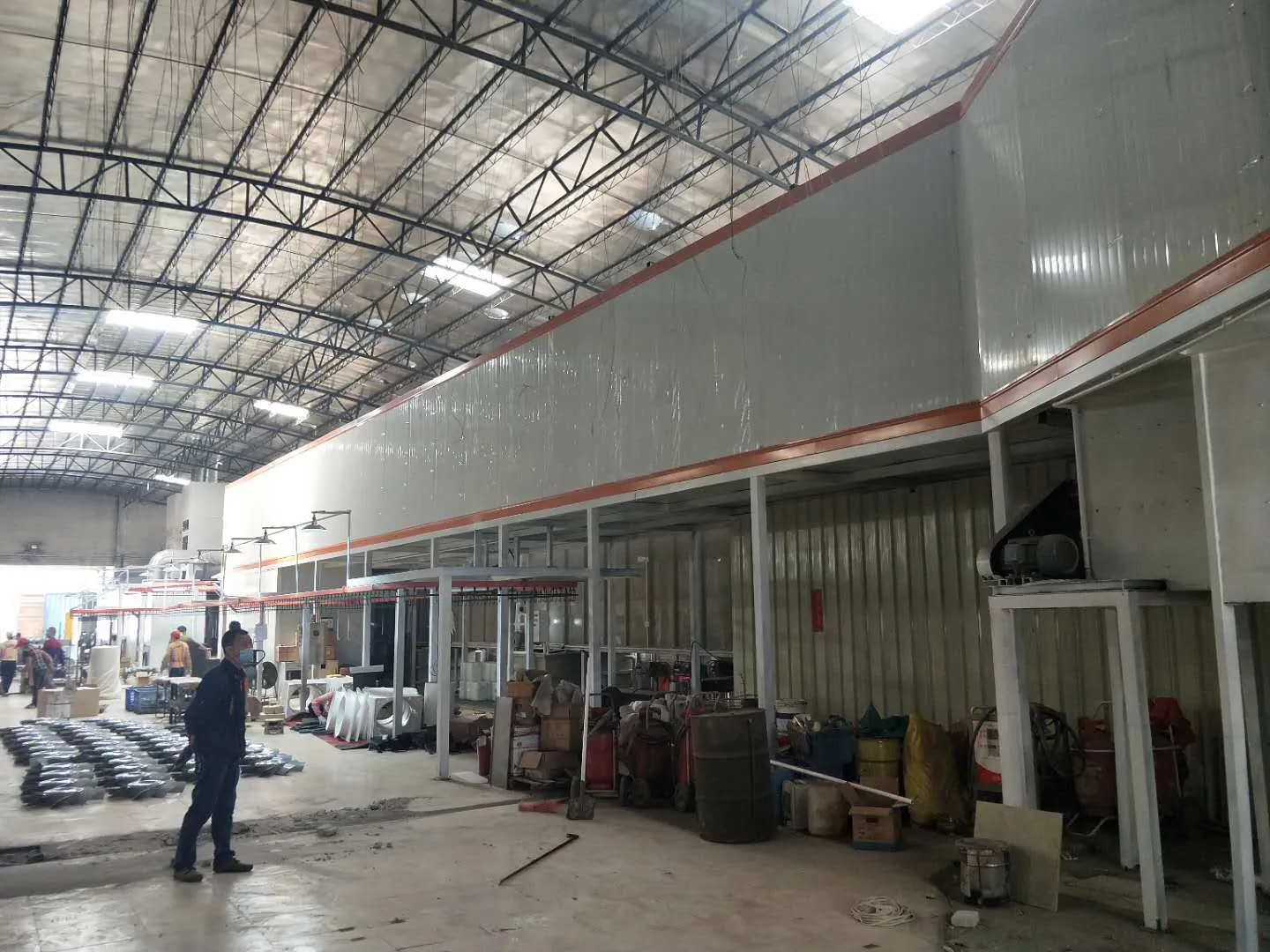
Significant Cost Savings Across Production & Maintenance
Material Efficiency Through 95%+ Powder Recovery
This is where powder coating's economics become compelling.
In liquid paint operations, 30–50% of material becomes waste—solvent that evaporates, overspray that becomes airborne, drips and spills. That waste costs money twice: once when you buy the paint, again when you pay to dispose of it.
Powder coating systems include recovery equipment—cyclone separators and secondary collection cabinets—that capture unused powder. Recovery rates routinely exceed 95%. The recovered powder goes directly back into the spray hopper and gets used on the next parts.
Let's do the math. If you're spraying 20,000 parts monthly using 2 kg of powder per part, that's 40,000 kg of powder annually. At typical powder costs ($5–8 per kilogram), a 30% material waste with liquid paint costs $60,000–96,000 per year in wasted material alone. With 95% powder recovery, waste drops to under $10,000.
Over a 5-year equipment lifecycle, the material savings alone pay for a significant portion of the powder coating line investment.
We've documented this with aluminum profile manufacturers in India. One client switched from liquid to powder coating on their extrusion finishing line. Material costs dropped from $0.18 per piece to $0.06 per piece—a 67% reduction. Production volume was identical; the difference was pure efficiency.
Reduced Labor Costs & Equipment Maintenance
Powder coating demands less direct labor than liquid spray operations.
Liquid painting requires skilled operators to maintain consistent spray patterns, distance, and pressure—too fast and you get thin coverage, too slow and you get sags. Each operator can handle perhaps 5–8 parts per hour on complex geometries.
Automated powder spray lines eliminate much of this variability. Our systems use fixed spray guns positioned along the conveyor path, with workpieces moving through the booth at controlled speeds. One operator monitors the line; multiple spray guns work simultaneously. Production rates jump to 20–40+ parts per hour depending on part complexity.
The maintenance difference is equally significant. Liquid paint systems require daily gun cleaning, frequent nozzle replacement due to solvent erosion, and regular solvent disposal. Powder systems need compressed air and occasional filter changes—minimal downtime, minimal skill required.
We've calculated maintenance costs for cabinet manufacturers. Liquid paint lines average $800–1,200 monthly in gun repairs, solvent purchases, and waste disposal. Powder lines average $200–400 monthly. Over five years, that's $36,000–$48,000 in savings.
Lower Long-Term Ownership Costs vs. Liquid Paint
The total cost of ownership (TCO) comparison heavily favors powder coating.
Consider a typical cabinet manufacturer processing 1,000 units monthly across a 5-year period (60,000 units total):
Liquid Paint Line TCO:
- Equipment: $80,000
- Material waste (30%): $96,000
- Labor (higher skill requirement): $180,000
- Maintenance & supplies: $60,000
- Waste disposal: $24,000
- Environmental compliance upgrades: $15,000
- Total: $455,000
Powder Coating Line TCO:
- Equipment: $150,000
- Material waste (5%): $16,000
- Labor (less skilled, fewer operators): $120,000
- Maintenance & supplies: $20,000
- Waste disposal: Minimal ($2,000)
- Environmental compliance: Minimal ($3,000)
- Total: $311,000
The powder coating line costs more upfront but delivers 32% lower total cost of ownership. For higher production volumes or longer timescales, the gap widens further.
This is why manufacturers we work with in Turkey and Algeria, despite higher initial equipment investment, view powder coating as the financially rational choice—not just the environmentally responsible one.
Environmental & Safety Compliance Benefits
Zero VOC Emissions & Regulatory Advantages
Environmental regulations are tightening globally. What was acceptable five years ago often violates today's standards in Europe, California, and increasingly in Asia.
Powder coating produces zero VOC (volatile organic compound) emissions. The powder particles don't evaporate; they melt and cure on the workpiece. Whatever isn't sprayed onto parts gets captured in the recovery system. There's no solvent to off-gas.
This gives powder coating an enormous regulatory advantage.
Liquid paint operations require:
- Air emission permits
- Scrubber or incinerator systems ($30,000–$100,000+ installed)
- Regular emissions testing
- Worker exposure monitoring
- Waste solvent disposal certifications
Powder coating systems need none of this. In jurisdictions with strict air quality regulations (like the EU or California), this difference alone can make powder coating the only viable option. We've consulted with manufacturers in Algeria and Turkey who specifically chose powder coating to avoid future regulatory barriers when exporting to Western markets.
Beyond air emissions, powder coating also eliminates liquid waste disposal—no hazardous waste streams, no treatment costs, no long-term environmental liability.
Safer Working Environment for Production Staff
Solvent-based liquid paint creates genuine occupational health risks. Spray booth operators face:
- Respiratory exposure to volatile compounds
- Skin contact with isocyanates and solvents
- Fire and explosion risks (many solvents are flammable)
- Repeated chemical exposure over years or decades
Workers in powder coating environments face minimal chemical exposure. Powder itself is generally recognized as safe at low concentrations. The main occupational concern is dust control—wear a respirator, keep the booth clean, and exposure is well-managed.
We've worked with customer facilities in India where converting from liquid to powder immediately improved worker safety metrics. Respiratory complaints dropped, workers reported feeling better at shift end, and occupational health insurance costs decreased.
From a business perspective, safer working conditions reduce turnover, improve productivity, and reduce liability exposure. It's not just an ethical advantage—it's an operational one.
Operational Efficiency & Production Scalability
Automated, Consistent Application for High-Volume Manufacturing
Manual liquid painting is fundamentally limited by human capability. Even skilled operators vary their technique across shifts, days, and weeks. Weather, humidity, and solvent batch variations affect results. Consistency suffers.
Automated powder coating lines eliminate these variables. Spray guns are positioned and timed identically for every part. Electrostatic conditions remain constant. Conveyor speed is programmable and consistent. The result: identical coating thickness and appearance across every part, every day, every month.
This consistency directly reduces defect rates. When we commission powder lines for cabinet manufacturers, defect rates typically drop from 8–12% with manual liquid spray to 2–5% with automated powder coating. Parts that would require rework or rejection in liquid paint operations pass inspection with powder.
Rework costs money. Failed parts cost money. Consistency pays for itself quickly.
For aluminum profile manufacturers like our Indian customer, consistency is non-negotiable. Profiles go into integrated assemblies; variation in coating thickness can cause fit and finish issues downstream. Automated powder coating delivers the precision these customers demand.
Faster Curing & Reduced Production Downtime
Liquid paint cure times depend on ambient temperature and humidity. In cool, humid conditions, a single coat might take 4–8 hours to dry. Multiple coats extend the timeline to 1–2 days, requiring extensive part storage between coats.
Powder coating cures in minutes. At typical curing temperatures (170–200°C), parts are fully cured in 10–20 minutes. After cooling, they're immediately ready for the next process step—no waiting, no storage, no schedule disruption.
This speed advantage becomes dramatic in continuous production. A line spraying and curing powder can move parts through at rates impossible with liquid paint. We've commissioned systems for outdoor furniture manufacturers in Turkey that achieve 30+ parts per hour on complex geometries—impossible with any liquid paint process.
Faster throughput means higher production from existing floor space. A 5,000 square-foot facility might produce 500 cabinets monthly with liquid paint but 1,200 cabinets monthly with powder coating on the same floor. That's a 140% capacity increase without expanding the building.

Industry-Specific Applications & Real-World Results
Metal Cabinets, Aluminum Profiles & Outdoor Furniture
Powder coating excels in applications where consistency, durability, and cost matter most.
Electrical & Networking Cabinets
Cabinet manufacturers—producing exchange enclosures, power distribution boxes, server racks—depend on powder coating. These products face demanding specifications: sharp color matching, consistent finish, and extreme durability (salt-fog ratings of 1,000+ hours are common). We've worked with cabinet factories in Algeria that achieved these specs with powder when liquid paint consistently fell short.
Aluminum Profile & Architectural Components
Aluminum extrusion companies use powder coating to add color and protect bare aluminum. The electrostatic nature of powder is especially effective on aluminum—the light metal's natural conductivity ensures uniform charging and deposition. Profile manufacturers in India tell us powder coating allows them to offer custom colors without maintaining large liquid paint inventories. Recovery and reuse mean color changes happen in hours, not days.
Outdoor Furniture
Furniture destined for patios, gardens, and commercial outdoor settings demands durability. We've monitored powder-coated outdoor furniture from Turkish manufacturers exposed to Mediterranean sun, salt spray, and temperature swings. After 4–5 years, the finish remains vibrant and intact. Comparable liquid-painted furniture shows fading, chalking, and corrosion by year 2–3.
Appliance & Consumer Product Casings
Home appliance manufacturers use powder coating for exterior cabinets and structural components. The finish is more durable than liquid paint, cost-competitive at high volumes, and environmentally compliant—important for export to regulated markets.
Typical Performance Improvements (30-40% Defect Reduction, 5-10 Year Lifespan Extension)
Real-world data from our customer implementations:
A Turkish furniture manufacturer switched a 1,200-unit/month production line from liquid to powder coating:
- Defect rate: Dropped from 11% to 3.5%
- Rework labor: Decreased by 70%
- Material cost: Reduced 62% (waste elimination)
- Production throughput: Increased 35% (faster curing)
- Payback period: 18 months
An Indian aluminum profile company coating high-end extrusions:
- Salt-fog durability: Extended from 800 hours (liquid) to 2,000+ hours (powder)
- Product lifespan: Estimated increase from 5 years to 10+ years in outdoor applications
- Warranty claims: Reduced 75% after 2 years of powder coating
- Customer complaints: Nearly eliminated
An Algerian cabinet factory producing electrical enclosures:
- Coating consistency: Variation reduced from 18% to 4%
- Finish quality: Achieved higher spec ratings (IEC/EN standards compliance)
- Production cost: Decreased 28%
- Production floor space utilization: Improved 45% (faster curing, no extended dry storage)
These aren't outlier cases. They reflect typical outcomes we see when manufacturers switch from traditional liquid spray to properly configured powder coating systems.
Is Powder Coating Right for Your Business? Key Considerations
When Powder Coating Makes Sense (Production Volume, Quality Requirements)
Powder coating isn't universally optimal. It works best for specific situations:
High-Volume Production (500+ units monthly)
At lower volumes, the fixed costs of powder equipment amortize slowly. Manual liquid spray or outsourcing makes more sense. But once you cross 500–1,000 monthly units of similar products, powder coating economics improve dramatically.
Complex Geometries
Parts with interior angles, narrow slots, stacked components, or irregular shapes benefit from powder's electrostatic coverage. Liquid paint struggles with these features; powder naturally reaches them.
Strict Appearance Standards
If your products demand precise color matching, uniform finish, or professional appearance, powder coating's consistency delivers. Fashion-sensitive products (furniture, appliances, outdoor equipment) belong on powder lines.
Durability-Critical Applications
Products facing harsh environments—coastal salt spray, industrial heat, extreme temperature swings, abrasion—need powder coating's superior corrosion and wear resistance.
Environmental/Regulatory Compliance
If you operate in jurisdictions with strict VOC limits or waste regulations, powder is often the only practical option.
Long-term Cost Optimization
If you're in this business for 5+ years with stable or growing volume, powder coating's total cost of ownership is nearly always lower.
When Powder Coating Might Not Fit
Very Low Production Volumes (<200/month)
Outsource or use liquid spray on a contract basis. Equipment overhead makes in-house powder coating uneconomical at these scales.
Highly Variable Product Mix
If you're coating dozens of different products with different sizes, colors, and geometries every week, the color changeover time and program complexity make powder less efficient. Batch liquid spraying may be smarter.
Small Shop Constraints
Powder coating systems require dedicated floor space (typically 30–50 feet of line length), separate electrical service, compressed air infrastructure, and possibly ventilation upgrades. If you can't accommodate this physically or financially, it's not feasible.
Custom/One-Off Work
If your business model is custom coating of customer-supplied parts in small batches, you're better served by professional coating job shops that already have equipment and expertise.
Investment & ROI Expectations
A basic powder coating line—front treatment, spray booth, curing oven, recovery system, and controls—typically costs $120,000–$250,000 installed, depending on sophistication and production speed.
Higher-volume automated systems (40+ parts/hour with multi-gun configuration) run $200,000–$400,000.
ROI timeline for a manufacturer producing 1,000+ units monthly typically looks like:
- Year 1: Material savings + labor efficiency offsets 60–80% of equipment cost
- Year 2: Break-even or slight positive ROI
- Year 3+: Strong positive return ($30,000–$60,000 annual net savings)
Payback typically occurs in 18–36 months for operations with consistent production volume and suitable product mix.
| Cost Category | Liquid Paint (annual) | Powder Coating (annual) | Savings |
|---|---|---|---|
| Material waste | $96,000 | $16,000 | $80,000 |
| Labor (fewer/less-skilled workers) | $180,000 | $120,000 | $60,000 |
| Maintenance & supplies | $60,000 | $20,000 | $40,000 |
| Waste disposal & compliance | $39,000 | $5,000 | $34,000 |
| Annual Total | $375,000 | $161,000 | $214,000 |
For a $150,000 equipment investment, that's a 7-month payback purely on operational cost savings. Quality improvements and defect reduction accelerate the timeline further.
How to Choose the Right Powder Coating Solution for Your Operation
If you've decided powder coating fits your business, the next step is getting it right—system design, equipment selection, and implementation matter enormously.
1. Understand Your Product Requirements
Start with specifics: part dimensions, production volume, complexity, final finish quality (matte, gloss, textured?), color range, and durability specs. Your powder coating configuration must match these requirements, not the other way around.
2. Assess Infrastructure Capacity
Verify you have adequate:
- Electrical service (powder lines typically draw 60–100 kW)
- Compressed air supply (4–6 bar, 100+ CFM, clean and dry)
- Ventilation capability (exhaust ductwork for spray booth and recovery system)
- Floor space for line layout (typically 30–60 feet in length)
- Water supply (for any cooling requirements)
3. Evaluate Pre-Treatment Needs
Surface preparation—degreasing, rust removal, phosphate conversion—is as important as the powder itself. A poor pre-treated surface will fail durability tests regardless of coating quality. Plan for adequate pre-treatment staging before the spray booth.
4. Consider Automation Maturity
Manual spray (operator uses handheld gun): Simplest, lowest cost, but lower consistency and lower throughput.
Semi-automatic (fixed guns, operator moves parts or parts move through): Good balance of cost and efficiency for medium volumes.
Fully automatic (parts conveyed through fixed gun array): Highest consistency and throughput, requires more initial investment and programming.
Choose automation level matched to your production volume and consistency requirements.
5. Plan for Operator Training & Support
Even highly automated systems need operators who understand powder coating principles, equipment maintenance, and troubleshooting. Factor in training time and ongoing support requirements.
Conclusion: Powder Coating as a Strategic Business Investment
Powder coating isn't just a better way to paint. It's a strategic upgrade that simultaneously improves product quality, reduces production costs, enhances environmental compliance, and increases operational flexibility. For manufacturers producing metal products at any reasonable volume, it's rarely a matter of "if" but "when" to make the switch.
The real benefits extend beyond cost savings. Powder coating enables manufacturers to offer customers superior durability, faster delivery, and environmental responsibility—all meaningful competitive advantages in modern markets.
If you're currently using liquid paint and producing 500+ units monthly, or if you're expanding production and reconsidering your coating approach, powder coating deserves serious evaluation. The financial case typically stands on its own within 18–30 months.
Ready to Explore Powder Coating for Your Operation?
If you're evaluating powder coating solutions or need to discuss whether a powder coating line makes sense for your specific products and production volume, we're here to help.
We've commissioned powder coating systems for cabinet manufacturers, furniture producers, aluminum profile companies, and metal parts specialists across multiple continents. We understand the technical requirements, the economic realities, and the implementation challenges of bringing a powder coating line into production.
Get in touch with us to discuss:
- Whether powder coating fits your product mix and production volume
- System configuration and equipment options suited to your needs
- Total cost of ownership and realistic ROI timelines
- Installation, training, and ongoing support
Contact us at +86-18064668879 to schedule a consultation.
We're ready to help you evaluate whether powder coating is the right next step for your manufacturing operation.
 English
  German
  Vietnamese
  French