What are the types of epoxy powder coating?
When you're choosing a surface coating system for your manufacturing operation, epoxy powder coating often emerges as a leading option. But here's what many factories overlook: epoxy powder coating isn't a single-solution category. It comes in distinct types, each with different performance characteristics, processing requirements, and best-fit applications. Understanding these differences isn't just theoretical knowledge—it directly impacts your production stability, product quality, and long-term coating performance.
Epoxy powder coatings are primarily classified into two main types: pure epoxy and epoxy-polyester hybrid blends. Pure epoxy coatings excel in chemical resistance and adhesion, making them ideal for industrial and corrosive environments such as oil and gas applications. Epoxy-polyester hybrids combine improved weatherability with strong protection, offering better balance for indoor and moderately outdoor applications. Both types cure through thermal crosslinking and can achieve excellent film thickness and hardness. Selection depends on specific requirements: choose pure epoxy for maximum corrosion resistance in harsh chemical environments; opt for epoxy-polyester blends for broader performance and cost efficiency in general manufacturing applications including cabinet coating, metal parts, and aluminum profiles.
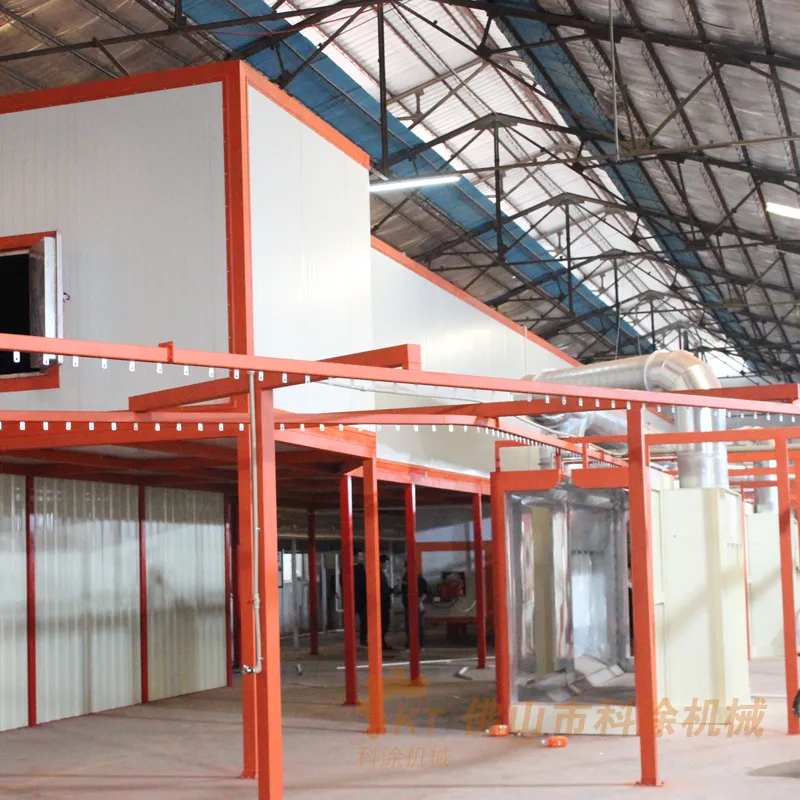
From our experience building electrostatic powder coating lines for cabinet manufacturers, sheet metal processors, furniture makers, and aluminum profile companies, we've learned that the right epoxy powder type can be the difference between a coating system that performs reliably for years and one that creates recurring quality issues and customer complaints. This article breaks down the main epoxy powder coating types, explains their real-world performance differences, and helps you match the right system to your actual production needs.
Understanding Epoxy Powder Coating: Definition and Why It Matters
Epoxy powder coating is a dry finishing system where finely ground epoxy resin particles are electrostatically sprayed onto a grounded workpiece and then thermally cured to form a continuous, durable coating. Unlike traditional liquid epoxy paints, powder coatings contain no solvents—the entire coating material becomes the final finish layer after curing, resulting in minimal waste and no VOC emissions during application.
The appeal is obvious: superior corrosion protection, excellent adhesion to metal substrates, high durability, and environmental friendliness. But the performance you actually get depends heavily on which epoxy powder system you select and how well your production line matches that system's cure requirements.
The core reason epoxy powders matter in industrial manufacturing is simple—they protect valuable products. Metal cabinets, outdoor furniture, aluminum components, and steel structures all face corrosion risks. A poor choice of powder type can mean coating failure, product recalls, or worse, safety issues. We've seen factories spend months troubleshooting quality problems that stemmed not from their spraying technique, but from choosing an epoxy powder formulation that didn't match their oven temperature profile or their workpiece geometry.
![electrostatic powder coating line in factory]
Main Types of Epoxy Powder Coating
Pure Epoxy Powder Coating
Pure epoxy powders are the traditional workhorse of industrial coating. These systems consist primarily of epoxy resin cross-linked with amine or dicyandiamide (DICY) curing agents. The chemistry creates an exceptionally hard, chemically resistant finish.
Performance characteristics:
Pure epoxy coatings offer outstanding corrosion resistance, particularly against oils, fuels, and mild chemicals. They provide excellent adhesion to bare metal and develop very hard film surfaces with superior mechanical properties. The coating resists abrasion and maintains its integrity even in harsh industrial environments. You'll find pure epoxy dominating applications like electrical enclosures, transformer housings, and offshore equipment.
Cure requirements:
Pure epoxy powders typically cure at elevated temperatures—usually between 180°C and 230°C—and require precise time-at-temperature profiles to develop full properties. Too short a cure and cross-linking remains incomplete, resulting in soft coatings with poor chemical resistance. Too long or too hot, and you risk color change or substrate distortion.
From our work with cabinet and switchgear manufacturers, we've observed that pure epoxy's high cure temperature sensitivity is actually the main source of operational headaches. Factories with older or less precise oven temperature control often struggle to achieve consistent film hardness and adhesion. We typically see better results when the oven maintains ±5°C stability across the coating zone.
Aesthetic options:
Pure epoxy powders traditionally offer a narrower color palette and usually come with a semi-gloss to high-gloss finish. They don't typically provide the matte or textured finishes that some designers prefer.
Epoxy-Polyester Hybrid Powder Coating
Hybrid powders blend epoxy and polyester resins, combining the chemical resistance of epoxy with the weatherability and processing flexibility of polyester. This is the type we recommend most often for general manufacturing customers.
Performance characteristics:
Epoxy-polyester hybrids deliver strong corrosion protection—not quite as extreme as pure epoxy against aggressive chemicals, but more than adequate for indoor and moderately outdoor environments. They offer better gloss retention and color stability than pure epoxy, especially under UV exposure. Adhesion is excellent, and the coatings maintain good mechanical properties. For outdoor furniture, architectural metal, and general industrial products, these hybrids strike a practical balance.
Cure requirements:
This is where the advantage becomes clear. Hybrids typically cure at slightly lower temperatures (160°C to 200°C) and show much greater tolerance to temperature variations. A 10°C deviation from set temperature causes noticeable problems with pure epoxy but is often invisible with hybrids. The cure also tends to be more forgiving on time—you have a wider window for acceptable results.
We've found that factories running high-volume production benefit significantly from this tolerance. Your oven doesn't need to be as precisely calibrated. Your line speed can be slightly more flexible. The result is fewer rejected batches due to undercure or hard-to-diagnose finish defects.
Aesthetic options:
Hybrids offer broader color choices, better gloss control, and the ability to achieve matte finishes more reliably. For furniture makers and consumer-facing applications, this flexibility is valuable.
![metal cabinet powder coating process]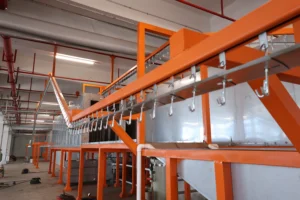
Key Performance Differences Between Epoxy Types
Corrosion Resistance and Chemical Durability
Pure epoxy powders provide superior chemical resistance. They resist strong acids, bases, and solvents better than hybrids. If your product will experience direct chemical exposure—industrial machinery, chemical tanks, or offshore equipment—pure epoxy is the right choice.
However, most manufacturing applications don't require that extreme level of chemical resistance. Cabinet interiors, outdoor furniture frames, and general sheet metal parts need good corrosion protection, but not resistance to concentrated hydrochloric acid. In these cases, epoxy-polyester hybrids deliver 95% of the protection at 70% of the cost, with better process stability.
We typically advise cabinet manufacturers that unless their customer specifications explicitly require pure epoxy or they're coating for offshore use, hybrids are the smarter long-term choice. The cost savings on powder, plus the operational ease of higher cure tolerance, compounds significantly over a production year.
Cure Conditions and Process Tolerance
This is the most practical difference for anyone running a coating line.
Pure epoxy demands precision. Your oven temperature must stay within a tight band. Your line speed must match the powder's specific cure profile. Workpiece spacing matters because overcrowded loading can create thermal shadows where coatings undercure. Operators need skill and attention to detail.
Epoxy-polyester hybrids are more forgiving. Temperature variations of ±10°C are typically acceptable. Line speed has a wider acceptable range. Loading density matters less. A less experienced operator can still achieve consistent results.
From a production stability perspective, this tolerance difference justifies choosing hybrids even if pure epoxy offers slightly superior chemistry. Stability beats theoretical maximum performance in real manufacturing.
Appearance and Finish Options
Pure epoxy coatings tend toward high gloss and vibrant colors, but they develop a narrower range of finishes. Matte finishes are difficult to achieve without special additives that complicate the cure.
Epoxy-polyester hybrids easily accommodate matte, satin, and textured finishes through conventional powder formulation. They also show better color consistency across batches and less color shift when exposed to heat during curing. For applications where appearance matters—outdoor furniture, architectural panels, consumer products—hybrids provide more design flexibility.
How to Match Epoxy Powder Coating Types to Your Application
Industry-Specific Recommendations
Electrical cabinets and switchgear:
Pure epoxy is the standard here. Electrical equipment often requires oil and fuel resistance, and the harsh interior environment of industrial cabinets justifies the premium. We've equipped cabinet coating lines for power distribution equipment, and pure epoxy remains the expected baseline.
General sheet metal parts and metal components:
Epoxy-polyester hybrid. Most fabricated parts—brackets, enclosures, structural components—need good corrosion resistance but not chemical-tank durability. Hybrids give you cost efficiency and operational ease.
Outdoor furniture and garden equipment:
Epoxy-polyester hybrid. UV exposure and weather are the real stressors here, not chemical attack. Hybrids manage UV better, and the aesthetic flexibility matters for consumer-facing products.
Aluminum profiles and extrusions:
Epoxy-polyester hybrid, often with pre-treatment using a chromate-free conversion coating. Aluminum's softer nature means overly aggressive chemistry is unnecessary; hybrids cure more predictably on aluminum substrates and show better adhesion without the thermal stress of pure epoxy's high cure temperature.
Outdoor appliances and metal surfaces exposed to salt or humidity:
Pure epoxy if budget allows, because salt-spray corrosion demands maximum protection. Hybrid if you're optimizing for cost and can accept slightly lower long-term durability in extreme coastal environments.
Environmental and Compliance Requirements
Different countries and regions have varying standards for powder coating systems. Some regions restrict certain curing agents or require lower VOC operations (which powder coatings already meet, but some formulations are preferred). Some customer bases—particularly in Europe and North America—increasingly prefer hybrid systems for new installations because of their lower environmental footprint during manufacturing.
We've found that clarifying these compliance requirements early prevents costly reformulations mid-project. One aluminum profile manufacturer we worked with initially specified pure epoxy, but EU customer requirements pushed toward hybrid systems. Specifying hybrid from the start would have simplified both their procurement and their marketing.
| Aspect | Pure Epoxy | Epoxy-Polyester Hybrid |
|---|---|---|
| Chemical resistance | Excellent | Very good |
| Corrosion protection | Outstanding | Excellent |
| Cure temperature | 180–230°C | 160–200°C |
| Temperature tolerance | ±3–5°C | ±8–12°C |
| Cure time | Strict | Flexible |
| Color options | Standard | Wider range |
| Matte finish availability | Limited | Good |
| UV stability | Moderate | Good |
| Cost per kg | Higher | Lower |
| Production line complexity | Higher | Lower |
| Best for | Chemical/offshore | General manufacturing |
Cost Considerations and Production Stability
Price Range Across Different Types
Pure epoxy powders typically cost 15–30% more per kilogram than hybrids, depending on the specific formulation and the curing agent used. If you're coating 10,000 cabinets per month, that cost difference becomes material.
But raw powder cost isn't the whole picture. What matters is total cost per coated part.
Pure epoxy often requires more careful oven control—sometimes necessitating a more expensive heating system or tighter process monitoring. Your line speed may be lower because you're limited by the powder's cure kinetics. Your scrap rate might be higher if curing isn't perfect. Your operator training time is longer.
Epoxy-polyester hybrids let you run faster, tolerate a wider range of oven conditions, and reduce operator skill dependency. Over a full year of production, the cost per piece often comes out similar or even lower, despite the lower per-kilogram powder price.
We've built cost models for several customers, and the pattern is consistent: unless you have a specific technical need for pure epoxy's extreme chemical resistance, hybrid systems deliver better value when you factor in operational costs, scrap rates, and energy consumption.
Long-Term Value vs. Initial Selection
Here's a mistake we see regularly: customers choose a powder type based purely on specifications, without considering whether their existing line can reliably process it.
A cabinet manufacturer with a 10-year-old electrical oven that holds ±15°C temperature variation might specify pure epoxy because it sounds better. Then production starts: coatings cure inconsistently, adhesion varies, finish quality suffers. The customer blames the powder supplier or the coating line equipment. But the real problem is a mismatch between the product and the capability.
We always recommend this evaluation sequence:
- Determine your actual performance requirement (what does the product need to withstand?)
- Assess your line's actual capability (temperature control, cure consistency, line speed range)
- Select the powder type that matches both
A hybrid might be better for your line today, even if pure epoxy is theoretically superior. You can always upgrade later—or upgrade your oven first, then switch powder types.
![aluminum profile surface finishing]
Epoxy Powder Coating vs. Other Coating Systems
The main alternatives to epoxy powder are polyester powder, polyurethane powder, and traditional liquid epoxy.
Polyester powder alone offers good UV resistance and aesthetics but lower chemical protection than epoxy. It's lighter and cheaper but doesn't match epoxy's adhesion or durability in harsh industrial settings. You'd choose polyester for outdoor, non-chemical applications where appearance and weathering matter most.
Polyurethane powder delivers excellent UV and chemical resistance but costs significantly more and requires very precise cure control. It's specialty-grade, reserved for high-end applications or extreme environments.
Liquid epoxy coatings (solvent-based) provide similar chemistry to epoxy powders but generate significant VOC emissions, require more complex application equipment, produce more waste, and show lower transfer efficiency. Powder coating beats liquid epoxy on almost every operational metric.
The practical reality: If you need industrial-grade corrosion protection with minimal environmental impact, epoxy powder—whether pure or hybrid—outperforms the alternatives. The choice between pure and hybrid is then really about matching your specific performance need against your production line's actual capability.
How to Choose the Right Epoxy Powder Type for Your Production Line
Start with three questions:
What does your product actually need to withstand?
Not what sounds impressive in a spec sheet. Will it sit in a warehouse or outdoors? Will it face oil, fuel, or chemicals? Will it get scuffed and scratched? Be honest. Most industrial parts need good, reliable corrosion protection, not extreme chemical durability.
What's your oven's actual temperature control?
Not the setpoint, but the real ±variation in the cure zone. Measure it. If you can hold ±5°C, you have options. If your variation is ±10°C or more, hybrid systems are your friend.
What's your line speed and part loading?
Faster lines and denser loading benefit from the more flexible cure of hybrids. If you run high volume with tight cycle times, hybrids let you optimize without constant parameter adjustments.
From our experience, we typically recommend epoxy-polyester hybrid as the starting point for new cabinet coating lines, sheet metal shops, and aluminum profile operations. Pure epoxy is the upgrade for customers whose products need extreme chemical resistance or who have very precise oven control and want the maximum possible protection.
We also advise specifying hybrid systems for customers planning to export to multiple markets, because hybrids tend to meet environmental and aesthetic requirements across different regions more easily than pure epoxy.
The final point: whichever type you choose, ensure your powder supplier can provide technical support on cure profiles, your oven is properly calibrated and maintained, and your pre-treatment (cleaning and conversion coating) is dialed in. The powder type matters, but it's only one component of a reliable coating system. Pre-treatment quality, cure control, and surface preparation often have more impact on long-term coating performance than the powder type itself.
More Related Questions
What are the six types of powder coatings?
The main categories are: epoxy, polyester, polyurethane, epoxy-polyester hybrid, acrylic, and specialty systems (like conductive or thermal-curing powders). Epoxy and polyester dominate industrial use.
What are the three types of epoxy?
In powder form: pure epoxy, epoxy-polyester hybrid, and epoxy-polyurethane hybrid. These represent different resin blends optimized for different performance profiles.
What is the difference between epoxy and powder coating?
Epoxy is a coating chemistry (the resin type). Powder coating is an application method (dry particles applied electrostatically and thermally cured). You can have epoxy powder coating, polyester powder coating, etc. All powder coatings are "powder," but not all epoxy coatings are powder—liquid epoxy exists too.
Conclusion
Choosing the right epoxy powder coating type isn't complicated, but it requires matching three factors: your product's actual performance requirements, your line's real process capability, and your operational priorities. Pure epoxy powders deliver superior chemical resistance and are the choice for extreme industrial environments. Epoxy-polyester hybrids balance strong performance with operational flexibility, lower cost, and broader aesthetic options—making them the right choice for most manufacturing operations producing cabinets, metal parts, furniture, and profiles.
The worst decision is letting powder type choice get disconnected from your actual equipment and process. A theoretically superior powder that your line can't cure consistently creates more problems than a well-matched hybrid that your team applies reliably every day.
If you're planning a new coating line, upgrading existing equipment, or selecting powder systems for a product line expansion, we recommend starting with a clear conversation about your specific performance needs, your current oven capability, and your production volume. The right powder type will follow from that clarity.
For guidance on matching coating systems to your specific product and production environment, or to discuss how our electrostatic powder coating lines can be configured to optimize your chosen epoxy powder system, reach out to us directly.
Contact us at:
WhatsApp: +8618064668879
Email: ketumachinery@gmail.com
We're here to help you build a coating system that works reliably for your products and your operation.
 English
  German
  Vietnamese
  French