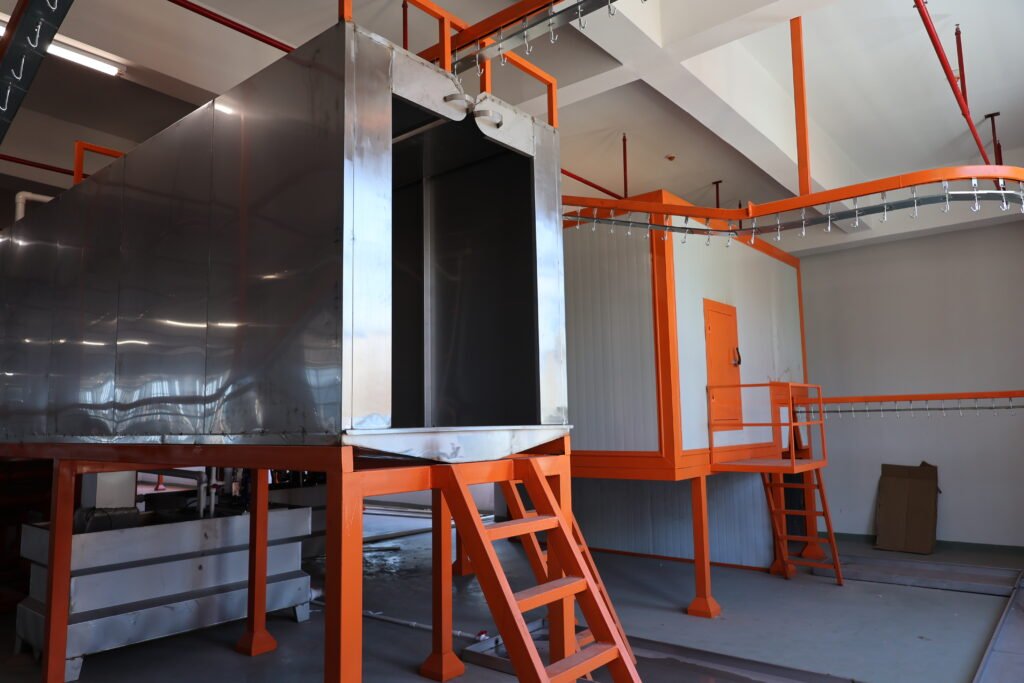
Many buyers say “we need powder line coating,” but they actually mean different things. Some mean a spray booth. Some mean an oven. Some mean “a complete line that can ship consistent parts.” When the definition is unclear, people buy the wrong setup and then wonder why defects, rework, and delays keep happening.
Powder line coating (more commonly called a powder coating line) is a complete production system that takes parts through surface preparation, powder application, and curing in a controlled flow. It is important because it turns coating from a skill-based job into a repeatable process with stable quality, lower rework, and predictable delivery.
I explain it in factory language. I do not stack fancy terms. I focus on what the line does and why that matters for quality, cost, and delivery.
What Is the Importance of Powder Coating?
People often talk about powder coating as “a nicer finish.” That is true, but I care more about what it does for business: fewer failures, fewer returns, and more stable production.
Powder coating is important because it creates a durable protective film when the surface is prepared correctly and the coating is cured correctly, and it can deliver strong consistency at scale when it is run as a controlled process.
What I see as the real importance in factories
- It protects parts in real use. It can improve abrasion resistance, corrosion resistance, and chemical resistance, depending on powder type and pretreatment.
- It supports consistent appearance. Many customers care about “same look every batch.” Powder can deliver stable gloss and texture when thickness and cure are controlled.
- It reduces total cost when the process is stable. Rework is a cost multiplier because you pay twice in labor, powder, and energy.
Powder coating only shows these advantages when the process is controlled. That is why the “line” matters.
What Is a Powder Coat Line?
Some people use “powder coat line” to mean a small booth and a batch oven. That can work for small volume. But in production terms, a powder coat line is the complete flow system that locks key variables so results repeat.
A powder coat line is a connected production setup that moves parts through pretreatment, dry-off, powder spraying (manual or automatic) with recovery, curing, cooling, and unloading, while controlling time, temperature, airflow, grounding, and inspection routines.
Typical blocks inside a powder coat line
- Loading / hanging (or carts and racks)
- Pretreatment (degrease, rinses, conversion coating if needed)
- Dry-off oven
- Powder spray booth (manual or automatic) + recovery/dust collection
- Curing oven
- Cooling zone
- Unloading + inspection + packing
| Factory view: what the line really controls | Process step | What the line controls | What happens if it is not controlled |
|---|---|---|---|
| Pretreatment | surface condition consistency | adhesion drift, corrosion complaints | |
| Dry-off | no residual water | pinholes, bubbles, rework | |
| Booth + spray | film build window | orange peel, thin edges, unstable look | |
| Recovery | stable airflow and clean powder path | powder loss, contamination, dusty shop | |
| Cure | part metal temperature + time | under-cure, over-cure, failures | |
| Handling | damage-free shipment | scratches and dents at final step |
A “line” is not just equipment. It is a control system.
What Are Powder Lines?
“Powder lines” is a broad term. It covers different layouts and automation levels. The right choice depends on order structure and changeover reality, not on what looks modern.
Powder lines are the different production system types used for powder coating, including batch lines, semi-automatic conveyor lines, and fully automatic lines, and each type is designed to balance flexibility, consistency, and unit cost.
| Main powder line types and what they fit | Powder line type | Best fit | Why it works | Common mistake |
|---|---|---|---|---|
| Batch line (rack/cart + booth + batch oven) | high-mix, small lots | flexible, easy inserts | weak SOP causes variation | |
| Semi-automatic line (conveyor flow + stable ovens/booth) | mixed production | stable takt, cleaner flow | bottleneck at racking/grounding | |
| Automatic line (reciprocators/robots + controlled recovery) | few SKUs, high volume | best consistency and unit cost | idle time if orders are unstable |
When I hear “powder lines,” I always ask one thing: can your orders feed the line in a stable way?
What Are the Benefits of Coating?
People ask this because they compare powder coating to liquid painting or other finishes. I answer it from production: coating is not only about looks. It is protection plus repeatability.
The benefits of coating are protection, improved appearance, and longer product life, and when coating is done on a line, the bigger benefit is repeatability: fewer defects, less rework, and more predictable delivery.
Benefits that become stronger when you use a powder coating line
- Consistent quality and less rework: the line fixes timing and process windows, so thickness and adhesion are more stable.
- Lower cost per part: recovery reduces powder loss, stable takt improves labor efficiency, and steady curing reduces wasted energy.
- Predictable throughput and delivery: the line runs on a rhythm, so planning becomes easier.
- Better durability when pretreatment and cure are correct: this matters most for outdoor and industrial parts.
- Cleaner and easier to manage: a proper booth and recovery system keeps powder inside the system, not in the workshop.
Factory-style takeaway
Powder line coating is important because it turns coating into a repeatable process. A repeatable process creates stable quality, lower rework, controlled cost, and reliable delivery.
Conclusion
Powder line coating is important because it turns “clean, coat, and cure” into a controlled production flow, which reduces defects and rework, lowers unit cost, and makes delivery predictable for B2B orders.
 English
  German
  Vietnamese
  French