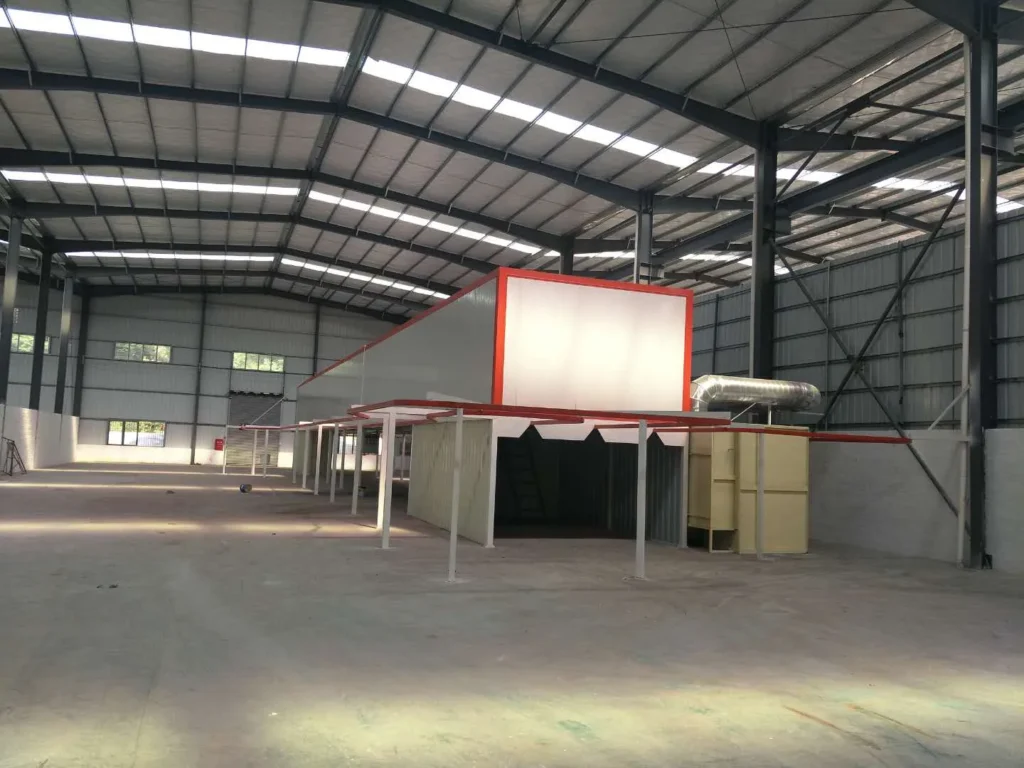
What Materials Are Used in Powder Coating? — Composition, Types & Selection Guide
Understanding Powder Coating: Basic Definition and Why Material Composition Matters
Powder coating is one of the most efficient, durable, and environmentally friendly surface treatment technologies in modern manufacturing. Unlike liquid paints that rely on solvent evaporation, powder coatings achieve their final properties through thermal cross-linking of solid particles. But what exactly goes into these coatings? Understanding the material composition is essential for manufacturers choosing the right coating system for their products.
Over the past two decades, I've worked directly with manufacturers across cabinet production, outdoor furniture, and aluminum extrusion industries. What I've consistently observed is that most purchasing teams focus on cost and aesthetics—but overlook how the material composition directly determines whether a coating will perform for five years or fifteen. The difference often comes down to understanding what's actually in the powder, how those components interact at high temperature, and whether the formulation matches your substrate and application environment.
Powder coatings consist of solid particles that melt and fuse together when heated, creating a continuous film. This process is fundamentally different from liquid paint, which relies on volatile organic compounds (VOCs) to carry the coating onto a surface. That's why powder coating has become the default choice for industrial manufacturers seeking durability, environmental compliance, and consistent batch-to-batch quality.
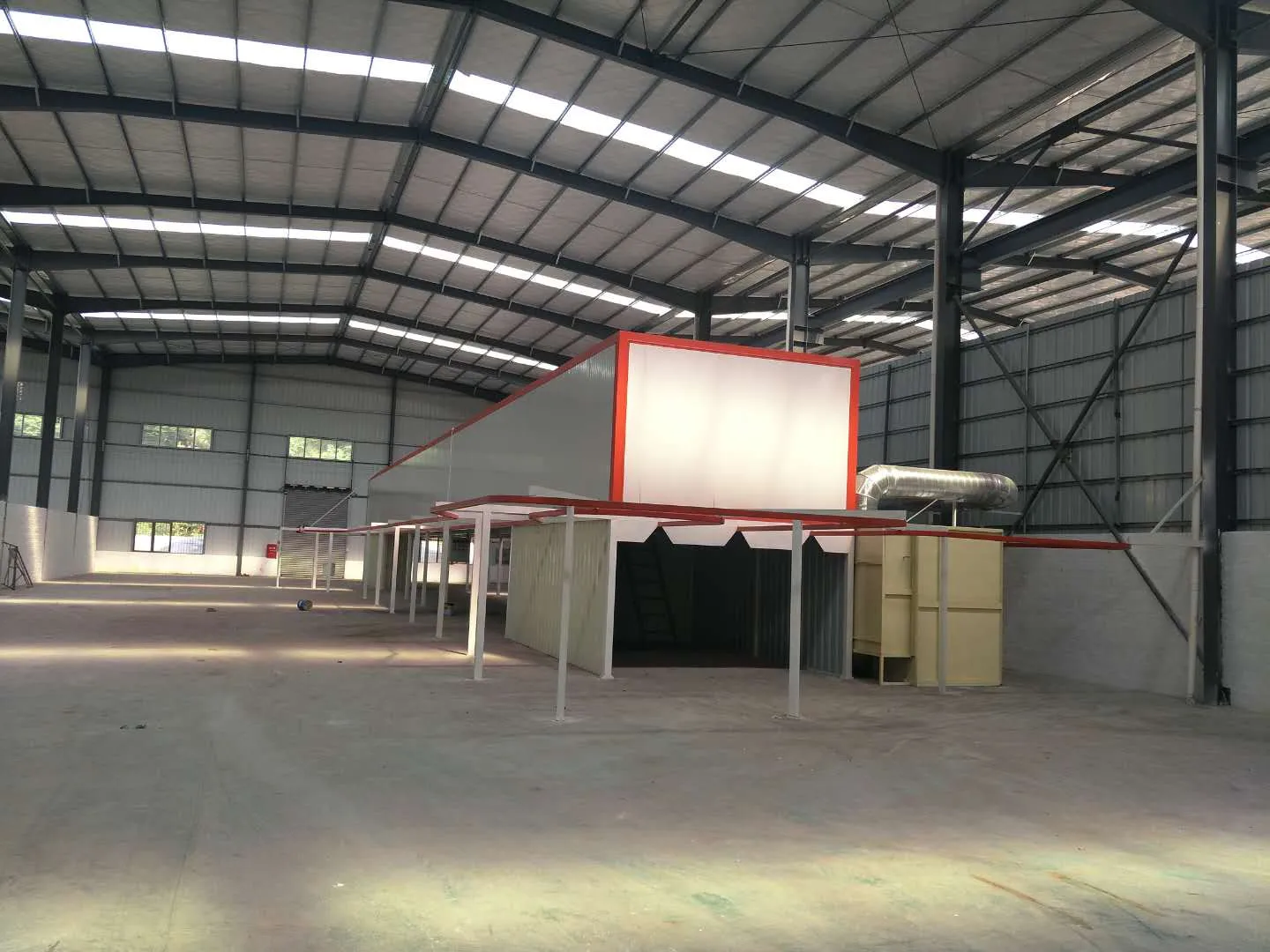
Core Material Components in Powder Coatings
Every powder coating formulation contains three fundamental material groups. Understanding each one helps you evaluate whether a specific powder is right for your production requirements.
Resin (Film-Former) – Role and Impact on Performance
The resin is the backbone of any powder coating. It provides:
- Film formation – the ability to melt and flow at elevated temperatures
- Adhesion – bonding to the substrate (steel, aluminum, or other metals)
- Durability – resistance to corrosion, weathering, and mechanical stress
- Appearance – gloss level and color retention over time
The resin system determines the overall performance category of the coating. In my experience working with cabinet manufacturers in Algeria, I've seen that epoxy resins dominate because they deliver exceptional adhesion and corrosion resistance—critical for electrical enclosures that may spend decades in industrial or outdoor settings. Conversely, when we worked with Turkish furniture producers, polyester resins became the default because of superior UV stability and outdoor durability.
The resin doesn't work alone. It requires a hardening agent to transform from a powder into a protective film.
Hardener (Cross-Linking Agent) – Why It's Essential
The hardener, also called the curing agent, works with the resin during thermal cure to:
- Enable chemical cross-linking, which transforms the coating from a flowing liquid state into a solid, hard film
- Develop final mechanical properties like hardness, impact resistance, and chemical resistance
- Achieve optimal cure at specific temperature and time settings
Without the hardener, the coating would remain soft and not provide lasting protection. In practice, this is why ovens must reach precise temperatures and maintain those temperatures for a defined period. When I worked with an Indian aluminum extrusion supplier, their concern about thick-ness uniformity and coating performance stemmed partly from inconsistent oven temperatures—which meant incomplete curing, which meant the hardener couldn't fully cross-link the resin.
Additives – Pigments, Fillers, and Functional Agents
Additives serve specialized functions to optimize processing and performance:
- Pigments – provide color and opacity, protecting the underlying substrate from UV degradation
- Fillers – reduce material cost, improve durability, and can add texture or functional properties
- Flow and leveling agents – ensure smooth, uniform surface appearance without sags or orange peel
- Anti-static agents – reduce static electricity during spraying, improving transfer efficiency
- Degassing agents – prevent bubbles and pinholes in the cured film
The quality and proportion of additives often separate a premium powder from a budget alternative. A high-quality pigment package maintains color and gloss longer; inadequate degassing agents lead to visible surface defects that are expensive to rework or scrap.
| Component | Primary Function | Impact on Final Coating | Quality Variance |
|---|---|---|---|
| Resin | Film formation & adhesion | Determines baseline durability | High – directly affects lifespan |
| Hardener | Cross-linking & cure | Enables final property development | High – incomplete cure = failure |
| Pigments | Color & UV protection | Aesthetic & weathering resistance | Medium – affects appearance & longevity |
| Fillers | Cost reduction & texture | Surface finish & thickness | Medium – cost vs. performance tradeoff |
| Flow agents | Surface smoothness | Reduces defects like orange peel | Low-Medium – affects cosmetics |
| Degassing agents | Bubble prevention | Eliminates pinholes & porosity | Medium – cosmetic & performance |
Major Powder Coating Systems: Properties, Curing Requirements & Applications
Powder coatings are classified primarily by their resin system. Each system offers distinct advantages and is suited to different applications. Understanding these categories helps you match the material to your substrate, environment, and performance requirements.
Epoxy Powder Coatings – Best for Industrial & Adhesion-Critical Applications
Composition: Epoxy resin + aliphatic or cycloaliphatic amine hardener
Key Properties:
- Excellent adhesion to metal substrates (often 5B or better on ASTM adhesion tests)
- Superior chemical and corrosion resistance
- High impact strength and flexibility
- Lower gloss retention (tendency to yellow in UV light over 2–3 years outdoors)
- Cost-effective for indoor and protected environments
Typical Curing: 200–220°C for 10–20 minutes
Best Applications:
- Industrial machinery and equipment
- Exchange/electrical cabinets and control panels
- Metal pipes and structural components
- Heavy-duty coating systems where adhesion is critical
- Pre-treatment sensitive substrates (steel with minimal oxide layers)
Why It's on Our List: From my direct experience at Ketu, epoxy systems dominate the cabinet and electrical enclosure market because of their unmatched adhesion and corrosion protection. We've seen many cabinet manufacturers—particularly in Northern Africa and the Middle East—specify epoxy precisely because the coating stays bonded even under harsh industrial conditions. The trade-off is that outdoor durability is lower than polyester, so epoxy is best reserved for indoor or sheltered applications.
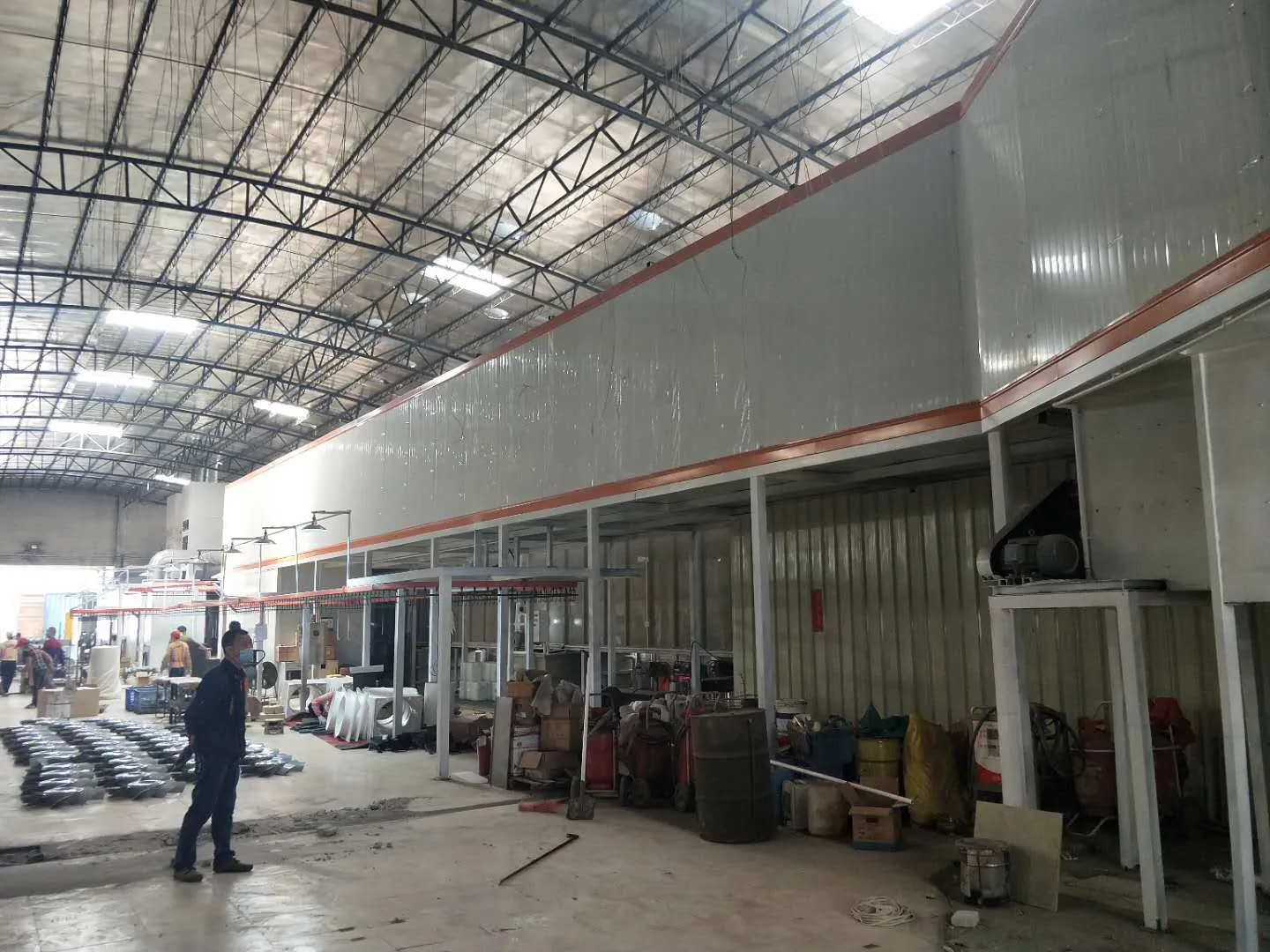
Polyester Powder Coatings – Superior Outdoor & Weather Resistance
Composition: Polyester resin + aliphatic amine or other hardener system
Key Properties:
- Superior outdoor durability and weather resistance (maintains gloss and color for 7–10+ years)
- Good color and gloss retention even in UV exposure
- Moderate cost and good balance of properties
- Lower impact strength compared to epoxy (but still adequate for most applications)
- Excellent for coastal and humid environments
Typical Curing: 200–220°C for 10–20 minutes (similar to epoxy)
Best Applications:
- Outdoor furniture and garden equipment
- Architectural profiles and window frames
- Building materials and metal roofing
- Any application exposed to sunlight and weathering
- Automotive exterior components
- Powder-coated handrails and outdoor fixtures
Why It's on Our List: In our Turkey outdoor furniture project, polyester was the natural choice because it resists UV degradation better than epoxy. The furniture components needed to maintain color and gloss after years of sun exposure, which polyester delivers more consistently. If you're coating products that will spend more than 2–3 years outdoors in direct sunlight, polyester is typically the better material investment, even if the upfront cost is 10–15% higher than epoxy.
Polyurethane Powder Coatings – High Gloss & Decorative Applications
Composition: Polyol resin + isocyanate hardener
Key Properties:
- Excellent gloss and surface smoothness
- High flexibility and impact resistance
- Superior appearance for decorative coatings
- Slightly lower corrosion resistance than epoxy
- More sensitive to humidity during storage
Typical Curing: 180–220°C, often lower than epoxy systems
Best Applications:
- High-end furniture and decorative coatings
- Products requiring superior tactile finish and appearance
- Items where appearance is as important as protection
- Applications where flexibility under stress is needed (articulated components)
- Custom and specialty coatings with premium aesthetic requirements
Acrylic Powder Coatings – Economical & Aesthetic Finishes
Composition: Acrylic resin + amine hardener
Key Properties:
- Good appearance and color retention
- Moderate corrosion resistance
- Lower cost than polyester or polyurethane
- Adequate for indoor and some outdoor applications
- Good flow and leveling characteristics
Typical Curing: 200–220°C for 10–15 minutes
Best Applications:
- Budget-sensitive indoor applications
- Decorative coatings where moderate durability is acceptable
- Products with shorter expected lifespan
- High-volume, cost-driven production (shelving, light fixtures, etc.)
| Resin System | Adhesion | Corrosion Resistance | UV/Gloss Retention | Impact Strength | Cost | Best For |
|---|---|---|---|---|---|---|
| Epoxy | Excellent | Excellent | Poor (yellows) | High | Low-Medium | Cabinet, electrical, industrial indoor |
| Polyester | Good | Good | Excellent | Moderate | Medium | Outdoor furniture, architecture, roofing |
| Polyurethane | Good | Moderate | Good | Very High | High | High-end furniture, decorative |
| Acrylic | Moderate | Moderate | Moderate | Moderate | Low | Budget applications, short-term use |
How Particle Size, Gloss Level & Surface Texture Affect Coating Performance
Beyond the resin chemistry, the physical properties of the powder—particle size, gloss level, and texture—directly influence both the application process and the final coating performance.
Particle Size Distribution and Its Impact on Spray Quality
Particle size distribution (PSD) affects how the powder atomizes, how evenly it deposits on the workpiece, and ultimately how uniform the coating thickness becomes.
- Fine particles (10–20 microns): Better transfer efficiency, finer appearance, but increased risk of over-spray and potential for incomplete covering on complex geometries
- Medium particles (20–40 microns): Industry standard for most applications; best balance of transfer efficiency, coverage, and appearance
- Coarse particles (40–80 microns): Better hiding power and coverage on uneven surfaces, but lower transfer efficiency and slightly less smooth appearance
In our experience at Ketu, most industrial customers benefit from medium-range PSD because it reduces rework rates. We've worked with cabinet manufacturers who initially switched to finer powders for cosmetic reasons but discovered they were wasting 8–12% more powder during the color-change process due to incomplete recovery.
Gloss Levels (High-Gloss, Satin, Matte) – Aesthetics and Practical Implications
Gloss level is controlled by particle size, resin formulation, and additives. Different gloss levels serve different purposes:
- High-gloss (85–100% at 60°): Professional appearance, easier to clean, reveals surface imperfections more readily, popular in high-end furniture and automotive
- Satin/Semi-gloss (40–60% at 60°): Balance between aesthetics and practicality; hides minor defects better than high-gloss; popular in outdoor furniture and architectural applications
- Matte (5–25% at 60°): Superior defect-hiding properties, modern aesthetic appeal, harder to clean, often requires specific formulation
From our Turkish furniture projects, I observed that outdoor furniture manufacturers increasingly specify satin or matte finishes because they hide surface scratches and weathering better than high-gloss. The trade-off is that matte coatings are slightly more difficult to maintain.
Texture and Specialty Finishes – Metal, Hammer, Sand-Grain Effects
Textured powders are formulated with specially sized particles or additives that create surface effects:
- Hammer finish: Creates a textured, metallic appearance similar to a hammer-struck surface; improves grip and hides imperfections
- Sand-grain: Provides a fine, uniform texture; popular in architectural and decorative applications
- Metallic: Incorporates metal flakes (aluminum, copper) for premium appearance; more complex to spray and cure uniformly
These specialty finishes typically cost 15–30% more than standard smooth powders and require more careful spray technique to avoid uneven effects.
Selecting the Right Powder Coating for Your Substrate and Application
Choosing the right powder coating material requires matching three variables: substrate type, environmental exposure, and performance requirements.
Material Compatibility – Steel, Aluminum, Stainless Steel & Other Substrates
Different substrates require different surface preparation and coating systems:
Steel:
- Best suited for epoxy or polyester powders
- Requires proper degreasing and rust removal (phosphate conversion coating recommended)
- Can accommodate a wide range of powder types
Aluminum:
- More sensitive to adhesion issues; requires chromate-free or chromium-free conversion coatings (environmental compliance)
- Epoxy generally provides superior adhesion; polyester is acceptable for outdoor applications
- Pre-treatment is critical—aluminum oxidizes rapidly, so coating should be applied soon after preparation
Stainless Steel:
- Low surface energy requires specialized pre-treatment and adhesion promoters
- Epoxy or polyurethane recommended; some polyesters may have adhesion concerns
- More expensive overall but provides superior corrosion resistance
Zinc-plated or galvanized:
- Epoxy provides good adhesion; polyester acceptable
- Passivation layer must be removed or properly treated
Curing Temperature & Equipment Requirements – What You Need to Know
The resin system determines the curing temperature and time profile. This directly impacts equipment requirements and operating costs.
- 200–220°C (typical): Most epoxy and polyester systems; requires reliable oven capable of holding ±5°C tolerance
- 180–200°C (lower-cure systems): Some newer polyurethane and hybrid systems; reduces energy consumption but may compromise final properties if oven temperature is unstable
- Higher cure (230°C+): Some specialty systems; requires more robust equipment and increases utility costs
From my direct work at Ketu, I've learned that oven consistency is more important than absolute temperature. An oven that fluctuates between 210–230°C will produce more coating defects than one that holds steady at 215°C. This is why accurate temperature control, good air circulation, and regular calibration of temperature sensors are non-negotiable.
Environmental & Performance Factors – UV Exposure, Chemical Resistance, Impact Strength
Match the powder coating system to the real-world conditions the product will face:
| Environmental Factor | Best System | Why | Expected Lifespan |
|---|---|---|---|
| Outdoor, direct UV | Polyester or Polyurethane | Superior gloss & color retention | 7–10+ years |
| Indoor, low corrosion | Epoxy | Excellent adhesion, cost-effective | 10–15+ years |
| Coastal/humid | Polyester with UV topcoat | Humidity + UV resistance | 5–7 years (without topcoat); 10+ (with) |
| High-impact environment | Polyurethane or impact-modified epoxy | Flexibility & dent resistance | 7–10 years |
| Chemical exposure | Epoxy or specialty polyurethane | Strong chemical resistance | 5–10 years (varies by chemical) |
An Indian aluminum extrusion customer once told me they were seeing premature coating failure in a humid warehouse environment. Investigation revealed they'd specified a standard polyester without sufficient salt-spray rating. A switch to a polyester formulated for coastal environments (with higher salt-spray resistance) solved the problem immediately.
Eco-Friendly & Advanced Powder Coating Materials
Environmental regulations and sustainability concerns are driving innovation in powder coating formulations.
Low-VOC and Zero-VOC Formulations
One of powder coating's biggest advantages over liquid paint is its inherently low volatile organic compound (VOC) emissions. However, newer formulations push this further:
- Standard powder coatings: ~0% VOC by design (no solvent carrier)
- Bio-based resins: Incorporate plant-derived materials instead of 100% petroleum-based chemistry; reduce carbon footprint by 15–30%
- Recycled resin content: Some manufacturers now offer powders with 20–50% recycled resin, reducing waste
The shift toward bio-based and recycled materials is happening fastest in Europe and North America, but is gradually spreading to Asia as well.
Chromium-Free Conversion Coatings
Environmental regulations (particularly the RoHS directive) are phasing out hexavalent chromium in pre-treatment processes:
- Traditional chromate: Excellent corrosion resistance but toxic and environmentally hazardous
- Chromium-free alternatives: Zirconium or titanium-based; equivalent performance but less environmental burden
- Cost impact: Chromium-free pre-treatment typically costs 10–20% more but is becoming the global standard
Cost-Benefit Analysis vs. Traditional Systems
Investing in eco-friendly powder coatings typically costs 5–15% more upfront but delivers:
- Lower long-term disposal costs (no hazardous waste)
- Reduced worker safety liability
- Compliance with stricter future regulations (avoid future re-specification)
- Improved brand perception, especially for consumer-facing products
From my work with manufacturers across Africa, the Middle East, and Asia, I've found that cost-conscious producers often hesitate on eco-friendly upgrades until regulations force the issue. However, those who make the switch proactively often discover that the efficiency gains from modern formulations (better transfer efficiency, fewer defects) offset the higher material cost.
Powder Coating vs. Liquid Paint: Why Material Composition Matters
Understanding material composition helps explain why powder coating is often the better choice:
| Property | Powder Coating | Liquid Paint (Solvent-Based) | Liquid Paint (Water-Based) |
|---|---|---|---|
| VOC Emissions | ~0% | 30–50% | 5–15% |
| Transfer Efficiency | 85–95% | 60–70% | 65–75% |
| Material Waste | 10–15% (recoverable) | 25–35% (non-recoverable) | 20–30% (semi-recoverable) |
| Gloss Uniformity | Excellent | Good (varies by application) | Good |
| Coating Thickness | 50–150 microns (controllable) | 25–100 microns (variable) | 20–80 microns (variable) |
| Cure Speed | 30–60 minutes (thermal) | 2–24 hours (evaporation/cure) | 4–48 hours (evaporation/cure) |
| Equipment Cost | Higher upfront | Lower upfront | Lower upfront |
| Operating Cost | Lower (energy + material) | Higher (material waste + disposal) | Medium (water waste) |
The material composition of powder coating makes it inherently more efficient: no solvent evaporation means no environmental loss, no volatile emissions mean safer working conditions, and the thermally-cured film has more consistent properties than a solvent-evaporated film.
Key Takeaways: How to Choose the Right Powder Coating Material for Your Needs
Based on thousands of hours helping manufacturers optimize their coating systems, here's my practical framework:
1. Identify Your Environment
- Indoor, protected: Epoxy or acrylic (cost-effective)
- Outdoor, direct UV: Polyester or polyurethane (durability priority)
- Coastal or high-humidity: Polyester with salt-spray rating or polyurethane with advanced additives
- High-impact or high-stress: Polyurethane or impact-modified epoxy
2. Verify Your Substrate
- Steel: Epoxy or polyester (wide compatibility)
- Aluminum: Epoxy preferred; polyester acceptable for outdoor; chromium-free pre-treatment essential
- Stainless: Epoxy or polyurethane; requires adhesion promoter
- Zinc/galvanized: Epoxy good; polyester acceptable
3. Balance Performance vs. Cost
- If longevity is critical (>10 years) and budget allows: Polyester or polyurethane
- If cost control is paramount and environment is mild: Epoxy or acrylic
- If appearance is critical: Polyurethane or high-quality polyester
- If environmental compliance is required: Specify chromium-free pre-treatment; consider bio-based resins
4. Verify Oven & Equipment Compatibility
- Standard cure (200–220°C): Most flexible; widest supplier choice
- Lower-cure systems (180–200°C): Energy savings but less margin for equipment variation
- Specialty cure profiles: Ensure your oven is capable before committing
5. Test & Verify
- Request salt-spray testing data (ASTM B117 or equivalent) for your specific environment
- Conduct adhesion testing (cross-hatch, pull-off) on your actual substrate
- Request gloss and color retention data if outdoor exposure is involved
From my direct experience at Ketu working with cabinet manufacturers in Algeria, furniture producers in Turkey, and aluminum extrusion companies in India, I can confirm that investing time upfront to understand your material requirements pays dividends. The worst-case scenario is discovering coating failure 18 months into production—which means costly rework, customer complaints, and potential warranty claims.
When to Contact a Coating Specialist
If your application involves any of the following, professional consultation is worthwhile:
- Complex or intricate geometries requiring specialized spray technique
- Salt-spray or chemical-resistance requirements exceeding standard specifications
- High-volume production (1,000+ units/day) where efficiency optimization has major cost impact
- Multi-substrate or multi-color production requiring flexible line configurations
- Environment with strict regulatory requirements (coastal, industrial, food-contact, etc.)
At Ketu, we've spent over a decade helping manufacturers across multiple continents design and implement powder coating systems that deliver consistent, durable results. If you're evaluating a new coating system, considering a product line expansion, or troubleshooting coating defects, we're happy to discuss your specific requirements.
Ready to optimize your powder coating material selection? Contact us at +8618064668879 (WhatsApp/Tel) or ketumachinery@gmail.com to discuss your application. We can help you evaluate material options, assess your current equipment compatibility, and recommend the coating system that balances performance, durability, and cost for your production environment.
 English
  German
  Vietnamese
  French