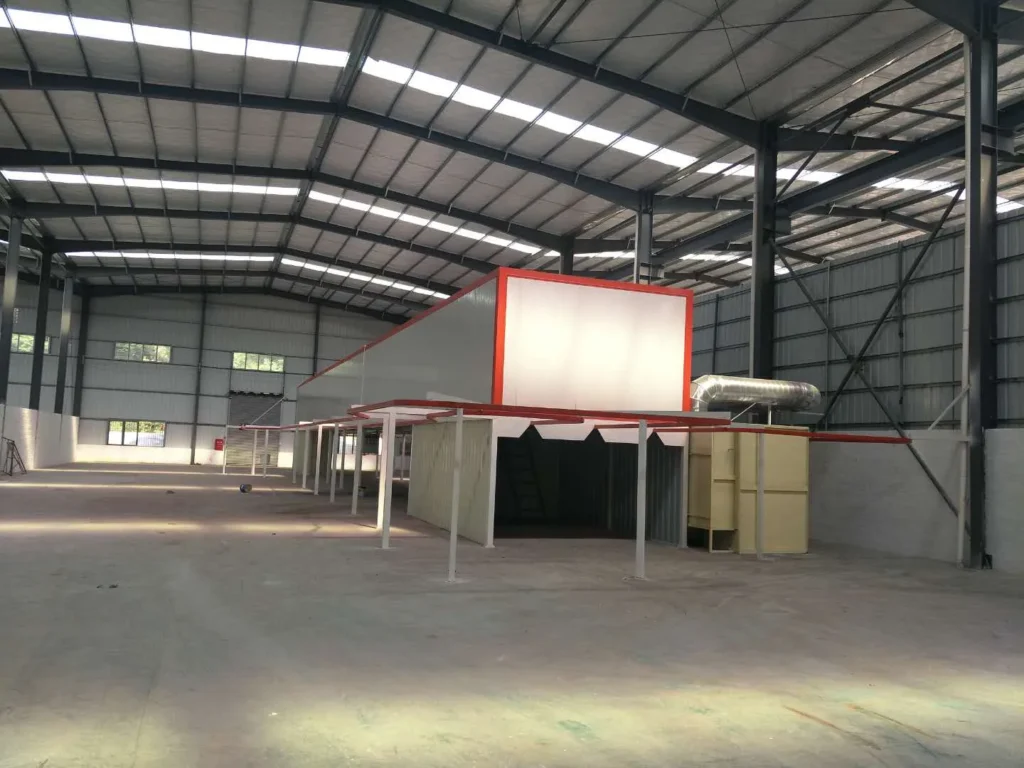
Where Can We Use Powder Coating Work For & What Purpose? A Complete Industry Guide
Over the years working in the powder coating equipment industry, I've noticed one consistent pattern: most manufacturing companies know powder coating exists, but they rarely understand where it fits into their production strategy or how much value it can unlock. This article changes that. Based on my experience building electrostatic powder coating lines for hundreds of manufacturers across metalworking, furniture, appliances, and structural industries, I'll walk you through exactly where powder coating works best—and why it matters to your bottom line.
Quick Overview: What This Guide Covers
This is a practical breakdown of powder coating applications, not a generic industry reference. I'm going to show you the industries and product categories where powder coating delivers real ROI, then explain what problems it solves and when it's worth the investment. Whether you're running a metal fabrication shop, building outdoor furniture, manufacturing aluminum profiles, or producing electrical enclosures, you'll find something actionable here.
Table of Contents
- Cabinet & Enclosure Manufacturing
- Metal Furniture Production
- Aluminum Architectural Products
- Automotive & Industrial Components
- Outdoor Equipment & Structural Steel
- Home Appliance Housings
- Comparison Table: When to Choose Powder Coating
- How to Evaluate If Powder Coating Is Right for Your Products
- Common Misconceptions About Powder Coating Applications
- Getting Started with Powder Coating for Your Production
1. Cabinet & Enclosure Manufacturing
This is probably the most established market for powder coating, and for good reason.
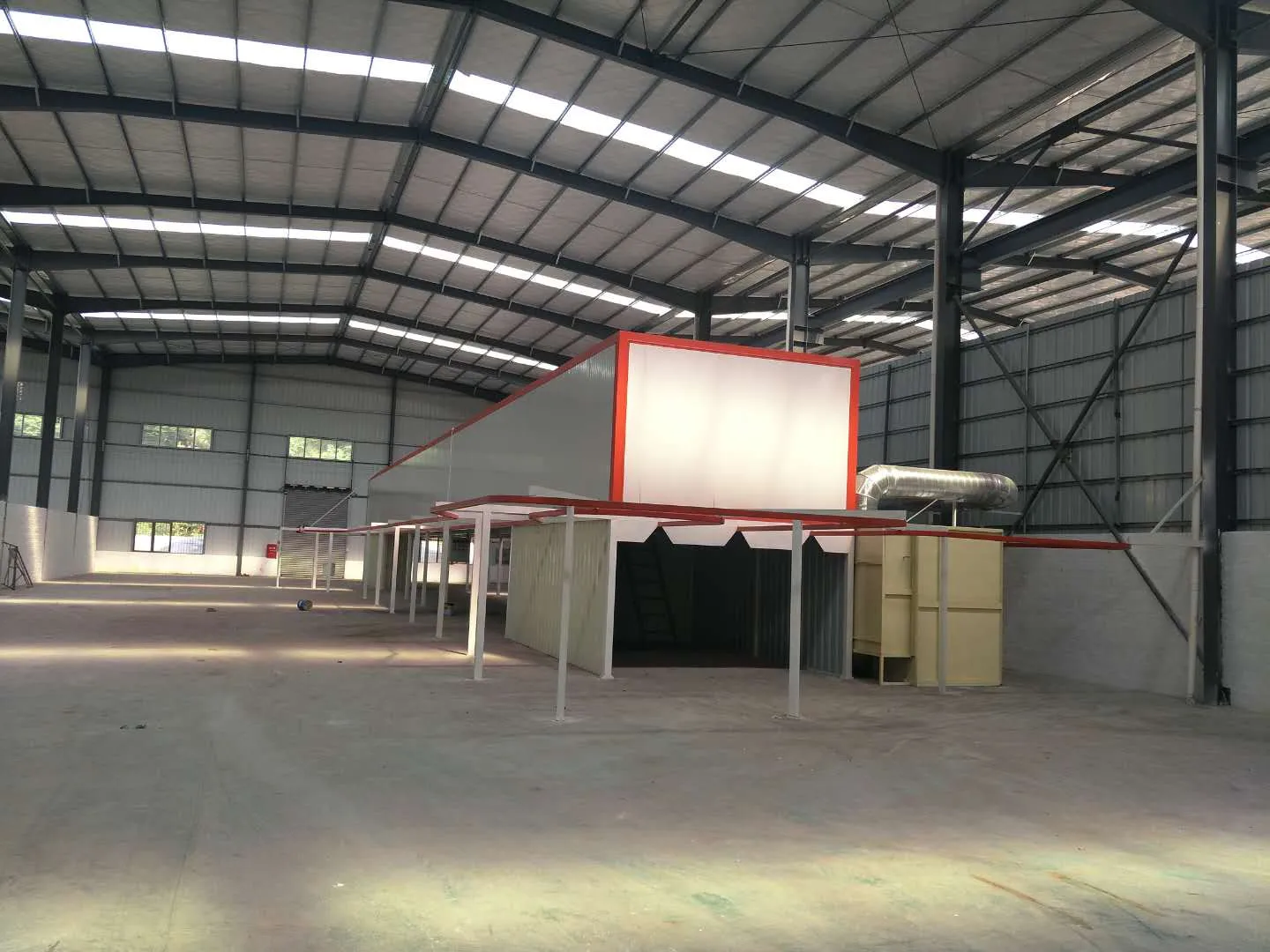
Why cabinets and enclosures benefit from powder coating:
Electrical cabinets, control panels, server housings, and network enclosures all share a similar requirement: they need to look professional, perform reliably, and resist corrosion in industrial or outdoor environments. Powder coating delivers on all three fronts.
From my experience with cabinet manufacturers in North Africa and the Middle East, the typical pain point is consistency. When you're producing 50+ cabinets per week, manual paint spray creates color variation, uneven coverage, and adhesion problems that show up in the field. Powder coating solves this through electrostatic uniformity—every cabinet gets the same charge, the same coverage, the same finish.
Specific advantages for this sector:
- Adhesion on steel & galvanized surfaces: Cabinets often arrive from your stamping vendor already galvanized or primed. Powder sticks better than liquid paint to these surfaces because it mechanically grips the electrostatic charge.
- Edge and corner coverage: Unlike spray paint, powder particles follow electric field lines, so they naturally wrap around corners and internal edges—critical for corrosion protection on cabinet seams.
- Thickness control: You can maintain 2.5–4 mils DFT (dry film thickness) consistently across hundreds of parts, which translates to predictable corrosion resistance and durability claims you can back up with data.
- Color fastness: Cabinet colors stay true even after 5+ years of warehouse use or outdoor storage because powder doesn't separate like liquid paint.
Typical applications in this category:
- Electrical distribution cabinets
- Telecom junction boxes
- Industrial control panels
- Server and networking enclosures
- Power generation switchgear housings
2. Metal Furniture Production
I first saw the real potential here when a Turkish furniture consortium visited our factory. They weren't just interested in equipment—they wanted to understand how to differentiate their seating and storage lines in the European market. Powder coating was their answer.
Why furniture manufacturers are moving to powder coating:
Metal furniture—whether office chairs, shelving, workbenches, or storage systems—faces a tough market requirement: it must look good and last. With liquid paint, you're fighting runs, drips, and handling marks every single day. Powder coating eliminates those defects almost entirely.
The cost advantage is also real. A typical office chair frame might use 200g of liquid paint (with 30% solvent loss) versus 80g of powder (90%+ utilization). That's a 60% reduction in material cost per unit, which compounds at scale.
What powder coating enables for furniture:
- Consistent finish quality: Every powder-coated chair looks identical to the next one. No color shifts, no sag, no thin spots. This matters to OEM buyers and end customers.
- Durability in logistics: Furniture gets bumped, stacked, and shipped. Powder coating is harder and more scratch-resistant than typical spray paint, so the product looks better when it reaches the customer.
- Sustainability narrative: You can market "zero-VOC finishing," which increasingly matters to corporate procurement teams and retail brands.
- Design freedom: Powder coating handles complex geometry—undercarriage welds, leg assemblies, weld seams—without coverage gaps. You can't say the same for spray paint.
Common furniture applications:
- Office seating (task chairs, conference chairs, stools)
- Metal storage (file cabinets, shelving, lockers)
- Outdoor seating (park benches, picnic tables, café chairs)
- Industrial workbenches and tool storage
- Retail display fixtures
3. Aluminum Architectural Products
This is where I see the most technical sophistication in powder coating applications. Aluminum extrusions—door frames, window profiles, curtain wall components, railing systems—demand precision that most manufacturers underestimate.
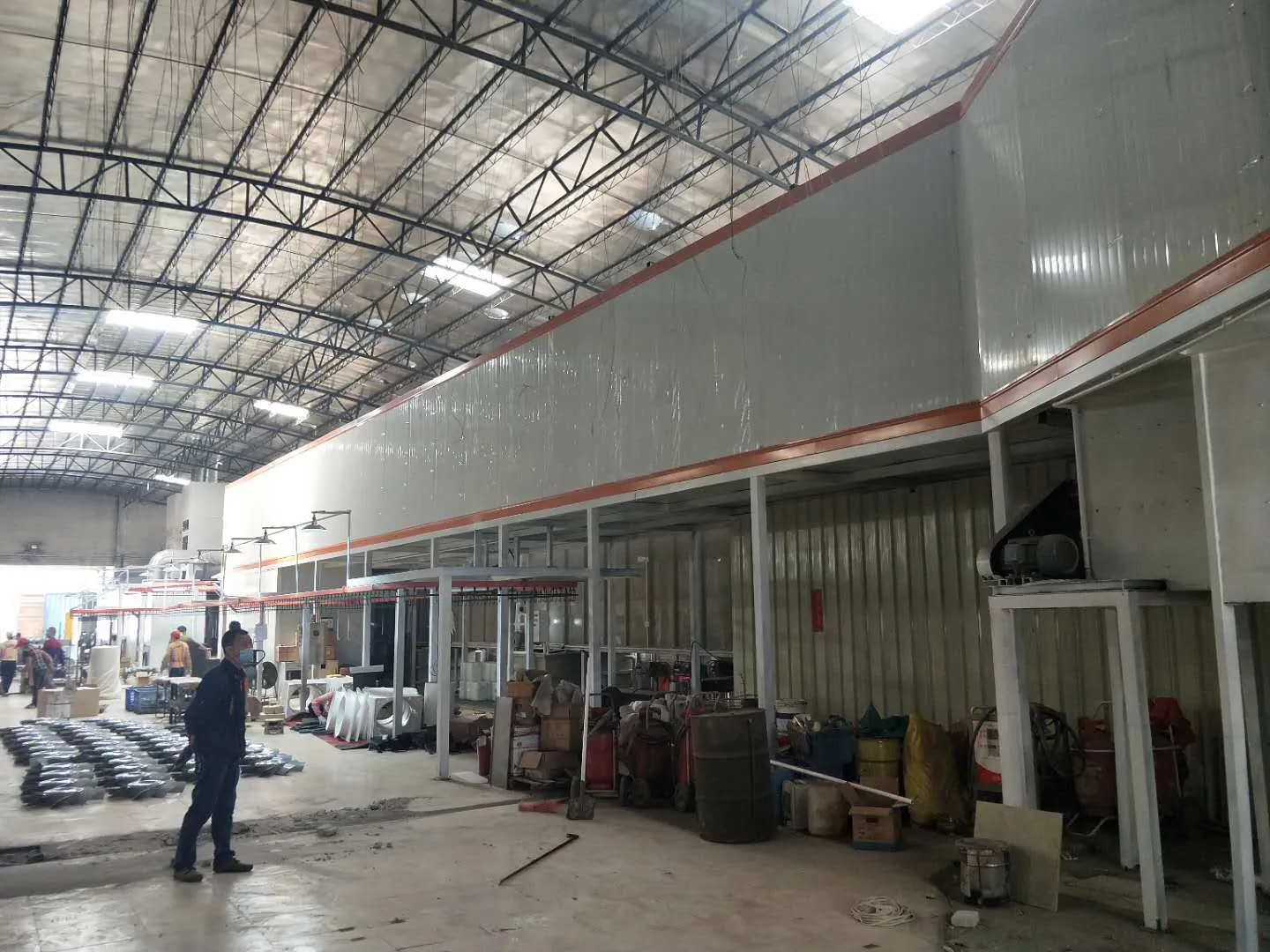
The aluminum challenge:
Pure aluminum oxidizes instantly when exposed to air. So before you can coat it, you need to remove that oxide layer, treat the bare aluminum with a conversion coating (typically a zirconium or titanium-based system), and then apply your finish. Get this sequence wrong, and the powder coating fails in the field—peeling, blistering, or corrosion spreading under the coating.
Why powder coating is the standard for aluminum profiles:
- Adhesion on non-ferrous metals: Aluminum doesn't have iron to form a rust barrier. Powder coating adheres electrostatically first, then thermally bonds during cure. This two-stage adhesion is stronger and more reliable than liquid paint on aluminum.
- Thick, uniform coating: Architectural aluminum needs 2.0–3.0 mils DFT minimum to resist salt spray and UV. Powder allows you to hit that spec consistently. Spray paint often undershoots because the operator doesn't control thickness precisely.
- Color retention: Architectural finishes—silvers, bronzes, champagne, charcoal—need to stay true for 10–20 years. Powder formulations designed for aluminum (often polyester or polyurethane blends) handle UV better than most liquid paints.
- Dimensional tolerance: Powder overspray doesn't drip or sag, so you can coat profiles without worrying about dimensional drift. This matters when you're assembling window frames to tight tolerances.
Real-world aluminum applications:
- Aluminum door and window frames
- Structural aluminum profiles for curtain walls
- Railing and balustrade systems
- Solar panel frames
- Aluminum extrusion components for industrial equipment
- Architectural trim and cornice elements
A practical note from my experience: I worked with an Indian aluminum extrusion company that switched from liquid paint to powder coating. Their reject rate dropped from 8% to less than 1% in the first month. The difference? Powder coating forced them to fix their pretreatment—and better pretreatment solved 80% of their adhesion problems.
4. Automotive & Industrial Components
Powder coating for auto parts might sound niche, but it's not. Engine brackets, suspension components, battery housings, heat shields, and transmission parts all run through powder lines in high volumes.
Why the automotive industry relies on powder coating:
- Performance in harsh environments: Engine bays are extreme: heat cycling, salt spray, vibration, chemical exposure. Powder coating's cross-linked matrix handles this better than single-layer liquid paint.
- Repeatability for OEM specs: Automotive suppliers work to Nissan, BMW, and Volkswagen specifications. Powder coating allows you to document and reproduce finish thickness, color, and adhesion to exact tolerances.
- Cost at scale: When you're producing 10,000 brackets per week, the labor and material savings of powder coating add up fast.
- Automation compatibility: Automotive suppliers often run automated lines. Powder coating integrates smoothly with conveyor systems, and you can cure parts in minutes (not hours like liquid paint).
Industrial component examples:
- Engine brackets and mounts
- HVAC ducts and housings
- Hydraulic manifolds
- Cable trays and conduit supports
- Heat exchanger fins
- Motor frames and enclosures
5. Outdoor Equipment & Structural Steel
This is where powder coating truly shines. Any product that sits outdoors—playground equipment, park benches, utility structures, fencing, gates—will outlast and look better if powder-coated instead of liquid-painted.
Why outdoor applications demand powder coating:
- Salt spray & UV resistance: Coastal regions, agricultural environments, and northern climates with road salt all accelerate corrosion. Powder coating's film thickness and cross-link density resist salt spray better than any single application of liquid paint.
- Durability over repainting cycles: A liquid-painted bench might need repainting every 3–4 years. A powder-coated bench lasts 8–12 years between touch-ups. Over the asset's life, powder coating costs less.
- Weather cycling performance: Outdoor coatings experience thermal expansion and contraction, UV degradation, and moisture penetration. Powder coatings (especially polyurethane or acrylic formulations) hold up better because the powder chemistry is engineered for this stress.
Outdoor equipment categories:
- Park and playground equipment
- Outdoor furniture and seating
- Utility and transmission structure components
- Fencing and railing systems
- Sports field equipment
- Landscaping and site furniture
- Utility boxes and enclosures
Real-world example: A Western European municipality switched their park bench procurement from liquid paint to powder coating. Initial cost per bench went up 12%, but maintenance labor dropped so dramatically that the total 10-year cost of ownership fell by 28%.
6. Home Appliance Housings
Walk into any appliance factory, and you'll see powder coating lines running continuously. Refrigerators, washing machines, dryers, ovens, microwaves—they all rely on powder coating for both aesthetics and durability.
Why appliance manufacturers standardized on powder coating:
- Visual consistency in retail: Appliance finish must look perfect on the showroom floor. Liquid paint creates surface defects—drips, sag, dust specs—that powder eliminates.
- Durability through the product lifecycle: An appliance sits in the customer's home for 10–15 years. It gets bumped, cleaned with harsh chemicals, and exposed to temperature swings. Powder coating handles this wear better than paint.
- Food-safe finish standards: Some appliance exteriors must meet food-contact or health-code compliance. Powder coatings formulated for food safety are reliable and predictable.
- Coating repeatability: Appliance OEMs require tight control of finish thickness (often 1.5–2.5 mils DFT). Powder coating delivers this consistency automatically.
Appliance-related applications:
- Refrigerator and freezer exteriors
- Washer and dryer drum and frame assemblies
- Oven and range housings
- Dishwasher tubs and panels
- Microwave enclosures
- HVAC unit casings
- Water heater housings
Comparison Table: When to Choose Powder Coating vs. Alternatives
| Product Category | Powder Coating | Liquid Paint | Electroplating | Anodizing | Best For |
|---|---|---|---|---|---|
| Cabinet & Enclosures | ★★★★★ | ★★★☆☆ | ★☆☆☆☆ | N/A | Powder coating (uniform coverage, adhesion, cost) |
| Metal Furniture | ★★★★★ | ★★★☆☆ | ★☆☆☆☆ | N/A | Powder coating (durability, finish, sustainability) |
| Aluminum Profiles | ★★★★★ | ★★☆☆☆ | ★★★☆☆ | ★★★★☆ | Powder or anodizing (depends on end-use) |
| Automotive Parts | ★★★★☆ | ★★★☆☆ | ★★★★☆ | ★★☆☆☆ | Powder or electroplating (application-dependent) |
| Outdoor Structures | ★★★★★ | ★★☆☆☆ | ★★☆☆☆ | ★★★☆☆ | Powder coating (cost, durability, coverage) |
| Appliance Exteriors | ★★★★★ | ★★★☆☆ | ☆☆☆☆☆ | ★★★☆☆ | Powder coating (aesthetics, cost, consistency) |
| High-Corrosion Marine | ★★★★☆ | ★★☆☆☆ | ★★★★★ | ★★★★☆ | Electroplating or heavy powder (specialized) |
| Food-Contact Surfaces | ★★★★☆ | ★★☆☆☆ | ★★★★★ | N/A | Electroplating or food-safe powder |
How to Evaluate If Powder Coating Is Right for Your Products
Ask yourself these five questions:
1. Do you care about consistency?
If you're shipping 100+ units per month and consistency matters to your customers, powder coating is almost always better than spray paint. The electrostatic process forces uniformity; spray paint does not.
2. Is corrosion protection a factor?
If your products sit outdoors, work in humid environments, or touch saltwater or chemicals, powder coating's thickness and adhesion will extend product life. Liquid paint will not compete.
3. Can you justify 2–4 weeks of lead time?
Powder coating requires custom color matching, fixture design, and cure scheduling. If you need finishes in days, spray paint is faster. If you can wait 2–3 weeks, powder coating cost advantage typically beats liquid paint.
4. What's your annual volume?
Powder coating equipment requires 8,000–15,000 units per year minimum to justify the capital investment. Below that, outsourcing to a job shop is more cost-effective.
5. What does your customer care about most?
If they're paying for durability and long-term performance, powder coating is worth the conversation. If they're buying commodity price, spray paint is still king.
Common Misconceptions About Powder Coating Applications
Misconception 1: "Powder coating is only for large manufacturers."
Not true. Mid-sized shops with 5,000–10,000 annual units can use a job shop (outsourced coating service) and still see ROI. You don't always need to own the equipment.
Misconception 2: "Powder coating can't be used on plastic."
Actually, thermoset plastics (phenolic, melamine) powder-coat well. Thermoplastics are problematic because powder cure temperatures melt them. But if your plastic can handle 300°F+, powder is viable.
Misconception 3: "Powder coating is more expensive than spray paint."
At scale, it's cheaper—but only if you're hitting volume. Below 5,000 units/year, spray paint is more economical. Above 15,000 units/year, powder coating wins on cost.
Misconception 4: "You can't get custom colors with powder coating."
False. Any color is possible; it just requires custom powder batch orders (minimum 500–1,000 lbs, lead time 4–8 weeks). Standard colors have no lead time and lower cost.
Misconception 5: "Powder coating doesn't work on non-ferrous metals."
Wrong. Aluminum, copper, brass, and stainless steel all powder-coat well. The pretreatment process changes (no rust, so different chemistry), but the finish is excellent.
Getting Started with Powder Coating for Your Production
If you're considering powder coating for the first time, here's the practical path:
Phase 1: Validate the Concept (Weeks 1–4)
- Send 10–20 sample parts to a local or regional powder coat job shop
- Request 2–3 different finish colors and surface textures
- Test adhesion, corrosion resistance, and impact resistance (send samples to a lab if needed)
- Compare cost per unit against your current spray paint process
Phase 2: Volume & Lead-Time Assessment (Weeks 4–8)
- Confirm your realistic annual volume for this product
- Calculate break-even point: equipment cost ÷ (cost savings per unit × annual volume)
- Decide whether to buy equipment or use a job shop long-term
- If job shop: negotiate volume pricing; if equipment: start equipment vendor discussions
Phase 3: Design & Engineering (Weeks 8–16)
- Work with equipment supplier to design fixtures, racks, and conveyor layout
- Plan pretreatment chemistry and scheduling
- Design powder color palette and procurement strategy
- Schedule operator training (typically 2–3 weeks before production start)
Phase 4: Pilot Production (Weeks 16–20)
- Run 500–1,000 units through the new powder line
- Collect QA data: adhesion, thickness, color, defect rate
- Troubleshoot pretreatment and curing parameters
- Gather feedback from quality and shipping teams
Phase 5: Full Production (Week 20+)
- Scale to target volume
- Implement QA routine: monthly adhesion testing, quarterly salt-spray validation
- Refine operator training and process documentation
Key Takeaways: Where Powder Coating Delivers Real Value
Based on thousands of parts I've seen processed through our lines:
-
Cabinets and enclosures: Powder coating is the standard. If you're not using it, you're at a competitive disadvantage.
-
Metal furniture: Durability + sustainability story + cost advantage = a winning combination. This market is shifting to powder coating fast.
-
Aluminum profiles: For architectural and structural applications, powder coating or anodizing—usually powder because it's more flexible on colors and faster to market.
-
Outdoor equipment: If your product touches weather, powder coating's durability is worth the investment.
-
Appliances: Consistency and visual appeal drive the requirement. Spray paint can't compete at scale.
-
Automotive and industrial: Use powder coating where durability and performance specs matter; use spray paint where cost is the only factor.
Ready to Explore Powder Coating for Your Products?
If you're evaluating powder coating for metal cabinets, furniture, aluminum profiles, or industrial components, I'd recommend starting with a conversation about your specific product and volume. Different applications have different requirements—pretreatment chemistry, cure temperatures, color options, fixture design all vary.
At Ketu, we work with manufacturers across all these categories. We can help you determine whether powder coating makes economic and technical sense for your products, and we can support you whether you build the line in-house or use a job shop.
Reach out to discuss your application:
- WhatsApp: +8618064668879
- Email: ketumachinery@gmail.com
We're here to help you understand where powder coating fits into your production strategy and how to make the transition smoothly.
 English
  German
  Vietnamese
  French