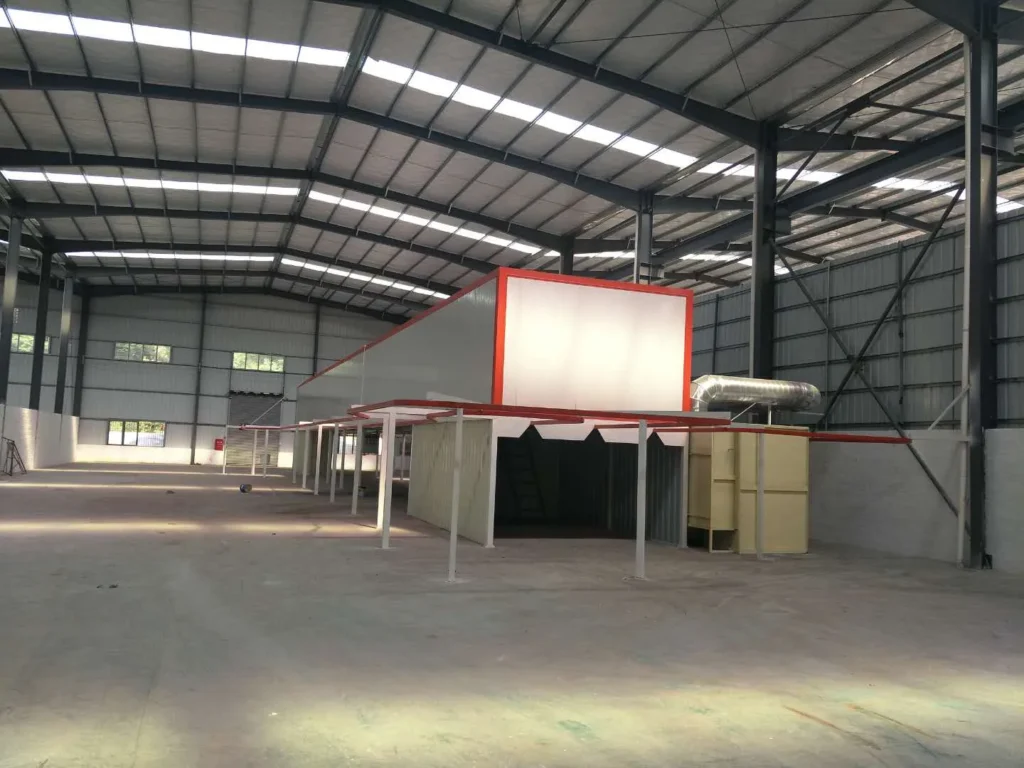
Optimizing Your Industrial Oven Design for Powder Coating: A Complete Optimization Guide
When we design and optimize a powder coating oven system, we're not just dealing with a heating chamber—we're engineering the most critical stage of the entire coating process. Over years of working with metal manufacturers in cabinet production, furniture making, and aluminum profiling, I've seen that oven design is often where quality either gets locked in or starts to fall apart.
This guide walks through the key design principles, technical decisions, and practical parameters that determine whether your curing oven delivers consistent, high-quality results or becomes a recurring source of defects and downtime.
Why Temperature Uniformity Matters in Powder Coating Ovens
Temperature uniformity is the foundation of powder coating quality. It's not negotiable.
When powder enters the oven, it needs to follow a precise heating curve: first, gradual temperature rise; then, a sustained cure window at target temperature; finally, stabilization. If different areas of the oven reach different temperatures, you get inconsistent cure depth, color variation, hardness differences, and adhesion problems.
In my experience, when a customer complains about "batch-to-batch inconsistency" or "some pieces cure great, some don't," the root cause is usually oven temperature distribution. Not the powder. Not the spray parameters. The oven.
What counts as "uniform"?
Industry best practice targets ±5°C variation across the oven chamber at any given time. Some high-spec applications demand ±3°C. Below that, you're spending money on precision you may not need; above ±8°C, you'll see visible defects—color shifts, gloss variation, or soft spots in the coating.
Why this matters to you:
- Under-cured areas lead to poor hardness, weak adhesion, and vulnerability to peeling or corrosion.
- Over-cured areas can cause yellowing, brittleness, or even coating damage on heat-sensitive substrates.
- Inconsistent cure between batches means constant adjustment, higher scrap rates, and lost customer confidence.
The oven design—its internal airflow, heater placement, insulation thickness, and control strategy—directly controls whether you hit that ±5°C window consistently.
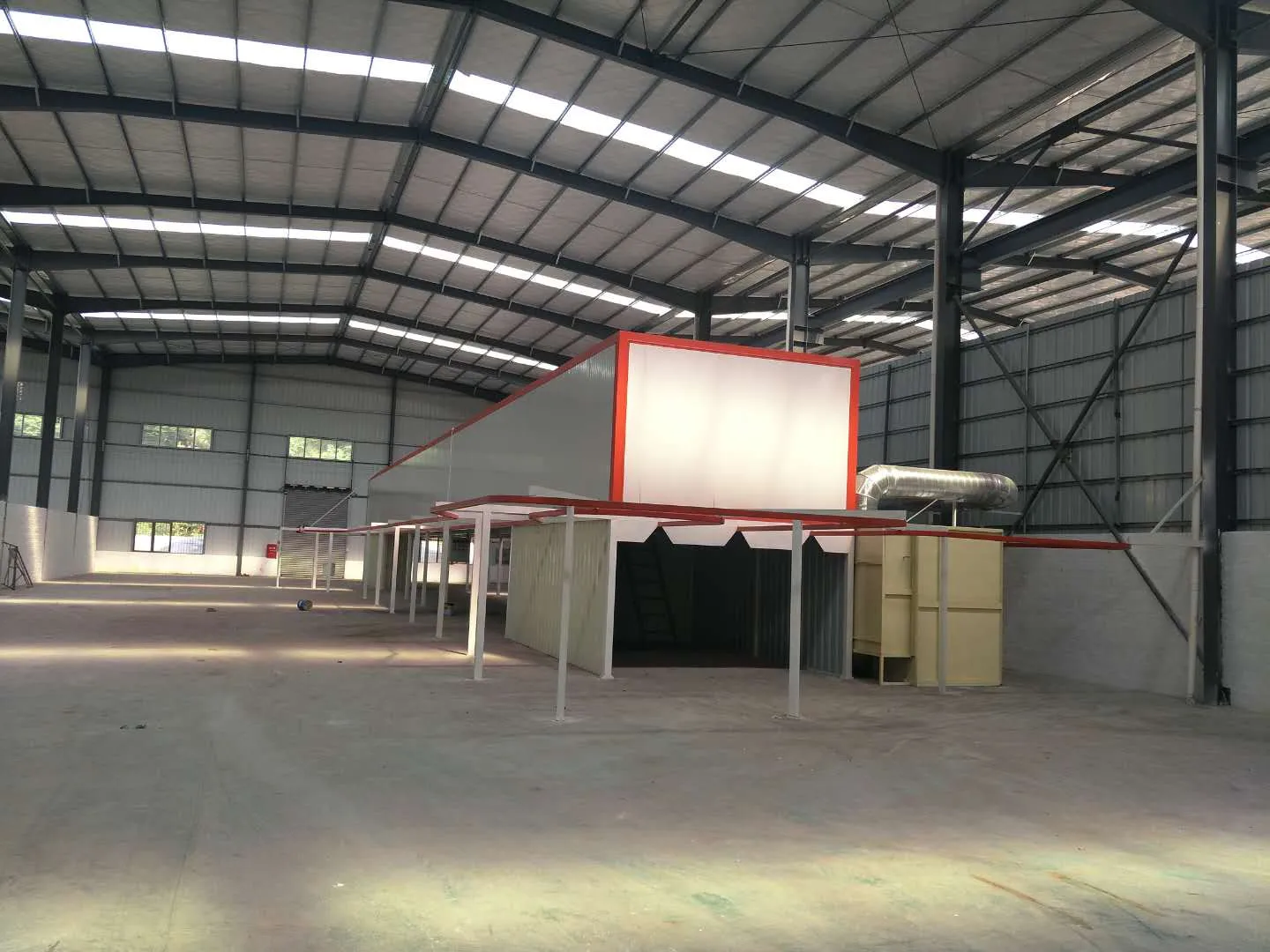
Choosing the Right Heating Method: Electric vs. Gas vs. Hybrid Systems
Your heating method is the first major decision point, and it affects energy costs, warm-up speed, temperature precision, and long-term maintenance.
Electric Heating (Resistance Heating)
Electric ovens use immersion heaters or tubular heating elements to generate heat directly inside the airstream.
Advantages:
- Precise temperature control (±2–3°C easily achievable)
- Fast warm-up time (30–40 minutes to reach 200°C)
- Lower maintenance; fewer moving parts
- Works well for smaller to mid-sized lines
- No combustion byproducts or combustion safety concerns
- Suitable for food-contact or sensitive applications
Disadvantages:
- Higher electricity consumption; higher operating costs for large-scale production
- Less cost-effective for very high throughput lines
- Element degradation over time if water quality is poor or humidity is high
Best for: Smaller production runs, batch ovens, applications requiring tight temperature control, or facilities with low electricity costs.
Gas Heating (Natural Gas or LPG)
Gas ovens use a burner to heat air, which is then circulated through the chamber. The combustion happens outside the product zone, and heated air is distributed internally.
Advantages:
- Lower operating cost per hour for high-volume production
- Faster temperature rise than electric (can reach 200°C in 20–30 minutes)
- Scalable to very large chambers
- Better suited for continuous-line operations
Disadvantages:
- More complex combustion control and safety systems required
- Requires gas supply infrastructure and permits
- Higher maintenance (burner inspection, combustion tuning)
- Slight risk of combustion gas infiltration if design is poor
- Requires reliable gas source and pressure regulation
Best for: High-volume production lines, continuous operations, facilities with natural gas availability, cost-sensitive manufacturers targeting long-term ROI.
Hybrid Systems (Electric + Gas)
Modern facilities often use a combination: gas for primary heating (faster ramp, lower cost) and electric for fine-tuning and precise zone control.
Advantages:
- Combines fast warm-up of gas with precision of electric controls
- Flexibility to use gas for high-volume periods and electric for low-volume or fine-tuning
- Can optimize energy consumption based on production schedule
Disadvantages:
- More complex control logic
- Higher upfront equipment cost
- Requires both gas and electrical infrastructure
Best for: Medium to large operations with variable production schedules, or manufacturers serving multiple industries with different cure requirements.
Our recommendation: The choice depends on your production volume, local energy costs, and precision needs. For a cabinet line targeting 20 pieces per 5-hour shift (as in typical projects we engineer), electric or hybrid heating provides better temperature consistency. For aluminum profiling at higher throughput, gas with electric trim control is more economical.
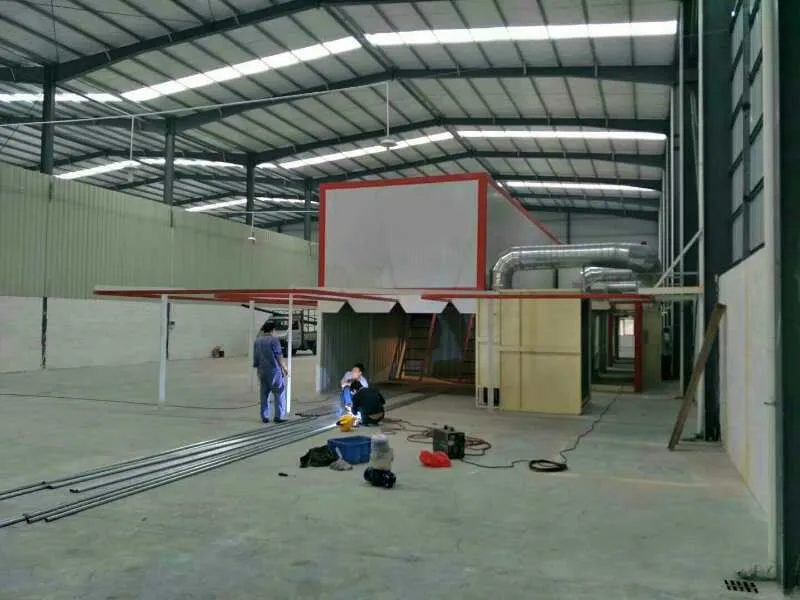
Designing Airflow Systems That Prevent Powder Blow-Off While Ensuring Even Cure
This is where most oven designs fail, and where the real engineering lives.
The airflow inside your oven has two competing jobs:
- Protect the coating. If air velocity is too high, loose powder particles get blown off the part, creating defects and waste.
- Cure the coating evenly. If air velocity is too low, stagnant zones form, and cure becomes inconsistent.
The solution is a well-designed two-stage airflow strategy.
Horizontal and Vertical Airflow Integration
Stage 1: Low-Speed Powder Protection Zone (Entry to Mid-Oven)
As the coated part enters the oven, powder is still loose. Air velocity here should be 0.3–0.5 m/s—barely perceptible to the human hand, but sufficient for gentle circulation. This is the "powder protection zone."
Design approach:
- Use perforated or slotted bottom and side diffusers that spread incoming air across a large cross-sectional area.
- Avoid sharp-edge ductwork that creates jet streams.
- Keep the return air path open to prevent pressure buildup.
- If the oven is long (>5 meters), divide it into zones with separate damper controls.
Stage 2: Higher-Velocity Cure Zone (Mid to Exit)
Once powder has melted and flowed (typically after 5–8 minutes at cure temperature), air velocity can increase to 0.8–1.2 m/s to accelerate heat transfer and solidification. This is the "cure acceleration zone."
Design approach:
- Use adjustable louvers or dampers to increase air velocity in the latter half of the oven.
- Ensure vertical mixing: design the return air path so that it pulls air downward from the upper zone back to the return plenum, promoting top-to-bottom and bottom-to-top mixing.
- Install baffles to prevent short-circuiting (direct path from inlet to return without full chamber mixing).
Real-world example:
One of our cabinet customers in Algeria reported consistent color shifts along the length of their oven—darker at the entry, lighter at the exit. Root cause: single-stage airflow at 0.8 m/s throughout. Solution: install a damper partition at the 60% point, reducing entry-zone velocity to 0.4 m/s and raising exit-zone velocity to 1.0 m/s. Result: uniform color and hardness across all pieces.
Variable Frequency Drive (VFD) Technology for Adaptive Speed Control
Manual dampers and fixed-speed fans are history. Modern ovens use Variable Frequency Drives to continuously adjust fan speed based on real-time oven conditions.
How it works:
The VFD reads temperature sensors distributed throughout the chamber and modulates fan speed to maintain target temperature while keeping air velocity within the safe "powder protection + cure" envelope.
Benefits:
- Energy savings: 20–40% reduction in fan energy when operating at partial load
- Faster warm-up: Fan runs at full speed during ramp phase, then throttles back during cure
- Tighter temperature control: Self-adjusting airflow compensates for variations in line loading
- Reduced powder waste: Lower air velocity throughout the cycle minimizes blow-off
- Quieter operation: Reduced fan noise during low-load periods
Control logic we typically implement:
- Ramp phase (0–100°C): Fan at 100%, air velocity 1.0–1.5 m/s, focus on rapid warm-up
- Cure phase (100–200°C): Fan modulated to maintain zone temperatures within ±3°C, air velocity 0.6–1.0 m/s
- Hold phase (200°C steady): Fan reduced to 60–70%, air velocity 0.4–0.6 m/s, just enough circulation to maintain temperature
This adaptive approach works because it recognizes that "uniform" doesn't mean "same speed everywhere, all the time"—it means matching airflow to the actual heating demand at each stage.
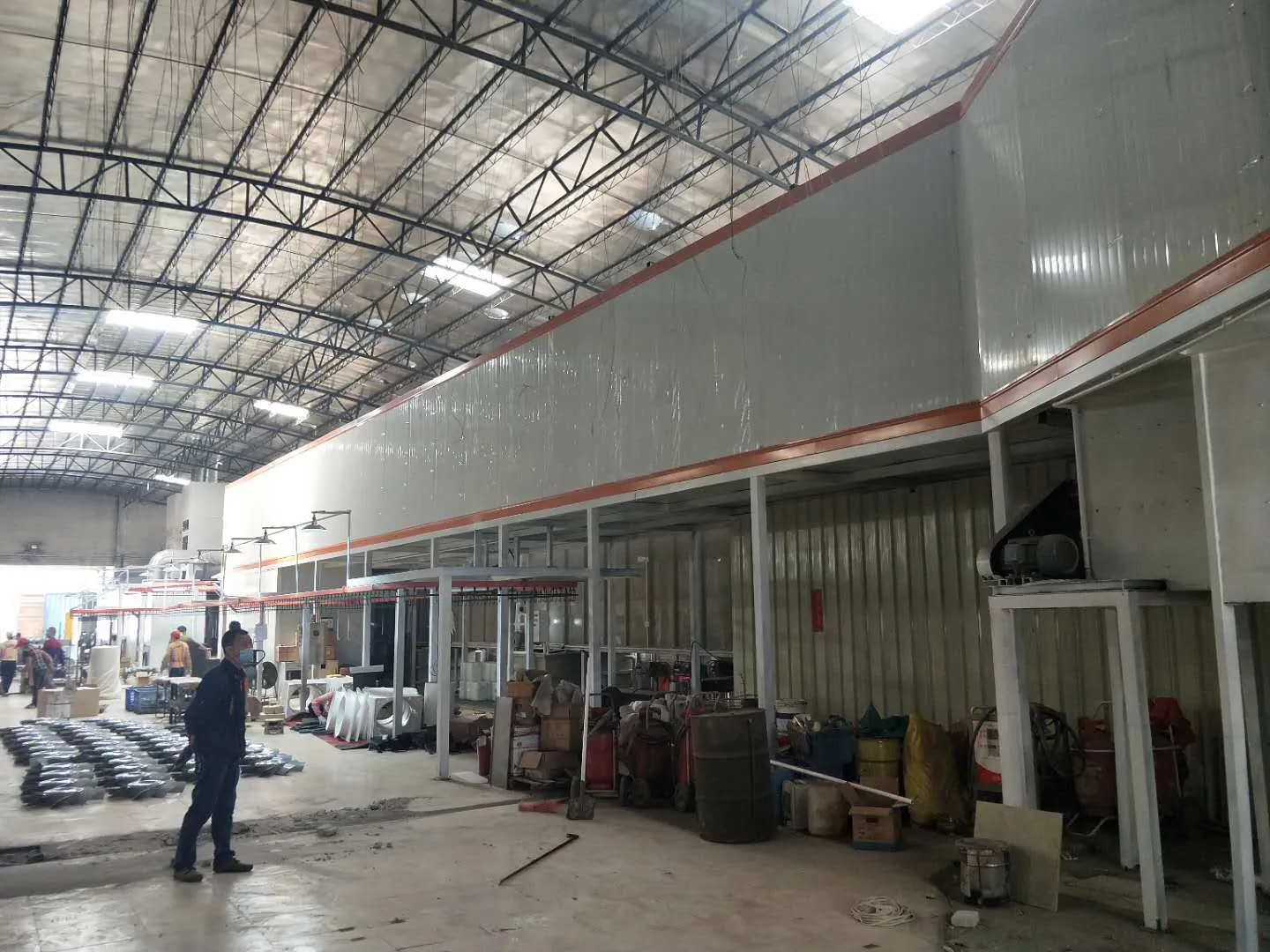
Core Design Parameters: Size, Insulation, and Material Selection
These three factors form a cost-quality-efficiency triangle that shapes your entire oven economics.
Oven Internal Dimensions
Size must match your workpiece envelope and production line speed.
Key parameters:
- Length: Typically 1.5–2x the longest workpiece dimension, plus 500–800 mm for entry/exit zones and temperature stabilization. Formula:
Oven Length = (Workpiece Length × 1.8) + 600mm - Width & Height: Must accommodate your widest part with 150–200 mm clearance on all sides for airflow distribution. Tighter clearance = more turbulence = less uniform cure.
- Effective Heated Volume: Longer ovens at slower line speeds improve cure uniformity because parts spend more time in the temperature envelope.
Throughput vs. oven length trade-off:
A 5-meter oven running at 1 meter/minute can process parts continuously. A 3-meter oven at the same line speed creates more crowding, risks temperature drop when multiple parts enter simultaneously, and may require throttling to maintain temperature. Better to invest in the longer chamber upfront than struggle with inconsistency later.
Insulation Thickness and Material
Insulation is not just about energy savings—it directly affects temperature uniformity and exterior safety.
Recommended specs:
| Insulation Type | Thickness | R-Value (approx.) | Cost | Durability | Moisture Resistance |
|---|---|---|---|---|---|
| Mineral Wool (standard) | 75–100 mm | R-4.5–6 | Low | Good (10+ years) | Moderate |
| High-Density Rockwool | 100–150 mm | R-6–8 | Medium | Excellent (15+ years) | High |
| Ceramic Fiber | 50–75 mm | R-5–7 | High | Excellent (20+ years) | Excellent |
| Combinations (Rockwool + Ceramic) | 100–125 mm total | R-7–9 | Medium-High | Excellent | Excellent |
Why insulation matters beyond energy:
- Reduces exterior surface temperature from 60–80°C (bad for safety and surrounding equipment) to <20°C above ambient
- Stabilizes interior temperature by reducing heat loss fluctuation as ambient conditions change
- Improves ramp consistency because less energy is wasted heating the oven structure itself
Material selection:
High-density rockwool is the workhorse for industrial ovens—good value, proven durability, and adequate performance. Ceramic fiber is worth the premium if your facility is in a high-humidity or corrosive environment (coastal areas, chemical-adjacent plants) because moisture degrades standard mineral wool over time.
A note on corners and seams: Many oven designs lose heat through poorly sealed corner and seam joints. Specify silicone-based high-temperature sealant (rated to 300°C) at all major joints. This single detail can improve temperature consistency by 2–3°C.
Heater Tube and Burner Placement
Electric heaters:
Mount in the return plenum (the bottom return air chamber), not in the main heating zone. This allows hot air to mix thoroughly before entering the chamber. If heaters are in the main chamber, you risk local hot spots and uneven ramp.
Gas burners:
Situate the combustion chamber outside the oven envelope. Use a heat exchanger to transfer thermal energy to the circulating air. Never direct combustion gas into the oven chamber (old practice, poor control). This approach adds cost but improves safety, control, and air quality.
Tube diameter and arrangement:
For electric, use 3/4" to 1" diameter sheath tubes. Smaller tubes cool faster and are prone to thermal cycling fatigue. Arrange multiple smaller heaters in parallel rather than one large heater to improve control response and reduce heater stress.
Control Systems and Safety: Temperature Monitoring, Interlocks, and Overtemp Protection
The control system is the oven's "nervous system." Poor controls make a well-designed oven perform poorly; good controls make even modest designs reliable.
Temperature Sensing and Control Points
Install RTD (Resistance Temperature Detector) or thermocouple sensors at minimum three locations:
- Inlet air temperature (immediately after heater, before chamber entry)
- Mid-chamber temperature (geometric center of the oven)
- Exit air temperature (just before part leaves)
Ideally, add surface temperature sensors on the actual workpiece at key points if possible (using non-contact infrared or temp-sensitive paint). This tells you what the part is actually experiencing, not just what the air temperature is.
Control strategy:
Use a PLC-based temperature controller that reads all sensors and uses a PID (Proportional-Integral-Derivative) algorithm to modulate heater power or fan speed. This prevents overshoot and oscillation.
Target setpoint tolerance: ±2–3°C. Anything wider and you'll see cure inconsistency.
Interlocks and Safety Devices
Critical interlocks:
- High-limit thermostat: Automatically cuts heater if temperature exceeds setpoint + 10°C (prevents runaway heating)
- Fan-run confirmation: Do not allow oven to heat if the circulation fan is not running (prevents stagnant zone hot spots)
- Door interlock: Heater shuts off immediately if the oven access door is opened during operation (prevents operator burns and safety hazards)
- Power-loss restart: After a power failure, oven must require manual restart (prevents automatic restart without operator verification)
Overtemp protection:
- Primary limit: Proportional control (e.g., reduce heater power at 95% of setpoint)
- Secondary limit: Hard-wired cutoff at setpoint + 10–15°C
- Tertiary limit: Thermostat meltdown link that mechanically disconnects heater if temp exceeds 250°C (failsafe, no electronics needed)
Data Logging and Traceability
Modern ovens should log temperature data continuously to a local data logger or cloud system. This serves two purposes:
- Quality verification: You can document that each batch was cured correctly
- Troubleshooting: If a defect occurs, you can review the exact temperature profile that part experienced
Minimum data resolution: One reading per 10 seconds. Store at least 7 days of data on-site.
Energy Optimization Strategies: Insulation, Heat Recovery, and Load Management
Energy cost is typically 40–60% of oven operating cost over its 10–15 year lifespan. Smart design cuts this significantly.
Insulation Investment vs. Long-Term Savings
A well-insulated oven loses ~5–8% of heat through walls and ceiling. A poorly insulated one loses 15–20%.
ROI calculation:
- Upgrade from 75 mm standard rockwool to 150 mm high-density rockwool: +$3,000–5,000 additional cost
- Energy savings: ~15–20% reduction in heating demand
- Payback at $0.10/kWh: 2–3 years
For a facility running the oven 40 hours/week year-round, this is a clear investment.
Best practice: Specify high-density insulation as standard, not an option.
Heat Recovery Systems
If your oven runs continuously, consider capturing exit air heat for:
- Space heating (especially valuable in cold climates)
- Preheating incoming combustion air (for gas ovens, improves efficiency by 5–10%)
- Process water heating (if your facility has wash systems)
Heat exchanger cost: $2,000–6,000 depending on capacity. Payback: 3–5 years in most climates.
Load Management and Density
Critical insight: Oven temperature stability depends heavily on how many hot parts are inside at once.
When you load a part into a cool oven, that part absorbs heat. If multiple parts are simultaneously cooling the chamber, temperature can drop 5–10°C temporarily. The heater then ramps up, potentially causing overcorrection.
Best practice:
- Monitor part loading density: Avoid loading new parts faster than the exit rate. If your cycle time is 15 minutes, never load more than one part per 15 minutes.
- Use separate preheat zones (optional): For very large or heavy parts, use a low-temperature preheat zone (100–120°C) before the main cure zone. This reduces thermal shock to the oven.
- Stagger part entry: If operating a continuous line, ensure consistent spacing between parts rather than bunching them.
Real data from an aluminum extrusion customer:
When they reduced their part density from 4 pieces/minute to 3 pieces/minute (eliminating bunching at the conveyor), their temperature variation dropped from ±6°C to ±3°C, and cure defects dropped 40%.
Sizing Your Oven: Production Capacity, Throughput, and Batch vs. Continuous Configurations
Oven sizing is not about "what fits our budget"—it's about matching cure time to line speed.
Cure Time Calculation
Cure time depends on:
- Powder type (polyester, epoxy, polyurethane all cure at different rates)
- Target temperature (typically 180–220°C for powder)
- Desired cure depth (full cross-link usually requires 10–20 minutes at temperature)
Typical profiles:
| Powder Type | Cure Temp | Time to Peak | Hold Time | Total Time in Oven |
|---|---|---|---|---|
| Polyester | 200°C | 8 min | 10 min | 18–20 min |
| Epoxy | 190°C | 10 min | 12 min | 22–25 min |
| Epoxy-Polyester Blend | 195°C | 9 min | 11 min | 20–22 min |
Your actual process: Get cure-time specs from your powder supplier, not guesses.
Oven Length from Throughput
Once you know cure time, calculate required oven length:
Formula:
Oven Length = (Line Speed [m/min]) × (Cure Time [min]) × 60 [s/min] / 60 + Buffer

Example: 1 m/min line speed × 20 min cure time = 20 meters effective length
(Plus 0.5–1 meter for entry ramp and exit stabilization)
Batch vs. Continuous:
Batch (Static) Ovens:
- Parts enter, door closes, oven heats to cure profile, parts cool, door opens
- Cycle time: 25–40 minutes typically
- Best for: Low-volume, high-variety production (e.g., custom cabinet orders)
- Advantage: Flexible, easy to change products between batches
- Disadvantage: Longer total lead time, lower throughput
Continuous Ovens:
- Parts enter one end, travel through at controlled speed, exit the other end
- Cycle time: 20–25 minutes steady-state (parts continuously flowing)
- Best for: Medium to high-volume, consistent product runs (e.g., aluminum extrusions, large cabinet production)
- Advantage: Higher throughput, steadier energy consumption, better thermal stability
- Disadvantage: Requires consistent line feeding, higher capital cost
Our engineering recommendation:
For production targets >15 pieces/8-hour shift, continuous oven is worth the investment. Below that, batch oven is more economical and flexible.
Troubleshooting Common Issues: Temperature Fluctuation, Hot Spots, and Dead Zones
Even well-designed ovens can develop issues. Here's how to diagnose and fix the most common problems:
Temperature Fluctuates More Than ±5°C
Likely causes (in priority order):
-
Uneven part loading – Density or spacing varies
- Fix: Implement part spacing control on conveyor (photocell-triggered gates)
-
Leaking door or access panel – Cold air infiltration
- Fix: Inspect gaskets, replace if compressed or cracked. Use high-temperature silicone sealant on seams.
-
Fan speed not stable – VFD issues or fixed-speed fan
- Fix: Check VFD output signal (should be steady at given speed). Consider upgrading to VFD if using fixed-speed motor.
-
Insulation gaps or settling – Reduces effectiveness
- Fix: Inspect via thermal camera. Patch gaps with high-temp sealant.
-
Heater not responding fast enough – Undersized heater
- Fix: Measure actual power draw vs. rated capacity. If drawing <80% of rated, heater is undersized. Add supplemental heater or increase airflow to reduce cooling load.
Hot Spots (Local Overheating)
Likely causes:
-
Airflow blockage – Part too close to diffuser or return grill
- Fix: Increase diffuser size, reposition return plenum, or adjust part mounting clearance
-
Heater too close to product area – Heat concentration
- Fix: Install baffle between heater and chamber, or relocate heater to return plenum
-
Poorly mixed return air – Return path pulls directly from one zone
- Fix: Install crossover baffles in return plenum to promote full-chamber mixing
Dead Zones (Local Undercuring)
Likely causes:
-
Low air velocity in stagnant corners – Especially in rectangular ovens with sharp corners
- Fix: Install corner guides or rounded corner baffles to force air into corners. Increase fan speed slightly in that zone (if VFD-equipped).
-
Part geometry blocks airflow – Large parts create wake zones
- Fix: Rotate part orientation if possible, or increase overall air velocity
-
Return air path too restrictive – Pressure builds up, reduces circulation
- Fix: Enlarge return ductwork or openings. Verify return filter is not clogged.
Diagnostic method: Use thermal imaging camera to map oven surface temperature. Identify cold spots, correlate to airflow design, then adjust baffles or diffuser position.
 English
  German
  Vietnamese
  French