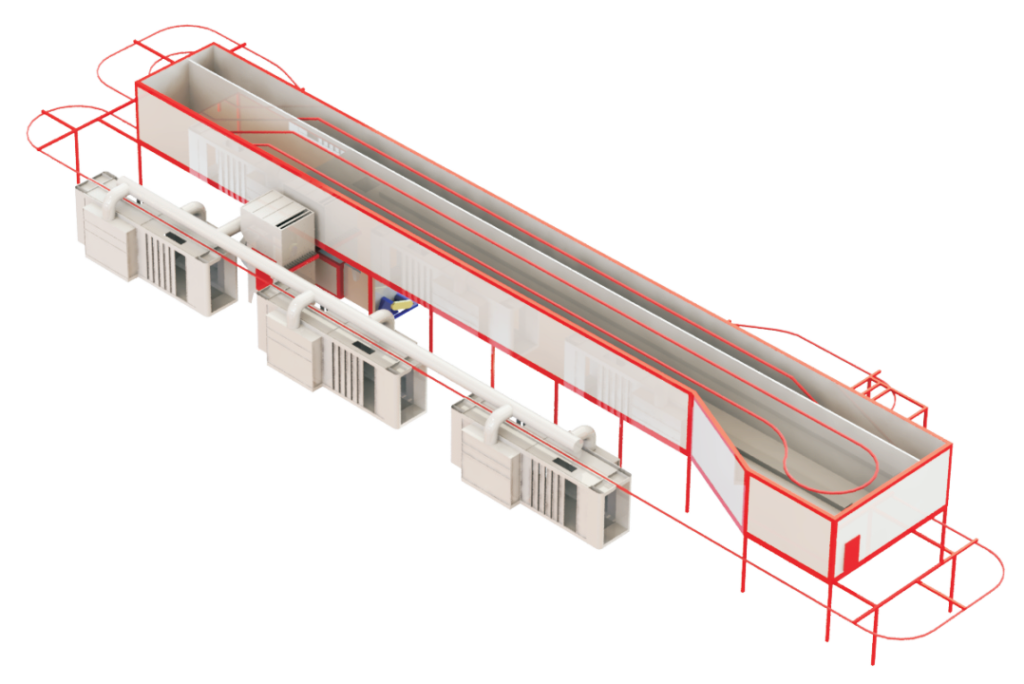
In modern manufacturing, the gap between average production and exceptional production often comes down to one critical piece of equipment: the powder coating oven. From my experience working with manufacturers across cabinet production, furniture manufacturing, and aluminum profile processing, I've seen firsthand how the right oven transforms not just the final product appearance, but the entire production workflow. Yet many facility managers still underestimate its role in overall line optimization.
A powder coating oven is far more than a simple heat chamber. It's the final stage where loose powder particles undergo chemical transformation into a hard, durable, and visually consistent coating through controlled thermal cross-linking. When properly integrated into your production line, it directly determines coating quality, product throughput, energy efficiency, and ultimately, your manufacturing competitiveness.
The challenge isn't choosing any oven—it's choosing the right one for your specific production needs. The difference between a poorly matched oven and an optimized one can mean the difference between scrapping 15% of your daily output due to coating defects and achieving 99% first-pass quality rates.
What Is a Powder Coating Oven and Why Does It Matter for Your Production?
For those new to industrial coating, let me clarify what we mean by a powder coating oven in context of a complete electrostatic powder coating line. It's the equipment that receives workpieces freshly sprayed with electrostatic powder, then applies heat to trigger the chemical curing process that transforms loose powder into a permanent, protective finish.
The workpiece enters the oven after the spray booth. Inside, the oven maintains a precise temperature environment—typically between 350°F and 450°F (177–232°C) depending on your specific powder formulation—while circulating heated air to ensure every surface reaches the required temperature simultaneously. This isn't about "baking it until it looks done." It's about achieving exact thermal profiles that activate the resin system and curing agents embedded in the powder.
Why does this matter to your bottom line? Because an oven that fails to deliver uniform temperature distribution will produce inconsistent coating hardness, adhesion problems, and surface defects that ripple through your inspection process and potentially damage customer relationships. In my projects with cabinet manufacturers in Algeria, we discovered that even a 10°C variation across the oven chamber was causing 8–12% of parts to fail adhesion testing on one side of the chamber.
The oven also directly impacts your production rhythm. If your oven's residence time is too long, you're losing throughput and driving up energy costs. If it's too short, you're undercuring parts and creating field failures. The oven must be precisely matched to your spray booth output, your product mass, and your target daily volume.
How Does a Powder Coating Oven Work?
The powder coating oven operates on a straightforward but precise principle: controlled heat application to trigger permanent cross-linking of the powder coating.
When a freshly powder-coated workpiece enters the oven, the heat begins a three-stage transformation. First, the powder particles melt and flow, evening out into a smooth, level surface. This flow stage is why you see rough powder transform into a glossy, uniform finish. Second, the resin and hardening agents (cross-linkers) inside the powder initiate a chemical reaction—they literally bond together, creating molecular bridges that transform loose particles into solid film. Third, as the workpiece cools, these bonds harden permanently, creating the final protective layer.
The actual oven design is engineered around hot air circulation. We typically use either electric heating elements or gas burners to generate heat, then a circulation fan distributes that heat evenly throughout the chamber. The air enters through carefully positioned inlet ducts, circulates around the workpiece, and exits through outlet ducts. The speed and uniformity of this circulation is critical—poor air movement creates dead zones where parts don't reach target temperature, leading to undercured spots and adhesion failures.
From a factory perspective, the curing profile matters as much as the temperature setpoint. The oven doesn't instantly jump to target temperature; it ramps up, holds the workpiece at peak temperature for a specific duration (typically 10–20 minutes), then allows cool-down. Some advanced ovens can program multiple temperature stages, which is useful if you're processing different product types or powder formulations on the same line.
Control systems have evolved significantly. The basic approach uses thermocouples to measure chamber temperature and trigger heating elements on and off. More sophisticated systems use PLC (programmable logic controller) controllers that not only maintain temperature but also record temperature data, log cycle times, and can trigger alarms if conditions drift outside acceptable ranges. For automotive and high-reliability applications, this documentation becomes essential for traceability.
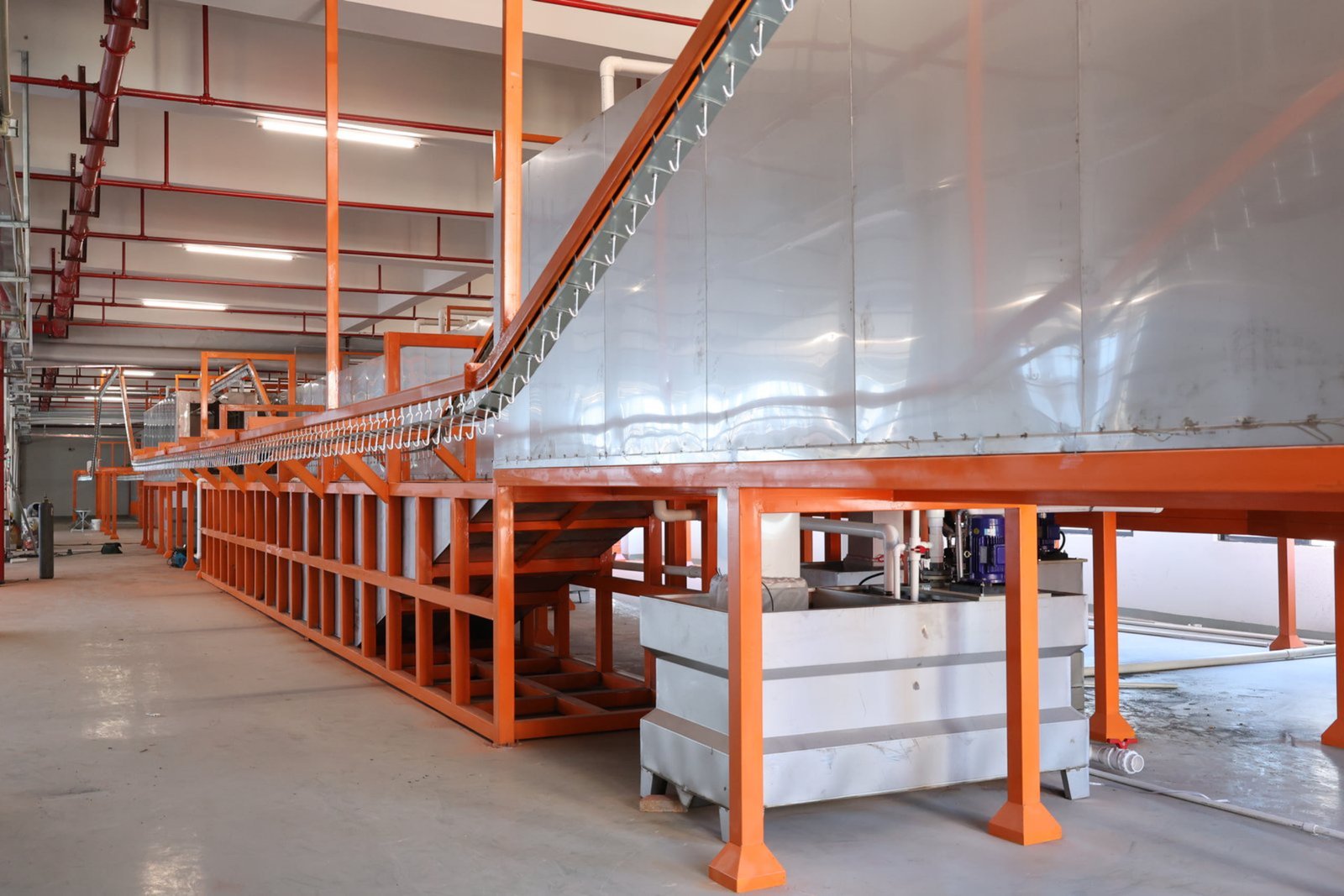
Key Performance Benefits: Quality, Efficiency, and Cost Optimization
How Powder Coating Ovens Improve Product Quality
From my experience commissioning lines in multiple countries, the oven's contribution to quality manifests in three concrete ways.
First is coating hardness and durability. Proper curing—neither undercured nor overly heat-stressed—produces coatings with optimal mechanical properties. The finish resists scratching, impact, and chemical exposure. I've tracked projects where an improperly calibrated oven caused adhesion failures in the field after just months of use, while properly cured parts from the same product line performed flawlessly for years. That's not coincidence; that's the oven doing its job.
Second is surface consistency and appearance. When the oven maintains uniform temperature distribution, every part exiting the line looks identical. Color consistency, gloss level, and surface smoothness become predictable. Conversely, when we've encountered temperature stratification problems—hot spots and cold spots in the chamber—the results are visible: parts from one side of the chamber show different gloss, parts from another side show slight color variation. Furniture manufacturers especially notice this immediately; one client rejected an entire run of outdoor chairs because the color appeared inconsistent under natural light.
Third is adhesion strength. The chemical cross-linking that happens inside the oven directly determines how well the coating bonds to the underlying metal. Too little heat, and the cross-linking is incomplete—the coating peels easily. Too much heat, and you risk degrading the coating matrix itself. The oven must hit the exact "Goldilocks zone" for your specific powder formulation.
Production Capacity and Throughput Gains
An optimized oven directly increases your line capacity in ways that seem counterintuitive to those unfamiliar with integrated production systems.
Most manufacturers assume their spray booth is the bottleneck. But I've audited dozens of lines where the real constraint was actually the oven. If your oven's residence time is 20 minutes but your spray booth can prepare a part every 8 minutes, you're creating a backup. Parts pile up before the oven, consuming floor space and disrupting workflow. The oven becomes the line's pacemaker.
By selecting an oven with the right capacity and residence time matched to your spray booth speed, you eliminate this constraint. I worked with an aluminum profile manufacturer in India who initially purchased an undersized oven. Their spray line could process 40 parts per hour, but the oven could only handle 25 per hour. We replaced it with a properly sized unit, and their throughput jumped to 38 parts per hour—a 50% capacity increase with no changes to the spray booth.
Energy consumption per part also improves. A correctly sized oven running continuously at full capacity is far more energy-efficient than an oversized oven that's only half-full or an undersized oven running in multiple batches. The thermal efficiency improves, and your cost per coated part drops significantly.
Types of Powder Coating Ovens: Choosing the Right Technology for Your Needs
Electric Heating Ovens vs. Gas-Fired vs. Oil-Fired Systems
The heating technology you choose depends on three factors: your local utility availability, your energy cost structure, and your production requirements.
Electric heating ovens use resistance heating elements, typically embedded in the chamber walls or positioned in the air circulation path. Advantages: precise temperature control, easy modulation, no combustion exhaust to manage, lower maintenance, suitable for food-contact or pharmaceutical environments. Disadvantages: high electrical power draw (often 50–100+ kW), higher operating cost per hour in regions where electricity is expensive, potential strain on facility electrical infrastructure. We typically recommend electric ovens for manufacturers in regions with abundant or low-cost power, or where line size is modest (processing fewer than 30 parts per hour).
Gas-fired ovens use natural gas burners to heat air, which then circulates through the chamber. Advantages: lower cost per BTU in most regions, faster ramp-up times (can reach target temperature in 30–40 minutes for an empty chamber vs. 45–60 for electric), lower sustained power draw. Disadvantages: require reliable gas supply and pressure regulation, produce combustion exhaust that must be safely vented, slightly less precise temperature control than electric (requires more sophisticated burner modulation), require annual maintenance and inspection of burner systems. Gas ovens are my recommendation for high-volume production lines or regions where natural gas is cheaper than electricity.
Oil-fired ovens are less common in modern manufacturing but appear in regions where oil is the primary heating fuel. The logic is the same as gas: combustion heat input. Disadvantages include higher maintenance, combustion residue management, and a narrower supplier base for replacement parts.
From a practical standpoint, I advise clients to run a total cost of ownership analysis. Calculate your hourly energy cost under each scenario, multiply by estimated annual operating hours, and compare over a 5–7 year equipment life. Often the "expensive" option upfront becomes the cheapest option long-term.
In one furniture production project I advised on in Turkey, the client initially wanted electric heating (thinking it was "simpler"). But our analysis showed that gas-fired heating would save €18,000 per year in operating costs due to lower gas prices in their region. The higher initial equipment cost paid for itself within 18 months.
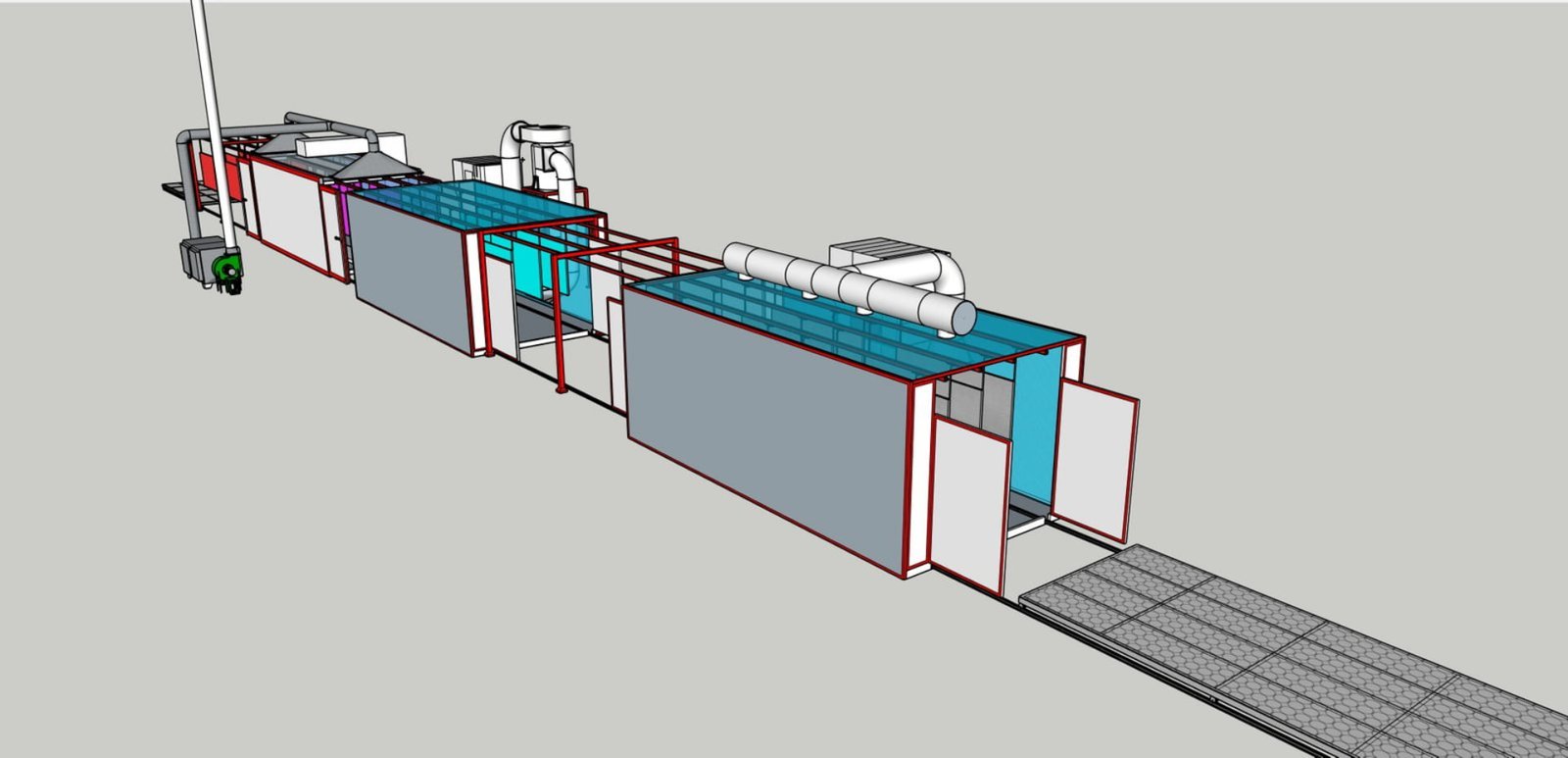
Selecting the Right Powder Coating Oven: Sizing, Specifications, and Integration Considerations
Matching Oven Capacity to Your Production Line
This is where most purchasing decisions go wrong. Many facilities buy an oven based on the largest workpiece they might ever process, not based on their actual daily production target. This leads to over-sized equipment, wasted energy, and poor ROI.
The correct approach starts with three questions:
-
What is your target daily output? Count parts per hour or total mass per day. Be realistic about your actual needs, not theoretical maximum.
-
What is the mass and material of your typical workpiece? Heavier parts and thermally conductive materials (like thick steel) require longer residence times to reach target temperature throughout. A thin aluminum bracket needs 8 minutes; a 50-pound steel cabinet needs 15 minutes.
-
What is your spray booth output rate? If your booth sprays 20 parts per hour, your oven must handle at least 20 parts per hour sustained. If it can't, you'll have queuing backups.
From these three inputs, we calculate the required oven chamber volume and residence time. For a 20 parts-per-hour line with 15-minute residence time, you need capacity for roughly 5 parts in the oven simultaneously. This determines the internal chamber dimensions and air circulation capacity.
From our experience, the most common sizing error is undersizing the oven. Facilities push too much volume through too small a chamber, leading to inadequate temperature uniformity, undercuring on some parts, and eventual quality failures. The second most common error is oversizing for flexibility that never materializes—they pay for a large oven "in case we need it someday," then operate it half-full for years.
My recommendation: size for your realistic current need plus 15–20% headroom for growth or product mix variations. Not 50%, not 100%. This gives you efficiency today and modest room for expansion without stranding capital in idle capacity.
Temperature Control, Flexibility, and Multi-Product Switching
If your production environment requires frequent product changes or different powder formulations with different cure temperatures, oven flexibility matters significantly.
Standard ovens have one fixed setpoint. You set it to 400°F, and it maintains 400°F. If you need to switch to a product that cures at 380°F, you're out of luck—you either waste energy running hot, or you spend 30+ minutes ramping down and stabilizing the new temperature.
Advanced ovens offer programmable temperature profiles. You can store 10 or 20 different cure programs, each with a unique ramp-up rate, peak temperature, hold duration, and controlled cool-down. A touch-screen interface lets the operator select "Program 3: Outdoor Furniture at 390°F" with one button press, and the oven automatically adjusts. This reduces product-changeover time from 45 minutes to maybe 5 minutes.
For facilities that switch products frequently, this capability pays for itself quickly. An aluminum profile facility in India told me they were losing 2–3 hours per shift to oven temperature management. After upgrading to a programmable oven with profile storage, that overhead dropped to 30 minutes per shift. That's nearly 10 productive hours per week recovered.
However, programmable ovens cost 15–25% more than fixed-setpoint ovens. My advice: only invest in this if you genuinely have multiple products with different cure requirements. If you're running 85% the same product, the extra cost isn't justified.
Ensuring Line Harmony: Pre-Treatment, Spray Booth, and Cooling Integration
This is a critical point that I see overlooked in roughly half of oven purchasing decisions: the oven doesn't exist in isolation. It's part of a line, and all segments must be synchronized.
If your pre-treatment cycle produces wet parts that aren't fully dried before spraying, those parts arrive at the oven with embedded moisture. The oven heat then rapidly evaporates that water, creating gas bubbles and voids in the coating—what we call "porosity." The oven isn't the problem; the line balance is.
Similarly, if your spray booth produces parts faster than your oven can accommodate, you have two options: slow down the spray booth (losing throughput), or accept that parts will pile up and sit in ambient conditions, where moisture and dust can contaminate the powder coating before it reaches the oven.
After the oven, cooling matters too. Parts exiting a 400°F oven are too hot to handle and too hot for immediate stacking or packaging. If you don't have adequate cooling infrastructure—forced-air cooling, conveyor staging, or cooling chambers—you either wait for passive cooling (consuming production floor space) or risk burning workers' hands.
In a proper integrated line:
- Pre-treatment cycle produces dry, clean parts.
- Spray booth output rate matches oven input capacity (or there's queuing buffer if needed).
- Oven residence time is stable and predictable.
- Cooling section can accommodate the full oven discharge rate.
- Conveyors and handling between each segment move parts smoothly without delays.
I always recommend modeling the entire line flow before purchasing an oven. Don't buy the oven in isolation; buy it as part of a coordinated system. From our experience, this integration work alone often improves overall line efficiency by 15–25%.
Understanding the True Cost of Ownership: Investment, Energy Consumption, and Maintenance
Initial Investment vs. Long-Term Operating Costs
An oven is one of the highest capital-cost items in a coating line. Prices typically range from $40,000 for a basic electric oven to $150,000+ for a large, high-speed, multi-zone gas-fired system.
Most companies focus on the upfront price and choose the cheapest option. This is a mistake. What matters is the total cost of ownership over 5–7 years of operation.
Calculate it this way:
| Cost Factor | Example Calculation |
|---|---|
| Initial equipment cost | $60,000 |
| Installation, electrical, venting | $15,000 |
| Annual energy consumption | $12,000 |
| Annual maintenance (filters, burner service) | $2,000 |
| Downtime/repair costs (estimated) | $1,500 |
| Total 5-year cost | $152,500 |
Now compare this to a $45,000 unit that consumes 30% more energy and requires more maintenance:
| Cost Factor | Lower-Cost Example |
|---|---|
| Initial equipment + installation | $45,000 + $15,000 = $60,000 |
| Annual energy (30% higher) | $15,600 |
| Annual maintenance (higher wear) | $2,800 |
| Downtime/repair costs | $3,000 |
| Total 5-year cost | $155,000 |
The $45,000 unit and $60,000 unit end up costing nearly the same over 5 years—but the $60,000 unit delivers higher reliability and lower daily operating expenses.
Energy Efficiency and Utility Consumption Factors
Oven energy consumption is often the largest ongoing operational expense after labor. A typical mid-size oven (processing 20–30 parts per hour) consumes 50–80 kW of power if electric, or 50,000–80,000 BTU/hour if gas-fired.
But here's the nuance: nominal consumption is different from actual consumption under real-world conditions.
An electric oven rated at "60 kW" only consumes 60 kW when actively heating. Once the chamber reaches setpoint, the heating elements cycle off. If the oven runs 16 hours per day and spends 8 of those hours maintaining temperature (not actively heating), the actual consumption is closer to 30 kW average.
Gas ovens are more efficient at energy conversion—natural gas has lower cost per BTU than electricity in most regions—but they consume more total energy to achieve the same result due to exhaust heat loss. The trade-off is usually worth it in high-volume operations.
Factors that reduce energy consumption:
- Better insulation: Ovens with thicker insulation and sealed construction lose less heat through walls. This reduces the energy needed to maintain temperature.
- Efficient air circulation: A well-designed fan system circulates air uniformly without wasting energy on turbulence or dead zones.
- Temperature modulation: Ovens that can reduce heating input when chamber temperature is stable use less energy than ovens that cycle on/off constantly.
- Proper sizing: An oven sized to your actual throughput operates more efficiently than an oversized oven running partially full.
From one factory audit I conducted, a 30% improvement in energy efficiency came simply from replacing an older, poorly insulated oven with a modern unit. The new oven cost $65,000, but energy savings of $8,000 per year meant payback in under 8 years—and the facility also gained improved temperature control and reliability.
Maintenance Requirements and Equipment Lifespan
A well-maintained oven typically lasts 10–15 years. Poor maintenance can cut that to 5–7 years. Here's what matters:
Electric ovens require:
- Annual inspection of heating elements for corrosion or cracking.
- Replacement of heating elements every 5–8 years (cost: $2,000–$5,000).
- Insulation inspection for deterioration.
- Thermocouple/sensor replacement every 3–5 years ($500–$1,500).
Gas-fired ovens require:
- Annual burner inspection and cleaning ($800–$1,500).
- Gas line inspection for leaks and pressure regulation check.
- Combustion air intake and exhaust duct cleaning.
- Replacement of burner components every 7–10 years ($3,000–$8,000).
All ovens require:
- Regular door seal inspection and replacement ($200–$600 per seal).
- Interior chamber cleaning to remove coating residue buildup.
- Circulation fan bearing and seal inspection.
- Control system and thermostat calibration annually.
Preventive maintenance typically costs $2,000–$3,500 per year and extends equipment life significantly. Neglecting maintenance leads to thermal drift (oven can no longer hold accurate temperature), increased energy consumption, and eventual catastrophic failure.
One facility I worked with in Algeria skipped maintenance for three years to save money. When the oven finally failed, it cost $18,000 to repair—plus the production downtime. Had they maintained it, they would have spent $6,000–$9,000 total over three years and never experienced downtime.

Infrastructure and Implementation Requirements
Electrical, Gas, and Ventilation Prerequisites
Before purchasing an oven, audit your facility's infrastructure. Many factories discover after equipment arrives that their existing electrical service, gas supply, or ventilation is inadequate.
Electrical requirements:
- Electric ovens typically need a dedicated 3-phase 380V or 480V connection with 60–100 amp capacity.
- Check your facility's main electrical service capacity. If available capacity is insufficient, you'll need to upgrade the entire service—a cost of $10,000–$40,000.
- Ensure proper grounding and surge protection.
- Use heavy-gauge copper wire to minimize voltage drop over long runs.
Gas requirements:
- Natural gas supply must provide adequate pressure (typically 5–10 inches of water column) and volume (measured in BTU/hour).
- Gas line must be sized appropriately; undersized lines cause pressure drop and burner performance issues.
- Install a pressure regulator near the oven inlet to stabilize supply.
- Include a gas shutoff valve for safety and maintenance access.
- In some regions, gas supply codes require licensed plumbers for installation.
Ventilation requirements:
- Electric ovens produce minimal exhaust but require air circulation to prevent heat stratification in the facility. Plan for ducting that draws cool air across the oven exterior.
- Gas-fired ovens must have powered exhaust venting to safely remove combustion gases. Exhaust ductwork typically requires 3–6 inches of diameter and must be properly sealed.
- Vent exits should be at roof level, at least 3 feet above any roof penetrations, to prevent exhaust re-entry.
- In some climates or production scenarios, you may need to temper incoming air (preheat it in winter, cool it in summer) to maintain stable oven performance.
I always recommend having an HVAC engineer review your facility layout before committing to an oven purchase. Undersized electrical service or venting discovered after equipment delivery causes costly delays and retrofits.
Environmental and Regulatory Compliance
Powder coating oven emissions and energy consumption are subject to regulations in most jurisdictions. Compliance requirements vary by region but typically address:
Air quality:
- Gas-fired ovens emit combustion byproducts. Most regions require exhaust to be vented above the roof, not discharged at ground level.
- Particulate matter and volatile organic compounds (VOCs) from the coating process may be captured by baghouse filters or secondary recovery systems downstream of the oven.
- Noise: Oven circulation fans produce noise. Depending on facility location, you may need to add acoustic enclosures or silencers to comply with local noise limits.
Energy efficiency:
- Some jurisdictions require energy audits or certifications for new industrial equipment.
- Equipment labeling or efficiency ratings may be required.
- Tax incentives or rebates may be available for high-efficiency equipment purchases.
Safety:
- Gas-fired ovens must comply with fuel safety codes (ANSI, CSA, or equivalent).
- Electrical systems must meet voltage and grounding standards.
- Emergency shutoff and lockout provisions must be in place.
Before finalizing your oven specification, consult your local environmental and safety agencies or hire a compliance consultant. Discovering regulatory issues after installation is costly and disruptive.
Real-World Applications and Success Stories
Over the past several years, I've overseen oven selection and integration for clients across three continents. The outcomes tell important stories about what works and what doesn't.
A cabinet manufacturer in Algeria needed to replace an aging oven that was causing 12% rejection due to undercured coatings. The facility produced heavy steel cabinet bodies requiring 16–18 minute residence times. The old oven was undersized and suffered severe temperature stratification—parts cooled on one side of the chamber while overcooling on the other. We selected a larger gas-fired oven with improved air circulation design and installed temperature monitoring at multiple chamber points. Post-implementation, rejection rates dropped to 2%, and throughput improved by 18% because parts moved through the line more smoothly without queuing delays. Total investment was $68,000; payback from improved yield alone occurred within 14 months.
A Turkish outdoor furniture company faced inconsistent coating appearance across their product line. They were attempting to run three different furniture types through the same oven, each requiring slightly different cure temperatures. The single-setpoint oven was a compromise—some products undercured, others overstressed. We replaced it with a programmable oven with five stored profiles. Operators could now switch between product types in under 5 minutes and achieve consistent gloss and color. Customer complaints about finish inconsistency dropped 65% in the first quarter post-implementation. The 20% premium cost for the programmable oven paid for itself in reduced warranty claims within 8 months.
An Indian aluminum profile company was constrained by oven capacity. Their spray booth could handle 35 parts per hour, but the oven could only reliably process 22 per hour, creating a severe bottleneck. We analyzed their full line and discovered the issue wasn't just oven size; it was also inadequate cooling infrastructure after the oven. Parts were exiting hot and had nowhere to go, creating backups. We upgraded both the oven (larger capacity) and added a forced-air cooling section. Combined throughput improved from 22 to 31 parts per hour—a 40% increase in line capacity with zero changes to the spray booth. The customer recovered the investment in 18 months through improved utilization.
These scenarios reinforce a consistent pattern: oven performance directly reflects how well it's integrated into the broader production system. Sizing it correctly, matching it to your line's other segments, and maintaining it properly yields dramatic improvements in quality, efficiency, and cost.
More Related Questions
Should I choose electric or gas heating?
Compare total cost of ownership in your region. Run energy cost projections for both options over 5 years. Gas is often cheaper for high-volume lines; electric is simpler for smaller operations or facilities without reliable gas supply.
What temperature do I need for my powder?
Always consult your powder manufacturer's technical data sheet. Cure temperatures typically range from 350°F to 450°F. Too low causes undercuring; too high can degrade the coating. Don't guess—confirm the exact temperature and minimum residence time for your specific formulation.
Can I use a smaller oven and run slower spray?
Not a good strategy. You'd waste spray booth capacity and lose productivity. Size the oven for your realistic target throughput, then size the spray booth accordingly. Mismatched components always create bottlenecks.
How often should I calibrate the oven temperature?
Annually at minimum. More frequently if you're in a high-reliability industry (automotive, aerospace, food contact). Temperature drift of just 5–10°C can cause coating defects. Annual calibration by a technician with certified equipment is essential.
Conclusion
A powder coating oven isn't simply a piece of industrial equipment—it's the final arbiter of your coating quality, production efficiency, and long-term manufacturing cost. The difference between choosing correctly and choosing poorly extends far beyond the purchase price. It affects your daily energy consumption, your rejection rates, your customer satisfaction, and ultimately, your competitive position.
From my factory perspective, the clients who succeed with oven investments are those who take time upfront to accurately assess their needs, understand their line's full workflow, and match the oven to realistic production targets—not theoretical maximums or aspirational growth that never materializes. They also commit to preventive maintenance, which adds minimal cost but multiplies equipment lifespan and reliability.
If you're evaluating a powder coating oven for your facility, I encourage you to look beyond the initial price tag. Calculate true cost of ownership. Verify your infrastructure can support it. Confirm the oven is sized for your actual production rhythm, not oversized for hypothetical future demand. And plan for integration with your existing spray booth, cooling section, and material handling systems.
The oven that seems expensive upfront often becomes the most economical choice over time—and it delivers the quality and reliability that your customers expect.
If you'd like to discuss oven sizing, line integration, or energy optimization for your specific production scenario, I'm available to review your requirements and recommend solutions tailored to your operation. Reach out via WhatsApp at +8618064668879 or email ketumachinery@gmail.com. We can arrange a detailed consultation to explore the right approach for your facility.
 English
  German
  Vietnamese
  French