Powder Coating Equipment: Complete Guide for Importers & Buyers in Middle East & Southeast Asia
If you're a factory owner, procurement manager, or distributor evaluating powder coating lines for metal product manufacturing, this guide cuts through the complexity. We've reviewed real supplier capabilities, installation practices, and operating costs across cabinet, furniture, and aluminum profile applications to help you build a practical shortlist. Our focus is on what actually works in production—not marketing claims.
 )
)
What Is Powder Coating Equipment and Why It Matters for Your Production
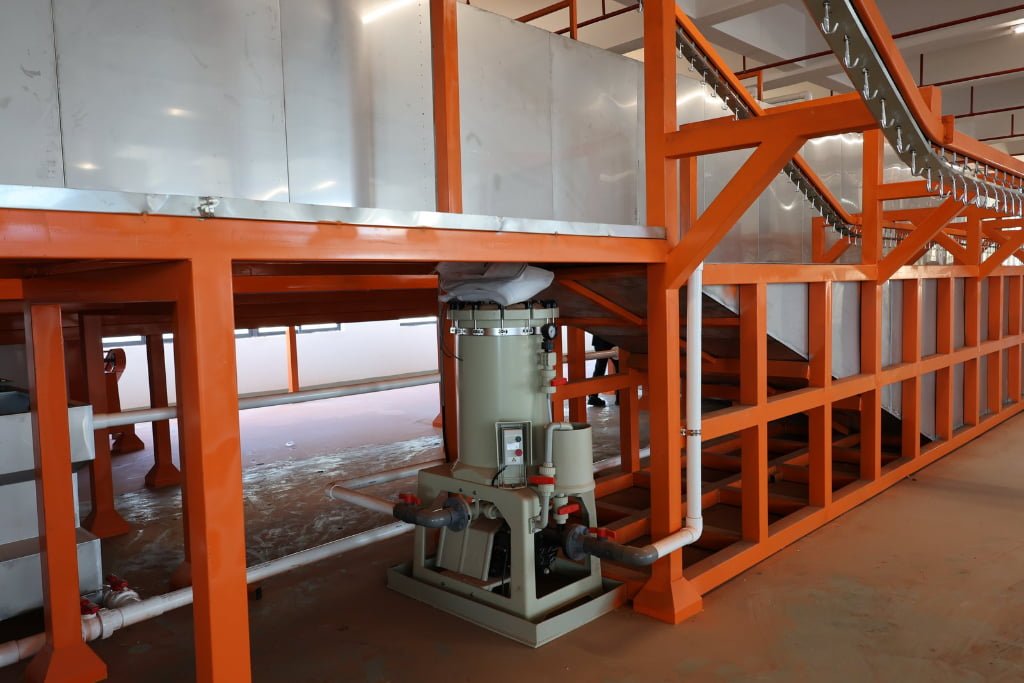
Powder coating equipment[^1] is not just a spray gun. It's a complete production system that integrates pretreatment, electrostatic application, powder recovery, and thermal curing—each part directly affecting your final product quality and operating costs.
Unlike liquid coating, powder systems achieve superior corrosion protection, better surface consistency, and lower material waste. But only if each component works together properly. We've seen factories buy high-end spray systems that underperformed because their pretreatment section was undersized, or they chose a curing oven without considering their actual workpiece throughput. These mismatches are expensive.
For manufacturers in the Middle East and Southeast Asia, the challenge is sharper: you need equipment that handles local electrical standards, meets regional environmental regulations, supports your production volume, and can be reliably serviced. A cheap line from an unfamiliar supplier often means costly downtime when problems arise.
Kernkomponenten einer vollständigen Pulverbeschichtungslinie
Pre-treatment System and Its Impact on Coating Quality
This is where most projects fail. Many buyers skip detailed evaluation of pretreatment, assuming the spray and curing stages carry all the weight. In reality, if oil, rust, or mill scale isn't fully removed and the surface isn't properly conditioned, your best spray system and curing oven cannot compensate. Coating adhesion will suffer, corrosion protection will degrade early, and your products will fail in the field.
A proper pretreatment line includes degreasing, rinsing, rust removal (for steel), optional pickling, rinsing again, and surface conditioning (phosphate or zirconium-based). Each stage requires proper temperature control, chemical concentration monitoring, and residence time. For cabinet and enclosure manufacturers, this is non-negotiable. For outdoor furniture, weak pretreatment becomes visible within months as adhesion loss and rust bloom.
Equipment capacity matters too. If your pretreatment can only handle 10 meters per minute but your spray section is sized for 15 m/min, you'll have bottlenecks. We recommend sizing pretreatment at 110% of target throughput to maintain consistent process windows.
Spray Application System: Types and Selection Criteria
Electrostatic powder spray[^2] is the industry standard for industrial metal coating. The system uses high-voltage electrical fields to attract negatively charged powder particles to grounded workpieces, creating uniform coverage with minimal overspray waste.
Your choice comes down to a few critical variables:
— Spray gun type: Manual booths (labor-intensive, good for small batches), reciprocating automatic systems (medium complexity, flexible), and fully automated spray heads (best for high volume, tight space requirements).
— Powder type compatibility: Some systems are optimized for epoxy, others for polyester or polyurethane. Verify that your target powder brands work reliably with the proposed spray logic.
— Coverage consistency: A well-tuned system achieves even layer thickness across curved surfaces, sharp edges, and recessed areas. Poor spray design leaves uncoated spots or thick accumulation at corners, both quality failures.
— Faraday-Käfig-Effekt: Recessed areas and inside corners are naturally harder to coat. Some spray designs include secondary electrodes or angled nozzles to improve coverage in these zones.
For cabinet production, a reciprocating spray frame with 2-4 parallel spray guns handles most geometry well. For aluminum profiles, consider whether you need precise thickness control across the profile cross-section—some suppliers offer spray systems optimized for this. For furniture, softer materials and more varied shapes often benefit from rotary or angled spray positioning.
Curing Oven and Temperature Control Standards
Das Aushärtungsofen[^3] crosslinks powder resin, turning raw powder particles into a hard, durable finish. Temperature and residence time must match the specific powder chemistry. Most industrial powders cure between 180–220°C, with dwell times of 8–25 minutes depending on part thickness and oven loading.
Key selection points:
— Heating method: Electric heating is cleaner and easier to control; gas heating is more cost-effective at high throughput but requires proper ventilation and combustion air supply.
— Temperature uniformity: Parts at the entrance, center, and exit should see the same effective curing temperature (±5°C tolerance is realistic). Poor uniformity creates soft spots or over-curing on edges.
— Oven insulation and efficiency: A well-insulated oven reduces energy loss and runs cooler on the exterior (worker safety). Expect 30%+ energy savings between a budget curing oven and a premium insulated one.
— Conveyor speed matching: Oven residence time is conveyor speed × oven length. If your spray section runs at 10 m/min, your oven must be sized to deliver 10–15 minutes dwell. Undersized ovens create short-dwell problems; oversized ovens waste space and energy.
For cabinet factories, a 6–10 meter electric or gas oven typically handles 15–25 m/min throughput. For furniture, smaller batch processing might use a 4–6 meter oven. For aluminum profiles, continuous high-speed lines may require 12+ meter ovens to maintain proper dwell at high speeds.
Powder Recovery System and Efficiency Optimization
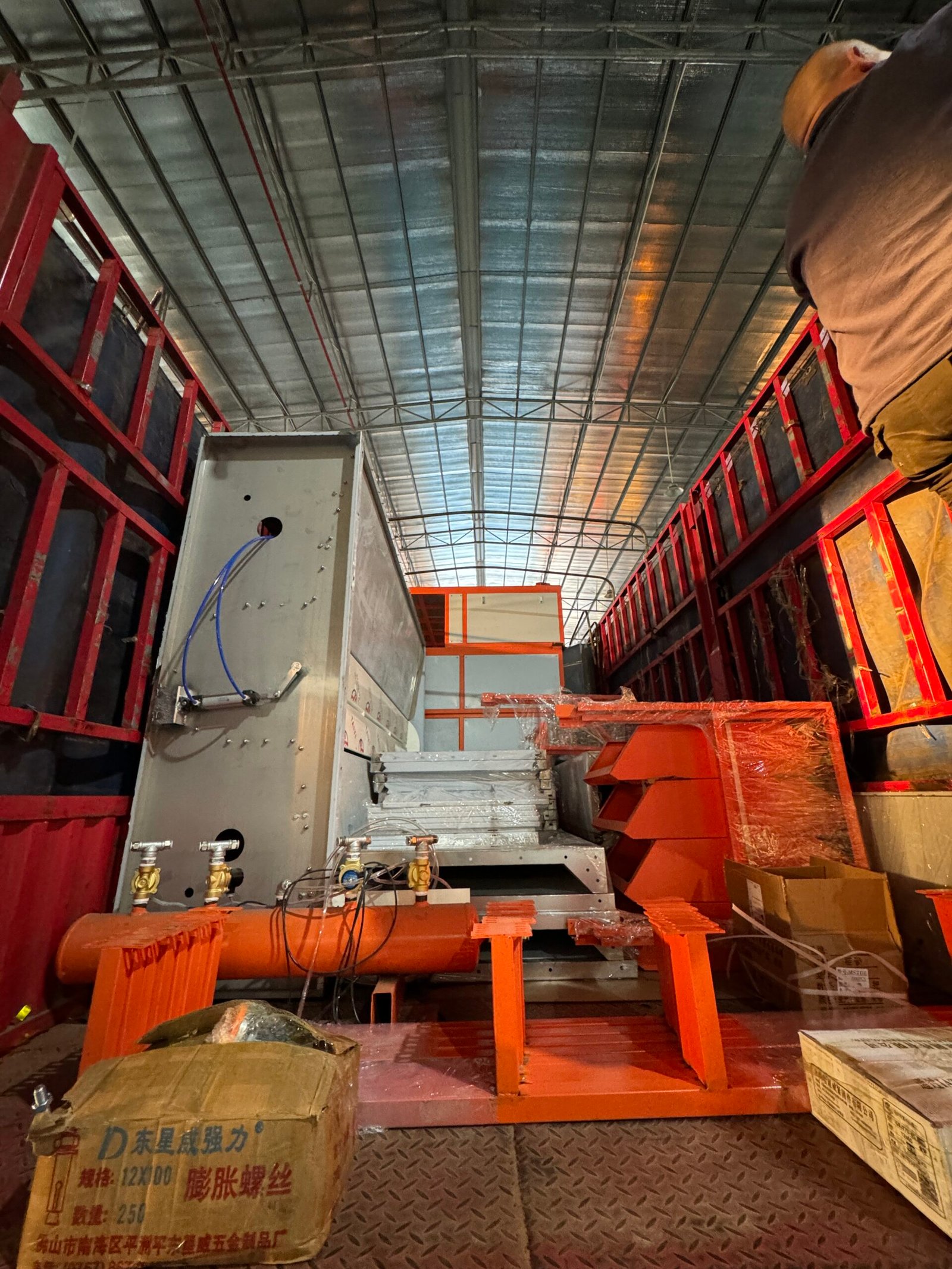
This component directly hits your bottom line. Powder sprayed but not deposited on the part becomes waste. A good recovery system captures 85–95% of overspray powder and recycles it back into the spray booth. Poor recovery loses 20–40% of purchased powder to the air filtration system.
cURL Too many subrequests by single Worker invocation. To configure this limit, refer to https://developers.cloudflare.com/workers/wrangler/configuration/#limits
— cURL Too many subrequests by single Worker invocation. To configure this limit, refer to https://developers.cloudflare.com/workers/wrangler/configuration/#limitscURL Too many subrequests by single Worker invocation. To configure this limit, refer to https://developers.cloudflare.com/workers/wrangler/configuration/#limits.
— cURL Too many subrequests by single Worker invocation. To configure this limit, refer to https://developers.cloudflare.com/workers/wrangler/configuration/#limitscURL Too many subrequests by single Worker invocation. To configure this limit, refer to https://developers.cloudflare.com/workers/wrangler/configuration/#limits.
— cURL Too many subrequests by single Worker invocation. To configure this limit, refer to https://developers.cloudflare.com/workers/wrangler/configuration/#limitscURL Too many subrequests by single Worker invocation. To configure this limit, refer to https://developers.cloudflare.com/workers/wrangler/configuration/#limits.
cURL Too many subrequests by single Worker invocation. To configure this limit, refer to https://developers.cloudflare.com/workers/wrangler/configuration/#limits.
cURL Too many subrequests by single Worker invocation. To configure this limit, refer to https://developers.cloudflare.com/workers/wrangler/configuration/#limits
cURL Too many subrequests by single Worker invocation. To configure this limit, refer to https://developers.cloudflare.com/workers/wrangler/configuration/#limits
cURL Too many subrequests by single Worker invocation. To configure this limit, refer to https://developers.cloudflare.com/workers/wrangler/configuration/#limitscURL Too many subrequests by single Worker invocation. To configure this limit, refer to https://developers.cloudflare.com/workers/wrangler/configuration/#limits.
cURL Too many subrequests by single Worker invocation. To configure this limit, refer to https://developers.cloudflare.com/workers/wrangler/configuration/#limitscURL Too many subrequests by single Worker invocation. To configure this limit, refer to https://developers.cloudflare.com/workers/wrangler/configuration/#limits.
cURL Too many subrequests by single Worker invocation. To configure this limit, refer to https://developers.cloudflare.com/workers/wrangler/configuration/#limitscURL Too many subrequests by single Worker invocation. To configure this limit, refer to https://developers.cloudflare.com/workers/wrangler/configuration/#limits.
cURL Too many subrequests by single Worker invocation. To configure this limit, refer to https://developers.cloudflare.com/workers/wrangler/configuration/#limitscURL Too many subrequests by single Worker invocation. To configure this limit, refer to https://developers.cloudflare.com/workers/wrangler/configuration/#limits.
cURL Too many subrequests by single Worker invocation. To configure this limit, refer to https://developers.cloudflare.com/workers/wrangler/configuration/#limitscURL Too many subrequests by single Worker invocation. To configure this limit, refer to https://developers.cloudflare.com/workers/wrangler/configuration/#limits.
cURL Too many subrequests by single Worker invocation. To configure this limit, refer to https://developers.cloudflare.com/workers/wrangler/configuration/#limitscURL Too many subrequests by single Worker invocation. To configure this limit, refer to https://developers.cloudflare.com/workers/wrangler/configuration/#limits.
7. Unload & Inspection: Cooled parts are removed. A quick visual check catches any major defects (uncoated spots, sags, edge buildup). Quality-conscious facilities also measure coating thickness and adhesion periodically.
System integration means all these stages work at matching speeds. If spray is faster than curing, parts pile up in the oven entrance, causing crowding and uneven curing. If pretreatment is slower than spray, the booth runs intermittently and humidity builds up.
From our experience, we've found that the most successful installations start with honest throughput assumptions—not optimistic targets. A factory aiming for 15 m/min but actually running 12 m/min steady-state is better served by a system designed for 12–14 m/min, with headroom for temporary peaks. Oversizing wastes capital; undersizing creates constant bottlenecks.
Powder Coating Equipment Requirements by Product Type
Cabinet and Metal Box Coating: Consistency and Corrosion Protection
Cabinet and electrical enclosure manufacturers face strict demands. Products are often specified for outdoor installation (telecom boxes, power distribution cabinets, server racks), where coating failure means equipment failure. Additionally, these products have sharp edges, internal cavities, and defined geometries—coating must be uniform without sags or thin spots.
Wichtige Anforderungen:
— Pretreatment must be robust (heavy degreasing, full pickling on bare steel). Surface defects are unacceptable.
— Spray system must reach internal cavities and upper edges evenly. Some cabinet designs benefit from multi-angle spray positioning or reciprocating frames.
— Coating thickness specification is typically 60–100 microns (2–4 mils). Measurement on curved edges and flat surfaces must both meet spec.
— Curing must be complete; any soft spot leads to field failures. Temperature uniformity and residence time are non-negotiable.
— Edge coverage is particularly critical. Bare metal at edges promotes corrosion, especially if the cabinet is used in coastal or industrial environments.
For a typical cabinet line (dimensions up to 2m × 1m × 0.5m, throughput target 20–30 cabinets per hour), a pretreatment system 3–4 meters long, a spray section with 2–3 gun stations, and an 8–10 meter curing oven are realistic. Electric curing is common in regions with stable power; gas heating is chosen where energy cost is critical and ventilation is available.
One often-overlooked factor: cabinet weight. A fully loaded cabinet can weigh 150+ kg. Your conveyor system must support this without sagging or binding. We've seen projects where a supplier underestimated load capacity, leading to conveyor stress and misalignment mid-production life.
Furniture Coating: Surface Finish and Weather Resistance
Metal furniture (outdoor tables, chairs, frames for padded seating) has different demands. The coating is visible, so surface quality (smoothness, color uniformity, gloss) directly affects market appeal. Additionally, outdoor exposure means the coating must resist UV fade[^4], moisture, salt spray (if coastal), and physical abrasion.
Wichtige Anforderungen:
— Pretreatment is still essential but slightly less aggressive than cabinet work. Aluminum furniture often starts with anodize-friendly chemistry; steel furniture gets standard degreasing and light pickling.
— Spray must deliver a fine, smooth finish without orange-peel texture or uneven gloss. Some spray systems are better than others at producing the fine atomization furniture buyers expect.
— Powder selection is often polyester (good UV resistance, gloss retention) or polyurethane (enhanced durability, color stability). The curing profile may differ from epoxy-based systems.
— Edge and corner appearance matters. Sags, drips, or heavy accumulation at edges is visible and unacceptable in furniture.
— Post-cure cooling and inspection are more critical because defects are visible and affect sales.
Furniture production often runs smaller batches with more variety than cabinet work. A flexible line with adjustable conveyor spacing, a spray system that handles varied geometries, and a curing oven with good temperature distribution works well. Throughput might be 10–20 pieces per hour (depending on size), which is lower than cabinet production but requires higher surface quality.
One strategic insight: outdoor furniture buyers increasingly ask about coating durability test results (salt spray, UV resistance, adhesion). If your supplier can demonstrate test data or provide reference customers' long-term feedback, that builds confidence. Generic claims about "excellent outdoor durability" don't convert; real performance data does.
Aluminum Profile Coating: Precision and Continuous Capacity
Aluminum profile coating is the most technically demanding. Profiles are long, continuous extrusions (3–6 meters), often with complex cross-sections. Production runs high volume at continuous speed. Coating thickness must be tightly controlled (often ±10 microns tolerance), and appearance defects are easily visible on the profile's reflective surface.
Wichtige Anforderungen:
— Pretreatment must use aluminum-compatible chemistry (no strong pickling; typically chromate or zirconium-based conversion coatings[^5]). Contamination from previous steel batches is a serious problem.
— Conveyor must support the profile without deformation. Aluminum profiles are relatively lightweight but long, requiring stable support at multiple points to avoid deflection or sag.
— Spray must apply coating at consistent thickness along the entire length and across all profile surfaces. This requires sophisticated spray gun positioning or multiple guns per profile.
— Powder thickness control is tight. If the oven is too hot or the dwell too long, the powder can sag on internal surfaces. If too cool or short, it won't fully cure, affecting adhesion and durability.
— Curing oven must accommodate profile length (up to 6 meters) with stable belt speed and uniform temperature from entrance to exit. Long ovens are expensive; poor uniformity causes variable quality.
A typical aluminum profile line runs at 15–25 m/min, producing 3–4 linear kilometers of coated profile per 8-hour shift. This requires a long pretreatment section (to maintain process stability at high speed), a highly efficient spray system (usually 3+ guns with automated positioning), and a 12–14 meter curing oven with excellent temperature control.
Energy consumption is significant on these lines. The oven is running constantly, heating long profiles in a confined space. A well-designed system recovers waste heat; a poorly designed one wastes 40%+ of fuel. Over a year of operation, this difference is thousands of dollars.
From our project experience, aluminum profile customers are the most detail-oriented. They measure coating thickness with eddy-current gauges, they inspect for color uniformity and gloss, they test adhesion with cross-hatch adhesion testers. If your supplier cannot meet these specific requirements and provide supporting test data, the project won't succeed.
Production Capacity, Efficiency, and Real Operational Costs
cURL Too many subrequests by single Worker invocation. To configure this limit, refer to https://developers.cloudflare.com/workers/wrangler/configuration/#limits
cURL Too many subrequests by single Worker invocation. To configure this limit, refer to https://developers.cloudflare.com/workers/wrangler/configuration/#limits.
cURL Too many subrequests by single Worker invocation. To configure this limit, refer to https://developers.cloudflare.com/workers/wrangler/configuration/#limits cURL Too many subrequests by single Worker invocation. To configure this limit, refer to https://developers.cloudflare.com/workers/wrangler/configuration/#limits.
cURL Too many subrequests by single Worker invocation. To configure this limit, refer to https://developers.cloudflare.com/workers/wrangler/configuration/#limits cURL Too many subrequests by single Worker invocation. To configure this limit, refer to https://developers.cloudflare.com/workers/wrangler/configuration/#limits.
cURL Too many subrequests by single Worker invocation. To configure this limit, refer to https://developers.cloudflare.com/workers/wrangler/configuration/#limits cURL Too many subrequests by single Worker invocation. To configure this limit, refer to https://developers.cloudflare.com/workers/wrangler/configuration/#limits.
cURL Too many subrequests by single Worker invocation. To configure this limit, refer to https://developers.cloudflare.com/workers/wrangler/configuration/#limits.
cURL Too many subrequests by single Worker invocation. To configure this limit, refer to https://developers.cloudflare.com/workers/wrangler/configuration/#limits
cURL Too many subrequests by single Worker invocation. To configure this limit, refer to https://developers.cloudflare.com/workers/wrangler/configuration/#limits
cURL Too many subrequests by single Worker invocation. To configure this limit, refer to https://developers.cloudflare.com/workers/wrangler/configuration/#limits
cURL Too many subrequests by single Worker invocation. To configure this limit, refer to https://developers.cloudflare.com/workers/wrangler/configuration/#limits
cURL Too many subrequests by single Worker invocation. To configure this limit, refer to https://developers.cloudflare.com/workers/wrangler/configuration/#limits
cURL Too many subrequests by single Worker invocation. To configure this limit, refer to https://developers.cloudflare.com/workers/wrangler/configuration/#limits.
cURL Too many subrequests by single Worker invocation. To configure this limit, refer to https://developers.cloudflare.com/workers/wrangler/configuration/#limits.
cURL Too many subrequests by single Worker invocation. To configure this limit, refer to https://developers.cloudflare.com/workers/wrangler/configuration/#limits
cURL Too many subrequests by single Worker invocation. To configure this limit, refer to https://developers.cloudflare.com/workers/wrangler/configuration/#limits.
cURL Too many subrequests by single Worker invocation. To configure this limit, refer to https://developers.cloudflare.com/workers/wrangler/configuration/#limits. cURL Too many subrequests by single Worker invocation. To configure this limit, refer to https://developers.cloudflare.com/workers/wrangler/configuration/#limits.
cURL Too many subrequests by single Worker invocation. To configure this limit, refer to https://developers.cloudflare.com/workers/wrangler/configuration/#limits.
cURL Too many subrequests by single Worker invocation. To configure this limit, refer to https://developers.cloudflare.com/workers/wrangler/configuration/#limits. Unregulated, inefficient air systems can double this. Regular filter maintenance and pressure optimization are overlooked but effective cost-saving measures.
Powder waste directly reduces margin. If your recovery system is 80% efficient, you lose 20% of purchased powder. If 92% efficient, loss drops to 8%. On a line consuming 10 kg/hr of powder (fairly typical for mid-size output), that's 2 kg/hr wasted at 80% recovery vs. 0.8 kg/hr at 92% recovery—a difference of 1.2 kg/hr or roughly 10,000 kg/year. At $5/kg, that's $50,000 annual waste. A supplier quoting a cheaper line may be hiding inadequate powder recovery.
Pretreatment chemical costs are steady-state and often underestimated. Degreaser, pickling acid, converter (phosphate or zirconium), and rinse water add up. Proper chemical management (tank level sensors, concentration monitoring, regular analysis) optimizes spend without sacrificing quality.
Labor is the third major cost bucket. A cabinet line might require 2–3 operators per shift (loading, unloading, basic inspection). A furniture line with complex geometry might need 3–4. Aluminum profile lines often run with 1–2 operators because feeding is automated, but require periodic technical adjustments. Higher automation upfront reduces long-term labor cost, especially in regions where labor rates are rising.
A realistic 5-year operating cost model for a mid-size cabinet line:
— Equipment investment: $250,000–400,000
— Annual energy: $30,000–40,000
— Annual powder waste: $15,000–25,000 (depends on recovery efficiency)
— Annual maintenance/parts: $8,000–15,000
— Annual labor: $40,000–80,000 (depending on shift count and regional rates)
— Total annual operating cost: $93,000–160,000
Over 5 years, total cost of ownership is $750,000–1,200,000. If the line processes 50,000 parts annually, cost per part is $15–24. Customers expect this margin to be built into their product pricing; if it isn't, the business won't be sustainable.
Maintenance Requirements and Downtime Factors
Well-maintained lines run reliably for 8–10 years. Neglected lines accumulate problems within 3–4 years.
Daily/shift-level maintenance:
— Check conveyor chain tension and lubrication.
— Inspect spray guns for powder buildup; clean as needed.
— Monitor oven door seals for heat loss.
— Check air pressure and filter status.
— Visually inspect parts for consistent coating quality.
Weekly maintenance:
— Deep clean spray booth and recovery system.
— Check pretreatment tank levels and chemical concentration.
— Inspect electrical connections and sensor operation.
— Test temperature sensors and curing oven thermostat accuracy.
Monthly maintenance:
— Flush and refill spray gun cartridges and nozzles.
— Check conveyor sprockets for wear.
— Measure oven uniformity with thermal imaging or temperature probes.
— Inspect insulation integrity on ovens and pipes.
Quarterly/annual maintenance:
— Full conveyor bearing and drive inspection.
— Oven burner cleaning and adjustment (gas systems).
— Cartridge filter replacement or deep cleaning.
— Electrical panel inspection and terminal tightening.
cURL Too many subrequests by single Worker invocation. To configure this limit, refer to https://developers.cloudflare.com/workers/wrangler/configuration/#limits.
cURL Too many subrequests by single Worker invocation. To configure this limit, refer to https://developers.cloudflare.com/workers/wrangler/configuration/#limits.
cURL Too many subrequests by single Worker invocation. To configure this limit, refer to https://developers.cloudflare.com/workers/wrangler/configuration/#limits
cURL Too many subrequests by single Worker invocation. To configure this limit, refer to https://developers.cloudflare.com/workers/wrangler/configuration/#limits.
cURL Too many subrequests by single Worker invocation. To configure this limit, refer to https://developers.cloudflare.com/workers/wrangler/configuration/#limits.
cURL Too many subrequests by single Worker invocation. To configure this limit, refer to https://developers.cloudflare.com/workers/wrangler/configuration/#limits.
cURL Too many subrequests by single Worker invocation. To configure this limit, refer to https://developers.cloudflare.com/workers/wrangler/configuration/#limits.
cURL Too many subrequests by single Worker invocation. To configure this limit, refer to https://developers.cloudflare.com/workers/wrangler/configuration/#limits.
cURL Too many subrequests by single Worker invocation. To configure this limit, refer to https://developers.cloudflare.com/workers/wrangler/configuration/#limits
cURL Too many subrequests by single Worker invocation. To configure this limit, refer to https://developers.cloudflare.com/workers/wrangler/configuration/#limits
cURL Too many subrequests by single Worker invocation. To configure this limit, refer to https://developers.cloudflare.com/workers/wrangler/configuration/#limits.
cURL Too many subrequests by single Worker invocation. To configure this limit, refer to https://developers.cloudflare.com/workers/wrangler/configuration/#limits
cURL Too many subrequests by single Worker invocation. To configure this limit, refer to https://developers.cloudflare.com/workers/wrangler/configuration/#limits cURL Too many subrequests by single Worker invocation. To configure this limit, refer to https://developers.cloudflare.com/workers/wrangler/configuration/#limits.
cURL Too many subrequests by single Worker invocation. To configure this limit, refer to https://developers.cloudflare.com/workers/wrangler/configuration/#limits cURL Too many subrequests by single Worker invocation. To configure this limit, refer to https://developers.cloudflare.com/workers/wrangler/configuration/#limits.
cURL Too many subrequests by single Worker invocation. To configure this limit, refer to https://developers.cloudflare.com/workers/wrangler/configuration/#limits cURL Too many subrequests by single Worker invocation. To configure this limit, refer to https://developers.cloudflare.com/workers/wrangler/configuration/#limits.
cURL Too many subrequests by single Worker invocation. To configure this limit, refer to https://developers.cloudflare.com/workers/wrangler/configuration/#limits cURL Too many subrequests by single Worker invocation. To configure this limit, refer to https://developers.cloudflare.com/workers/wrangler/configuration/#limits.
cURL Too many subrequests by single Worker invocation. To configure this limit, refer to https://developers.cloudflare.com/workers/wrangler/configuration/#limits cURL Too many subrequests by single Worker invocation. To configure this limit, refer to https://developers.cloudflare.com/workers/wrangler/configuration/#limits.
From our experience, Middle East facilities often have robust electrical grids but less tolerance for installation errors. Southeast Asia regions may have more variable power quality, requiring additional stabilization investment. Plan electrical infrastructure upgrades well before equipment delivery; they are often the longest-lead items.
Environmental Compliance and Emission Control Standards
Powder coating is far cleaner than liquid spray, but it's not emission-free. Pretreatment tanks release fumes; curing ovens produce water vapor and volatile organic compounds (VOCs) from powder resin thermal breakdown.
Pretreatment ventilation: Degreasing and pickling tanks should have local exhaust hoods with ducting to an external stack. Spray booth pretreatment zones need similar capture. Inadequate ventilation exposes workers to chemical fumes and creates legal liability.
Spray booth containment: The spray booth must be enclosed with negative pressure (air drawn out, not leaking into the factory). This contains overspray and prevents powder escape. Booth exhaust requires filtration (cartridge or baghouse) to capture residual powder before the air is vented. A poorly designed booth disperses powder throughout the facility, coating machinery and contaminating other products.
Curing oven exhaust: Gas-fired ovens must have proper combustion air intake and flue gas exhaust to atmosphere. Improper venting creates carbon monoxide risk and inefficient combustion. Electric ovens are cleaner but still release water vapor; ventilation helps manage humidity.
Powder recovery and waste: Reclaimed powder from recovery systems has finite reuse life (typically 3–5 recirculation cycles). Spent powder is classified as industrial waste and must be disposed of according to local regulations. Some regions require hazardous waste handling; others allow landfill. Budget $200–500/ton for powder waste disposal.
Regional standards:
— UAE: Follows stringent environmental regulations; many facilities are in industrial zones with mandatory air quality monitoring.
— Saudi Arabia: Stricter enforcement in recent years; emissions compliance is increasingly important.
— Southeast Asia (Thailand, Vietnam, Indonesia): Standards vary by location; Tier-2 cities often have less enforcement but are tightening regulations.
A proper powder coating line with full environmental controls (spray booth filtration, oven exhaust treatment, pretreatment ventilation, waste management) adds roughly 15–20% to project cost. It is not optional—it's regulatory requirement and worker safety foundation.
Factory Space, Ventilation, and Equipment Footprint
A powder coating line requires more floorspace than it appears.
Line footprint: A pretreatment section (3–5 meters) + spray booth (2–3 meters) + curing oven (8–12 meters) + unload area (2 meters) totals 15–25 meters of linear space. Width depends on conveyor design (typically 1.5–2.5 meters). That's roughly 200–300 square meters for a mid-size cabinet line, not including support areas.
Support areas around the line:
— Powder storage (1–2 meters): Bags or drums of powder should be stored in a cool, dry room (not in the production area due to contamination risk).
— Chemical storage (2–3 meters): Degreaser, pickling acid, converter, rinse water—each in separate, labeled containers with secondary containment trays.
— Waste collection (1–2 meters): Spent powder bin, spent pretreatment sludge container, waste liquid disposal.
— Control room or operator station (10–15 square meters): For electrical panels, controls, operator workstation.
— Tool & spare parts storage (10–20 square meters): For maintenance items, hoses, fuses, spray gun tips.
Total facility space needed: roughly 250–400 square meters for a mid-size line, including all support areas. In expensive urban markets (Dubai, Bangkok), this is a major cost constraint. Some facilities compress layout; this risks bottlenecks and maintenance access issues.
Ventilation and air handling: A properly operating spray booth and oven exhaust should remove 50,000–100,000 cubic meters per hour of air, depending on line size. This creates negative pressure in the spray area and ensures powder containment. Facilities need 3–5 complete air changes per hour in the coating area. In hot climates, this requires powerful ventilation fans and potentially air cooling (to avoid excessive heat in the spray zone).
Utilities infrastructure:
— Water: Pretreatment requires 2–5 cubic meters per hour (depending on design efficiency). This must be metered and monitored.
— Drainage: Spent pretreatment liquid (containing oils, metal ions, phosphate sludge) cannot be discharged to municipal sewers without treatment. Budget for a treatment system or contract with a licensed waste handler.
— Compressed air: 10+ kW compressor + air treatment (dryer, filters) must be in a separate room (noisy, hot).
— Electrical: As discussed, robust distribution and grounding infrastructure.
A well-planned facility layout separates chemical storage, production, and waste areas. It allocates dedicated ventilation zones and utility routing. Poor layout compromises both safety and efficiency. Before signing a lease or committing space, have the supplier (or an independent engineer) verify that your facility can accommodate the line safely and efficiently.
How to Evaluate and Select the Right Supplier
Supplier Credentials and Local Support Capability
A cheap line from an unknown overseas manufacturer can be tempting. But when problems arise 6 months after installation, you realize the risk.
cURL Too many subrequests by single Worker invocation. To configure this limit, refer to https://developers.cloudflare.com/workers/wrangler/configuration/#limits
cURL Too many subrequests by single Worker invocation. To configure this limit, refer to https://developers.cloudflare.com/workers/wrangler/configuration/#limits cURL Too many subrequests by single Worker invocation. To configure this limit, refer to https://developers.cloudflare.com/workers/wrangler/configuration/#limits.
cURL Too many subrequests by single Worker invocation. To configure this limit, refer to https://developers.cloudflare.com/workers/wrangler/configuration/#limits ISO 9001cURL Too many subrequests by single Worker invocation. To configure this limit, refer to https://developers.cloudflare.com/workers/wrangler/configuration/#limits.
cURL Too many subrequests by single Worker invocation. To configure this limit, refer to https://developers.cloudflare.com/workers/wrangler/configuration/#limits cURL Too many subrequests by single Worker invocation. To configure this limit, refer to https://developers.cloudflare.com/workers/wrangler/configuration/#limits
cURL Too many subrequests by single Worker invocation. To configure this limit, refer to https://developers.cloudflare.com/workers/wrangler/configuration/#limits cURL Too many subrequests by single Worker invocation. To configure this limit, refer to https://developers.cloudflare.com/workers/wrangler/configuration/#limits.
cURL Too many subrequests by single Worker invocation. To configure this limit, refer to https://developers.cloudflare.com/workers/wrangler/configuration/#limits cURL Too many subrequests by single Worker invocation. To configure this limit, refer to https://developers.cloudflare.com/workers/wrangler/configuration/#limits.
cURL Too many subrequests by single Worker invocation. To configure this limit, refer to https://developers.cloudflare.com/workers/wrangler/configuration/#limits. cURL Too many subrequests by single Worker invocation. To configure this limit, refer to https://developers.cloudflare.com/workers/wrangler/configuration/#limits.
cURL Too many subrequests by single Worker invocation. To configure this limit, refer to https://developers.cloudflare.com/workers/wrangler/configuration/#limits
- cURL Too many subrequests by single Worker invocation. To configure this limit, refer to https://developers.cloudflare.com/workers/wrangler/configuration/#limits cURL Too many subrequests by single Worker invocation. To configure this limit, refer to https://developers.cloudflare.com/workers/wrangler/configuration/#limits.
- cURL Too many subrequests by single Worker invocation. To configure this limit, refer to https://developers.cloudflare.com/workers/wrangler/configuration/#limits cURL Too many subrequests by single Worker invocation. To configure this limit, refer to https://developers.cloudflare.com/workers/wrangler/configuration/#limits.
- cURL Too many subrequests by single Worker invocation. To configure this limit, refer to https://developers.cloudflare.com/workers/wrangler/configuration/#limits cURL Too many subrequests by single Worker invocation. To configure this limit, refer to https://developers.cloudflare.com/workers/wrangler/configuration/#limits
cURL Too many subrequests by single Worker invocation. To configure this limit, refer to https://developers.cloudflare.com/workers/wrangler/configuration/#limits.
cURL Too many subrequests by single Worker invocation. To configure this limit, refer to https://developers.cloudflare.com/workers/wrangler/configuration/#limits
Equipment delivery is 30% of the battle. Installation and commissioning determine whether it actually works.
Installation scope: Clarify what's included:
— Does the supplier send technicians for on-site installation? Or do you hire a local contractor?
— Are all connections (electrical, air, water, drainage) included?
— Does the supplier verify grounding, power quality, and ventilation before startup?
— Are temporary supports, cabling, and infrastructure left clean and organized?
Budget for 2–4 weeks of on-site installation work, with 2–3 supplier technicians. If the supplier plans a 3-day visit for a complex line, that's a red flag.
Commissioning & testing: After installation, the line must be run through full-cycle testing:
— Pretreatment chemistry verification (tank levels, pH, temperature).
— Spray system testing (air pressure, powder flow, electrostatic voltage, nozzle pattern).
— Oven temperature mapping (verify uniformity from entrance to exit).
— Conveyor speed, bearing, and chain tension verification.
— Recovery system efficiency measurement.
— Full dry-run and test runs with sample parts.
This typically takes 1–2 weeks. Ask the supplier for a detailed commissioning checklist upfront. Generic "it'll be ready when done" is not acceptable.
Bedienerschulung: Factory staff must understand daily operation, basic troubleshooting, and maintenance procedures. Key training topics:
— Load/unload procedures and conveyor operation.
— Pretreatment tank management (checking levels, adjusting concentration, recognizing contamination).
— Spray booth operation and safety (electrostatic hazards, powder breathing).
— Oven operation (temperature settings, thermal monitoring).
— Recovery system checks.
— Shutdown procedures and daily cleaning.
— Basic problem recognition (when to call for service, vs. attempting fixes).
Supplier should provide 3–5 days of hands-on training with both operators and maintenance staff. Training in English or the local language (arrange in advance) is essential. Leaving a manual in Chinese or Japanese is not sufficient.
Spare parts inventory: Before the supplier departs, clarify:
— Which parts should you stock on-site? (spray gun tips, O-rings, filters, thermal sensors)
— Which parts can be sourced locally? (conveyor chains, electrical connectors, industrial hoses)
— Which parts require shipment from the supplier? (pressure regulators, oven thermostats, control boards)
— Lead times and pricing for each category.
A supplier that offers a "3-year consumables package" (spray tips, cartridge filters, O-rings, thermal paste) at a fixed price is reducing your uncertainty. This is worth paying a premium for.
Proven Case Studies and Reference Checks for Your Industry
Don't rely on the supplier's marketing claims. Talk to their customers directly.
What to ask reference customers:
- Project timeline: Did installation finish on schedule? What delays occurred?
- cURL Too many subrequests by single Worker invocation. To configure this limit, refer to https://developers.cloudflare.com/workers/wrangler/configuration/#limits cURL Too many subrequests by single Worker invocation. To configure this limit, refer to https://developers.cloudflare.com/workers/wrangler/configuration/#limits
- cURL Too many subrequests by single Worker invocation. To configure this limit, refer to https://developers.cloudflare.com/workers/wrangler/configuration/#limits cURL Too many subrequests by single Worker invocation. To configure this limit, refer to https://developers.cloudflare.com/workers/wrangler/configuration/#limits
- Energieverbrauch: cURL Too many subrequests by single Worker invocation. To configure this limit, refer to https://developers.cloudflare.com/workers/wrangler/configuration/#limits
- cURL Too many subrequests by single Worker invocation. To configure this limit, refer to https://developers.cloudflare.com/workers/wrangler/configuration/#limits cURL Too many subrequests by single Worker invocation. To configure this limit, refer to https://developers.cloudflare.com/workers/wrangler/configuration/#limits
- cURL Too many subrequests by single Worker invocation. To configure this limit, refer to https://developers.cloudflare.com/workers/wrangler/configuration/#limits cURL Too many subrequests by single Worker invocation. To configure this limit, refer to https://developers.cloudflare.com/workers/wrangler/configuration/#limits
- cURL Too many subrequests by single Worker invocation. To configure this limit, refer to https://developers.cloudflare.com/workers/wrangler/configuration/#limits cURL Too many subrequests by single Worker invocation. To configure this limit, refer to https://developers.cloudflare.com/workers/wrangler/configuration/#limits
- cURL Too many subrequests by single Worker invocation. To configure this limit, refer to https://developers.cloudflare.com/workers/wrangler/configuration/#limits cURL Too many subrequests by single Worker invocation. To configure this limit, refer to https://developers.cloudflare.com/workers/wrangler/configuration/#limits.
cURL Too many subrequests by single Worker invocation. To configure this limit, refer to https://developers.cloudflare.com/workers/wrangler/configuration/#limits.
cURL Too many subrequests by single Worker invocation. To configure this limit, refer to https://developers.cloudflare.com/workers/wrangler/configuration/#limits cURL Too many subrequests by single Worker invocation. To configure this limit, refer to https://developers.cloudflare.com/workers/wrangler/configuration/#limits
cURL Too many subrequests by single Worker invocation. To configure this limit, refer to https://developers.cloudflare.com/workers/wrangler/configuration/#limits.
cURL Too many subrequests by single Worker invocation. To configure this limit, refer to https://developers.cloudflare.com/workers/wrangler/configuration/#limits.
cURL Too many subrequests by single Worker invocation. To configure this limit, refer to https://developers.cloudflare.com/workers/wrangler/configuration/#limits.
cURL Too many subrequests by single Worker invocation. To configure this limit, refer to https://developers.cloudflare.com/workers/wrangler/configuration/#limits.
cURL Too many subrequests by single Worker invocation. To configure this limit, refer to https://developers.cloudflare.com/workers/wrangler/configuration/#limits.
cURL Too many subrequests by single Worker invocation. To configure this limit, refer to https://developers.cloudflare.com/workers/wrangler/configuration/#limits If you're producing cabinets, ask for a cabinet manufacturer reference. If furniture, ask for a furniture customer. The coating process differs enough that success in one industry doesn't guarantee success in another.
Welcher Lieferant passt zu welchem Käufertyp?
If you're a cabinet or enclosure manufacturer, prioritize suppliers with proven track records in industrial metal box coating. You need robustness, consistency, and ability to handle tough pretreatment. Look for suppliers offering heavy-duty construction, reliable spray systems, and strong process control.
If you're a furniture manufacturer, prioritize surface finish quality and aesthetic appeal. Suppliers who can demonstrate smooth, fine finishes on test furniture samples and who have outdoor furniture industry references will serve you better. Ask about polyester and polyurethane powder compatibility, as these are common in furniture.
If you're an aluminum profile manufacturer, prioritize technical depth and precision. You need suppliers who understand profile-specific challenges (dimensional tolerance, long-part handling, continuous speed operation). References from other profile manufacturers are essential.
If you're a distributor or integrator planning to resell or integrate lines, prioritize suppliers with strong technical documentation, scalable designs, and flexible configurations. You need a partner who can customize quickly and support your customers effectively.
If you're operating in a price-sensitive market, (e.g., small cabinet shops, low-cost furniture assembly), a mid-range supplier may fit better than a premium brand. Verify that quality still meets basic standards and that local support is available, even if the supplier is not a household name.
If you're importing to a regulated market (UAE, Saudi Arabia, or tightening Southeast Asia regions), prioritize suppliers who understand local standards and have experience with regional import requirements. This reduces customs delays and ensures compliance-ready equipment.
[^1]: Explains the complete industrial process of applying powder coatings to metal surfaces, including spray systems, curing, and quality standards.
[^2]: Describes the electrostatic application technology where charged powder particles are attracted to grounded workpieces for even coverage and minimal waste.
[^3]: Provides information on industrial oven design, heating methods, temperature control systems, and efficiency standards for powder curing processes.
[^4]: Covers ultraviolet radiation effects on coatings including fading, degradation, and the protective role of powder coatings in outdoor applications.
[^5]: Explains chemical conversion coating processes like chromate and zirconium treatments used to prepare aluminum surfaces before powder application.
[^6]: Details the ISO 9001 quality management system standard that manufacturers implement to ensure consistent product quality and operational excellence.
 German
  English
  Vietnamese
  French