<!DOCTYPE html>
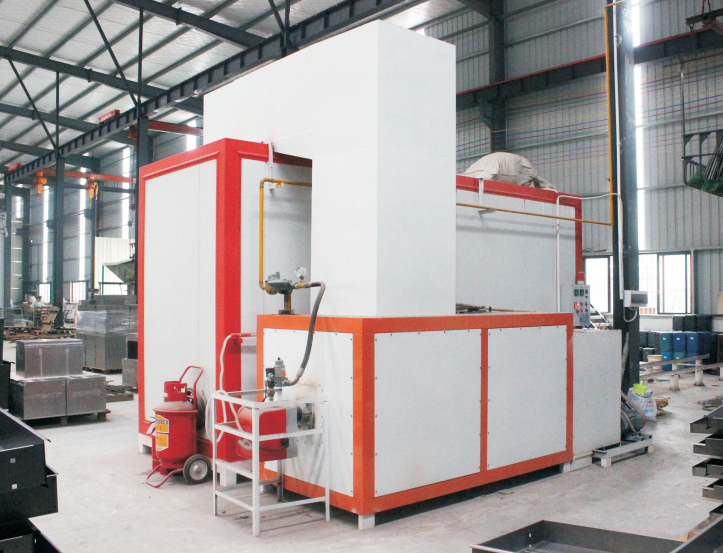
Gas Powder Coating Curing Oven
The Gas Powder Coating Curing Oven is designed for industrial powder coating lines that require efficient heating, stable temperature control, and uniform hot air circulation. It uses natural gas or LPG as the heat source to cure powder coating into a durable film.Core system advantages:
- Gas burner heating provides strong thermal output for continuous powder coating production.
- Hot air circulation helps improve temperature uniformity inside the curing chamber.
- Accurate temperature control supports stable curing quality and coating performance.
- Safety protection can include flame detection, gas pressure monitoring, over-temperature alarm, and emergency shutdown.
- Suitable for furniture, appliances, metal parts, building materials, hardware, and industrial coating lines.
Gas
Natural gas or LPG heating for industrial curing production
180–220°C
Common powder curing range depending on coating formula
Uniform
Hot air circulation helps reduce hot and cold zones
Safe
Flame, gas pressure, temperature, and exhaust safety protection options
Gas Heating Advantage
Efficient Gas Heating and Stable Hot Air Circulation for Powder Curing
The core value of a gas powder coating curing oven is strong heating capacity, stable temperature control, and efficient thermal circulation. A well-designed gas oven helps factories improve curing consistency while controlling long-term energy cost.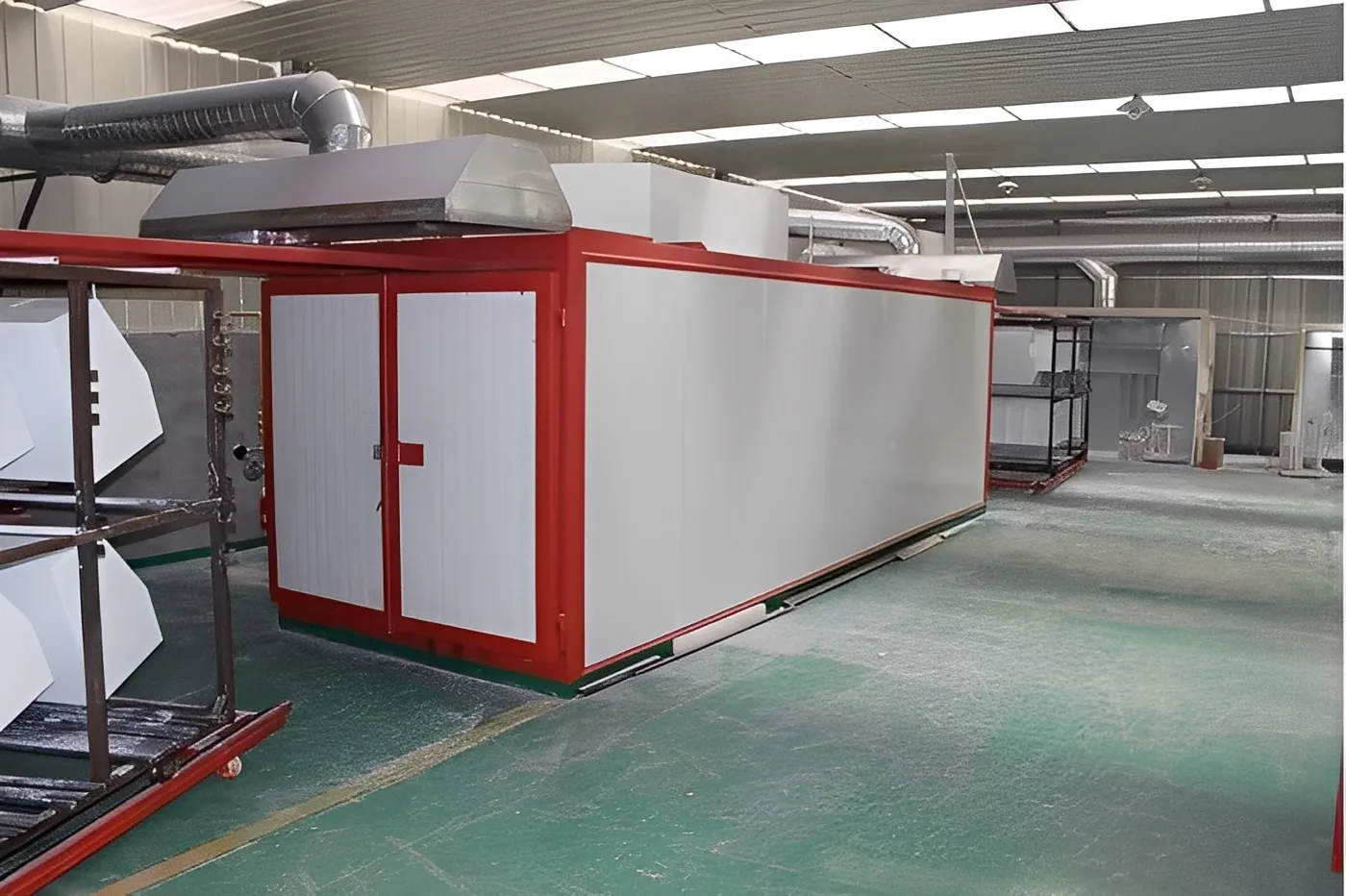
Designed for Continuous Industrial Curing
Gas heating is commonly used in medium and large powder coating lines because it can provide strong heat output and fast temperature recovery. When combined with a proper circulation fan and air duct design, it supports stable curing of powder-coated workpieces.Why This Oven Matters
The curing oven determines the final coating hardness, adhesion, gloss, impact resistance, and long-term surface performance. Stable gas heating and temperature uniformity are critical for reliable powder coating results.
01
Efficient Heating
Gas burner system provides strong heat energy for fast preheating and stable production.
02
Uniform Temperature
Hot air circulation helps transfer heat evenly around different workpiece surfaces.
03
Safe Combustion
Flame detection, gas control, ventilation, and emergency protection improve operation safety.
04
Better Coating Quality
Stable curing helps the powder coating form a hard, smooth, and durable film.Product Details
Gas Curing Oven for Powder Coating Line Performance
The oven combines burner heating, heat exchange, hot air circulation, insulation, temperature control, exhaust, and safety protection to complete the powder coating curing process.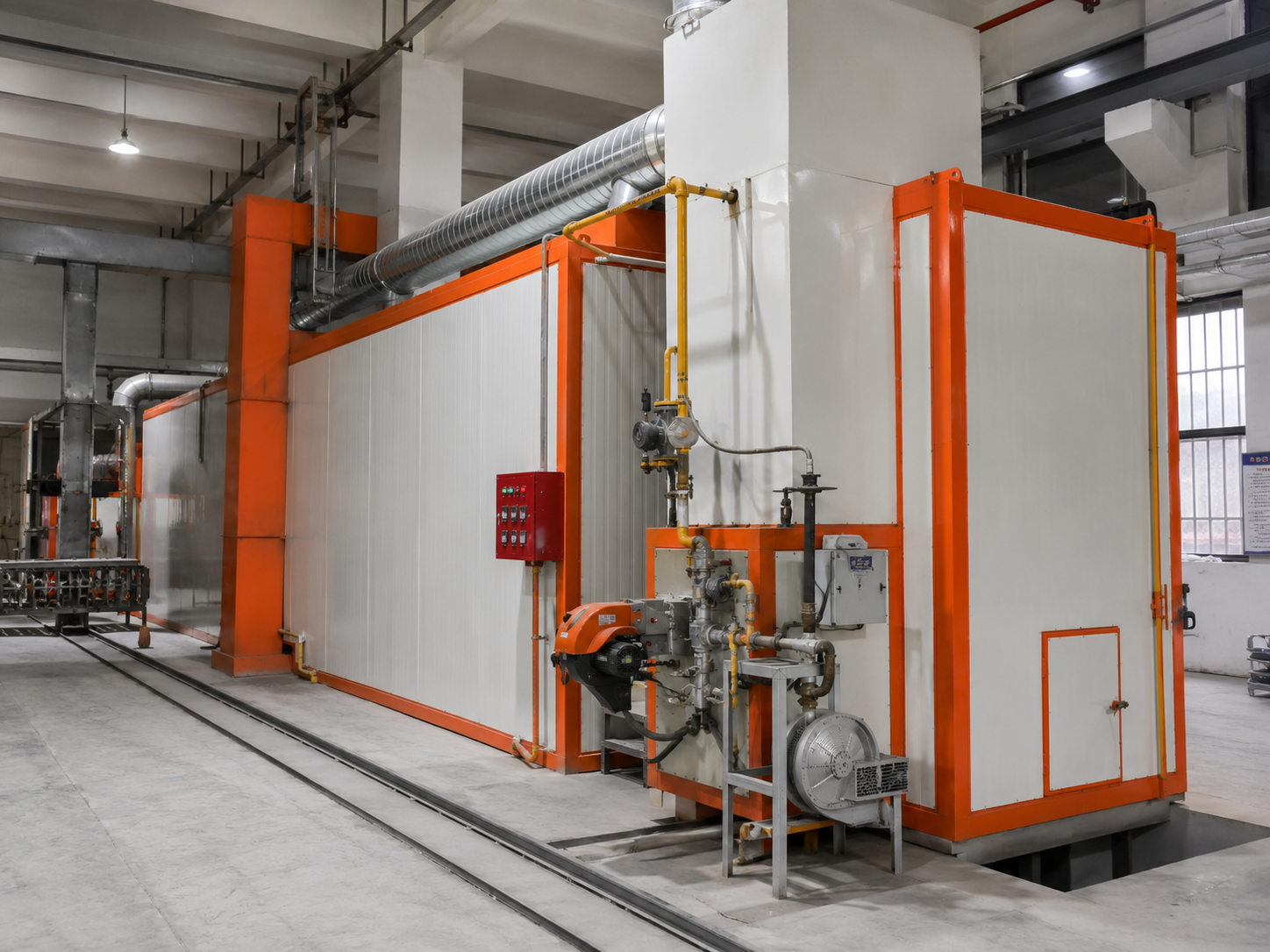
Gas Burner and Heat Exchange System
The gas curing oven uses a burner system to generate heat. Depending on the process requirement, the system can be designed with direct hot air heating or indirect heat exchange. For many industrial coating lines, indirect heat exchange is preferred when cleaner circulating hot air is required. The right heating method depends on the powder coating formula, workpiece requirements, local regulations, and project budget.- Natural gas or LPG burner options
- Direct heating or indirect heat exchange design
- Fast preheating and strong temperature recovery
- Burner capacity customized according to oven size and output
Hot Air Circulation for Temperature Uniformity
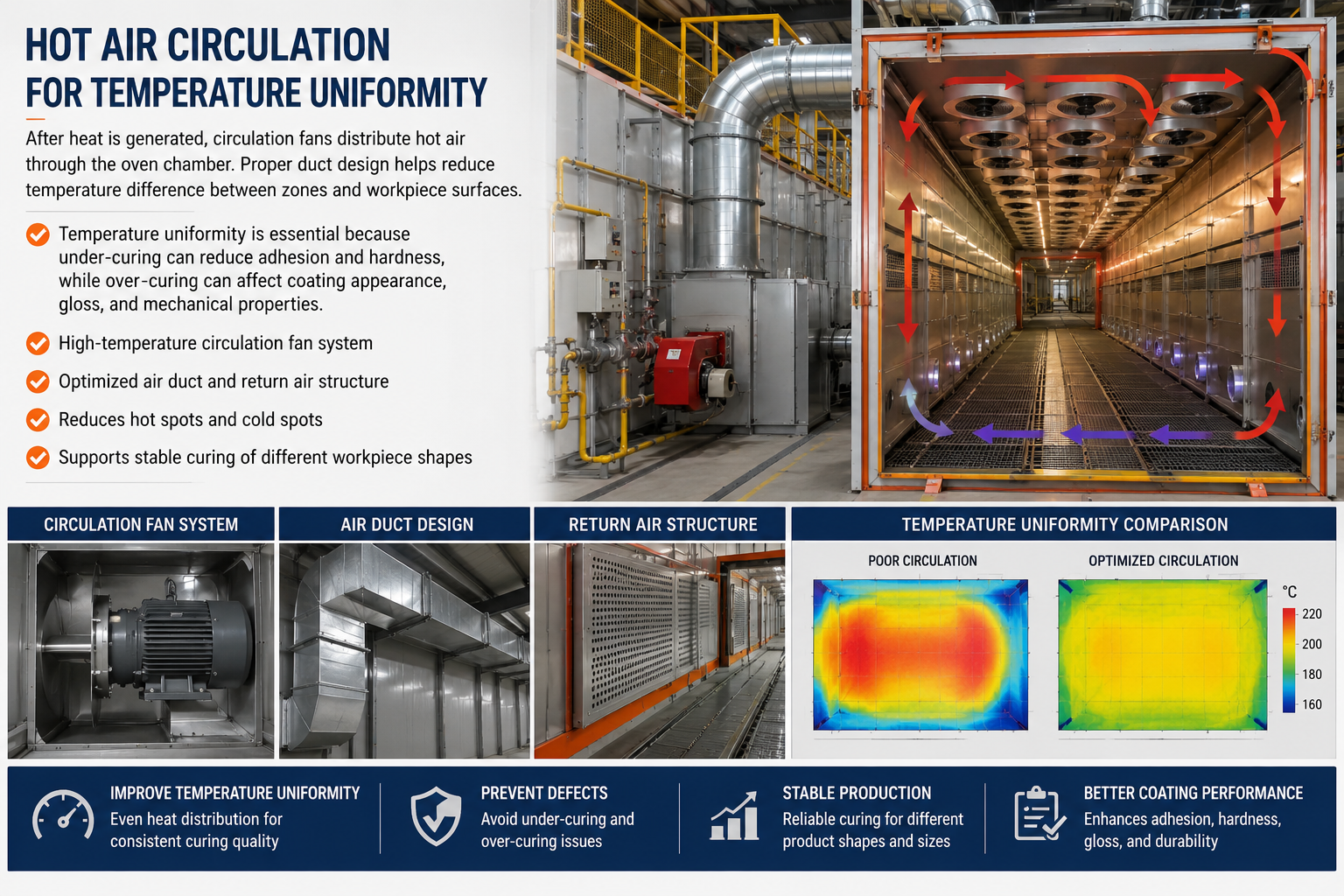
After heat is generated, circulation fans distribute hot air through the oven chamber. Proper duct design helps reduce temperature difference between zones and workpiece surfaces. Temperature uniformity is essential because under-curing can reduce adhesion and hardness, while over-curing can affect coating appearance, gloss, and mechanical properties.- High-temperature circulation fan system
- Optimized air duct and return air structure
- Reduces hot spots and cold spots
- Supports stable curing of different workpiece shapes
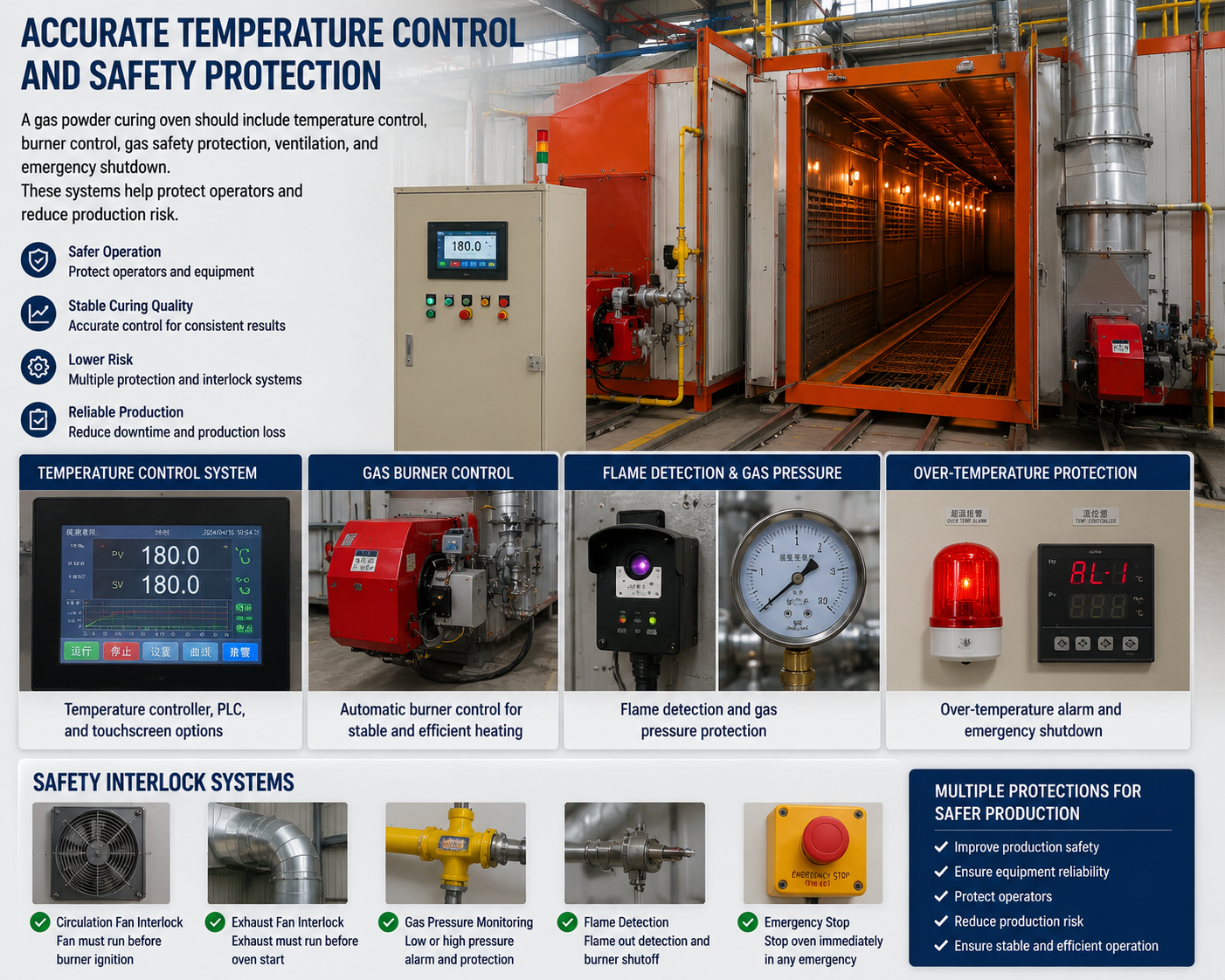
Accurate Temperature Control and Safety Protection
A gas powder curing oven should include temperature control, burner control, gas safety protection, ventilation, and emergency shutdown. These systems help protect operators and reduce production risk. Typical safety options include flame detection, gas pressure monitoring, over-temperature alarm, fan interlock, exhaust interlock, and emergency stop.- Temperature controller, PLC, and touchscreen options
- Flame detection and gas pressure protection
- Over-temperature alarm and emergency shutdown
- Exhaust and circulation fan interlock options
Key Advantages
Core Benefits of Gas Powder Coating Curing Oven
These advantages help factories improve curing quality, production efficiency, energy performance, and operating safety.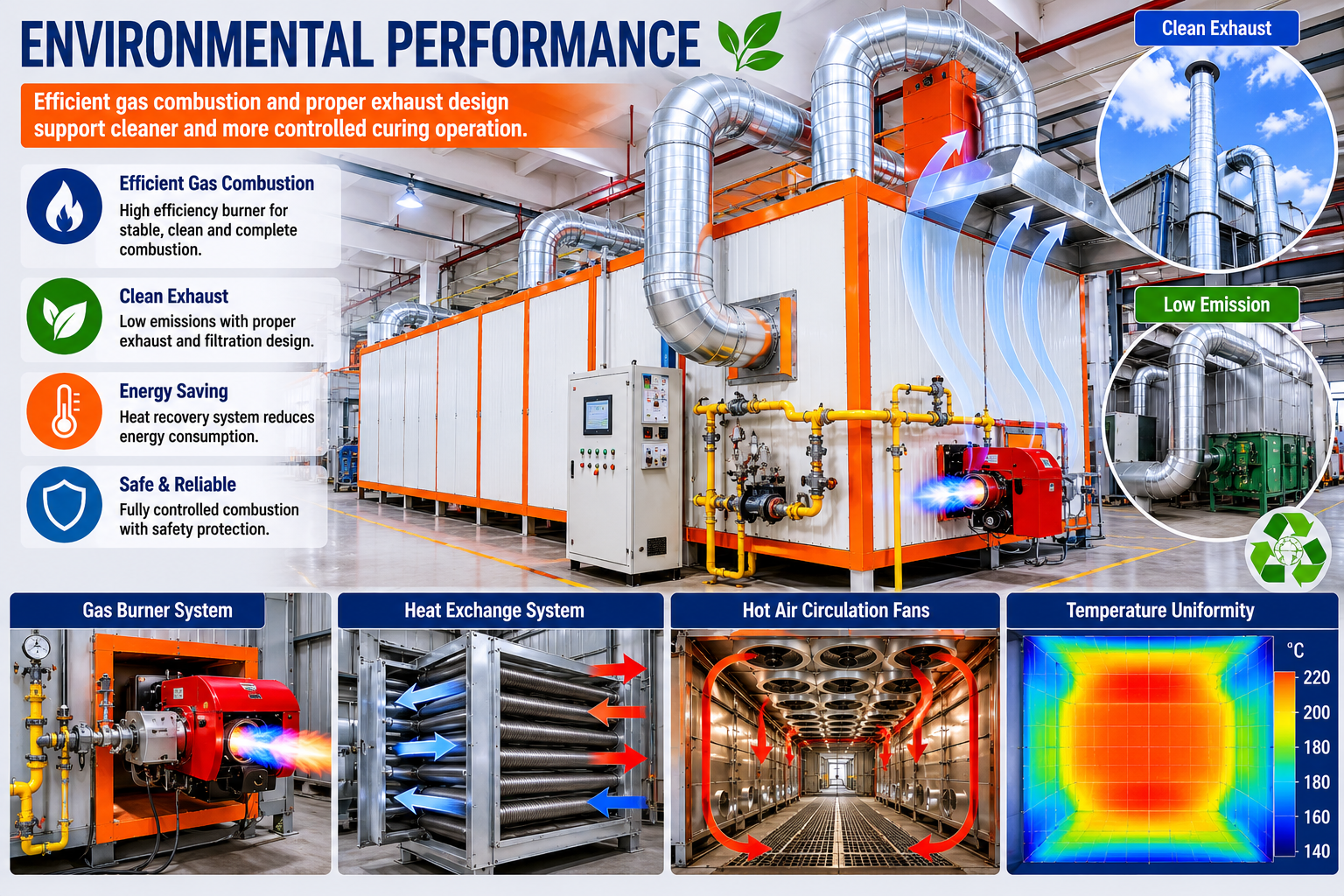
Environmental Performance
Efficient gas combustion and proper exhaust design support cleaner and more controlled curing operation.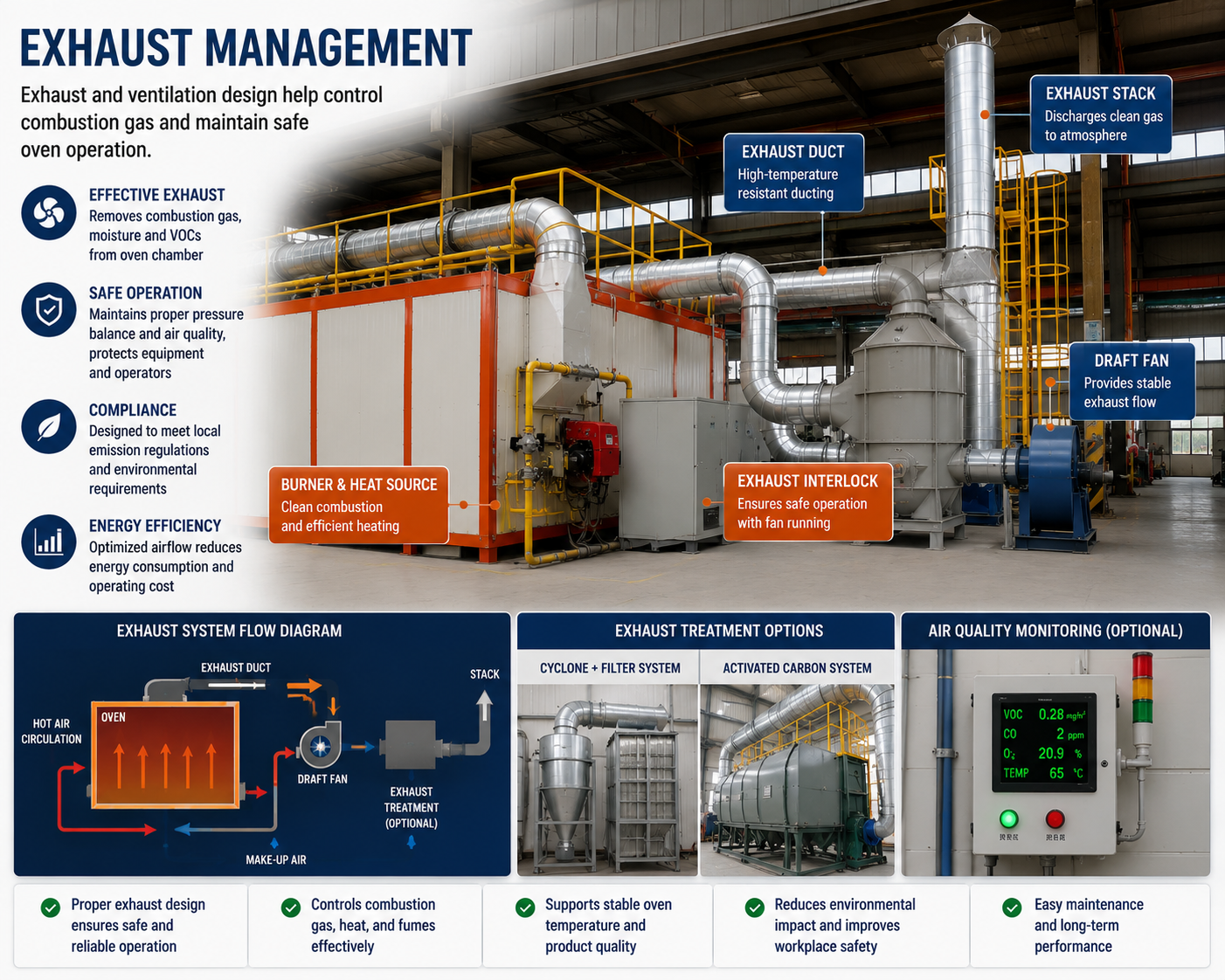
Exhaust Management
Exhaust and ventilation design help control combustion gas and maintain safe oven operation.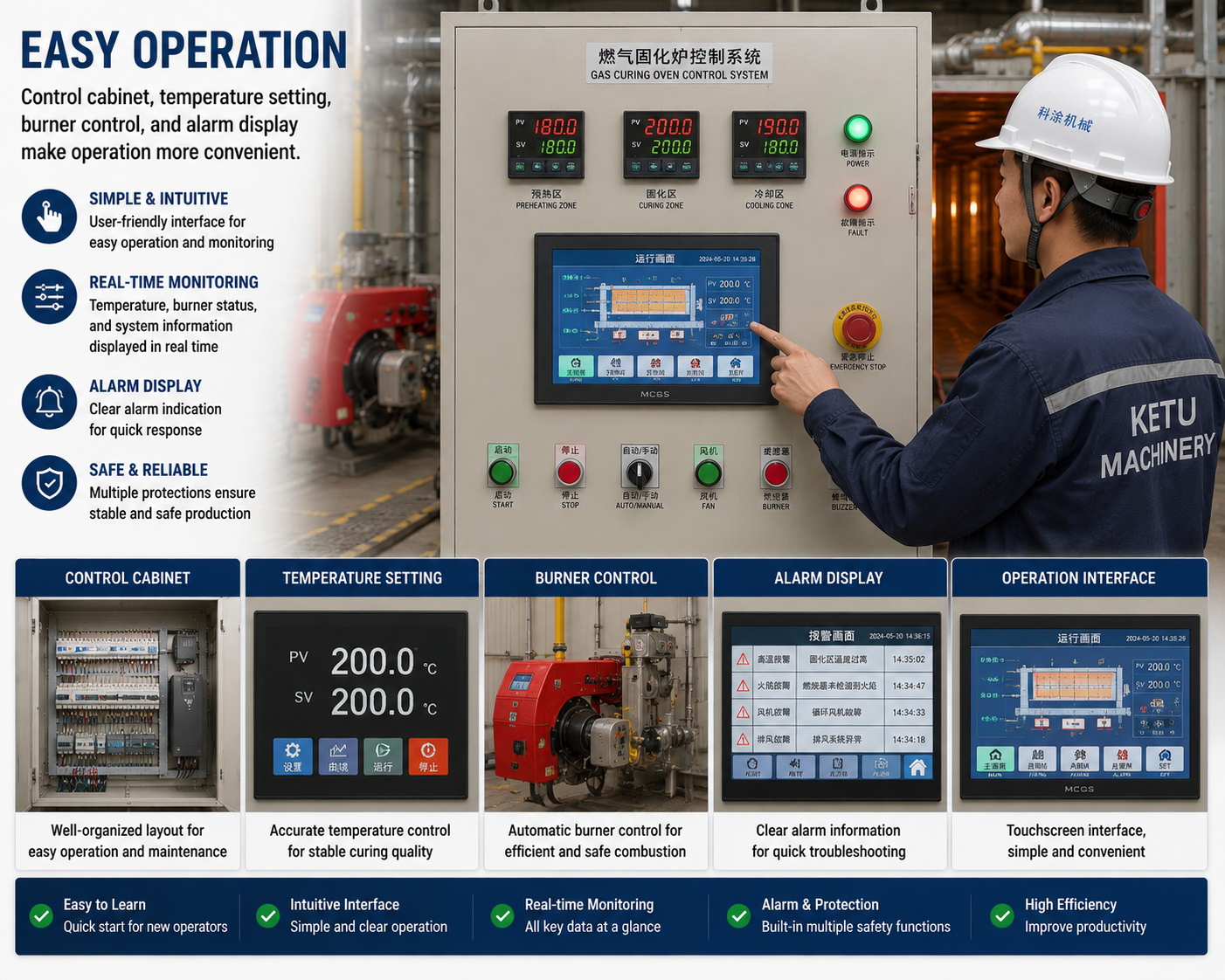
Easy Operation
Control cabinet, temperature setting, burner control, and alarm display make operation more convenient.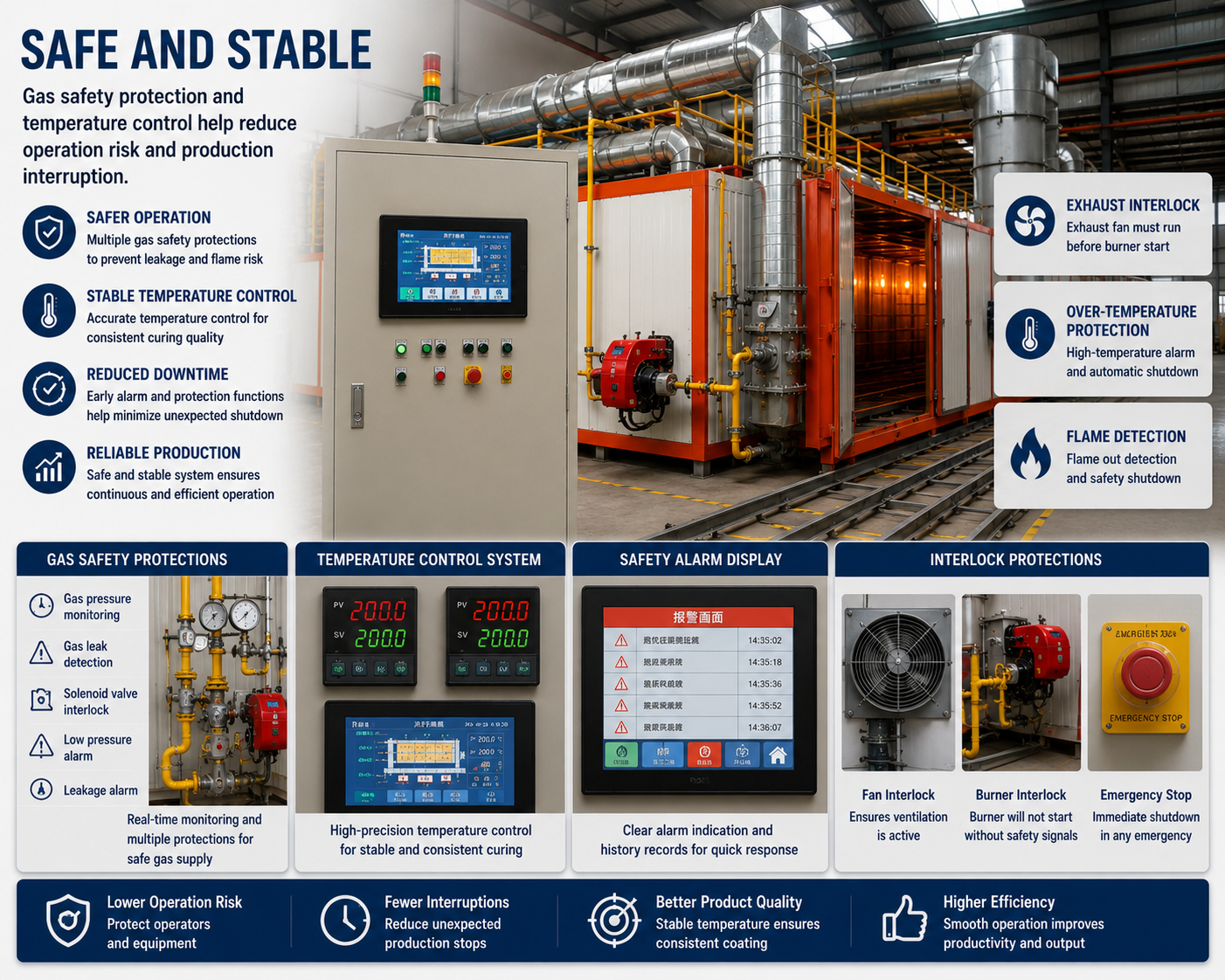
Safe and Stable
Gas safety protection and temperature control help reduce operation risk and production interruption.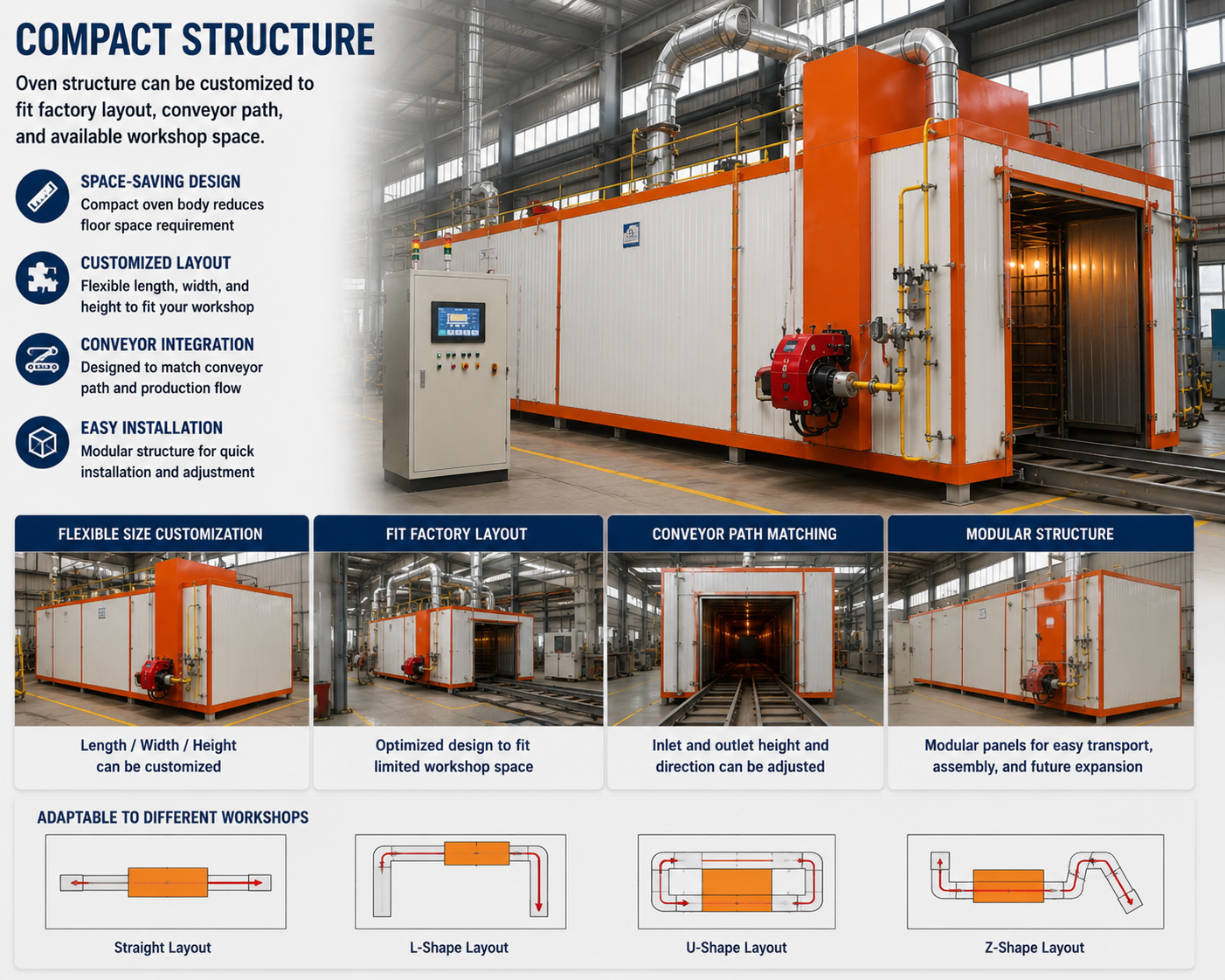
Compact Structure
Oven structure can be customized to fit factory layout, conveyor path, and available workshop space.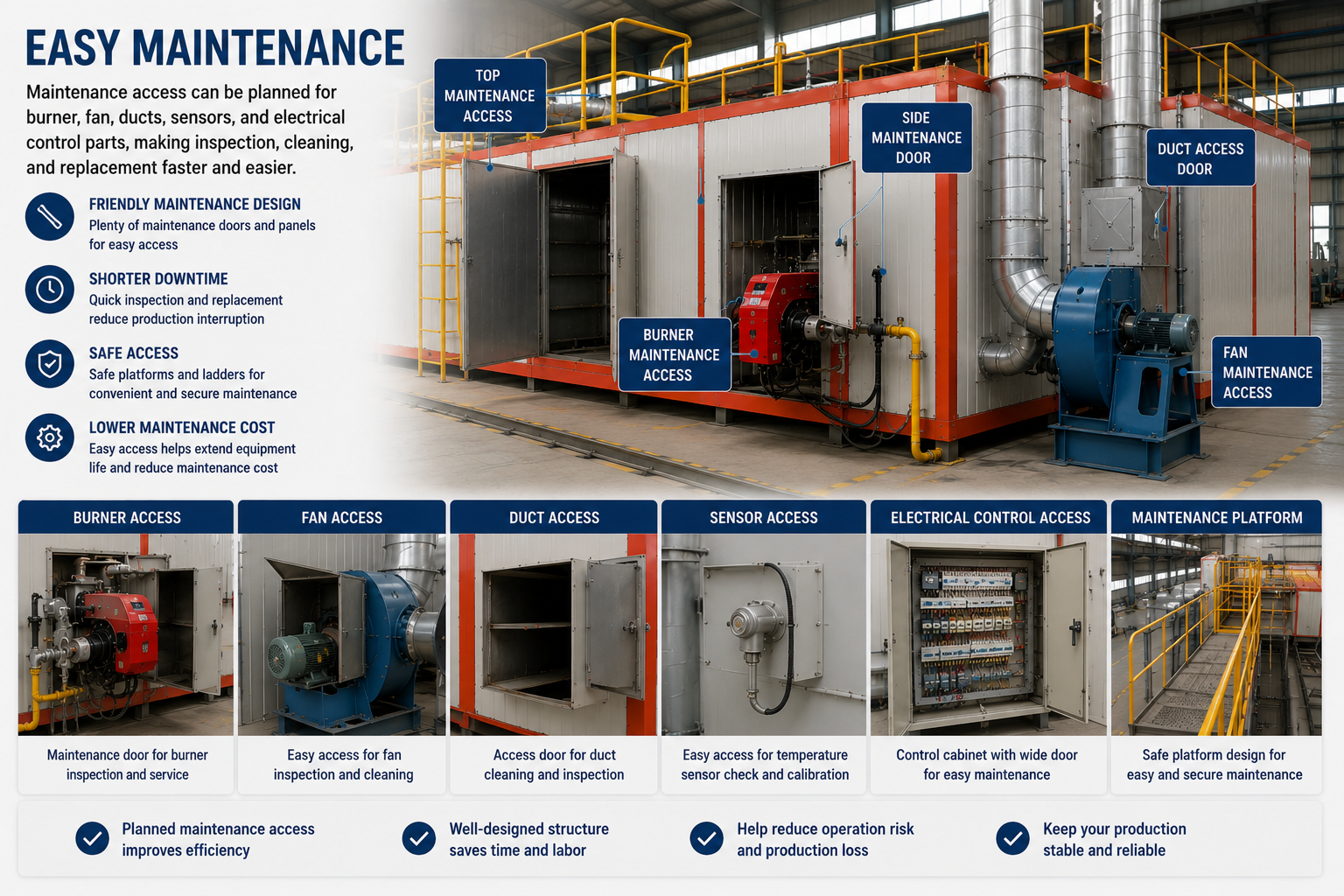
Easy Maintenance
Maintenance access can be planned for burner, fan, ducts, sensors, and electrical control parts.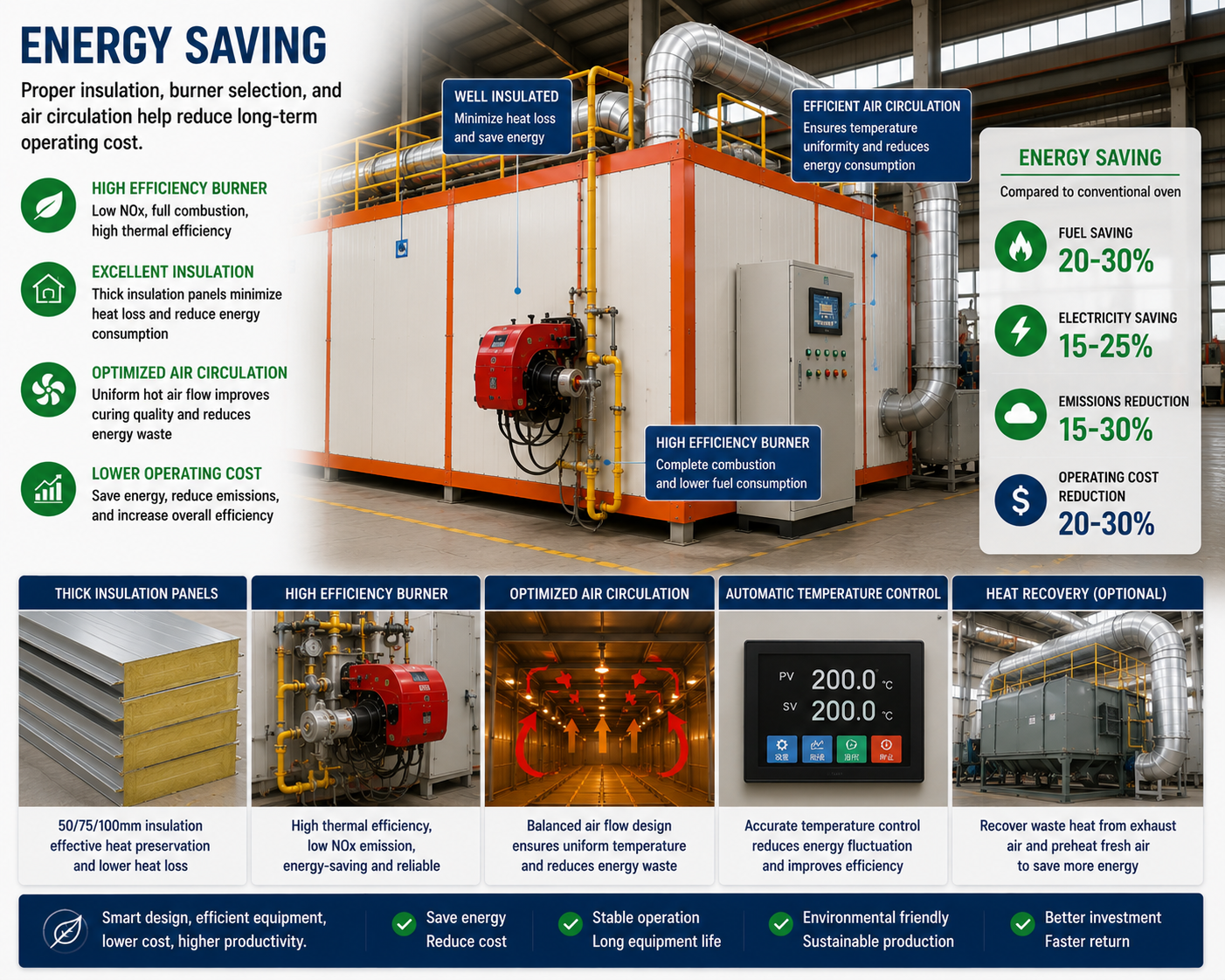
Energy Saving
Proper insulation, burner selection, and air circulation help reduce long-term operating cost.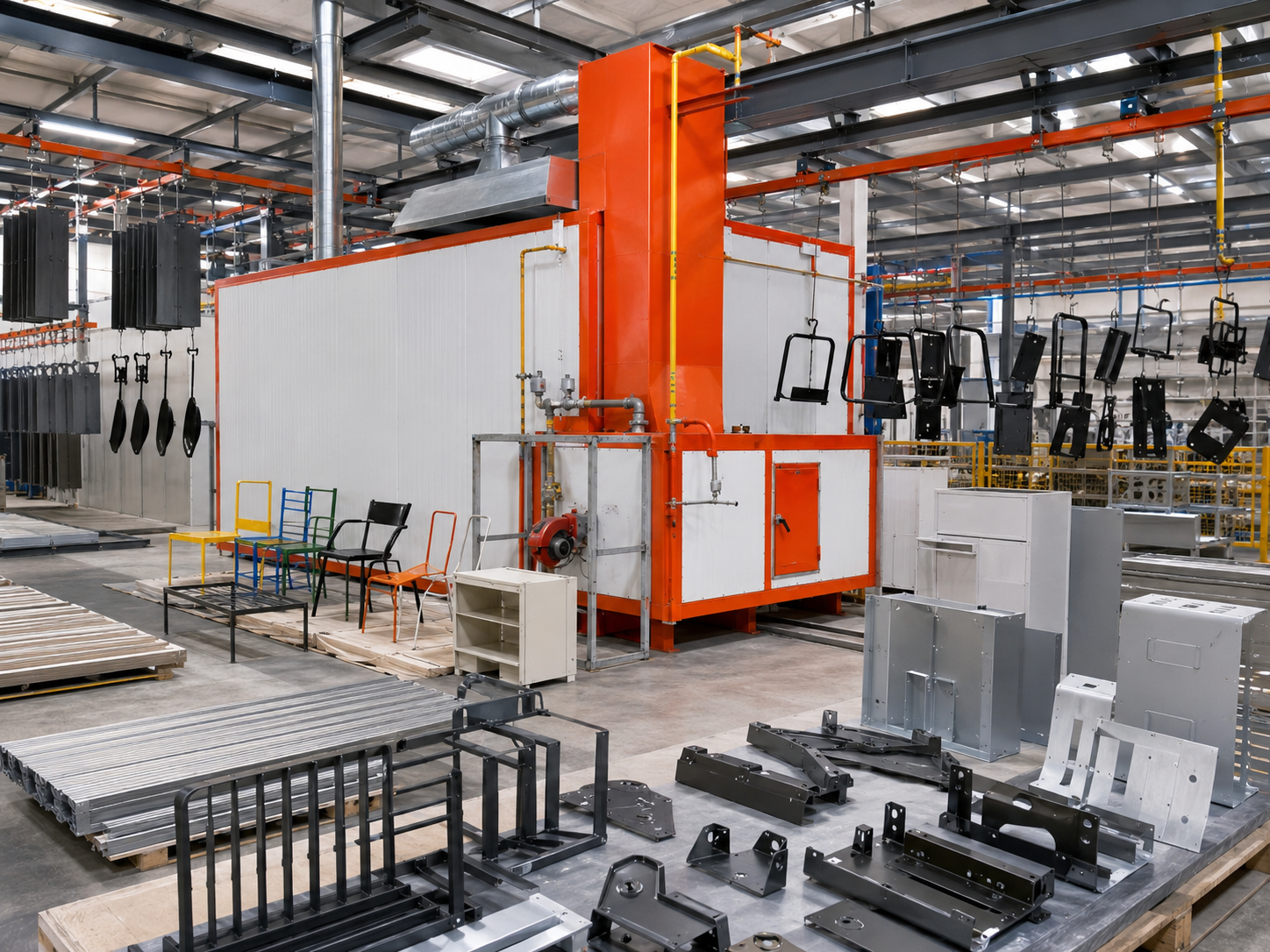
Wide Application
Suitable for furniture, appliances, building materials, automotive parts, hardware, and metal products.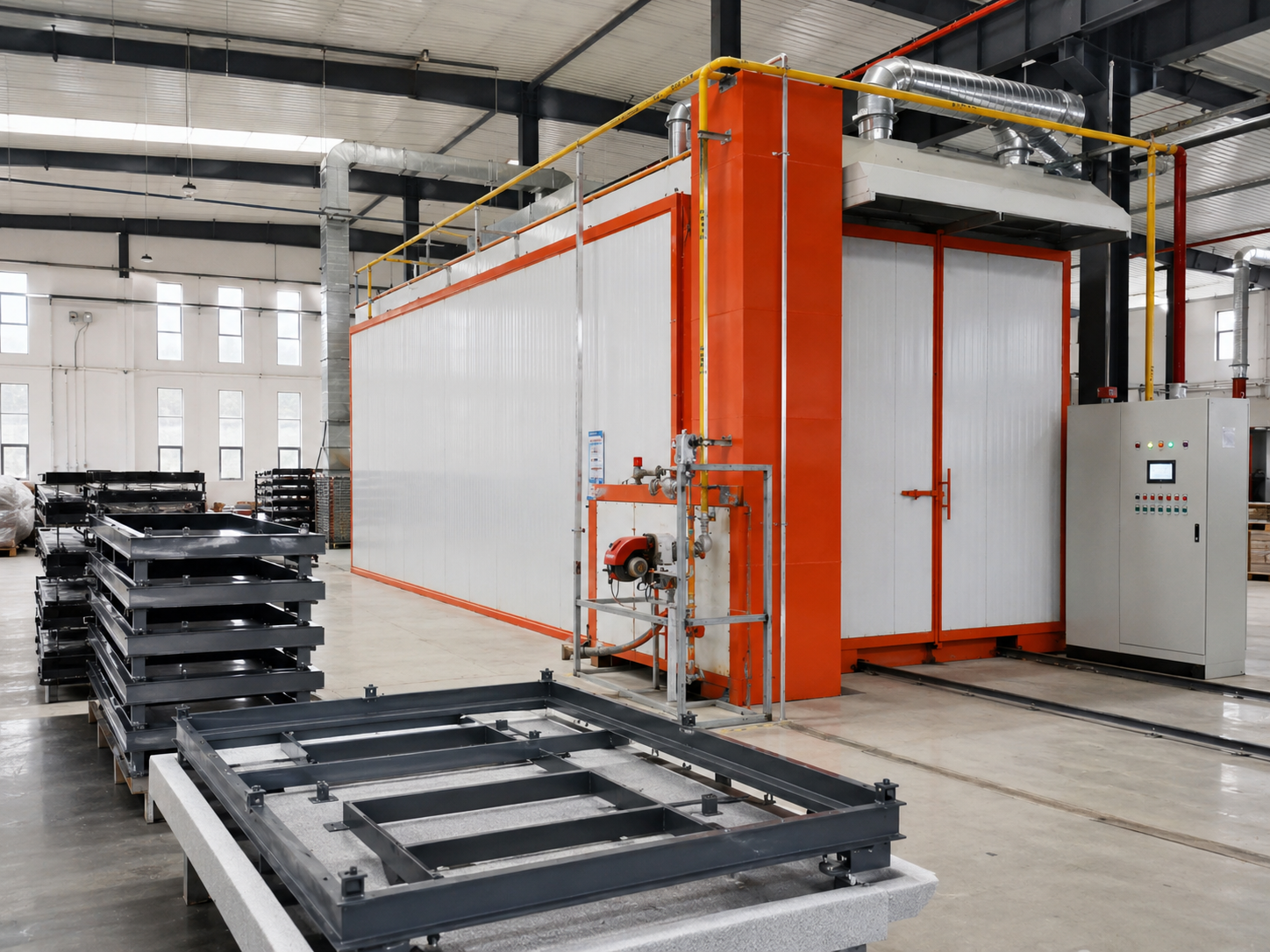
Improve Product Quality
Stable curing improves coating adhesion, hardness, gloss, impact resistance, and surface consistency.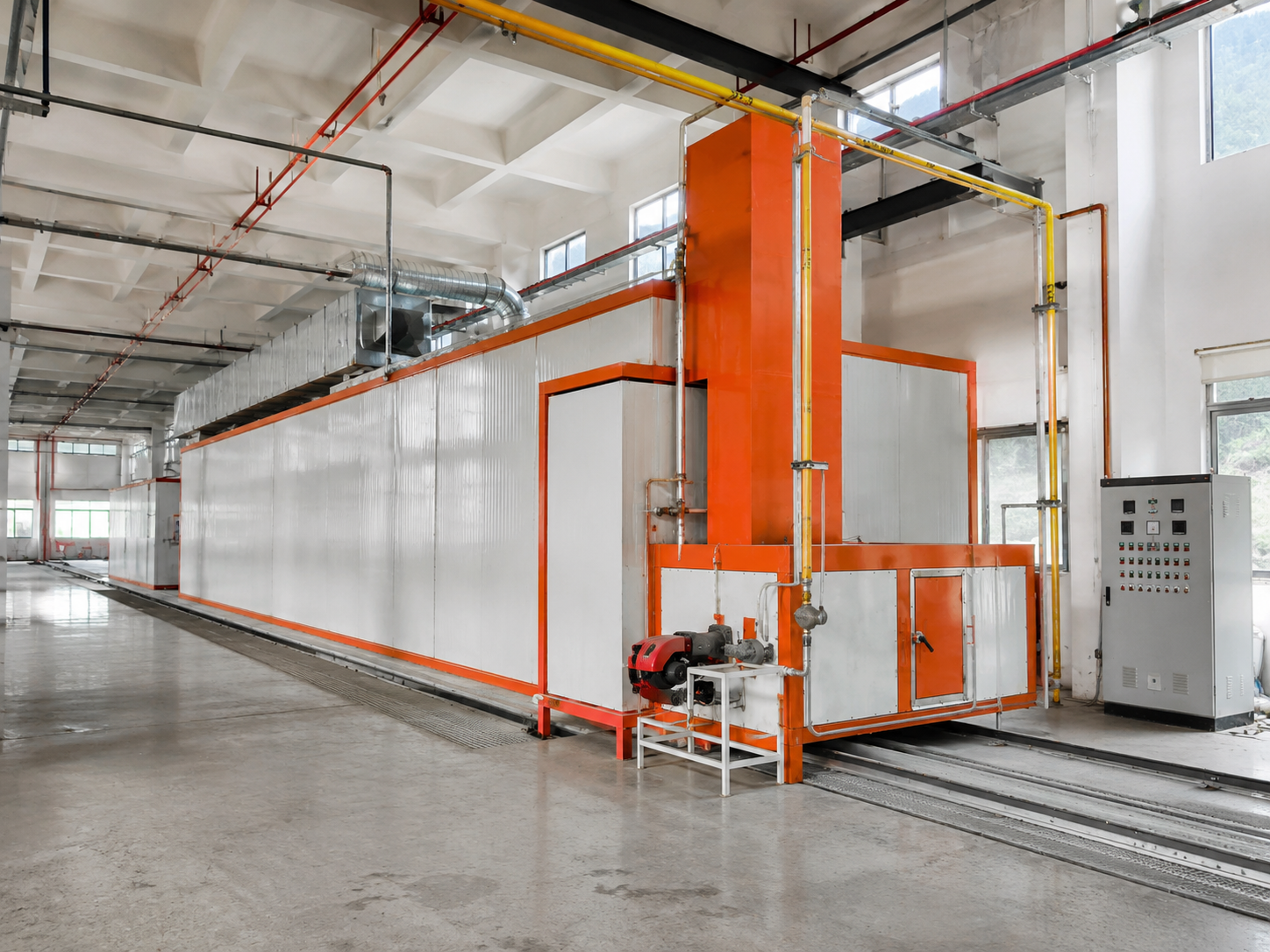
Customizable Capacity
Oven size, heating power, conveyor, and control system can be matched to production capacity.Working Principle
How the Gas Powder Coating Curing Oven Works
The gas curing oven completes the powder curing process through burner heating, air circulation, temperature control, workpiece heating, resin reaction, and final film formation.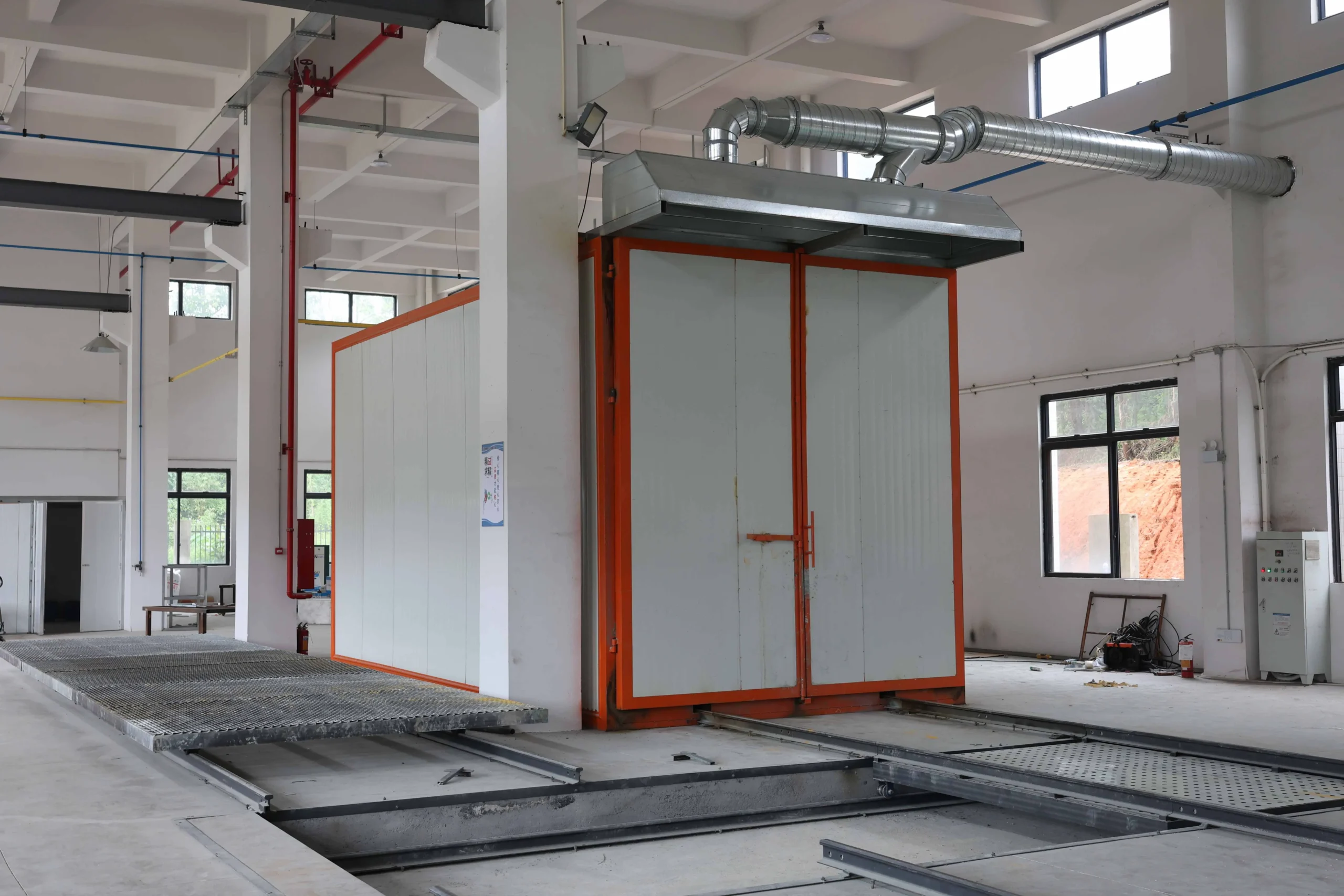
Gas Heating and Powder Curing Process
The oven uses a gas burner to generate heat. Hot air is circulated inside the chamber by circulation fans. Powder-coated workpieces absorb heat until the powder melts, flows, reacts, and forms a hard coating film. Most powder coating systems require a specific curing temperature and holding time. The actual workpiece temperature, not only the oven air temperature, must reach the required curing condition.- 1Gas combustion: Natural gas or LPG burns through the burner system and generates heat.
- 2Heat transfer: Heat is transferred directly or through a heat exchanger into circulating air.
- 3Hot air circulation: Fans distribute hot air evenly across the oven chamber.
- 4Workpiece heating: Powder-coated parts absorb heat until the coating reaches curing temperature.
- 5Film formation: Powder melts, levels, reacts, and forms a hard protective coating film.
- 6Control and safety: Temperature, burner, gas pressure, flame status, and exhaust are monitored during operation.
Operation Method
Standard Operation Method for Gas Powder Coating Curing Oven
A correct operating process helps maintain curing quality, improve safety, and reduce production defects during powder coating production.Step 1: Preparation
Check the oven chamber, conveyor, burner, gas pipeline, circulation fan, exhaust fan, temperature sensors, and control cabinet. Confirm that the gas source, power supply, and exhaust system are normal before startup.Step 2: Safety Check
Check gas pressure, valve status, flame detection, fan interlock, emergency stop, and over-temperature protection. Make sure the oven area is clear and operators understand safety procedures.Step 3: Preheating
Start the burner and circulation fan according to the operating procedure. Preheat the oven to the curing temperature recommended by the powder coating supplier, usually around 180°C to 220°C depending on powder formula.Step 4: Loading Workpieces
Send powder-coated workpieces into the oven by conveyor, trolley, or rack. Keep proper spacing between workpieces so hot air can circulate evenly across all surfaces.Step 5: Curing Process
Maintain the required curing temperature and time. Monitor oven temperature, workpiece temperature, burner status, and airflow. Avoid overheating, under-curing, or large temperature differences inside the oven.Step 6: Cooling and Inspection
After curing, allow workpieces to cool naturally or through a cooling area. Inspect coating appearance, adhesion, gloss, hardness, and curing quality according to production standards.Step 7: Shutdown and Maintenance
After production, shut down the burner and keep ventilation as required by the equipment procedure. Perform routine checks on burner, fan, sensors, gas valves, ducts, and chamber cleanliness.Friendly Tips
Important Selection Tips Before Buying a Gas Curing Oven
Use these points to evaluate heating capacity, fuel type, temperature uniformity, safety protection, energy performance, and long-term operation cost.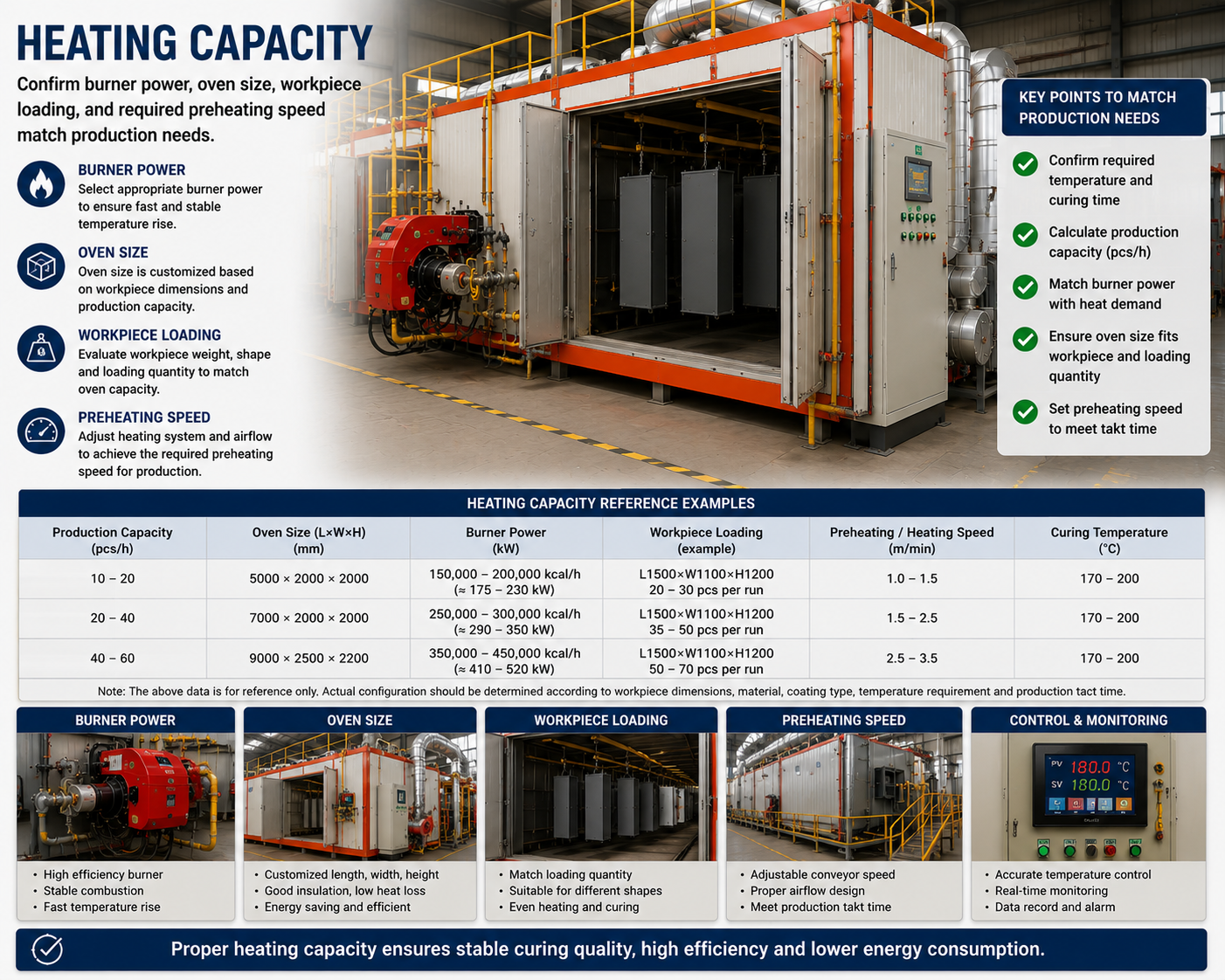
Heating Capacity
Confirm burner power, oven size, workpiece loading, and required preheating speed match production needs.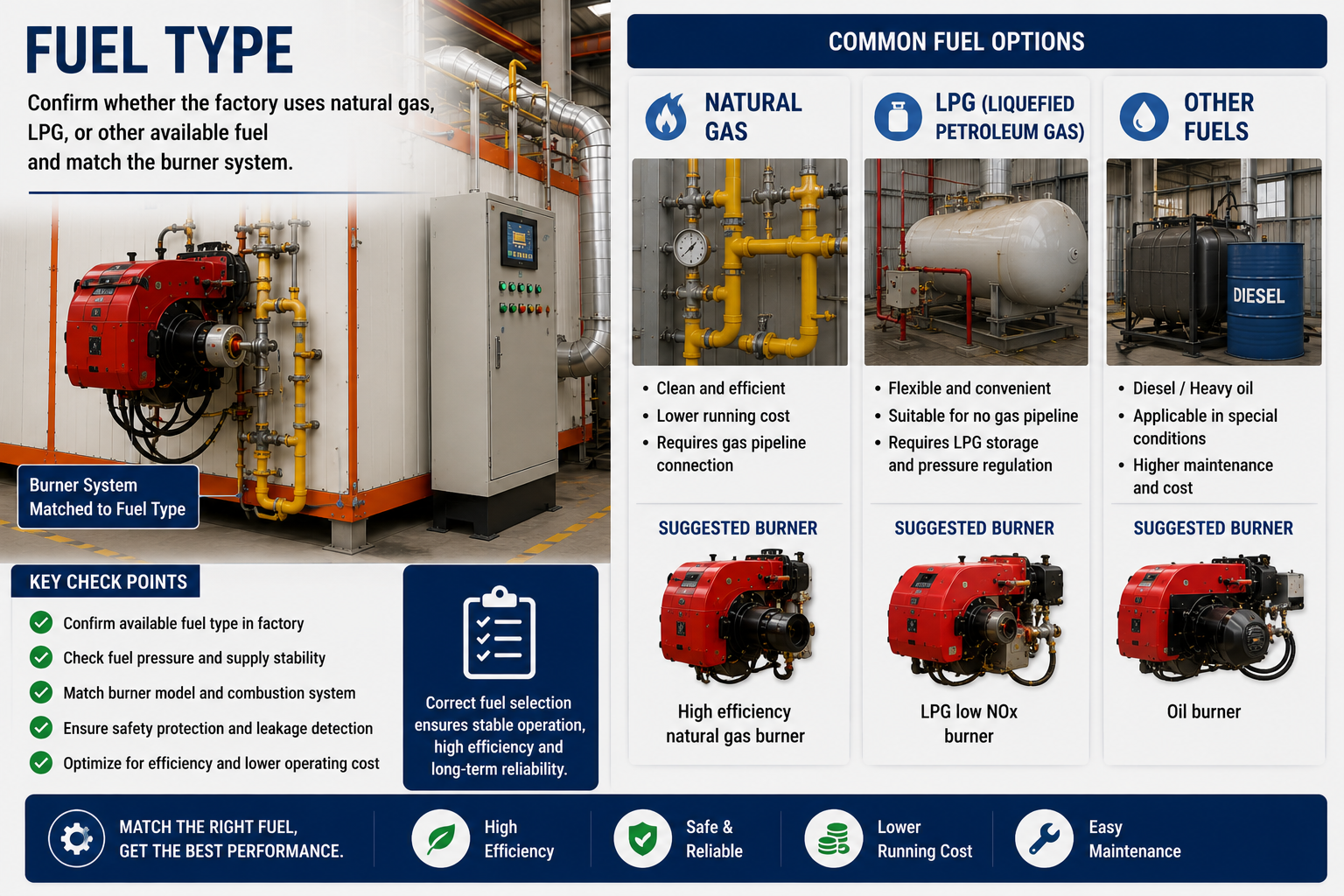
Fuel Type
Confirm whether the factory uses natural gas, LPG, or other available fuel and match the burner system.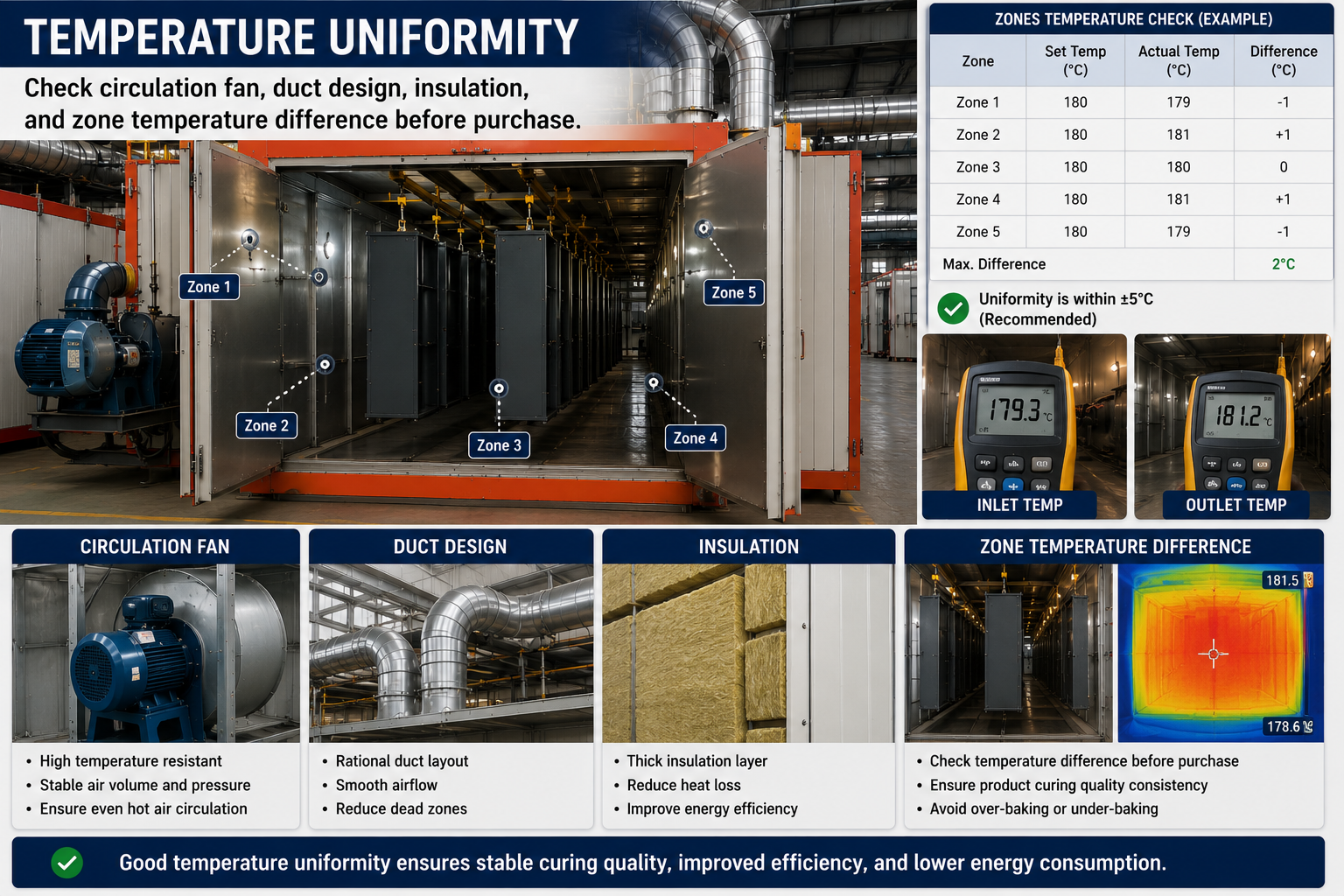
Temperature Uniformity
Check circulation fan, duct design, insulation, and zone temperature difference before purchase.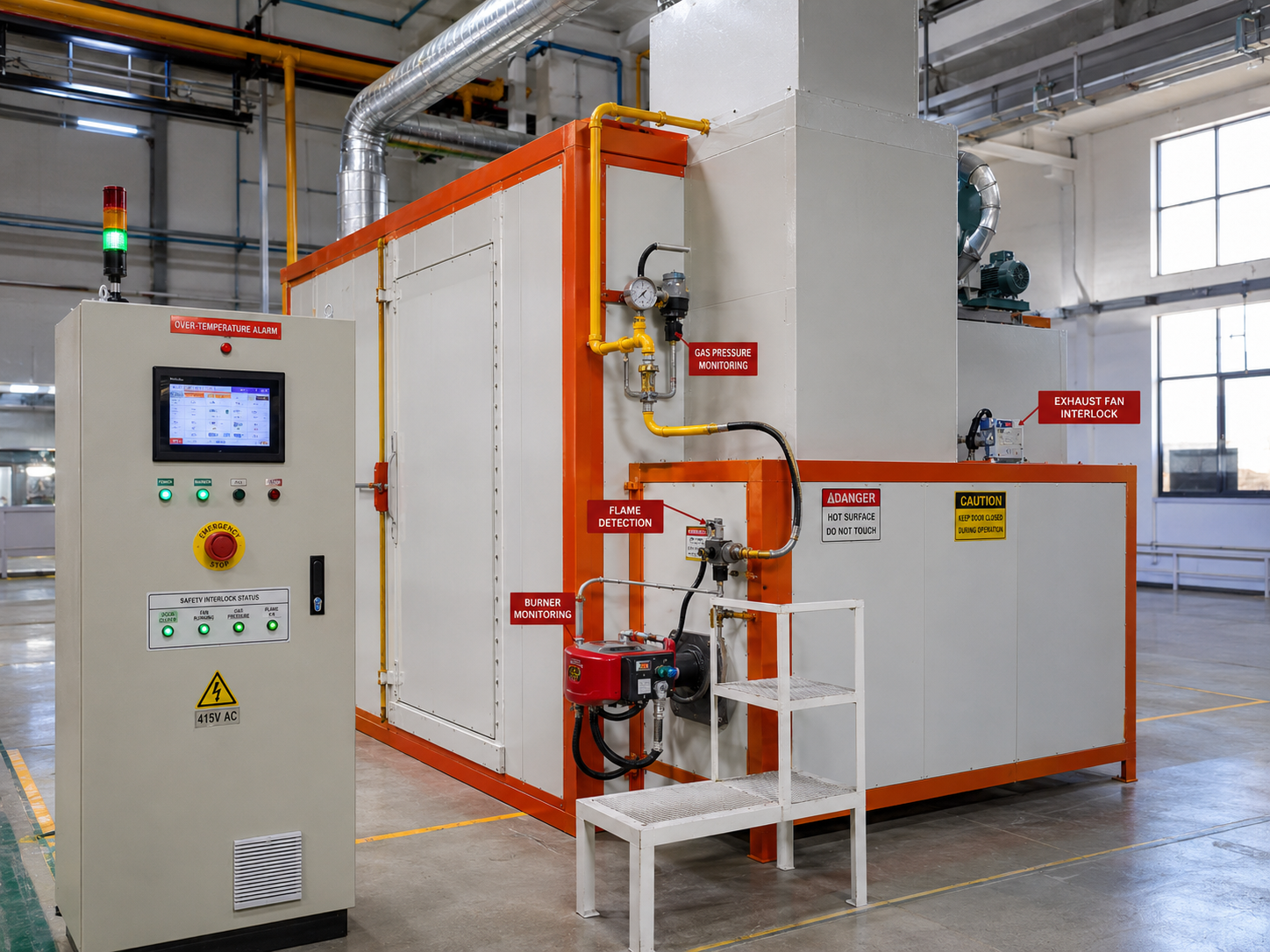
Safety Protection
Confirm flame detection, gas pressure monitoring, over-temperature alarm, emergency stop, and fan interlock.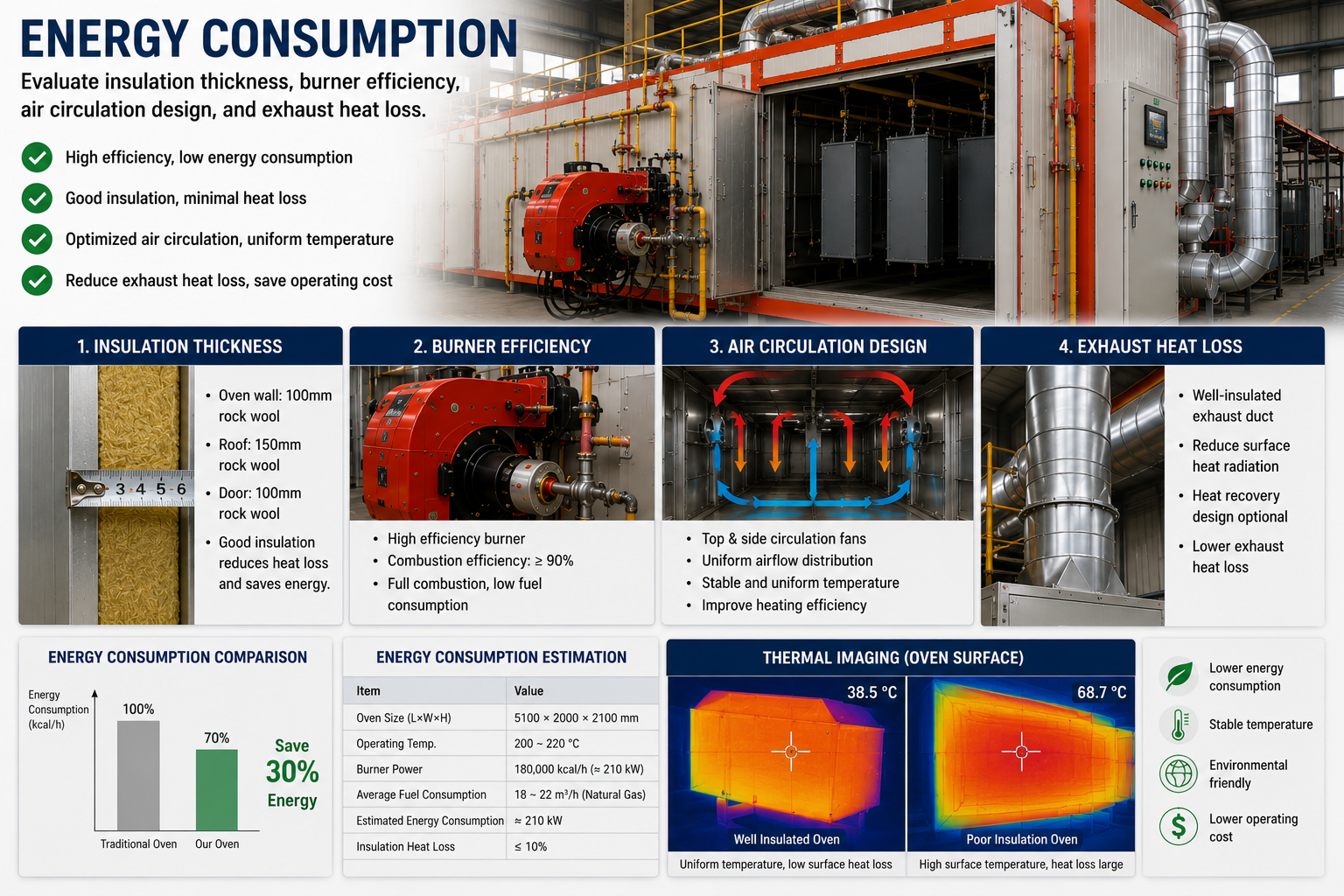
Energy Consumption
Evaluate insulation thickness, burner efficiency, air circulation design, and exhaust heat loss.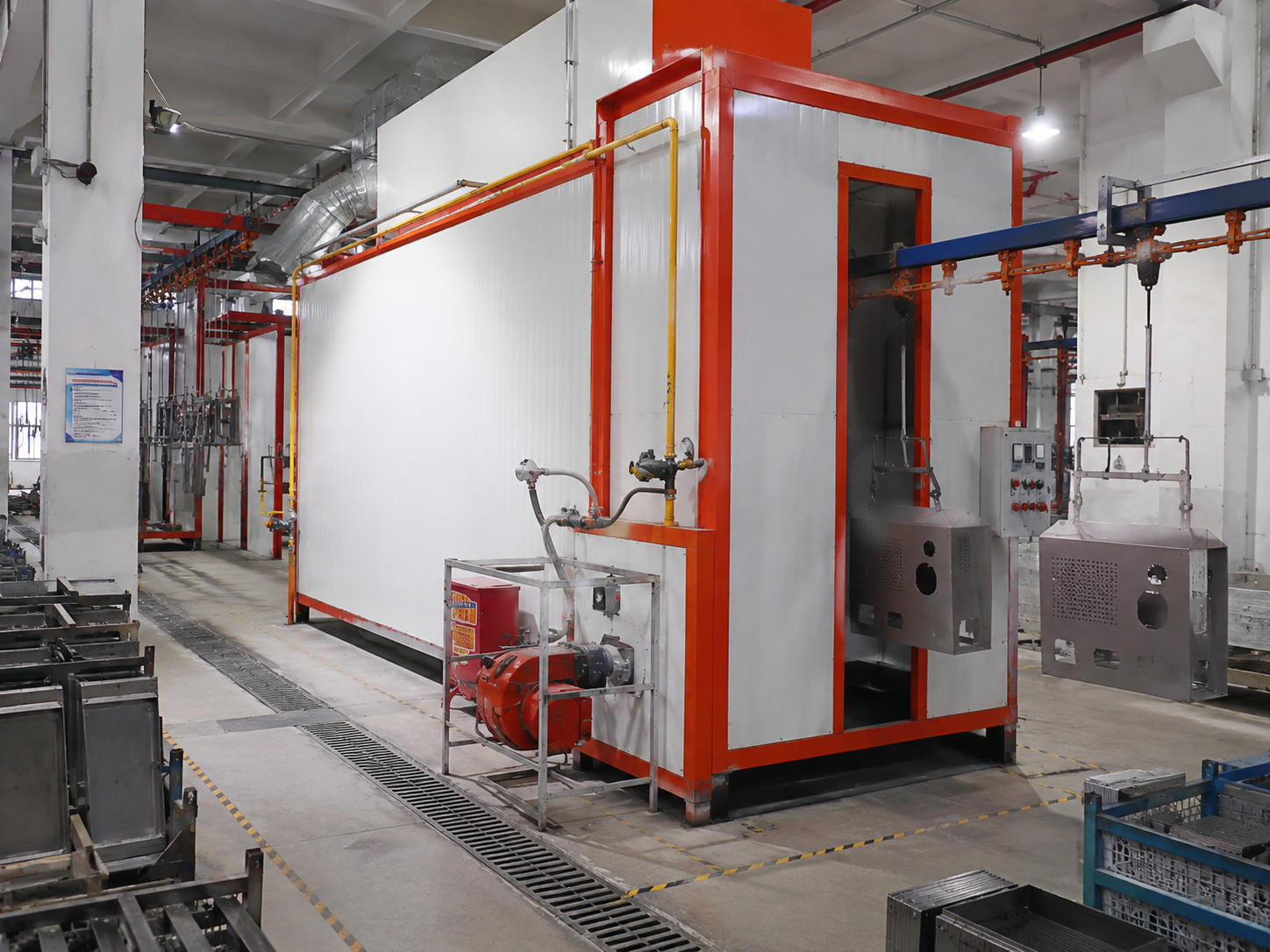
Oven Size and Layout
Select the right oven structure based on workpiece size, conveyor speed, curing time, and floor space.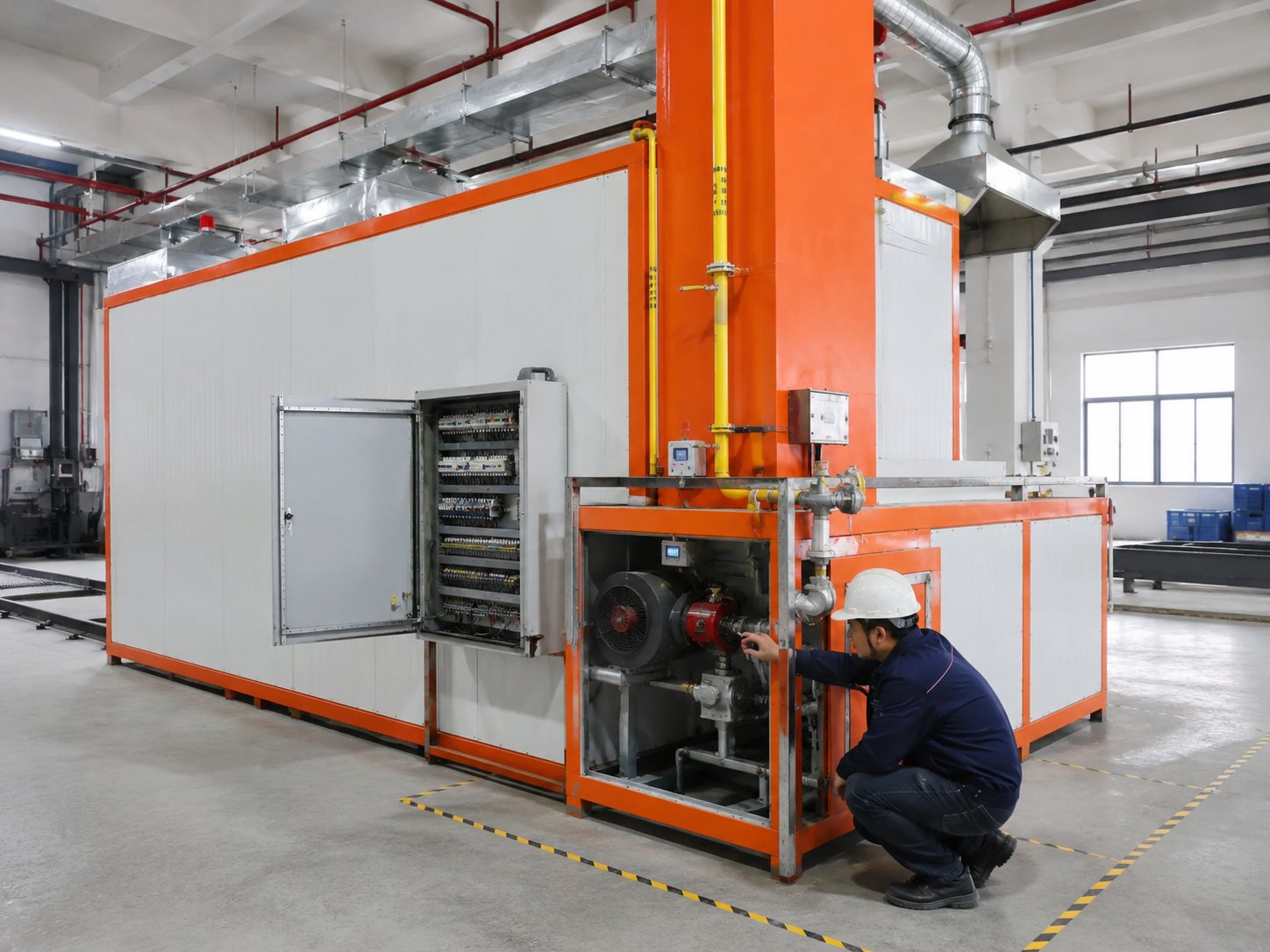
Maintenance Access
Check whether burner, fans, ducts, sensors, gas valves, and electrical cabinet are easy to maintain.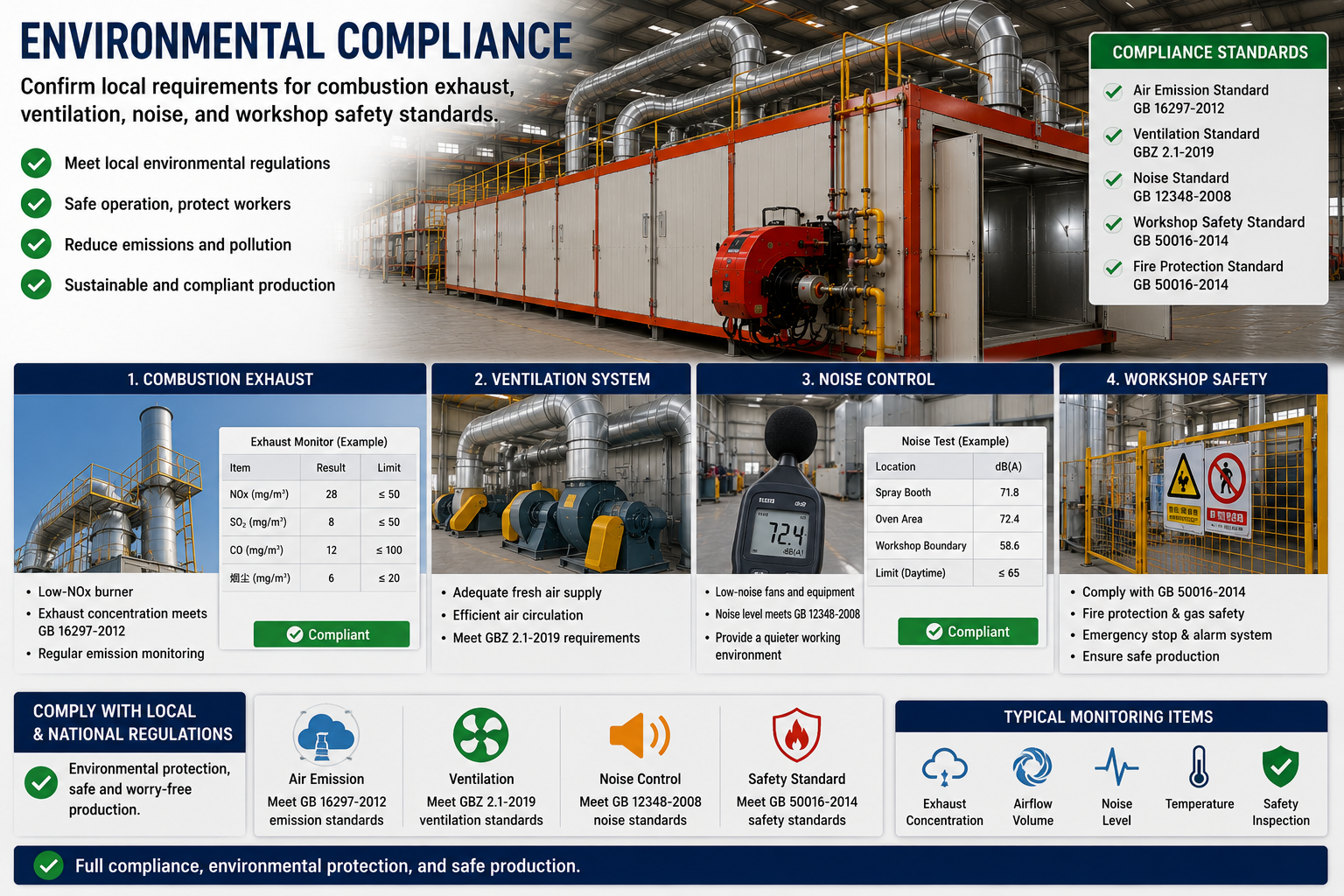
Environmental Compliance
Confirm local requirements for combustion exhaust, ventilation, noise, and workshop safety standards.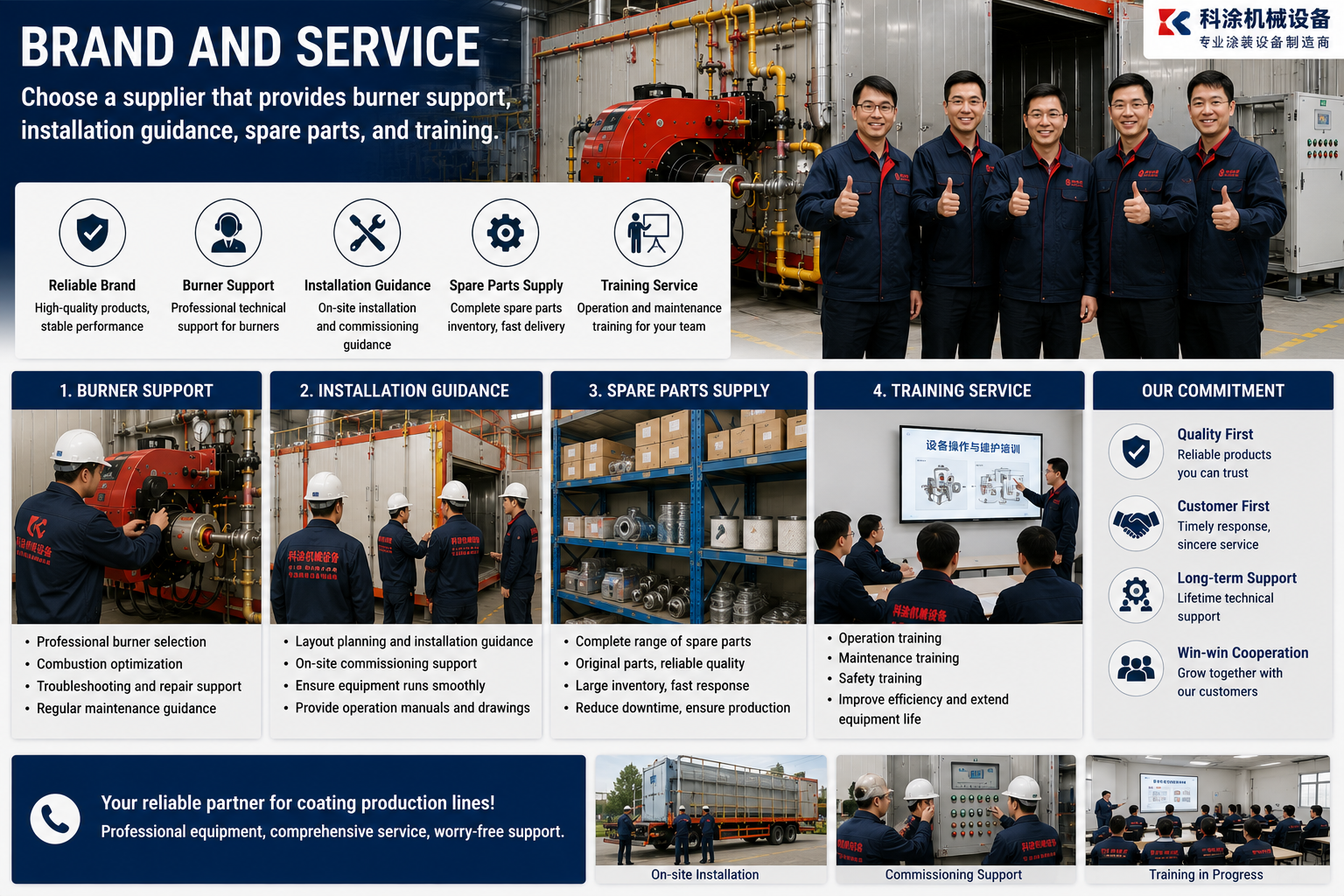
Brand and Service
Choose a supplier that provides burner support, installation guidance, spare parts, and training.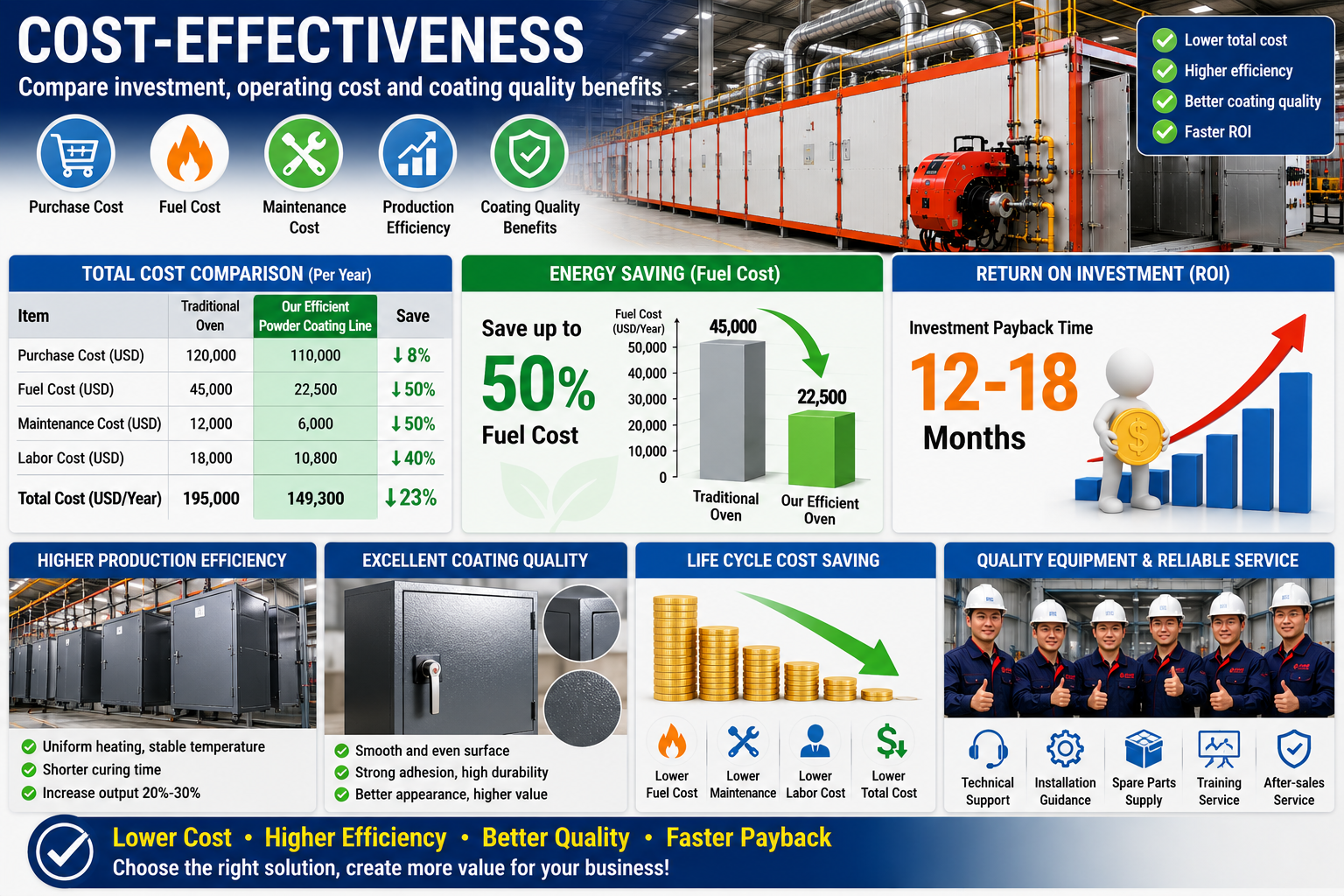
Cost-Effectiveness
Compare purchase cost, fuel cost, maintenance cost, production efficiency, and coating quality benefits.Technical Parameters
Gas Powder Coating Curing Oven Reference Configuration
Exact oven size, burner power, air volume, temperature zones, insulation, conveyor design, and safety system should be customized according to workpiece size and production target.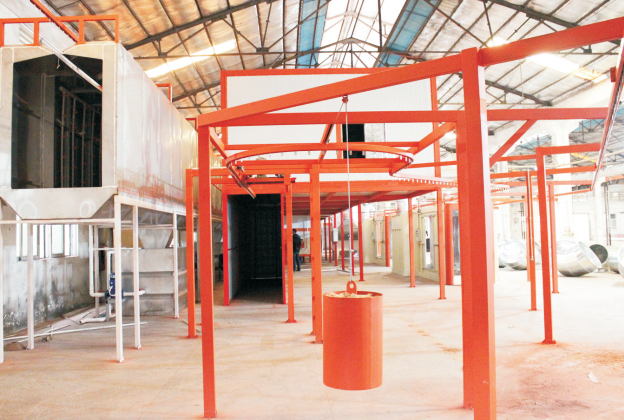
Custom Gas Oven Layout
Send workpiece drawings, factory layout, gas type, daily output, conveyor speed, curing temperature, and curing time. A customized gas curing oven layout can be prepared for quotation.| Parameter | Reference Specification |
|---|---|
| Equipment Type | Gas powder coating curing oven / gas heating powder coating oven / industrial curing furnace |
| Fuel Type | Natural gas, LPG, or customized gas source according to site condition |
| Working Principle | Gas burner generates heat; hot air circulation transfers heat to powder-coated workpieces |
| Typical Curing Range | Usually 180°C to 220°C depending on powder coating supplier recommendations |
| Heating Method | Direct gas heating or indirect heat exchange design according to process requirement |
| Air Circulation | High-temperature circulation fan and duct system for temperature uniformity |
| Control System | Temperature controller, burner control, PLC, touchscreen, alarm system optional |
| Safety Protection | Flame detection, gas pressure monitoring, over-temperature alarm, emergency stop, fan interlock, exhaust interlock |
| Oven Type | Batch oven, tunnel oven, conveyor oven, or customized line-integrated curing oven |
| Customization | Oven size, burner power, insulation thickness, fan capacity, conveyor path, zones, doors, and control system can be customized |
Engineering note: Curing result depends on powder formula, actual workpiece temperature, oven temperature uniformity, holding time, workpiece material thickness, burner capacity, airflow design, and conveyor speed. Always confirm the curing curve with the powder coating supplier.
Complete Buying Guide
The Complete Purchasing Guide for Gas Powder Coating Curing Ovens
Buying a gas curing oven should not be based only on oven price. A good decision should evaluate fuel type, burner power, heat exchange method, temperature uniformity, air circulation, insulation, safety protection, environmental compliance, and long-term fuel cost. This guide helps buyers compare key technical factors before requesting a quotation or confirming a gas powder coating oven layout.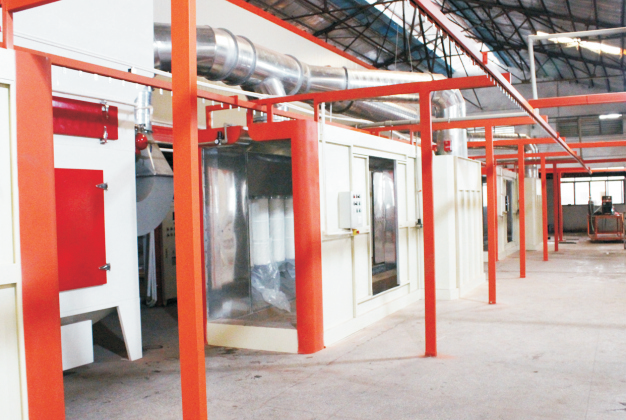
01
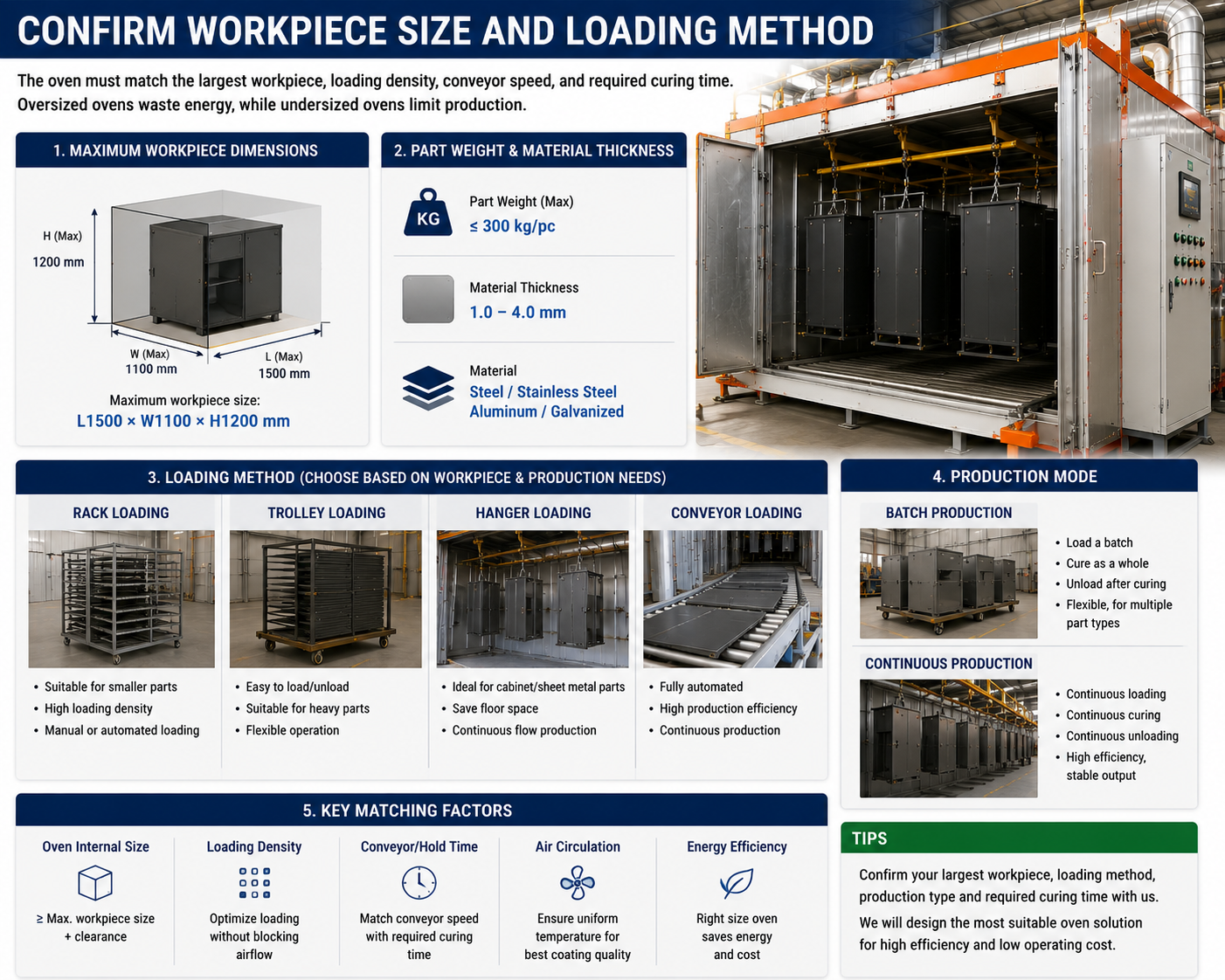
Confirm Workpiece Size and Loading Method
The oven must match the largest workpiece, loading density, conveyor speed, and required curing time. Oversized ovens waste energy, while undersized ovens limit production.- Maximum workpiece dimensions
- Part weight and material thickness
- Rack, trolley, hanger, or conveyor loading
- Batch production or continuous production
02
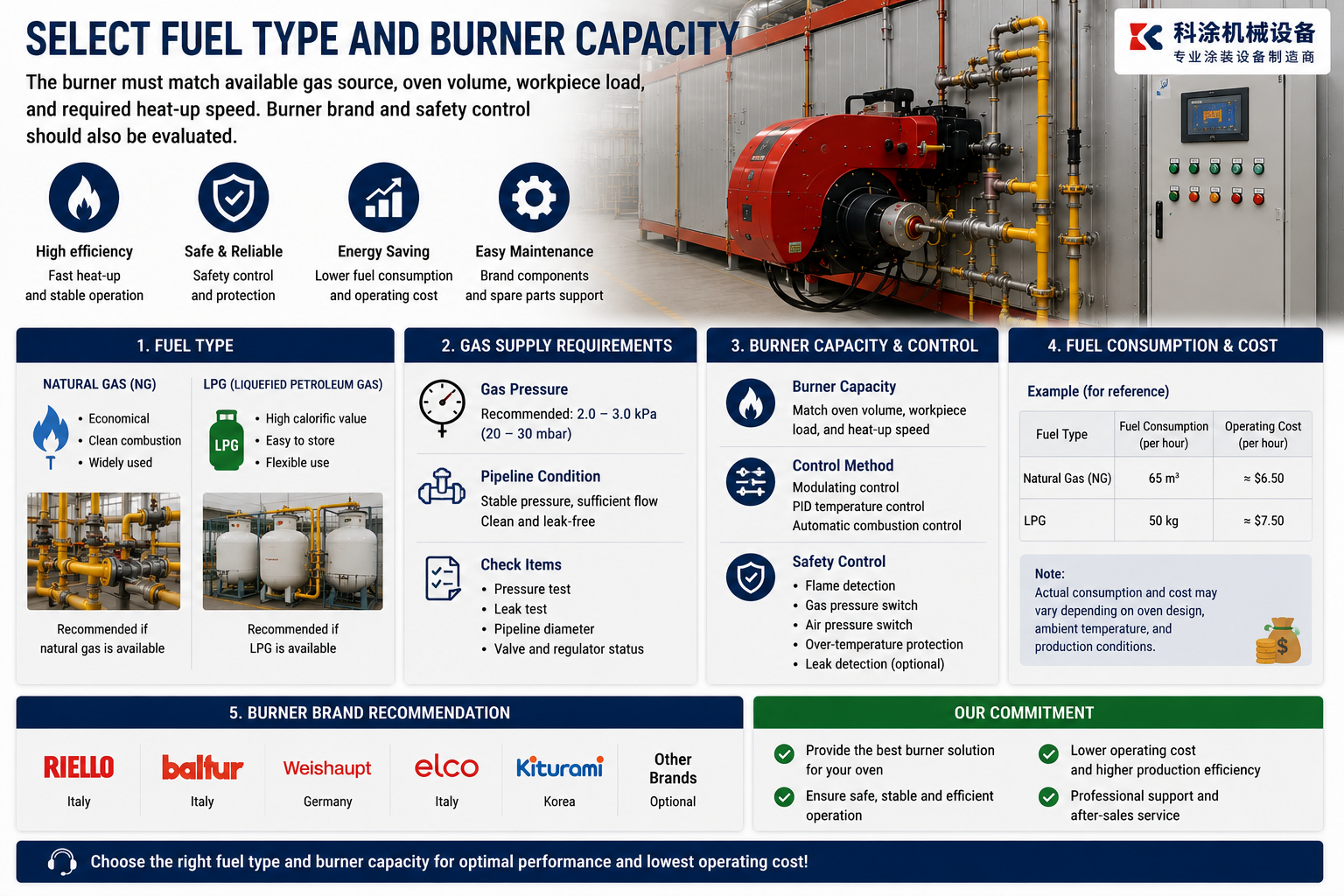
Select Fuel Type and Burner Capacity
The burner must match available gas source, oven volume, workpiece load, and required heat-up speed. Burner brand and safety control should also be evaluated.- Natural gas or LPG availability
- Gas pressure and pipeline condition
- Burner capacity and control method
- Fuel consumption and operating cost
03
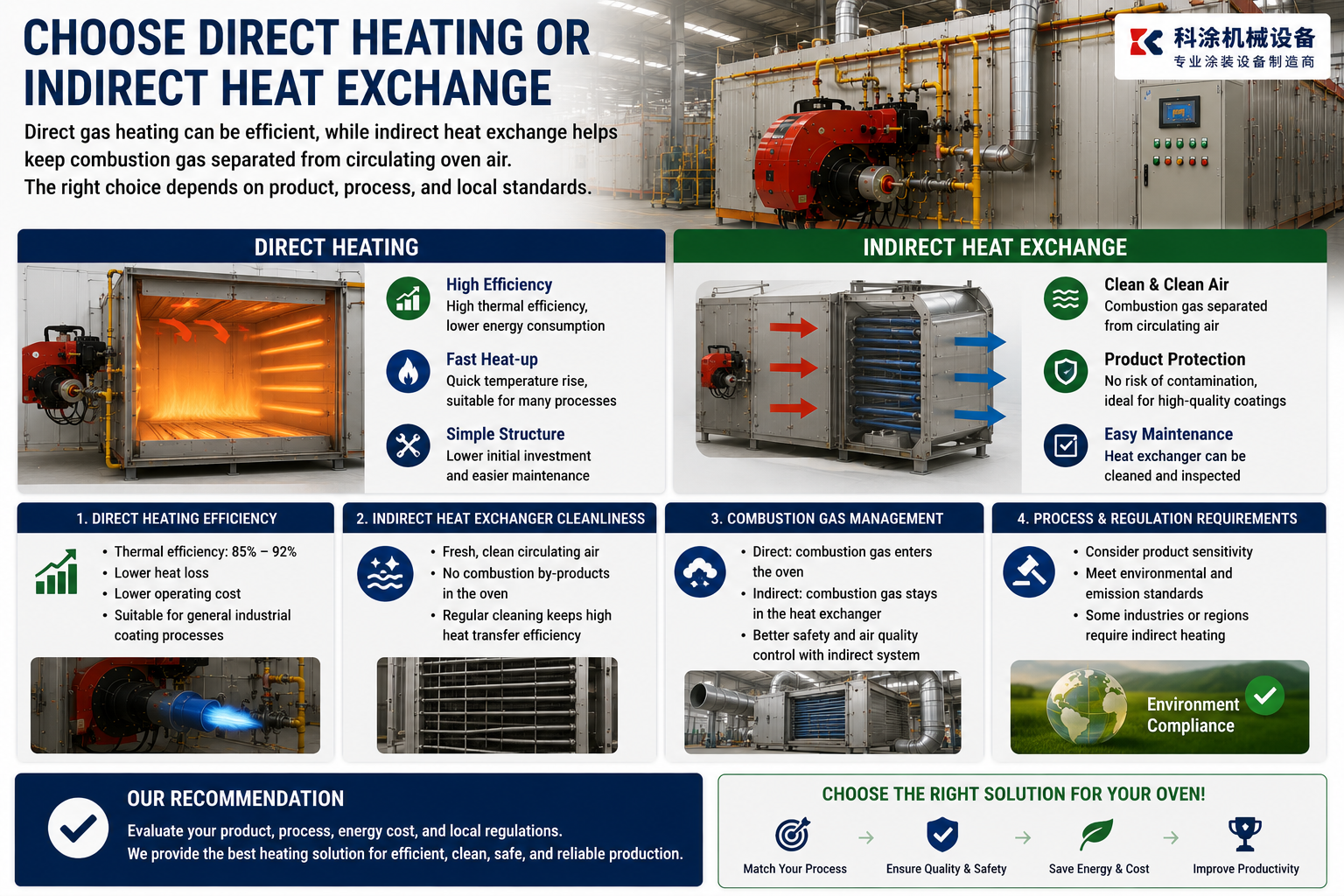
Choose Direct Heating or Indirect Heat Exchange
Direct gas heating can be efficient, while indirect heat exchange helps keep combustion gas separated from circulating oven air. The right choice depends on product, process, and local standards.- Direct heating efficiency
- Indirect heat exchanger cleanliness
- Combustion gas management
- Process and regulation requirements
04
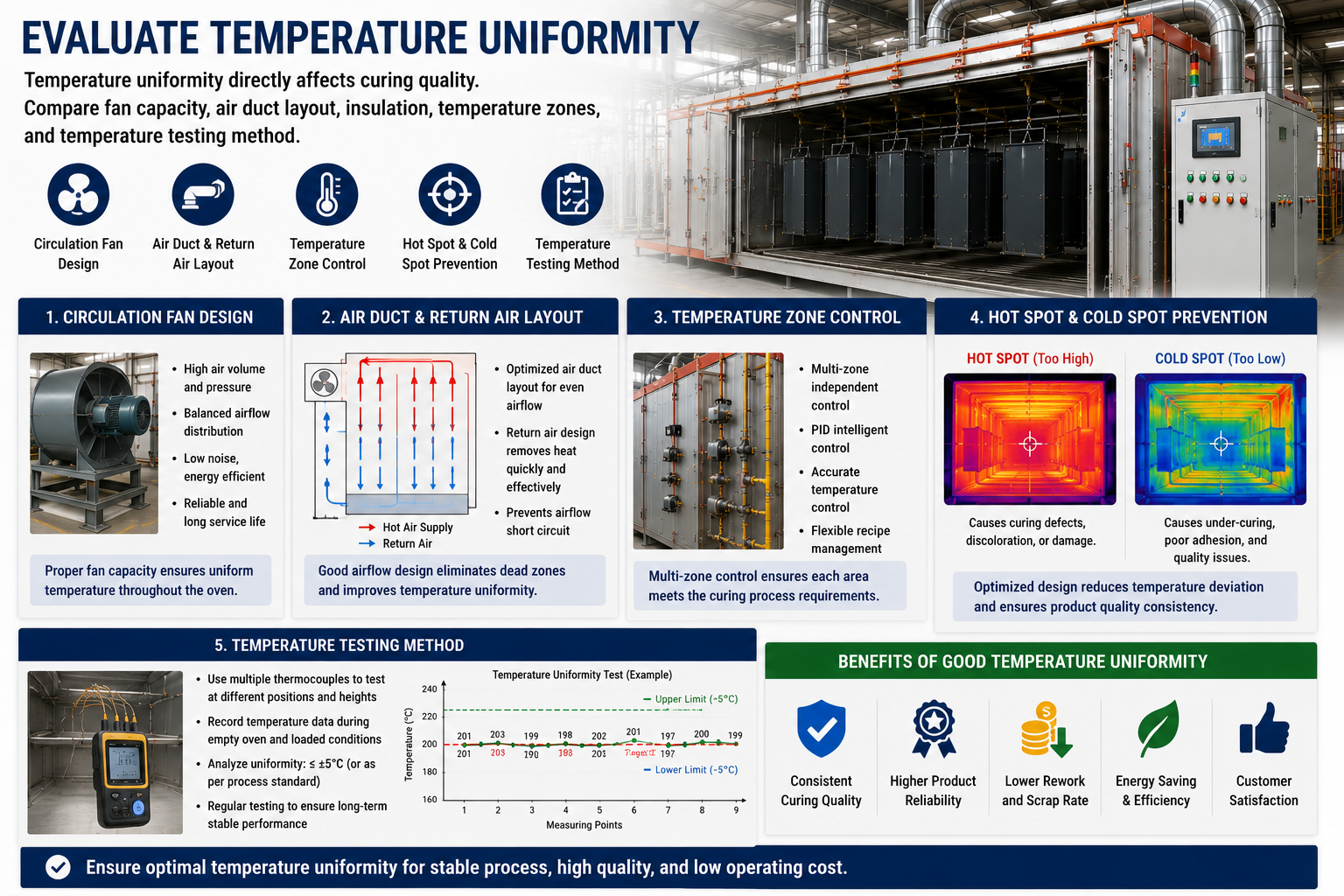
Evaluate Temperature Uniformity
Temperature uniformity directly affects curing quality. Compare fan capacity, air duct layout, insulation, temperature zones, and temperature testing method.- Circulation fan design
- Air duct and return air layout
- Temperature zone control
- Hot spot and cold spot prevention
05
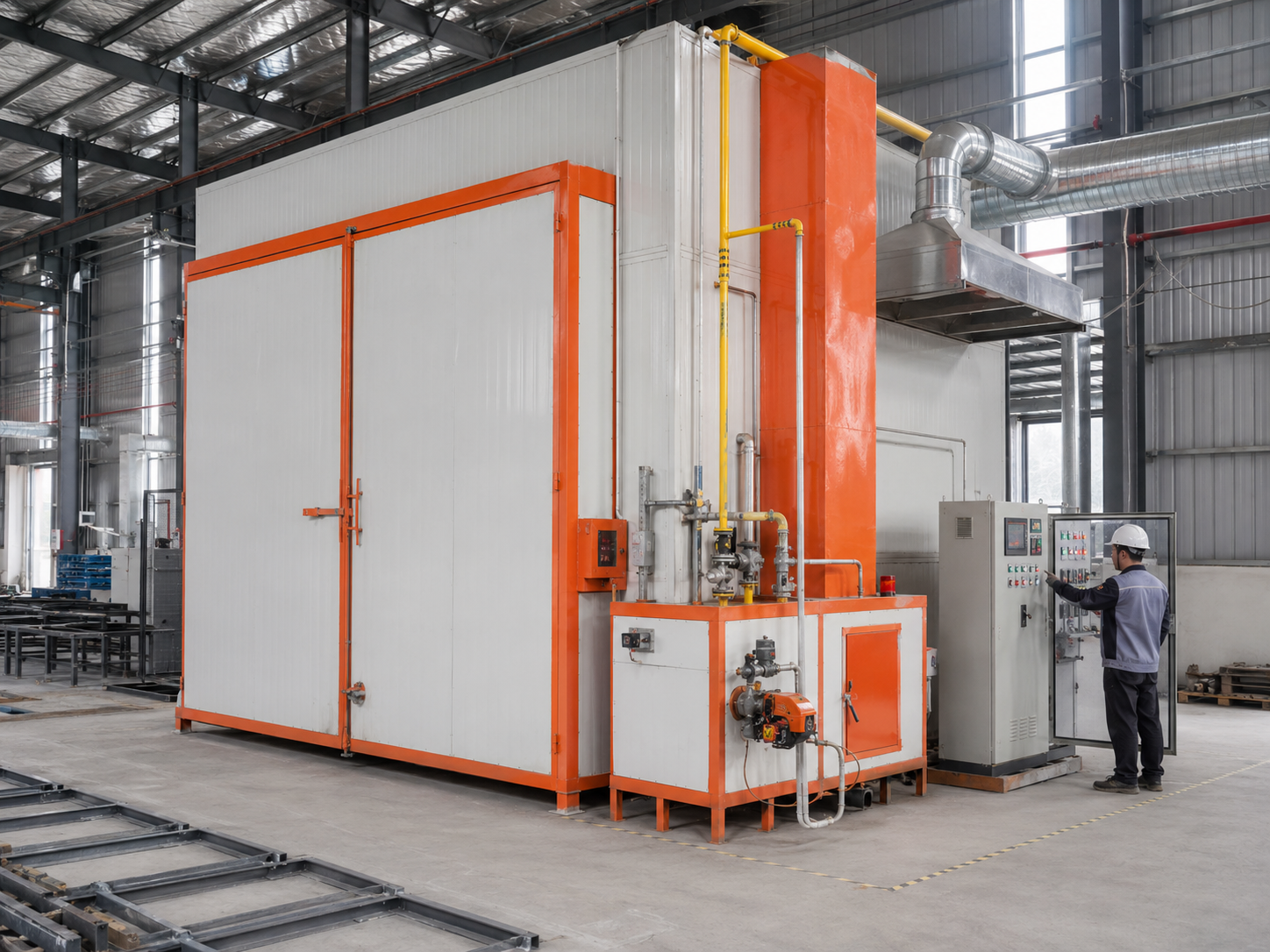
Check Insulation and Energy Saving Design
Good insulation reduces heat loss and fuel consumption. Buyers should check insulation thickness, door sealing, exhaust heat loss, and air circulation efficiency.- Insulation material and thickness
- Door sealing and heat leakage
- Exhaust heat management
- Fuel consumption per production cycle
06
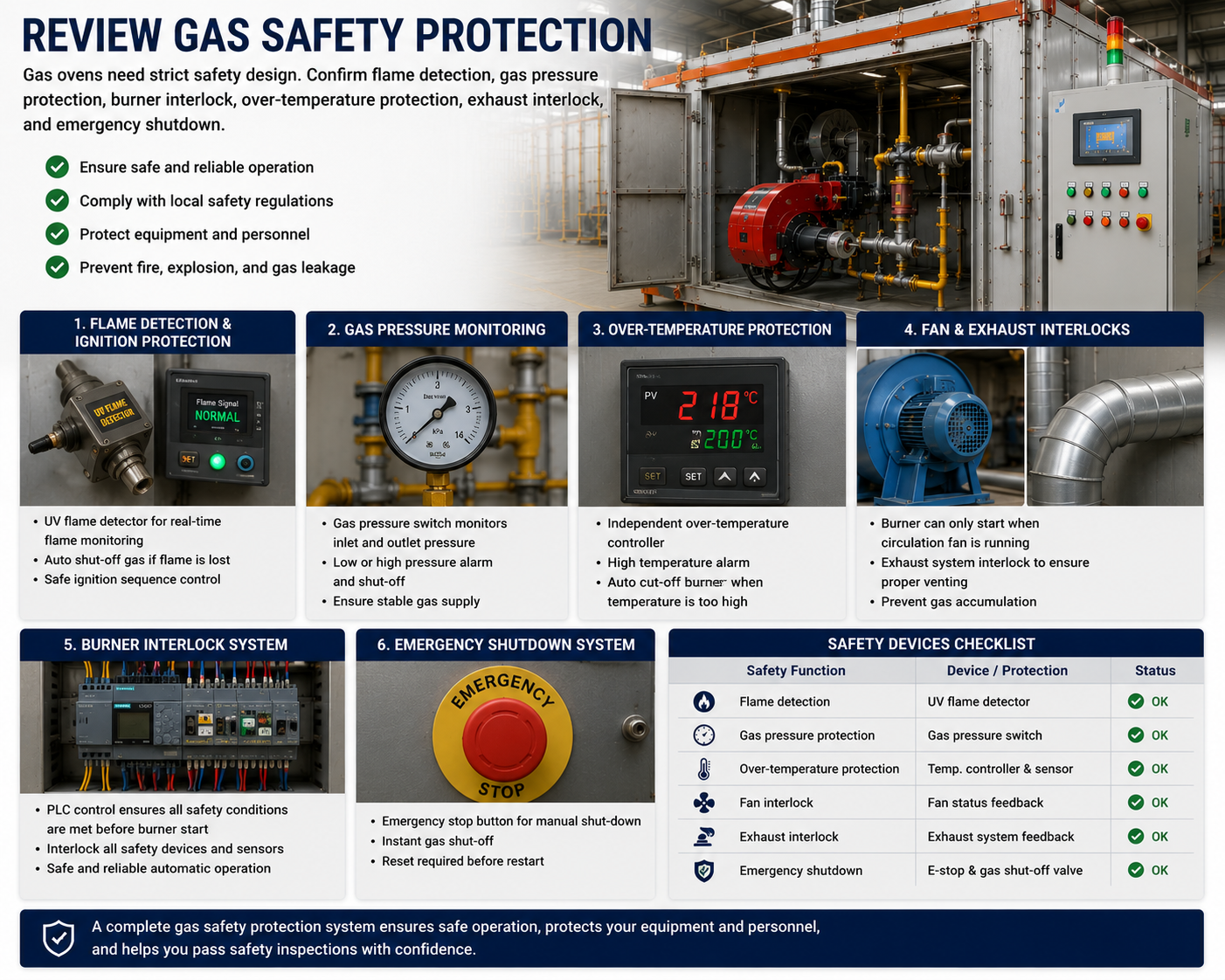
Review Gas Safety Protection
Gas ovens need strict safety design. Confirm flame detection, gas pressure protection, burner interlock, over-temperature protection, exhaust interlock, and emergency shutdown.- Flame detection and ignition protection
- Gas pressure monitoring
- Over-temperature alarm
- Fan and exhaust interlocks
07
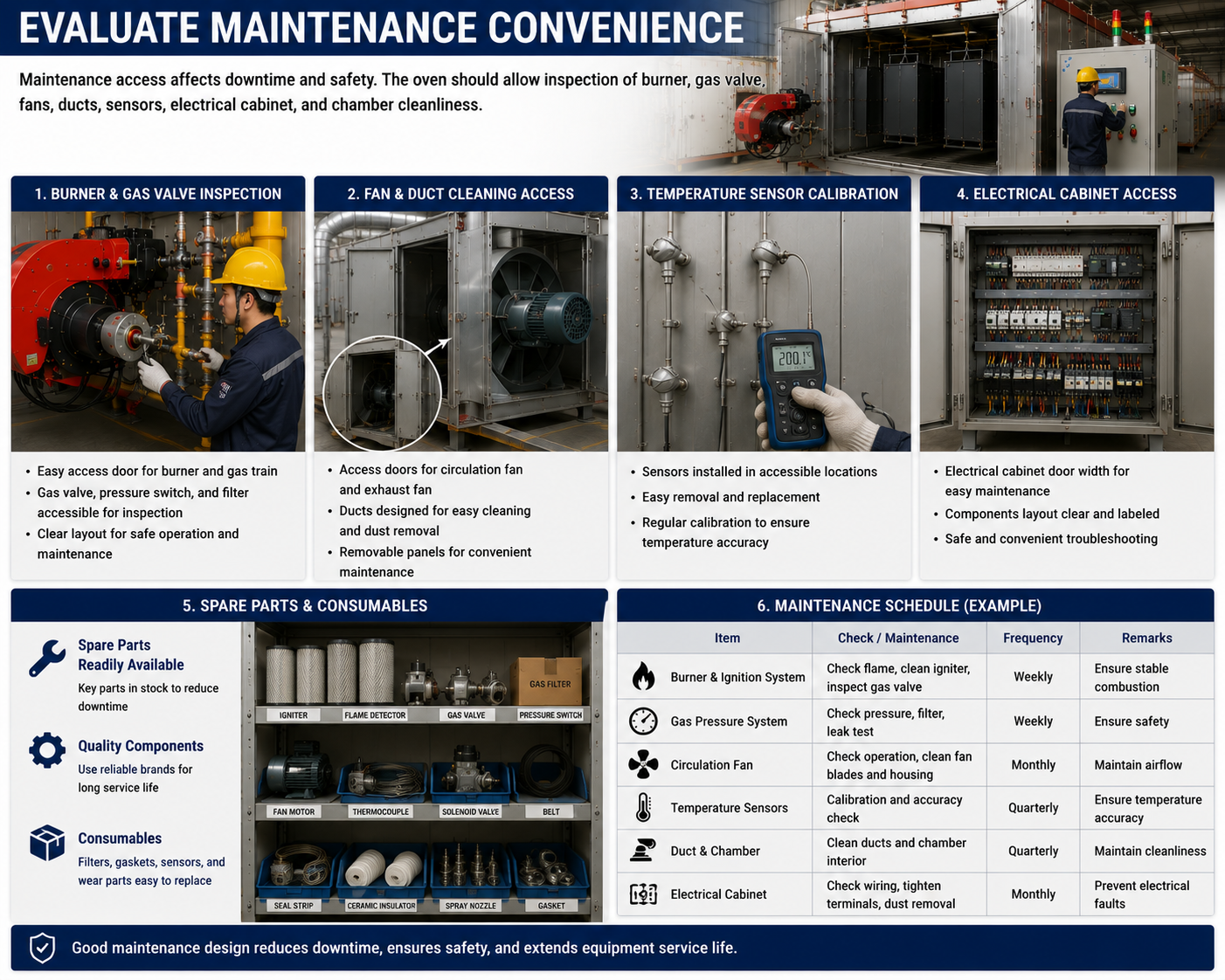
Evaluate Maintenance Convenience
Maintenance access affects downtime and safety. The oven should allow inspection of burner, gas valve, fans, ducts, sensors, electrical cabinet, and chamber cleanliness.- Burner and gas valve inspection
- Fan and duct cleaning access
- Temperature sensor calibration
- Spare parts and maintenance schedule
08
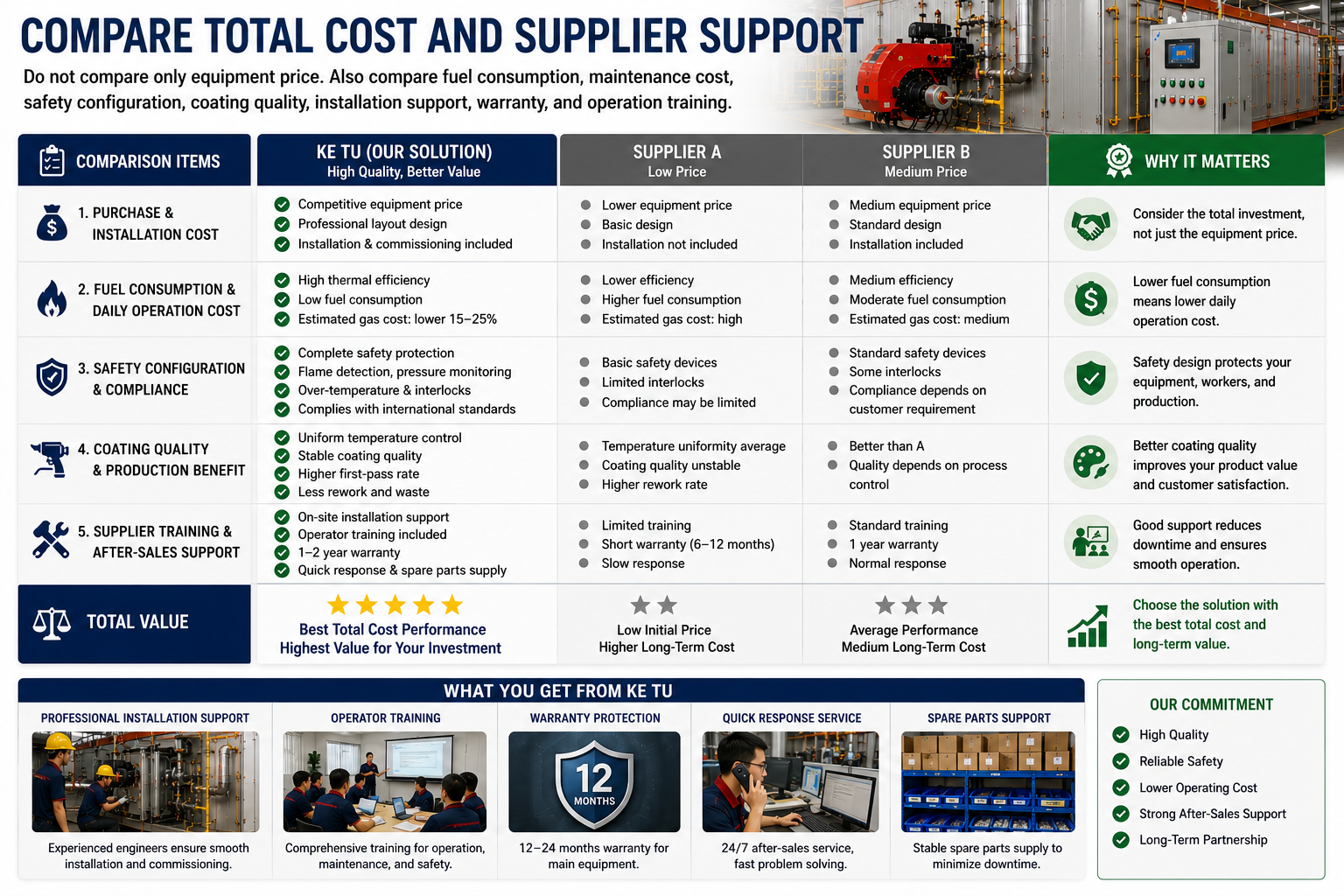
Compare Total Cost and Supplier Support
Do not compare only equipment price. Also compare fuel consumption, maintenance cost, safety configuration, coating quality, installation support, warranty, and operation training.- Purchase and installation cost
- Fuel consumption and daily operation cost
- Safety configuration and compliance
- Supplier training and after-sales support
Quick Buyer Comparison Table
Use this table to evaluate whether a gas powder coating curing oven matches your production requirement.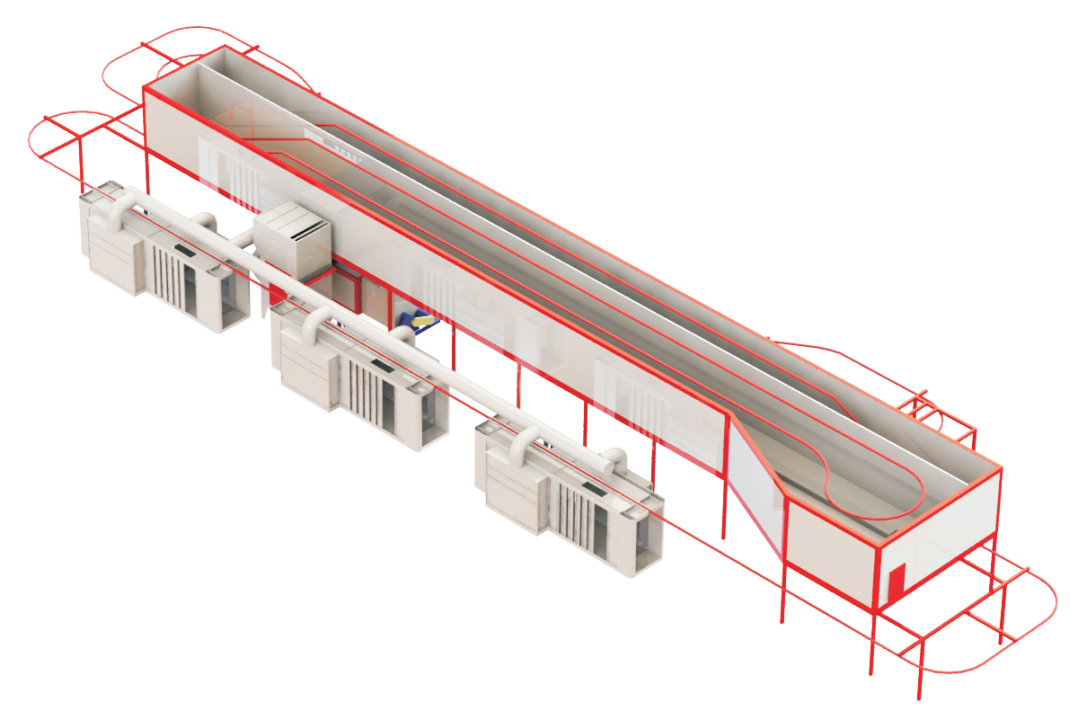
| Buying Factor | What to Check | Why It Matters |
|---|---|---|
| Fuel Type | Natural gas, LPG, gas pressure, pipeline condition | Determines burner selection, safety design, and operating cost |
| Heating Capacity | Burner power, oven volume, workpiece load | Affects preheating speed and production capacity |
| Temperature Uniformity | Fan capacity, ducts, zones, insulation | Controls curing quality and coating consistency |
| Safety System | Flame detection, gas pressure, interlocks, emergency stop | Protects operators and reduces gas operation risk |
| Energy Efficiency | Insulation, burner efficiency, exhaust heat loss | Reduces long-term fuel cost |
| Supplier Support | Installation, burner support, spare parts, training | Improves long-term oven reliability |
Need a purchasing recommendation for your gas curing oven?
Send your workpiece photos, factory layout, gas type, curing temperature, curing time, output target, and safety requirements. We can help you select the right gas powder coating curing oven configuration. Get Configuration Advice
FAQ
Frequently Asked Questions About Gas Powder Coating Curing Oven
These questions cover gas heating, curing temperature, hot air circulation, safety protection, maintenance, energy consumption, and purchasing decisions.What is a gas powder coating curing oven?
A gas powder coating curing oven is an industrial oven that uses natural gas or LPG as the heat source to cure powder-coated workpieces. It uses burner heating and hot air circulation to help powder coating melt, flow, react, and form a durable film.
What temperature is usually used for powder coating curing?
Many powder coatings are cured around 180°C to 220°C, but the exact temperature and time must follow the powder coating supplier’s recommended curing curve and actual workpiece temperature requirement.
Can the oven use natural gas or LPG?
Yes. The gas oven can be configured for natural gas, LPG, or another suitable gas source according to site conditions. Burner selection must match gas type, gas pressure, and pipeline condition.
What is the difference between direct heating and indirect heat exchange?
Direct heating transfers combustion heat directly into the circulating air. Indirect heat exchange uses a heat exchanger so combustion gas and circulating oven air are separated. The right choice depends on process requirements, product quality needs, and local standards.
Why is temperature uniformity important?
Temperature uniformity affects coating adhesion, hardness, gloss, appearance, and long-term performance. Poor uniformity may cause under-curing, over-curing, coating defects, or inconsistent surface quality.
What safety features should a gas curing oven include?
Important safety features include flame detection, gas pressure monitoring, over-temperature alarm, emergency stop, burner interlock, circulation fan interlock, exhaust interlock, and safe startup and shutdown procedures.
What information should I provide before quotation?
Please provide workpiece size, weight, material thickness, production output, gas type, curing temperature, curing time, factory layout, conveyor method, and local safety or environmental requirements.
Can the oven size be customized?
Yes. Oven length, width, height, burner power, insulation thickness, fan capacity, conveyor path, door design, temperature zones, and control system can be customized according to production needs.
How can gas oven energy consumption be reduced?
Energy consumption can be reduced by proper burner selection, good insulation, door sealing, optimized air circulation, suitable oven size, reduced exhaust heat loss, and matching curing time with actual production needs.
What maintenance is required?
Regular maintenance includes checking the burner, ignition system, gas valves, gas pressure, flame detector, circulation fans, exhaust system, temperature sensors, control cabinet, insulation, and oven chamber cleanliness.
Is a gas curing oven suitable for continuous production?
Yes. Gas curing ovens are commonly used in continuous powder coating lines because they can provide strong heat output and good temperature recovery when designed correctly.
What should I check before final purchase?
Check fuel type, burner capacity, heat exchange method, temperature uniformity, air circulation, insulation, safety protection, maintenance convenience, environmental compliance, supplier experience, warranty, and after-sales support.
Still not sure which gas curing oven is right?
Send workpiece photos, curing requirements, factory layout, gas source, and output target. Our team can help compare gas oven, electric oven, tunnel oven, batch oven, and complete powder coating line options. Ask Our Coating Line Expert
×
 English
  German
  Vietnamese
  French